

Quick Answer
You can bathe a Border Collie with allergies, and regular bathing may help remove pollen and other allergens from the coat and skin. Use lukewarm water, a gentle dog-specific shampoo, and follow your veterinarian’s bathing plan if your dog has diagnosed allergies or a skin condition. The AVMA’s pet allergy guidance also notes that regular bathing can help soothe skin and reduce allergens on the coat.
Safe Allergy Bath Steps
- Check the skin: Look for redness, sores, scabs, odor, and raw patches before starting.
- Brush first: Gently remove loose undercoat, dirt, pollen, and easy tangles.
- Use lukewarm water: Hot water can make already irritated skin uncomfortable.
- Choose dog shampoo: Use a mild hypoallergenic product or the medicated shampoo your veterinarian prescribed.
- Rinse completely: Shampoo residue trapped in the dense double coat may cause more irritation.
- Dry thoroughly: Remove moisture from the undercoat as well as the visible outer coat.
When to Stop
- Stop home treatment and call your vet if you see open sores, pus, spreading redness, strong odor, facial swelling, breathing trouble, or rapidly worsening itching.
Bathing an allergy-prone Border Collie is different from washing a healthy dog after a muddy walk. I treat it as a skin-care routine first and a cleaning job second.
A Border Collie, sometimes simply called a Border, has a dense double coat that can hold pollen, dirt, shampoo, and moisture close to the skin. That makes careful rinsing and drying especially important when itching is already present.
In This Guide
- Can Bathing Help a Border Collie With Allergies?
- What Should You Check Before the Bath?
- What Shampoo Should You Use?
- How Do You Bathe a Border Collie With Allergies?
- How Often Should You Bathe an Allergic Border Collie?
- How Should You Dry the Double Coat?
- What Allergy Bathing Mistakes Should You Avoid?
- When Does Itching Need a Veterinarian?
- Frequently Asked Questions
- Final Takeaway
Can Bathing Help a Border Collie With Allergies?
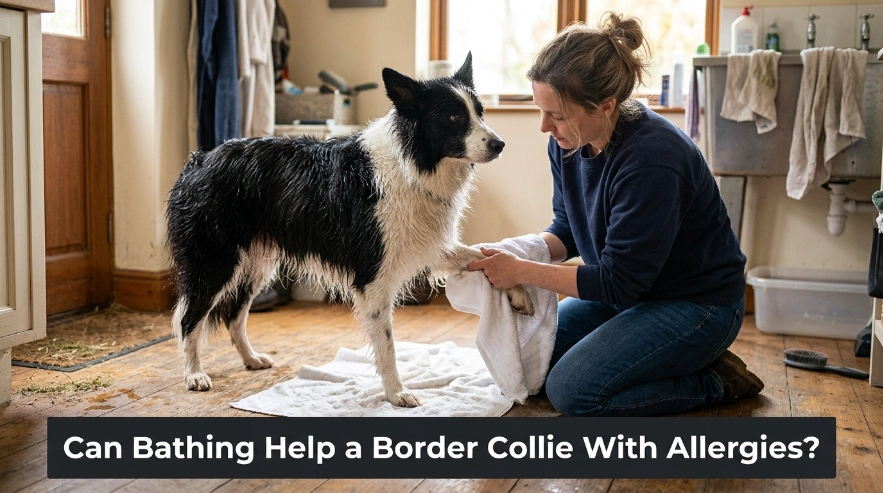
Yes. Bathing can remove environmental allergens sitting on your Border Collie’s skin and coat, including pollen, grass residue, and household particles.
It may also calm itchy skin when you use an appropriate product. However, a bath does not identify or cure the underlying allergy.
An allergy bath is a bath designed to remove surface allergens and support irritated skin without adding new irritants. It may use a gentle hypoallergenic shampoo or a medicated product chosen for a diagnosed skin problem.
That distinction matters because itching can have several causes. The PetMD overview of dog skin allergies describes environmental, food, flea, and contact-related triggers.
- Environmental allergens: Pollen, grass, mold, and dust may settle on the coat.
- Contact irritation: Cleaners, fragrances, plants, or grooming products may irritate exposed skin.
- Flea-related allergy: A sensitive dog may become intensely itchy after flea exposure.
- Food-related problems: Bathing may soothe skin, but it cannot remove a dietary trigger.
- Secondary infection: Scratching can damage skin and may occur alongside bacterial or yeast problems.
As of 2026, regular bathing remains one of the supportive measures commonly mentioned in veterinary allergy guidance. The schedule and product still need to match the individual dog.
Vet note: Persistent itching deserves a veterinary diagnosis because allergies, parasites, infections, and other skin problems can look similar at home.
What Should You Check Before the Bath?
Inspect your Border Collie’s skin before turning on the water. A quick check can tell you whether a normal home bath makes sense.
I part the coat with my fingers instead of judging the dog from above. A thick Border Collie coat can hide irritated areas surprisingly well.
Look at the common itchy areas
- Paws and between the toes
- Belly and groin
- Armpits
- Base of the tail
- Behind and beneath the ears
- Under the collar
- Areas the dog repeatedly licks or chews
Minor pinkness and itching may fit an existing allergy plan. Wet sores, pus, bleeding, marked swelling, or a strong unusual odor are different.
Brush gently before getting the coat wet
The AKC Border Collie breed profile describes both rough and smooth Border Collies as having dense, weather-resistant double coats. The undercoat makes pre-bath grooming useful.
Use a gentle brush or comb to remove loose fur and easy tangles. Don’t scrape aggressively across red or painful skin.
- Remove loose debris: This gets dirt and some outdoor material out before shampooing.
- Open the coat: Less loose undercoat makes wetting and rinsing easier.
- Find hidden problems: Brushing lets you notice irritated patches before they become soaked.
If brushing causes pain, stop. Painful skin needs more attention than routine grooming.
What Shampoo Should You Use?
Use a shampoo made specifically for dogs and appropriate for your Border Collie’s skin problem. For allergy-prone skin, simple and gentle is usually safer than heavily scented.
The right product depends on whether you are removing allergens, soothing sensitive skin, or treating a condition diagnosed by your veterinarian.
| Situation | Product Type | Main Goal | Important Caution |
|---|---|---|---|
| Mild sensitive skin | Gentle, dog-specific hypoallergenic shampoo | Clean without unnecessary fragrance or harsh ingredients | Stop if redness or itching increases |
| Dry, itchy skin | Dog shampoo containing soothing ingredients such as colloidal oatmeal | Support and soothe irritated skin | Not a substitute for diagnosing persistent itch |
| Diagnosed infection or dermatitis | Veterinarian-recommended medicated shampoo | Treat the diagnosed skin problem | Follow exact frequency and contact-time instructions |
| Pollen or grass exposure | Vet-approved gentle shampoo, rinse, or targeted wipe-down | Remove allergens from fur and exposed skin | A full shampoo bath may not be needed after every outing |
Avoid human shampoo
Human shampoo isn’t my backup choice for an itchy Border Collie. Dog skin and human skin differ, and products made for people may leave canine skin dry or irritated.
The AKC’s dog shampoo guidance covers dog-specific and medicated formulations used for different skin needs.
Don’t improvise with strong ingredients
A dog that’s already itchy isn’t the best candidate for experimenting with fragrances, essential oils, concentrated homemade mixes, or several new products at once.
Using one appropriate product also makes it easier to identify what happened if your dog’s skin improves or worsens.
Vet note: Ask your veterinarian before starting medicated shampoo. The right active ingredient depends on what is causing the skin problem.
How Do You Bathe a Border Collie With Allergies?
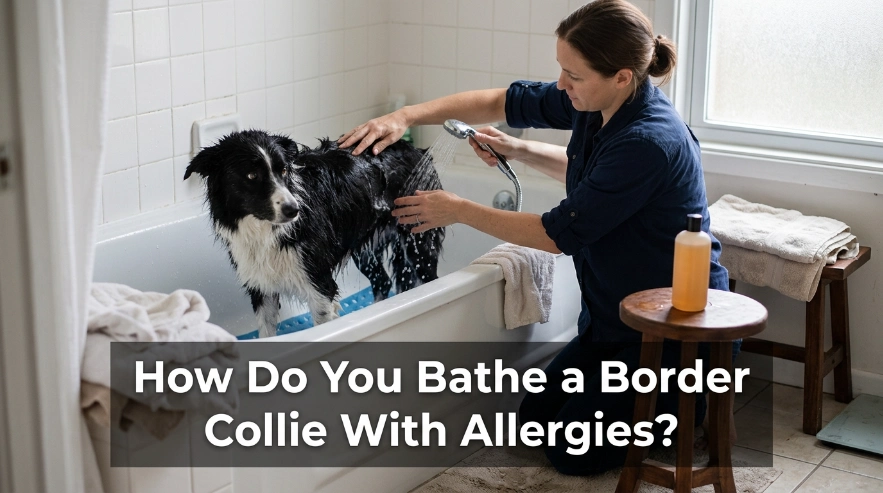
Keep the bath calm, gentle, and thorough. My main goals are getting water to the skin, avoiding aggressive scrubbing, removing all shampoo, and preventing trapped moisture afterward.
Prepare everything first. Once an energetic Border Collie is wet, searching the house for another towel isn’t ideal.
- Brush the coat gently. Remove loose fur, surface debris, and uncomplicated tangles.
- Use a nonslip surface. Good traction reduces scrambling and makes handling calmer.
- Set the water to lukewarm. Test it on your inner forearm before wetting the dog.
- Wet the body gradually. Start around the shoulders and work down the body rather than spraying the face.
- Part the double coat. Use your fingers so water reaches the skin instead of running over the outer coat.
- Apply the approved shampoo. Spread it gently rather than scratching with your nails.
- Follow medicated instructions exactly. If the product has a required contact time, use the label or your veterinarian’s directions.
- Rinse slowly and completely. Keep separating the coat until you cannot feel slippery product near the skin.
- Clean the face carefully. A damp cloth gives you more control around the eyes, nose, and ears.
- Blot away water. Press towels into the coat instead of rubbing irritated skin hard.
- Dry the undercoat. Check thick areas with your fingers before deciding the dog is finished.
Why rinsing deserves extra time
A Border Collie’s topcoat can look clean while product remains deeper in the fur. I continue rinsing after the obvious foam disappears.
Run your fingers against the direction of hair growth and feel close to the skin. The coat shouldn’t feel slick or coated.
Keep the water pressure gentle
High-pressure spraying can make a nervous dog fight the bath. It can also feel harsh over inflamed skin.
A handheld sprayer or cup works well when used slowly. Keep water out of the ear canals and avoid spraying directly into the face.
Section Takeaway: Allergy bathing works best when it is gentle and complete. Wet the double coat to the skin, use the correct product, rinse longer than you think you need to, and dry the undercoat fully.
How Often Should You Bathe an Allergic Border Collie?
There is no single bathing schedule for every allergic Border Collie. Some dogs need frequent therapeutic baths, while others become drier when shampooed too often.
A veterinarian may recommend weekly or another regular schedule when bathing is part of allergy control. Medicated products can have their own instructions.
| Situation | Practical Approach |
|---|---|
| Healthy coat with no active allergy problem | Bathe when dirty or when your normal grooming routine requires it. |
| Known seasonal or environmental allergies | Your vet may suggest regular baths, sometimes around weekly, depending on symptoms and product. |
| After a high-pollen walk | A paw and belly rinse or wipe may remove surface material without another full shampoo bath. |
| Prescription medicated shampoo | Use only on the schedule given by the veterinarian or product directions. |
Watch the skin rather than blindly following a calendar. Increased flaking, tight-looking skin, or worse itching after baths may mean the routine needs changing.
Vet note: A therapeutic bathing schedule should be adjusted with your veterinarian if symptoms remain unchanged or become worse.
How Should You Dry the Double Coat?
Drying matters almost as much as shampoo choice. A Border Collie’s outer coat may feel dry while the undercoat remains damp.
I check behind the ears, under the collar area, around the chest, beneath the belly, and through thicker rear feathering before calling the job finished.
- Let excess water drain: Give your dog a moment to shake if the area is safe.
- Blot with absorbent towels: Press instead of scrubbing the skin.
- Switch towels: A dry second towel removes more moisture than working with one soaked towel.
- Separate thick coat: Use your fingers so air reaches the undercoat.
- Use cool or gentle airflow: Avoid holding hot airflow over one patch of sensitive skin.
- Check the skin again: Look for any irritation that became easier to see after bathing.
Complete drying is especially important if your Border Collie already has inflamed skin or recurring infections. Dampness trapped deep in dense fur creates an environment you don’t want sitting against irritated skin.
What Allergy Bathing Mistakes Should You Avoid?

The biggest mistakes usually come from trying to make the dog cleaner rather than trying to protect the skin. More shampoo and harder scrubbing aren’t automatically better.
- Using hot water: Keep water comfortably lukewarm instead.
- Scrubbing itchy areas: Massage gently with fingertips rather than scratching with nails.
- Using human products: Choose a dog-specific shampoo suitable for sensitive skin.
- Adding fragrance: Perfume isn’t needed on a dog already dealing with skin irritation.
- Changing several products: Introducing multiple products makes reactions harder to trace.
- Rinsing too quickly: Thick undercoat can hide shampoo residue.
- Leaving the coat damp: Check the undercoat, not just the surface.
- Assuming every itch is an allergy: Fleas, infections, and other conditions can cause similar signs.
- Ignoring worsening symptoms: Repeated home baths shouldn’t replace veterinary assessment.
The ASPCA’s dog grooming guidance also lists scratching, chewing, redness, hot spots, flaky skin, hair loss, rashes, and drainage among signs worth paying attention to.
When Does Itching Need a Veterinarian?
Call your veterinarian when itching is persistent, severe, recurrent, or accompanied by obvious skin damage. Bathing can support treatment, but it cannot tell you what caused the problem.
I would also stop experimenting with new shampoos when the skin is getting worse instead of better.
Arrange veterinary care if you notice:
- Repeated scratching that interrupts sleep or normal activity
- Constant paw chewing or licking
- Hair loss or bald patches
- Hot, painful, or spreading red areas
- Scabs, crusts, or open wounds
- Strong or unusual skin odor
- Drainage, pus, or bleeding
- Recurring ear irritation alongside itchy skin
- Symptoms that return soon after treatment
Some reactions can be urgent
Facial swelling, widespread hives, collapse, weakness, or breathing difficulty can indicate a serious reaction. Don’t try to solve those signs with another bath.
Seek prompt veterinary help instead. Severe allergic reactions can progress quickly.
Vet note: Your veterinarian may need to check for parasites, infection, food-related disease, contact irritation, or environmental allergy before recommending a long-term bathing plan.
Frequently Asked Questions
Can I bathe my Border Collie every week for allergies?
Weekly bathing may be appropriate for some dogs with environmental allergies, especially when a veterinarian recommends it. It isn’t automatically right for every Border Collie. Your dog’s skin response, shampoo type, allergy cause, and any medications should guide the schedule.
What is the best shampoo for a Border Collie with allergies?
For mild sensitive skin, look for a gentle dog-specific hypoallergenic shampoo. Some dogs also tolerate soothing oatmeal formulas well. If your Border Collie has dermatitis, yeast, bacteria, or another diagnosed problem, use the medicated shampoo recommended by your veterinarian.
Does bathing remove pollen from a Border Collie’s coat?
Yes. Bathing and rinsing can physically remove pollen and other environmental material sitting on the coat and skin. After lighter exposure, cleaning the paws and belly may sometimes be enough, which can reduce the need for another full shampoo bath.
Should I use warm or cold water on itchy skin?
Use comfortably lukewarm water unless your veterinarian gives different instructions. Avoid hot water on irritated skin. Test the stream on your inner forearm before it reaches your Border Collie and recheck it whenever you adjust the faucet.
Can I use human sensitive-skin shampoo on my Border Collie?
I would avoid it for routine bathing. A product marketed as gentle for people is still formulated for human skin. Choose a dog-specific shampoo designed for sensitive skin or use the exact medicated product recommended by your veterinarian.
Why is my Border Collie itchier after a bath?
Possible reasons include shampoo residue, an irritating ingredient, water that was too hot, excessive bathing, or an underlying skin problem that is progressing. Rinse thoroughly and stop using any new product linked with worsening symptoms. Persistent itching needs veterinary assessment.
Can I just rinse my Border Collie without shampoo?
Sometimes. A plain lukewarm rinse can help remove surface pollen, grass residue, or dirt after outdoor activity without adding another shampoo session. Dry the double coat thoroughly afterward, and follow your veterinarian’s advice if your dog has an active skin condition.
Final Takeaway
You can safely bathe a Border Collie with allergies when you put skin comfort ahead of aggressive cleaning. Use lukewarm water, the right dog-specific shampoo, gentle handling, complete rinsing, and thorough drying.
Don’t assume that more baths always mean less itching. The best frequency depends on your dog’s allergy trigger, skin condition, and treatment plan.
Most importantly, pay attention to what the skin tells you. If redness, chewing, sores, odor, or itching keeps returning, involve your veterinarian instead of simply changing shampoos again.