

Quick Answer
For most Border Collies, a medium slicker brush is the best brush after a bath because it can separate the double coat, lift loose undercoat, and work through small tangles. PetMD also recommends routine slicker-brush grooming for Border Collies, although a pin brush can be an excellent gentler alternative for longer rough coats.
My Post-Bath Brush Setup
- Best overall: Use a medium slicker brush once the coat is no longer dripping wet.
- Rough coats: Add a pin brush when you want to separate longer feathering without excessive pulling.
- Heavy shedding: Use an undercoat rake carefully after the coat has dried and loosened.
- Final check: Run a metal comb through feathering, behind the ears, and around the legs.
- Avoid: Don’t aggressively rake or brush a soaking-wet, tangled coat.
Best Timing
- Towel-blot first, separate the coat with cool or low airflow, then brush gently in small sections.
Bath time is only half the job with a Border Collie. That dense coat can look clean on top while loose undercoat and small tangles hide underneath.
I treat post-bath brushing as the finishing stage. The right brush helps the coat dry evenly, removes loosened hair, and restores the natural shape without scraping the skin.
In This Guide
- What Is the Best Brush After a Border Collie Bath?
- Why Does Brush Choice Matter After a Bath?
- Should You Brush a Border Collie Wet or After Drying?
- How Do You Brush a Border Collie After a Bath?
- Which Brush Is Best for Rough vs Smooth Border Collies?
- Which Border Collie Grooming Brushes Are Worth Using?
- What Post-Bath Brushing Mistakes Should You Avoid?
- How Often Should You Brush a Border Collie?
- Frequently Asked Questions
- Final Takeaway
What Is the Best Brush After a Border Collie Bath?

A medium slicker brush is my best overall choice after bathing most Border Collies. Its fine bent pins can reach through the outer coat and pick up loose hair that bathing has already loosened.
That doesn’t mean every Border Collie needs the same tool. Coat length, density, shedding level, and sensitivity all change what feels comfortable.
Definition: A post-bath brush for a Border Collie is a grooming tool used after washing and partial drying to separate the double coat, remove loosened fur, locate tangles, and restore a smooth coat finish.
Why I reach for a slicker first
A bath releases dead hair that may have been sitting deep in the undercoat. Once the coat begins separating during drying, a slicker can collect much of that loose material.
- Fine pins: Reach through thicker areas better than a basic bristle brush.
- Wide working surface: Makes the body, chest, and hindquarters easier to cover.
- Tangle detection: Lets you feel resistance before small knots become larger mats.
- Coat finishing: Helps fluff and separate hair after drying.
The AKC guide to dog brush types also emphasizes choosing tools based on coat type rather than using one brush for every dog.
That’s especially important with Border Collies. Their coat is functional, dense, and designed for outdoor work rather than simply looking fluffy.
Why Does Brush Choice Matter After a Bath?
Border Collies have a double coat, meaning they carry a softer insulating undercoat beneath more protective outer hairs. Both rough-coated and smooth-coated Border Collies have this basic two-layer structure.
The AKC’s double-coat guidance specifically includes Border Collies among dogs with medium double coats.
Bathing changes how loose hair sits
Shampoo, rinsing, towel drying, and airflow can release undercoat that was ready to shed. Some of that hair washes away, while the rest stays trapped between the outer hairs.
That’s why a freshly washed Border Collie can sometimes appear even fluffier before brushing. The loose coat has separated but hasn’t completely fallen away.
- Slicker brush: Good for lifting loosened hair and separating dense areas.
- Pin brush: Useful for longer feathering and a gentler finishing pass.
- Undercoat rake: Most useful when seasonal shedding is heavy.
- Metal comb: Excellent for checking whether hidden tangles remain.
I don’t judge a brush by how much fur it removes in one pass. Comfort and coat condition matter more than producing the biggest pile of hair.
A tool that scratches the skin or repeatedly catches healthy hair is too aggressive. Grooming should feel controlled, not like you’re trying to strip the coat.
Should You Brush a Border Collie Wet or After Drying?
I prefer to do the main post-bath brushing after towel blotting and partial drying. I don’t repeatedly drag a slicker through a coat that’s still saturated with water.
Wet hairs can bunch together and make resistance harder to judge. That makes a gentle drying stage useful before detailed brushing.
Start before the bath
Good post-bath grooming actually begins before water touches the dog. Remove obvious burrs, knots, and compacted tangles first.
VCA’s dog grooming and coat-care guidance recommends brushing tangles and burrs before bathing because existing tangles can become harder to manage after washing.
My timing sequence
- Pre-brush: Remove loose debris and obvious tangles before bathing.
- Wash and rinse: Rinse thoroughly so shampoo doesn’t remain under the dense coat.
- Towel-blot: Press moisture out instead of aggressively rubbing the hair.
- Separate the coat: Use comfortable cool or low airflow while moving through sections.
- Begin brushing: Start once the hair separates easily enough to see and feel what you’re doing.
- Comb-check: Finish problem areas with a metal comb.
If my brush suddenly stops, I stop too. I don’t pull harder simply because the dog has just had a bath.
That pause usually tells me I’ve found a small knot, dense undercoat, or a damp section that needs more careful handling.
How Do You Brush a Border Collie After a Bath?
The best method is to work in small sections and follow the direction of coat growth. This gives you better control than sweeping randomly across the entire dog.
1. Begin with easy areas
I usually start along the shoulder or upper back. These areas let the dog settle before I reach more sensitive feathering.
- Brush with light pressure.
- Use short, controlled strokes.
- Watch the skin rather than only the hair.
- Stop when you feel a snag.
2. Work through the coat in sections
Lift a small layer of hair with one hand and brush the exposed section beneath it. This technique is often called line brushing.
Move gradually across the body. The goal is to reach through the coat without repeatedly scraping the same patch of skin.
3. Spend extra time on friction zones
Some areas tangle faster because hair rubs against itself or against collars and harnesses.
- Behind the ears
- Under the collar
- Chest feathering
- Armpits
- Back of the front legs
- Rear feathering
- Base of the tail
4. Finish with a comb test
A brush can glide over the surface while a small knot remains underneath. I therefore use a wide- or medium-tooth metal comb as a final check.
If the comb moves from near the skin toward the ends without catching, the section is usually finished. Never force the comb through resistance.
Section Takeaway: Brush in small sections, use light pressure, and let resistance tell you when to slow down. A slicker does the main work, while a comb confirms that hidden tangles are gone.
Which Brush Is Best for Rough vs Smooth Border Collies?
Both coat varieties are double-coated, but they don’t feel identical under a brush. A rough Border Collie’s longer feathering usually creates more places for tangles to hide.
A smooth Border Collie has shorter hair, yet the undercoat can still shed heavily. Shorter doesn’t mean single-coated.
Rough-coated Border Collie
For a rough coat, I like a slicker for the dense body coat and a pin brush for longer feathering. A metal comb helps behind the ears, chest, legs, and tail.
The longer hair makes section-by-section grooming worthwhile. Don’t brush only the visible surface.
Smooth-coated Border Collie
A smooth coat may need fewer finishing passes. A gentle slicker or suitable pin brush can handle routine loose hair without overworking the shorter outer coat.
During shedding season, an undercoat-focused tool may become useful. Use it with restraint rather than making it your everyday finishing brush.
AKC notes that both Border Collie coat types need regular grooming and suggests pin-brush grooming once or twice weekly, with more frequent brushing during shedding periods.
Which Border Collie Grooming Brushes Are Worth Using?
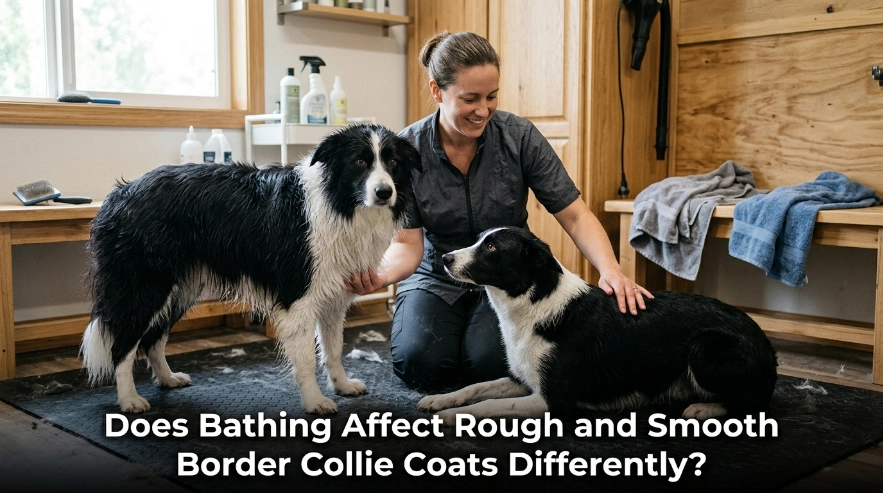
No single brush performs every grooming job equally well. I prefer a small toolkit where each item has a clear purpose.
| Tool | Best Post-Bath Job | Rough Coat | Smooth Coat | Routine Use |
|---|---|---|---|---|
| Medium slicker | Loose hair and minor tangles | Excellent | Very good | PetMD suggests slicker brushing 2–3 times weekly |
| Pin brush | Separating and finishing longer hair | Excellent | Good | AKC suggests 1–2 times weekly routinely |
| Undercoat rake | Removing heavy loose undercoat | Useful seasonally | Useful seasonally | Increase only when undercoat is actively shedding |
| Metal comb | Finding hidden tangles | Essential finishing tool | Helpful | Use as a final check |
| Bristle brush | Surface smoothing | Limited undercoat reach | Good finishing option | Optional |
If I could own only two tools, I’d choose a good slicker and a sturdy metal comb. For a heavily feathered rough coat, I’d strongly consider adding a pin brush.
As of 2026, that’s still the simplest setup I recommend for everyday home grooming. More tools don’t automatically produce a healthier coat.
What Post-Bath Brushing Mistakes Should You Avoid?
The biggest mistake is trying to make the brush do all the work. Drying, detangling, and brushing should work together.
Brushing a soaking-wet tangled coat
Don’t assume water softened every knot. Existing tangles may tighten and become more difficult to separate.
Pushing harder when the brush catches
Resistance is information. Stop, inspect the section, and separate the hair gently rather than dragging the tool through it.
Using an undercoat rake everywhere
An undercoat rake has a specific job. I save it for dense loose undercoat rather than treating it like a daily finishing brush.
Repeatedly brushing one spot
Fine metal pins can irritate skin when you keep scraping the same area. Count your passes and move on once the section is clear.
Ignoring the skin
Part the coat occasionally while grooming. Look for redness, sores, unusual scaling, moist irritated areas, or anything painful.
Vet note: If brushing reveals painful skin, open sores, persistent redness, unusual hair loss, or signs of infection, stop grooming that area and ask your veterinarian for advice.
Trying to cut out a tight mat with scissors
Dog skin can pull into a mat and sit much closer to scissors than it appears. A tight or skin-level mat is safer in experienced professional hands.
- Good brushing: Light pressure, controlled sections, smooth coat movement.
- Bad brushing: Fast scraping, repeated pulling, forced passes through knots.
- Stop signal: Pain, skin redness, sudden flinching, or a brush that cannot pass safely.
How Often Should You Brush a Border Collie?
A post-bath brushing session shouldn’t replace routine grooming between baths. Regular maintenance keeps the next bath easier.
PetMD recommends slicker brushing a Border Collie two to three times weekly. AKC guidance suggests routine pin brushing once or twice weekly and daily attention during heavier shedding.
A practical schedule
- Normal weeks: Brush thoroughly several times across the week according to your dog’s coat.
- After a bath: Do one careful finishing session after towel drying and partial drying.
- Shedding season: Check the undercoat more frequently and remove loose hair gently.
- After outdoor work: Check immediately for burrs, seeds, mud, and small tangles.
- Rough coats: Inspect feathering and behind the ears more often.
Your own dog should set the final schedule. A farm dog running through fields may need more coat checks than a Border Collie spending most days on clean suburban walks.
I also shorten sessions when the dog becomes restless. Ten calm minutes can be more productive than a long wrestling match.
Frequently Asked Questions
Can I use a human hairbrush on my Border Collie after a bath?
A human brush usually isn’t my first choice because it may not reach efficiently through a Border Collie’s dense double coat. A dog-specific slicker or pin brush gives you better control, while a metal grooming comb helps check the coat close to the skin.
Is a slicker brush safe for Border Collies?
Yes, a suitable slicker brush can work well when used gently. Keep pressure light, brush with the direction of coat growth, and avoid repeatedly scraping one area. If the skin becomes red or your dog appears uncomfortable, stop and reassess your technique.
Should I use an undercoat rake after every bath?
No. An undercoat rake is most useful when your Border Collie has substantial loose undercoat, especially during seasonal shedding. It doesn’t need to be the default finishing tool after every bath. For routine post-bath grooming, a slicker or pin brush is usually more versatile.
Can I brush my Border Collie immediately after rinsing?
You can gently separate obvious areas if necessary, but I prefer doing the main brushing after towel blotting and some drying. Once the hair starts separating, it’s easier to identify tangles and control brush pressure without repeatedly pulling through a water-heavy coat.
What brush is best for a rough-coated Border Collie?
A medium slicker is an excellent all-purpose choice for a rough-coated Border Collie. I also like a pin brush for longer feathering and a metal comb for checking behind the ears, chest, legs, and tail where small tangles can hide.
What brush is best for a smooth-coated Border Collie?
A gentle slicker or pin brush usually works well on a smooth coat. Although the hair is shorter, smooth Border Collies still have double coats and shed undercoat. During heavier shedding, a carefully used undercoat tool can help remove loosened hair.
Why does my Border Collie shed more after a bath?
Bathing, rinsing, towel drying, and airflow can loosen hairs that were already ready to shed. You may therefore notice more fur during the post-bath brushing session. This can be especially obvious when a double-coated dog is going through a seasonal coat change.
Final Takeaway
For most dogs, the best brush after a Border Collie bath is a medium slicker brush. It gives you enough reach to handle loosened undercoat while still working well as a general coat-finishing tool.
For a rough coat, pair it with a pin brush and metal comb. During heavy shedding, add an undercoat rake only where loose undercoat makes it useful.
- Brush before bathing so existing tangles don’t become harder to manage.
- Towel-blot instead of rubbing the coat into new tangles.
- Partially dry first before doing your main slicker-brush session.
- Work in small sections and use resistance as a signal to slow down.
- Comb-check problem areas before calling the grooming session finished.
The goal isn’t to remove the largest possible pile of fur. It’s to leave your Border Collie’s double coat clean, separated, comfortable, and ready for the next muddy adventure.