

Quick Answer
You can bathe a Border Collie without shampoo when the coat only needs light cleaning. Use lukewarm water, rinse through the double coat thoroughly, and dry it completely afterward. For a full bath setup, see these Border Collie bathing essentials.
Quick water-only bath steps
- Brush first: Remove loose undercoat, burrs, dirt, and tangles before adding water.
- Use lukewarm water: Wet the coat slowly until water reaches the dense undercoat.
- Massage gently: Work clean water through dirty areas with your fingertips.
- Rinse completely: Keep flushing muddy areas until the runoff is clear.
- Blot dry: Press towels into the coat instead of rubbing back and forth.
- Dry the undercoat: Check thick areas near the neck, chest, rump, and tail before finishing.
When water alone is not enough
- Use an appropriate dog-specific shampoo when the coat is oily, strongly smelly, contaminated, or needs veterinary treatment.
Sometimes a Border Collie needs a rinse, but you don’t have dog shampoo nearby. Maybe your Collie found the muddiest puddle on the trail five minutes before you reached home.
I’ve dealt with that exact kind of cleanup more than once. A water-only bath can work well, but knowing its limits protects your Border Collie’s skin and double coat.
In This Guide
- Can You Bathe a Border Collie Without Shampoo?
- When Does a Water-Only Bath Work?
- How Do You Bathe a Border Collie Without Shampoo?
- Water-Only Bath vs Dog Shampoo
- What Can You Use Instead of Shampoo?
- Can You Use Human Shampoo or Soap?
- How Should You Dry the Double Coat?
- When Does Your Border Collie Need Shampoo?
- Frequently Asked Questions
- Final Takeaway
Can You Bathe a Border Collie Without Shampoo?
Yes, you can bathe a Border Collie using only clean, lukewarm water. It works best for light dirt, dust, loose debris, or fresh mud that has not left the coat greasy.
A water-only bath means rinsing and physically loosening dirt without adding shampoo, soap, detergent, or another cleanser.
That distinction matters. Water can remove many particles, but it does not dissolve oily material as effectively as a suitable cleansing product.
Why the Border Collie coat changes the process
Border Collies have a dense double coat in both rough and smooth varieties. The softer undercoat sits below more protective outer hairs.
Water can roll over the surface while deeper hair remains dry. You need to separate thick coat sections with your fingers during rinsing.
- Rough coats: Longer feathering can hold mud, plant debris, and tangles.
- Smooth coats: Shorter hair is easier to inspect, but the undercoat still needs attention.
- Both coat types: Thorough drying matters after any complete soaking.
The American Kennel Club is a useful general reference for Border Collie breed and coat information.
A water-only rinse should still be treated as a real grooming session. Brush before soaking the coat and check it again once dry.
Section Takeaway: A shampoo-free bath is safe for routine light cleanup when plain water can remove the mess. The double coat still needs complete wetting, rinsing, and drying.
When Does a Water-Only Bath Work?
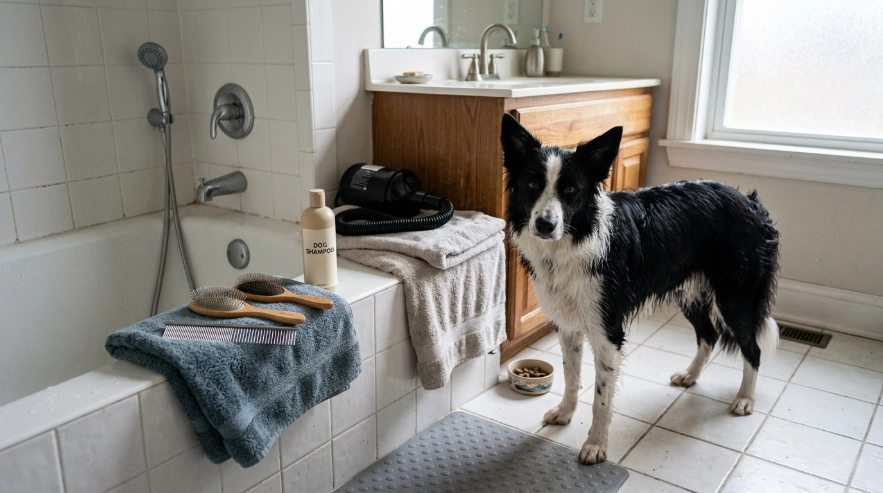
A water-only bath works best when your Border Collie is dirty rather than oily, smelly, or medically affected. Think fresh mud instead of greasy buildup.
I use the simplest cleaning method that solves the problem. There is little reason to shampoo an entire dog because two legs collected wet soil.
Good situations for a shampoo-free rinse
- Fresh mud: Wet or recently dried mud often loosens well with water.
- Dusty coat: Outdoor dust can often be brushed and rinsed away.
- Dirty paws: Paw and lower-leg rinsing may be enough after a walk.
- Sand: Clean water can flush beach or trail sand from the coat.
- Light debris: Small amounts of loose soil can rinse away after brushing.
- Post-swim rinse: Fresh water can remove some surface residue after safe recreational swimming.
Try spot-cleaning before a full bath
Not every muddy Border Collie needs to stand in a tub. Targeting the dirty area keeps the routine faster and simpler.
- Let thick mud dry slightly when appropriate.
- Brush away loose dirt.
- Rinse the remaining dirty section with lukewarm water.
- Blot with an absorbent towel.
- Dry and comb the cleaned area.
This approach is especially useful for active dogs that collect dirt on their paws and belly every few days.
When water alone struggles
Water is less effective when dirt is mixed with body oils or sticky substances. Persistent odor can also signal that simple rinsing will not solve the issue.
- Greasy or waxy coat
- Strong persistent odor
- Sticky food or unknown substances
- Fecal contamination
- Heavy urine contamination
- Skin infection or veterinary skin treatment
- Oil, chemicals, paint, fuel, or potentially toxic substances
Vet note: If your Border Collie has contacted a chemical or unknown substance, contact your veterinarian or an appropriate poison resource before experimenting with home cleaning products.
How Do You Bathe a Border Collie Without Shampoo?
Brush first, wet the coat with lukewarm water, massage dirty areas gently, rinse until clean, then blot and dry thoroughly. The process should remove dirt without creating new tangles.
Step 1: Brush before adding water
Start with a dry coat whenever possible. Remove loose undercoat, burrs, leaves, and manageable knots.
Pay extra attention to high-friction areas:
- Behind the ears
- Under the collar
- Armpits
- Chest feathering
- Rear legs
- Belly
- Tail
Existing tangles can become harder to manage after soaking. This is why I never rush the pre-bath coat check.
Step 2: Use lukewarm water
Test the water with your hand first. It should feel comfortably warm rather than hot.
Start around the shoulders and work backward. Keep direct spray away from the eyes and ear canals.
Step 3: Wet through the undercoat
Use your fingers to part the coat as water flows over it. A wet-looking surface does not guarantee that the undercoat is soaked.
Spend extra time on dense areas such as the neck, chest, rump, and rear feathering.
Step 4: Massage dirty sections
Use your fingertips rather than your nails. Work water through the coat in the direction of hair growth.
Avoid aggressive circular scrubbing. That motion can twist long feathering and encourage tangles.
Step 5: Keep flushing the dirt away
Rinse one section at a time until the runoff looks clean. Lift and separate the coat so trapped soil can escape.
If mud remains stuck after patient rinsing, you may have reached the limit of water-only cleaning.
Step 6: Let your dog shake
Give your Border Collie room for one good shake if the area is safe. It removes a surprising amount of loose water.
Then move directly to towel drying. Don’t let a soaking coat become tangled during zoomies across the house.
Water-Only Bath vs Dog Shampoo
Water-only bathing is gentler and simpler, but dog shampoo cleans oils and stubborn grime better. Neither method is automatically right for every bath.
| Bathing factor | Water only | Dog shampoo |
|---|---|---|
| Fresh mud | Often enough | Usually optional |
| Dust and loose dirt | Good choice | Often unnecessary |
| Greasy coat | Limited cleaning | More effective |
| Persistent odor | May not remove cause | Useful when appropriate |
| Sensitive skin | Avoids extra ingredients | Choose a vet-appropriate formula |
| Medicated treatment | Not a treatment | Use prescribed product as directed |
The most practical rule is simple. Use shampoo when you need the cleaning action shampoo provides.
For everyday dirt, brushing and water may be all you need. During heavier seasonal coat changes, this Border Collie shedding-season bath guide explains how loose undercoat affects bath day.
What Can You Use Instead of Shampoo?
For light dirt, the safest substitute is usually no substitute at all. Clean lukewarm water is preferable to experimenting with household cleaners.
Plain water
Water is my first choice for fresh mud and routine paw cleanup. It has no fragrance, detergent, or extra ingredient that needs rinsing away.
Damp cloth
A soft damp cloth works well around the face, lower legs, belly, and small dirty patches. It also gives you better control near the eyes.
Veterinarian-approved grooming products
A dog-safe wipe or rinse may be useful when water alone is inconvenient. Follow the label and stop if your dog’s skin reacts.
Dogs with recurring sensitivity need more careful product choices. See this guide to bathing a Border Collie with sensitive skin before adding unfamiliar products.
What about oatmeal?
Oatmeal-based dog shampoos are different from making a kitchen mixture and rubbing it into the coat. Commercial pet products are formulated for a defined use.
If dryness is the reason you’re avoiding ordinary shampoo, read the guide to oatmeal shampoo for Border Collies before choosing a product.
Vet note: Persistent itching, redness, sores, hair loss, unusual odor, or recurring skin problems deserve veterinary evaluation instead of repeated home-remedy experiments.
Can You Use Human Shampoo or Soap on a Border Collie?
Human shampoo, dish soap, hand soap, and household detergents should not become routine substitutes for dog shampoo. If you have no dog product, use water for light cleaning instead.
The ASPCA provides broad dog-care information, while the American Veterinary Medical Association is a useful resource for general veterinary guidance.
Why I avoid improvising with household cleaners
- They aren’t designed for routine canine grooming: Cleaning strength and ingredients vary widely.
- Fragrance can be unnecessary: A strong scent does not make a dog cleaner.
- Residue can hide in dense fur: Border Collie undercoat makes complete rinsing important.
- Skin reactions are harder to trace: Multiple improvised ingredients complicate the picture.
One unusual emergency may require special decontamination advice. That is different from choosing a routine bath product.
When the substance on your dog may be hazardous, call your veterinarian instead of guessing which household cleaner will remove it.
How Should You Dry a Border Collie After a Water-Only Bath?
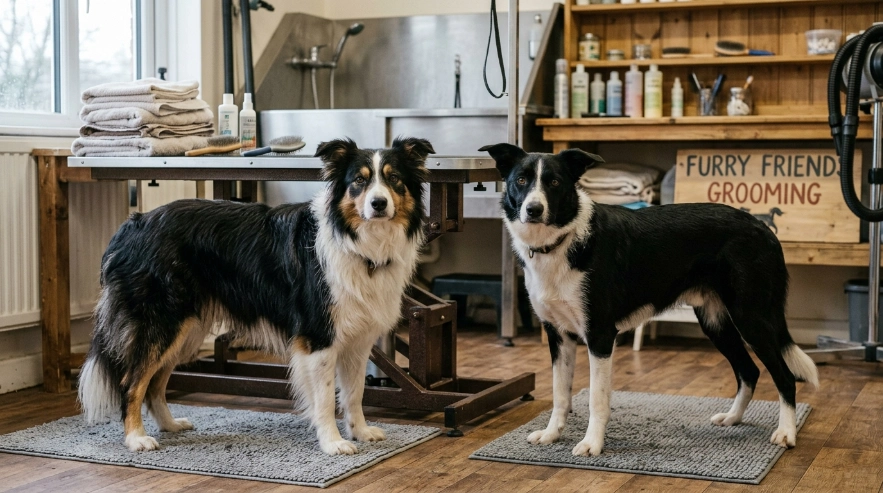
Blot away surface water, then dry the coat until the dense undercoat is no longer damp. Drying is just as important without shampoo as it is after a normal bath.
Blot instead of rubbing
Press towels into the coat and gently squeeze longer feathering. Replace soaked towels as needed.
Avoid scrubbing the coat back and forth. Friction can twist damp hair together.
Use comfortable airflow
If your dog accepts a pet dryer, keep the airflow comfortable and moving. Never hold concentrated hot air against one patch of skin.
- Start with a low, comfortable setting.
- Move through the coat in sections.
- Separate dense hair with your fingers.
- Check the skin temperature frequently.
- Stop if your Border Collie becomes distressed.
Finish with a coat check
Once the coat is mostly dry, use an appropriate brush gently. Finish with a comb when the coat is fully dry.
A guide to the best brush after a Border Collie bath can help you choose the finishing tool.
Pay special attention behind the ears, under the legs, chest, rear feathering, and tail. These areas can hide damp tangles.
If matting is a recurring problem, follow this post-bath mat prevention routine.
Section Takeaway: Don’t judge dryness by the surface of the coat. Check through the undercoat with your fingers, then brush and comb once the hair is ready.
When Does Your Border Collie Need Shampoo?
Use a suitable dog shampoo when water cannot remove the material causing the dirt, grease, or odor. Shampoo can also be part of veterinary treatment when specifically prescribed.
Signs water alone probably isn’t enough
- Coat still feels greasy after rinsing
- Strong odor remains when the coat is dry
- Sticky material clings to the hair
- Heavy organic contamination remains
- A veterinarian prescribed medicated shampoo
- The coat needs a proper cleansing bath rather than a quick rinse
Don’t keep repeating water baths hoping a persistent smell will disappear. Odor may come from the skin, ears, mouth, anal area, or another source.
Skin problems change the decision
Itching doesn’t automatically mean your Border Collie needs stronger shampoo. Parasites, allergies, irritation, and infections can create similar outward signs.
The veterinary information available through PetMD and the Merck Veterinary Manual can help owners understand why ongoing skin symptoms deserve proper assessment.
Vet note: Contact your veterinarian for intense itching, open sores, swelling, repeated skin odor, patchy hair loss, painful skin, or a worsening reaction after bathing.
Don’t over-clean an active dog
Border Collies can get dirty often because they run, work, hike, swim, and explore. Dirt does not mean every outing requires a full shampoo bath.
In my own routine, muddy legs get treated as muddy legs. I don’t automatically wash the entire coat when a targeted rinse solves the problem.
As of 2026, that practical distinction remains useful: match the cleaning method to the mess rather than bathing by habit.
Frequently Asked Questions
Can I wash my Border Collie with only water?
Yes. Clean lukewarm water can remove fresh mud, dust, sand, and light debris. Brush the coat first, rinse through the undercoat, and dry it completely afterward.
What can I use if I don’t have dog shampoo?
For ordinary light dirt, use plain lukewarm water rather than substituting human shampoo or household soap. A damp cloth also works for small dirty areas such as paws, the belly, or the face.
Will water alone remove dog smell?
Sometimes, but not always. Water may remove odor caused by surface dirt, while greasy buildup or an underlying skin problem can leave a smell behind after the coat dries.
Can I use dish soap on my Border Collie?
I would not use dish soap as a routine shampoo replacement. For light dirt, plain water is the simpler option. If your dog has contacted a hazardous oily substance, ask a veterinarian how to decontaminate the coat safely.
Can I use baby shampoo on my Border Collie?
Baby shampoo is still a human product. For normal grooming, choose a shampoo formulated for dogs when shampoo is needed, or use plain water when the coat only needs a light rinse.
Does a water-only bath dry out a Border Collie’s skin?
An occasional lukewarm rinse generally avoids the detergent action of shampoo. However, frequent soaking, hot water, prolonged dampness, or existing skin disease can still cause problems for some dogs.
Should I brush my Border Collie after a shampoo-free bath?
Yes. Once the coat is mostly or fully dry, gentle brushing helps separate the hair and remove loosened undercoat. A comb check can reveal hidden tangles behind the ears, legs, chest, and tail.
Final Takeaway
You can bathe a Border Collie without shampoo when you’re dealing with fresh mud, dust, sand, or another light mess. Plain lukewarm water is often all you need.
The important part is not skipping the rest of the grooming process. Brush first, rinse through the dense double coat, blot gently, and dry the undercoat completely.
- Use water alone for light surface dirt.
- Spot-clean when only one area is messy.
- Don’t replace dog shampoo with random household soaps.
- Use dog-specific shampoo when grease or stubborn grime requires it.
- Dry dense undercoat thoroughly after soaking.
- Contact your veterinarian for persistent skin or odor problems.
A muddy Border Collie doesn’t always need a bottle of shampoo. Sometimes the simplest bath is the right one.