

Quick Answer
To freshen a Border Collie coat between baths, start with a thorough brushing, then spot-clean dirty areas with a damp cloth or dog grooming wipe. For stronger odor, use a dog-specific waterless shampoo sparingly rather than repeatedly wetting the whole double coat. The AKC’s waterless dog-cleaning guidance also recommends choosing products made specifically for dogs.
My quick between-bath routine
- Brush first: Remove loose undercoat, dust, dried mud, grass, and dead hair.
- Spot clean: Wipe the paws, belly, chest, rear feathering, and other dirty areas.
- Use dog products: Choose canine grooming wipes or a pH-appropriate waterless shampoo.
- Dry completely: Never leave moisture trapped beneath the outer coat.
- Clean bedding: Wash collars, blankets, crate pads, and beds that can put odor back on the coat.
- Investigate odor: Persistent sour, yeasty, fishy, or ear-related smells deserve closer attention.
One rule I follow
- Freshening should remove dirt and odor sources, not cover them with heavy perfume.
A Border Collie can collect an impressive amount of dust, grass, saliva, and trail dirt without looking filthy. That is especially true with a rough-coated Border Collie or working sheepdog with dense feathering.
I’ve found that a five-minute grooming session often makes more difference than another bath. This guide covers the methods I use to freshen the coat while protecting the breed’s weather-resistant double coat.
In This Guide
- What Does Freshening a Border Collie’s Coat Mean?
- How Do I Freshen a Border Collie Between Baths?
- Can Brushing Remove Border Collie Odor?
- How Do I Spot-Clean a Border Collie Without a Bath?
- Waterless Shampoo vs Wipes vs Coat Spray
- How Should I Clean the Coat After Walks?
- What Should I Avoid Using on the Coat?
- When Is Border Collie Odor a Health Warning?
- How Often Should I Freshen the Coat?
- Frequently Asked Questions
- Final Takeaway
What Does Freshening a Border Collie’s Coat Mean?
Freshening a Border Collie’s coat means removing loose hair, surface dirt, moisture, and mild odor without giving a complete shampoo bath. It is routine coat maintenance, not a substitute for treating skin disease.
Definition: A Border Collie’s double coat has a softer insulating undercoat beneath more weather-resistant guard hairs. Both rough and smooth Border Collies have double coats, although rough coats carry more length and feathering.
The American Kennel Club’s Border Collie guidance describes both coat varieties as dense, weather-resistant coats requiring regular brushing. That coat structure is why surface cleaning works so well when the dog isn’t truly dirty.
Why Border Collies get stale between baths
A farm collie that spends time outdoors can carry tiny particles deep into the coat. Dust also mixes with natural skin oils and loose undercoat.
- Dust and soil: Fine dirt settles around the neck, shoulders, belly, and tail.
- Dried saliva: Licking can leave a stale smell around legs and flanks.
- Wet vegetation: Damp grass transfers moisture and organic debris onto feathering.
- Loose undercoat: Shed hair can hold dust and odor close to the skin.
- Dirty gear: Collars and harnesses can return odor to a clean coat.
A healthy Border Collie shouldn’t need perfume to smell acceptable. A mild natural dog smell is normal.
How Do I Freshen a Border Collie Between Baths?
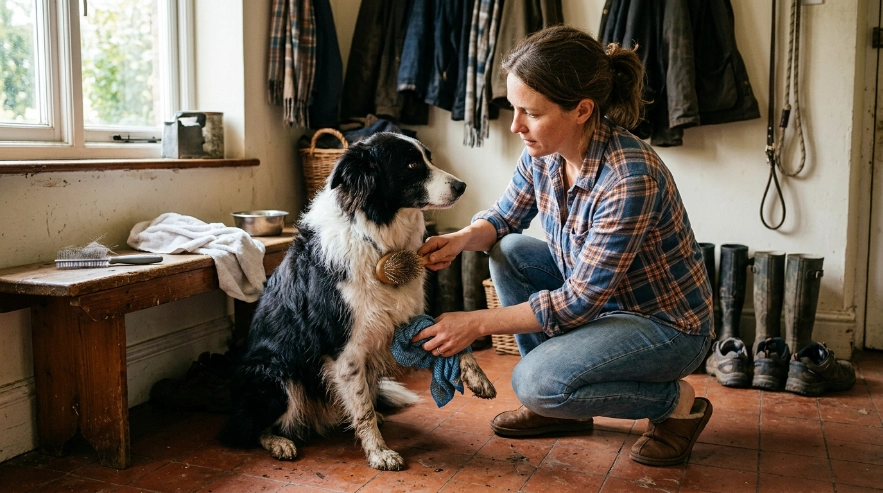
I use a simple routine: inspect, brush, spot-clean, dry, and check the dog’s bedding. It usually takes between five and fifteen minutes.
Step 1: Check the coat before adding moisture
Run your hands against the hair and part it in several places. Look for burrs, mud, damp patches, oily skin, redness, and tangles.
I pay extra attention behind the ears, under the front legs, around the tail, and through the rear feathering. Those areas hide debris easily.
Step 2: Brush from the surface toward the undercoat
- Start with the neck and shoulders.
- Work along the body in small sections.
- Brush the chest, belly edges, and leg feathering gently.
- Finish around the hindquarters and tail.
- Use a comb to check areas that tangle easily.
During heavy seasonal shedding, I spend longer on loose undercoat. Removing dead hair often removes much of the dusty smell with it.
Step 3: Clean only the areas that need it
Use a barely damp microfiber cloth for light dirt. For messier areas, use an unscented or lightly scented dog grooming wipe.
Work with the coat rather than soaking it. A rough Border Collie’s undercoat can stay damp long after the surface appears dry.
Step 4: Dry and brush once more
Press a clean towel against any damp areas. Once dry, give the coat a quick final brush to lift the guard hairs.
This last pass makes a surprising difference. The coat feels lighter and smells cleaner without being stripped of its natural oils.
Section Takeaway: Freshening works best when you remove the source of odor in layers—loose hair first, dirt second, moisture last.
Can Brushing Remove Border Collie Odor?
Yes, brushing can reduce mild Border Collie odor when dust, dead hair, dried mud, or outdoor debris is the cause. It cannot fix odor caused by infected skin, ears, or another medical problem.
The Border Collie coat is built for outdoor work. Regular brushing keeps air moving through the coat and removes material trapped between the guard hairs.
Which tools work best?
- Pin brush: Good for routine work on rough coats and longer feathering.
- Slicker brush: Useful for loose hair and small tangles when used gently.
- Metal comb: Helps check behind ears, feathering, and other knot-prone areas.
- Undercoat tool: Helpful during shedding, but avoid aggressive repeated scraping.
I don’t try to pull out every strand of undercoat in one sitting. Several gentle passes are easier on the skin.
As of 2026, mainstream grooming guidance still emphasizes regular brushing for double-coated breeds rather than shaving or constantly bathing them. Border Collies benefit from that approach because both coat varieties rely on an undercoat.
How often should you brush?
For most of the year, I aim for at least one or two thorough sessions each week. During a heavy coat blow, daily light brushing can be more practical.
That schedule is flexible. A working dog running through fields may need quick checks after every outing.
How Do I Spot-Clean a Border Collie Without a Bath?
Spot-clean the dirty area with a damp cloth or dog-safe wipe, then dry it completely. This works well for paws, lower legs, belly hair, chest feathering, and the rear end.
For muddy paws
- Let thick mud dry slightly if it is not irritating the skin.
- Brush or crumble off loose dirt.
- Wipe the paw and lower leg with lukewarm water.
- Clean gently between the pads.
- Dry the foot thoroughly.
I prefer this over putting the whole dog into the tub after every wet walk. It is faster and keeps unnecessary moisture out of the undercoat.
For a dirty belly or feathering
Use a soft damp cloth and work in small sections. Press rather than scrub when dried dirt has stuck to longer hair.
If plain water is not enough, a dog-specific grooming wipe is a practical next step. The ASPCA’s dog grooming guidance also recommends products made for pets rather than human shampoos.
For the face
Use a separate clean damp cloth. Keep cleansers away from the eyes, nose, ear canals, and mouth.
I rarely put sprays directly around a Border Collie’s face. Applying a small amount to a cloth gives much more control.
Waterless Shampoo vs Wipes vs Coat Spray
All three can freshen a Border Collie, but they solve different problems. I choose the least intensive option that will do the job.
| Method | Best for | Rough coat | Smooth coat | Main caution |
|---|---|---|---|---|
| Damp cloth | Dust, paws, light dirt | Excellent for targeted areas | Excellent | Dry the area fully |
| Dog grooming wipes | Quick cleanup after walks | Good for surface and feathering | Very convenient | Avoid heavy fragrance |
| Waterless dog shampoo | Broader odor or oily coat | Brush through carefully | Easy to distribute | Product can build up if overused |
| Dog coat freshening spray | Very mild stale smell | Use a light mist only | Easy to use lightly | Should not mask persistent odor |
How often can I use waterless shampoo?
Waterless shampoo is best treated as an occasional grooming aid. The AKC advises against overusing it because residue can build up on the coat.
I would not turn it into a daily routine. If my dog needs deodorizing constantly, I look for the cause instead.
What should I look for on the label?
- Made for dogs: Avoid products designed for human hair or skin.
- Mild fragrance: Unscented is often the simplest choice.
- No-rinse directions: Follow the manufacturer’s instructions exactly.
- Simple application: Foam and wipe-on products are easier to control than heavy sprays.
The PetMD bathing guide also lists waterless shampoos and grooming wipes as options for between-bath cleaning.
How Should I Clean the Coat After Walks?
After a normal walk, check the Border Collie’s paws, belly, chest, legs, and tail before doing anything else. Most outings do not require a full-body cleanup.
My five-minute post-walk check
- Paws: Check pads for grit, mud, seeds, and small debris.
- Lower legs: Brush away dried soil before using water.
- Belly: Wipe splash marks from wet paths or grass.
- Feathering: Look for burrs, twigs, and sticky plant material.
- Collar area: Feel for trapped moisture beneath collars or harness straps.
One of my Border Collies could come home looking clean while the hair behind his front legs held damp grass clippings. That tiny area created more odor than the rest of his coat.
It taught me to use my hands as much as my eyes. A quick feel through the undercoat often finds what a glance misses.
Clean the dog’s gear too
A freshly brushed dog can smell stale again within minutes if the collar is dirty. Fabric harnesses are another common odor trap.
- Wash washable collars as needed.
- Dry harnesses fully before reuse.
- Clean crate mats and blankets regularly.
- Do not put damp bedding under a clean dog.
What Should I Avoid Using on the Coat?
Avoid human perfume, strongly fragranced body sprays, human dry shampoo, and concentrated essential oils. A product smelling pleasant to us does not make it appropriate for canine skin.
Don’t use human shampoo as a shortcut
Dog skin differs from human skin, so routine grooming products should be made specifically for dogs. Between-bath products deserve the same care as regular shampoo.
Be careful with essential oils
Concentrated oils are not harmless just because they are plant-derived. Some can irritate dogs or cause poisoning through skin exposure or licking.
The VCA Animal Hospitals guidance on essential oils lists several oils that can be toxic to dogs. I don’t improvise homemade scented coat sprays with concentrated oils.
Don’t repeatedly soak the double coat
A half-wet cleanup can create its own musty smell if moisture stays near the skin. Use the smallest amount of water needed for the dirty area.
Never shave a healthy double coat merely to make cleaning easier. The topcoat and undercoat have protective functions that normal grooming should preserve.
When Is Border Collie Odor a Health Warning?
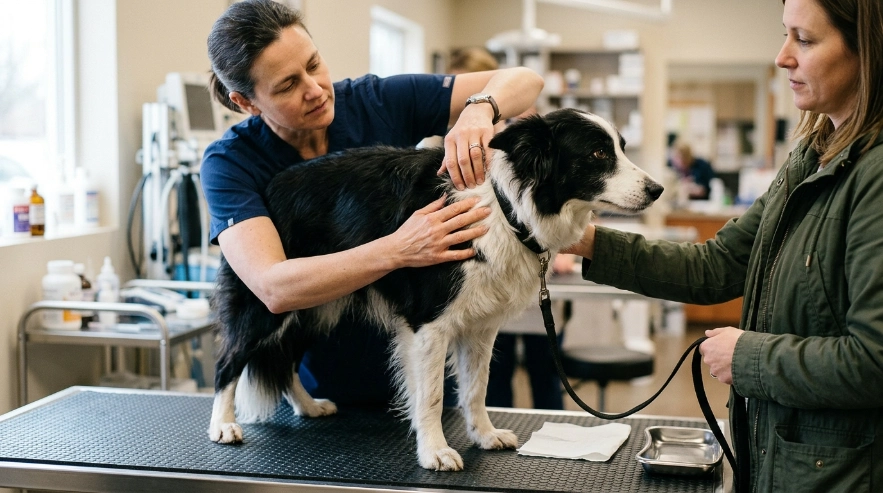
Persistent or localized odor can signal more than a dirty coat. Pay attention when the smell returns soon after cleaning or comes with skin changes.
| What you notice | What to check | Next step |
|---|---|---|
| Sour or yeasty smell | Redness, greasy skin, itching | Arrange a veterinary check if persistent |
| Strong odor from one ear | Discharge, redness, head shaking | Have the ear examined |
| Fishy rear-end odor | Scooting, licking, swelling | Ask your veterinarian to evaluate it |
| Odor with hair loss | Sores, flakes, inflamed skin | Seek veterinary advice |
Border Collies can also develop allergies and skin problems like other breeds. Deodorizing products may hide the smell temporarily without addressing the cause.
Vet note: If odor comes with itching, pain, discharge, sores, swelling, hair loss, or persistent skin redness, contact your veterinarian rather than repeatedly applying grooming products.
I use a simple test when I am unsure. I smell the skin itself after the dog is dry, rather than judging only the outer hair.
How Often Should I Freshen the Coat?
There is no fixed calendar for between-bath freshening. Base it on your Border Collie’s coat, activity, weather, and how dirty the dog becomes.
A practical grooming rhythm
- After outdoor adventures: Check paws, belly, feathering, and burr-prone areas.
- Once or twice weekly: Give the coat a thorough brush during normal shedding.
- During coat blow: Use shorter, more frequent brushing sessions.
- When lightly dirty: Spot-clean only the affected areas.
- When mildly stale: Consider a dog-safe wipe or occasional waterless shampoo.
- When truly dirty: Give a proper bath with dog shampoo and thorough drying.
Bath frequency varies between individual dogs. Lifestyle matters more than forcing every Border Collie onto the same schedule.
An Australian Shepherd, Kelpie, or other active herding breed may develop a similar outdoor grooming routine. However, product use should still match the individual dog’s skin and coat.
For my own dogs, the goal is not to make the coat smell like perfume. I want it dry, loose, clean to the touch, and free from trapped debris.
Frequently Asked Questions
Can I freshen a Border Collie without getting the coat wet?
Yes. Start with a thorough brushing to remove loose undercoat, dust, dried soil, and debris. If the coat still smells stale, a dog-specific dry or waterless shampoo can provide occasional no-rinse cleaning.
Can I use baby wipes on my Border Collie?
I prefer wipes made specifically for dogs. Human wipes may contain fragrance or other ingredients that were not designed for canine skin or for a dog that may lick residue from its coat.
Can I spray perfume on my Border Collie?
Avoid human perfume and strongly scented body sprays. They can irritate sensitive skin and only cover odor instead of removing its source. If you use a coat freshener, choose a product specifically labeled for dogs.
Why does my Border Collie smell again one day after cleaning?
Check the collar, harness, bed, crate liner, ears, paws, and skin. When odor returns quickly, the source may be dirty gear, trapped moisture, or a localized health problem rather than the whole coat.
Is dry shampoo safe for a Border Collie’s double coat?
A dog-specific waterless shampoo can be useful between baths when used according to its label. Brush it through carefully and avoid frequent heavy application, because residue can collect in a dense undercoat.
Should I brush a Border Collie before using grooming wipes?
Yes, whenever practical. Brushing removes loose dirt and hair first, so the wipe can clean the coat rather than smearing debris through it. It also helps you find mats, burrs, and irritated skin.
How do I keep my Border Collie smelling fresh in wet weather?
Focus on drying rather than fragrance. Towel the paws, belly, chest, and feathering after wet outings, remove damp collars or harnesses, and check that the undercoat is dry before the dog settles on bedding.
Final Takeaway
The best way to freshen a Border Collie coat between baths is usually the simplest: brush thoroughly, clean only what is dirty, and keep the double coat dry. Waterless shampoo and dog wipes are useful tools, but they should support good grooming rather than replace it.
If an odor keeps returning, stop trying to cover it. Check the skin, ears, paws, bedding, and gear, and involve your veterinarian when the smell comes with irritation or other symptoms.
Keep those short grooming sessions calm and rewarding. For an active Border Collie, five minutes of regular coat care can prevent a much bigger cleanup later.
