

Quick Answer
You should bathe a Border Collie after camping when the coat is muddy, smelly, sticky, contaminated, or holding debris that brushing cannot remove. A lightly dusty Border may only need brushing and paw cleaning because the breed’s weather-resistant double coat does not need shampoo after every outdoor trip.
Quick post-camping routine
- Check for ticks: Inspect the skin, ears, neck, armpits, groin, paws, and tail before bathing.
- Remove burrs: Pick out seeds, twigs, and burrs while the coat is dry.
- Brush first: Work out loose dirt, undercoat, and small tangles before adding water.
- Choose the cleanup: Spot-clean a mild mess or use a full bath for mud, odor, or widespread dirt.
- Rinse thoroughly: Use lukewarm water and a mild dog shampoo when a full bath is needed.
- Dry completely: Pay special attention to the undercoat, paws, belly, feathering, and areas behind the ears.
One rule I follow
- Inspect before washing: A bath should never replace a careful post-camping coat and skin check.
Camping with a Border Collie can leave you with one happy dog and half the forest attached to their coat. Borders, sometimes called working sheepdogs, are built for active outdoor life, but mud, burrs, ticks, smoke, and wet undercoat can turn the trip home into a grooming job.
I’ve learned not to automatically reach for shampoo. I inspect the dog first, decide how dirty the coat truly is, and use the least aggressive cleanup that gets the job done.
In This Guide
- Does a Border Collie Need a Bath After Every Camping Trip?
- What Should You Check Before Bathing?
- How Do You Bathe a Border Collie After Camping?
- Full Bath or Spot-Clean: Which Does Your Border Collie Need?
- How Do You Handle Mud, Burrs, Sap, and Campfire Smell?
- How Should You Check Ticks, Paws, Ears, and Skin?
- How Does a Border Collie’s Double Coat Affect Drying?
- Frequently Asked Questions
- Final Takeaway
Does a Border Collie Need a Bath After Every Camping Trip?
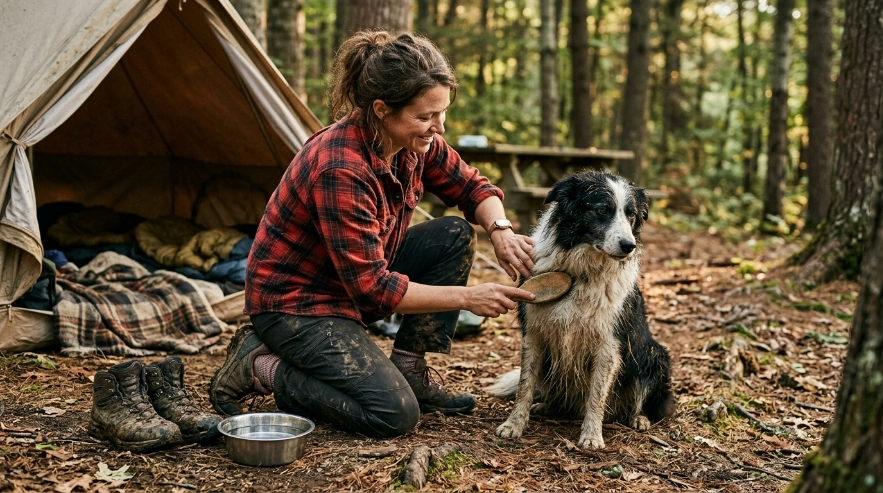
No. A Border Collie does not automatically need a shampoo bath every time you return from camping.
The decision should depend on what is in the coat. Dry dust and loose vegetation often come out with brushing, while sticky mud, strong odors, or questionable substances usually justify washing.
Definition: A post-camping bath is a cleanup performed after outdoor exposure to remove dirt, odor, allergens, debris, or substances that should not remain against the dog’s coat and skin.
When I would give a full bath
- Dried or wet mud covers much of the body.
- The belly and legs are coated with dirty water or swamp residue.
- The dog rolled in something foul-smelling.
- Smoke odor remains deep in the coat after brushing.
- The fur feels greasy, sticky, or contaminated.
- Spot-cleaning cannot remove the mess comfortably.
When brushing may be enough
A Border Collie that stayed mostly dry may come home with dust, pine needles, grass, and loose dirt. I usually let dry mud crumble first, then brush the coat carefully.
The ASPCA’s dog grooming guidance recommends brushing before bathing to remove dead hair and mats. That step is especially useful for a Border Collie’s dense coat.
Too much shampooing can also leave some dogs with dry or irritated skin. The goal is cleanliness, not automatically creating a bath schedule after every adventure.
Section Takeaway: Bathe for a reason, not simply because your Border Collie went camping. If brushing, paw washing, and a damp cloth solve the problem, a full shampoo bath may be unnecessary.
What Should You Check Before Bathing?
Inspect your Border Collie while the coat is still dry. Water can hide small debris and tighten existing tangles.
I start with my hands before reaching for a brush. Slowly feeling through the coat often finds burrs and skin problems that are hard to see.
Do a nose-to-tail camping check
- Ears: Look around the outer ear and surrounding fur for seeds, burrs, dirt, and ticks.
- Neck and collar area: Remove the collar so you can inspect the skin underneath.
- Armpits: Check where front legs meet the body because debris can hide in the coat.
- Belly and groin: Look for irritation, bites, plant material, and attached ticks.
- Tail and trousers: Separate the longer feathering and remove twigs or burrs.
- Paws: Inspect between toes and pads for stones, seeds, cuts, or packed mud.
Remove tangles before adding water
Both rough-coated and smooth-coated Border Collies carry a double coat. Rough Borders usually collect more visible plant debris in their feathering, but smooth coats still trap dirt near the skin.
Work through minor tangles gently with an appropriate brush and comb. Don’t yank through a tight burr or mat.
If a mat sits close to the skin, forcing it can hurt your dog. A professional groomer or veterinarian can help when the area is severe or the skin underneath looks damaged.
Section Takeaway: The most important part of a post-camping bath happens before the water starts. Find ticks, burrs, wounds, and tangles while you can still inspect the dry coat clearly.
How Do You Bathe a Border Collie After Camping?
Brush first, use lukewarm water, wash with dog shampoo, rinse completely, and dry the undercoat thoroughly. Keep the process calm and methodical.
My Border Collies have always done better when bath time feels predictable. I prepare towels, shampoo, a non-slip surface, and grooming tools before bringing the dog in.
Step-by-step post-camping bath
- Brush the dry coat. Remove loose dirt, shed undercoat, seeds, and manageable tangles.
- Protect the bath area. Use a non-slip mat so tired legs have secure footing.
- Wet with lukewarm water. Work through the outer coat until water reaches the dense undercoat.
- Apply dog shampoo. Use a mild product made specifically for dogs unless your veterinarian recommends something else.
- Work from neck toward the rear. Concentrate on dirty areas without aggressively scrubbing the coat into knots.
- Keep shampoo away from eyes and ears. A damp washcloth is often enough for the face.
- Rinse longer than you think. Separate the fur with your fingers and keep rinsing until no shampoo remains.
- Press out excess water. Use absorbent towels instead of twisting or aggressively rubbing long feathering.
- Dry to the skin. Check the undercoat, armpits, belly, tail, and areas behind the ears.
What temperature should the water be?
Use comfortably lukewarm water rather than hot water. A dog that has already spent hours exercising outdoors does not need another source of discomfort.
Cold outdoor bathing is also a poor choice when temperatures are low. Clean your dog somewhere sheltered where you can dry the coat properly.
Should you shampoo twice?
Usually, one careful wash is enough. A second wash may help after an unusually dirty trip, but repeated shampooing can irritate sensitive skin.
If an unknown chemical, fuel, toxic plant, or other hazardous material is involved, don’t improvise with ordinary grooming products. Contact your veterinarian for substance-specific advice.
Vet note: Persistent redness, pain, swelling, sores, unusual odor, or excessive licking deserves veterinary attention rather than repeated bathing.
Section Takeaway: A successful camping bath is gentle but thorough. The rinse and drying stages matter just as much as shampooing a muddy coat.
Full Bath or Spot-Clean: Which Does Your Border Collie Need?
Choose the smallest cleanup that removes the problem completely. Not every muddy paw needs a full-body bath.
This comparison is the simple decision guide I use after hikes and camping trips.
| Camping condition | Best cleanup | Why |
|---|---|---|
| Dry dust and loose grass | Brush | Usually removes dry surface debris without shampoo. |
| Muddy paws only | Paw wash | Cleans affected areas without soaking the entire coat. |
| Small muddy belly patch | Spot-clean | Targets dirt while reducing unnecessary shampoo use. |
| Heavy mud across legs and body | Full bath | Widespread dirt is difficult to remove evenly by wiping. |
| Strong campfire or swamp odor | Brush, then bath if needed | Loose odor particles may brush out before shampoo is necessary. |
| Unknown chemical or oily substance | Veterinary guidance | Decontamination depends on the specific substance involved. |
Partial cleaning is especially useful on multi-day trips. You can keep paws and feathering clean without repeatedly shampooing the entire dog.
How Do You Handle Mud, Burrs, Sap, and Campfire Smell?
Different camping messes need different responses. Treating everything as “dirt” can make coat problems harder to solve.
Dry mud
Let ordinary mud dry when practical, then break loose chunks gently with your fingers. Brush the remaining dirt out before deciding whether shampoo is necessary.
Burrs and grass seeds
Remove burrs before bathing because wet fur can tighten around them. Hold the hair near the skin to reduce pulling while you work the debris loose.
Don’t ignore a sharp seed that appears embedded in skin or between toes. Plant material can be painful and may require veterinary removal.
Tree sap and sticky material
Avoid cutting blindly near the skin. Separate the affected hair and stop your dog from licking the substance while you determine what caused the stickiness.
If you don’t know what the material is, call your vet before applying solvents, cleaners, essential oils, or household chemicals. Products safe for a tent or car may not be safe on canine skin.
Campfire smoke smell
Start with outdoor brushing once the coat is completely dry. A mild smoke odor may fade without shampoo.
For a strong lingering smell, a dog-safe shampoo and thorough rinse are more appropriate. Avoid masking the odor with perfume or concentrated essential oils.
How Should You Check Ticks, Paws, Ears, and Skin?
A bath does not replace a post-camping health inspection. Check your Border Collie carefully after time in woods, brush, long grass, or other tick habitat.
PetMD’s hiking safety guidance recommends checking the skin and fur for parasites after hiking, along with inspecting paws and removing seeds or burrs.
Where should you look for ticks?
- Around and inside the outer ear area
- Under the collar and around the neck
- Under the front legs
- Around the groin and inner thighs
- Between the toes
- Under the tail and through dense feathering
Part the coat until you can see or feel the skin. A rough-coated Border can hide a surprising amount beneath the outer feathering.
Check the paws before your dog settles down
Camping surfaces can include gravel, thorns, hot ground, sticks, and rough rock. Examine every pad and the spaces between the toes.
The AKC provides additional guidance on how to clean and inspect dog paws after outdoor exposure. Thorough drying between the toes matters after washing.
Watch the skin for delayed irritation
- Redness: Especially under the belly, armpits, and collar.
- Repeated licking: Often signals discomfort in one specific area.
- Scratching: Check for parasites, bites, debris, or irritated skin.
- Swelling: Look closely for wounds, stings, or embedded material.
- Moist sore areas: Dense damp coat can hide skin irritation.
Vet note: Contact your veterinarian if you find an attached tick you cannot safely remove, an embedded object, significant swelling, an infected-looking wound, or persistent skin irritation.
Section Takeaway: Inspect first and clean second. The most important post-camping discovery may be a tiny tick, thorn, cut, or irritated patch hidden beneath the coat.
How Does a Border Collie’s Double Coat Affect Drying?
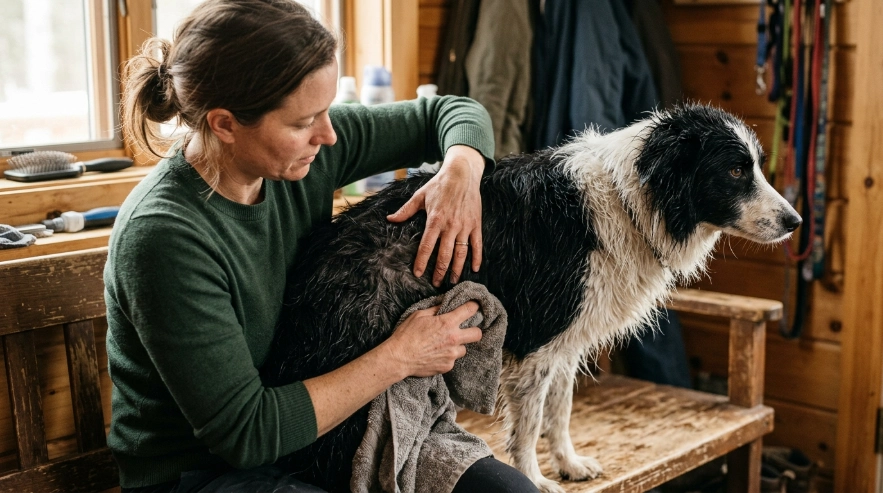
A Border Collie’s double coat can feel dry on top while remaining damp underneath. That is why post-bath drying deserves more attention than a quick towel rub.
The breed has an insulating undercoat beneath protective outer hair. Both rough and smooth Border Collies have this basic coat structure, although rough coats carry more length and feathering.
Rough coat vs. smooth coat after camping
- Rough coat: More likely to trap burrs, leaves, mud, and tangles in the chest, legs, tail, and trousers.
- Smooth coat: Usually releases larger debris faster but can still hold fine dirt and moisture close to the skin.
- Both coats: Need inspection, brushing, proper rinsing, and complete drying.
How I dry the coat
I first press towels into the coat instead of scrubbing back and forth. Aggressive rubbing can twist longer hairs into new tangles.
Then I separate dense areas with my fingers and check whether the undercoat still feels cool or damp. Behind the ears, under the legs, the belly, and tail feathering deserve extra attention.
Keep the dog somewhere comfortably warm until the coat is dry. Don’t send a still-damp Border straight into a cold yard or crate with wet bedding.
As of 2026, the practical rule remains simple: protect the double coat rather than trying to make it easier by shaving it. Regular brushing and sensible drying preserve the coat’s normal function.
How often can you bathe after outdoor adventures?
There is no single calendar interval that fits every Border Collie. Lifestyle, coat condition, swimming, mud exposure, skin sensitivity, and veterinary needs all change the answer.
An active working Border may need cleanup more often than a dog walking mainly on sidewalks. That does not mean shampooing after every exercise session.
Between full baths, use brushing, clean water for paws, and targeted wiping when they solve the problem. If frequent bathing seems necessary because your dog remains itchy, greasy, or unusually smelly, ask your veterinarian to check the skin.
Section Takeaway: The outer coat drying first can fool you. Always check the undercoat with your hands before deciding your Border Collie is completely dry.
Frequently Asked Questions
Should I bathe my Border Collie immediately after camping?
Not necessarily. First check for ticks, burrs, grass seeds, cuts, and tangles while the coat is dry. If your dog is only dusty, brushing may be enough; widespread mud, strong odor, or sticky contamination usually makes a bath more useful.
Can I just rinse my Border Collie with water after camping?
Yes, when the problem is mainly mud or dirty paws. A water rinse can remove simple dirt without shampoo, but you still need to dry the dense coat completely and inspect the skin and paws beforehand.
Should I brush a Border Collie before or after the camping bath?
Brush before bathing to remove loose dirt, shed hair, burrs, and tangles. Once the coat is completely dry, a light final brushing can separate the coat and catch loose hair missed during the first grooming session.
What if my Border Collie smells like campfire smoke?
Start by brushing the dry coat outdoors. If the odor remains strong, wash with a mild dog shampoo and rinse thoroughly rather than covering the smell with perfume, essential oils, or human grooming products.
Can I use human shampoo after a dirty camping trip?
A shampoo made specifically for dogs is the safer routine choice. Dog skin and coat needs differ from ours, and fragrances or other ingredients in human products can irritate some dogs.
Should I check for ticks before or after the bath?
Check before bathing, then inspect again while drying. The dry-coat examination lets you systematically feel the skin, while the second check can reveal spots you missed once the coat has been separated and cleaned.
What should I do if my Border Collie has irritated skin after camping?
Stop experimenting with shampoos or home remedies and inspect for ticks, bites, debris, or wounds. Persistent redness, swelling, pain, sores, discharge, or repeated scratching and licking should be discussed with your veterinarian.
Final Takeaway
You don’t need to bathe a Border Collie simply because camping made them dusty. Start with a careful inspection, remove outdoor debris, brush the dry coat, and choose between paw cleaning, spot-cleaning, or a full bath based on the mess.
When a bath is needed, keep it simple: lukewarm water, dog-safe shampoo, a complete rinse, and patient drying down to the undercoat. That’s the routine I trust after a long weekend outdoors.
The bigger priority is what you discover while grooming. Check the ticks, paws, skin, ears, belly, and feathering before your tired camping partner curls up for a well-earned sleep.
