

Quick Answer
Bathe your Border Collie every 8 to 12 weeks, or when they get exceptionally muddy. Over-bathing strips their natural coat oils and causes skin irritation. Always brush thoroughly before wetting their double coat to prevent severe matting. Learn more about coat care from the American Kennel Club.
Essential Bathing Steps
- Pre-bath brushing: Remove all loose undercoat first.
- Water temperature: Use lukewarm water, never hot.
- Dog-safe shampoo: Choose a gentle, oatmeal-based formula.
- Deep rinsing: Wash away all soap to avoid itching.
- Complete drying: Use a high-velocity dryer to reach the skin.
Pro Tip
- Block the drain with steel wool to catch massive amounts of shedding fur.
I have lived with and trained Border Collies for decades. I know exactly how much mud they can collect on a single hike.
Keeping their gorgeous double coat clean requires specific techniques. This guide covers the best Border Collie bathing tips to keep your dog healthy. We will explore everything from water temperature to deshedding tricks.
In This Guide
How Often Should You Bathe a Border Collie?
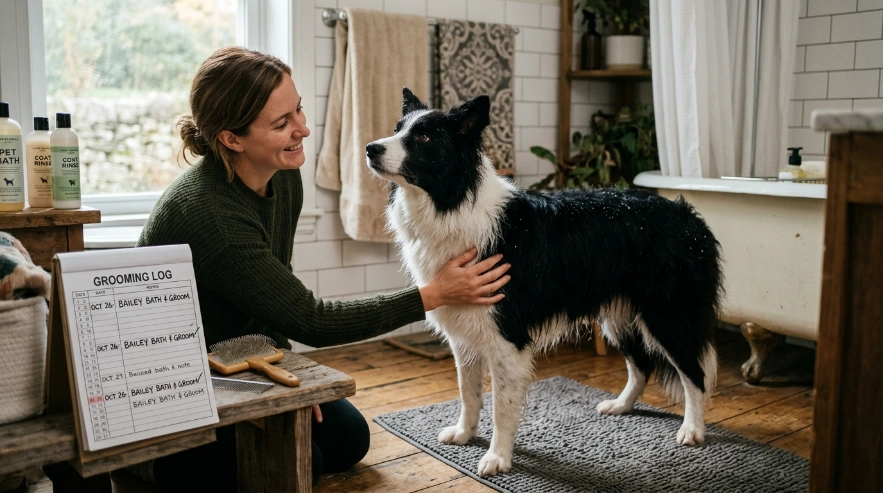
You should bathe your Border Collie every 8 to 12 weeks. Washing them too frequently strips their skin of natural oils.
These oils protect their skin and keep their coat weather-resistant. Without them, your dog might develop dry, itchy skin. Dry skin leads to scratching.
Sometimes, life happens and they roll in something terrible. You must wash them immediately if they smell bad. Otherwise, stick to the schedule.
Vet note: Frequent scratching after baths often points to over-washing. Always consult your vet if skin redness persists for more than two days.
Border Collies are active, working dogs. They naturally repel a lot of dirt as their coat dries.
You will often notice mud simply flaking off them. This self-cleaning feature is truly incredible. It saves owners a lot of time.
If your dog is only slightly dusty, try a waterless shampoo. You can also wipe them down with a damp cloth.
- Active farm dogs: May need baths every 6 weeks.
- Suburban pets: Usually fine with every 10 weeks.
- Indoor companions: Can stretch to every 12 weeks easily.
Always adjust the schedule based on your dog’s lifestyle. A cleaner environment means fewer baths.
Frequent brushing is actually more important than frequent bathing. Brushing removes the dirt trapped in the undercoat. It keeps the fur healthy.
Section Takeaway: Limit full baths to every 8 to 12 weeks to protect your Border Collie’s natural coat oils and prevent skin irritation.
Understanding the Border Collie Double Coat
A Border Collie’s double coat consists of two distinct layers. The dense undercoat provides vital insulation.
The longer topcoat acts as a protective shield against weather. It guards against rain, snow, and UV rays. This combination is highly functional.
You must understand this structure before you start bathing. Getting water down to the skin is surprisingly difficult.
| Coat Layer | Function | Bathing Challenge |
|---|---|---|
| Undercoat | Insulation (warmth and cooling) | Traps dead hair, hard to rinse clean. |
| Topcoat | Weather and dirt resistance | Naturally repels water, slowing down soaking. |
Rough coat and smooth coat Border Collies have slightly different needs. Rough coats tangle much faster.
Smooth coats are easier to soak and dry. However, both types shed heavily twice a year. This is called blowing the coat.
During shedding season, baths can help loosen dead fur. You just have to manage the hair explosion in your tub.
Fun Fact: The oils in the topcoat are what make your dog smell “doggy” when wet. This is completely natural.
Never shave a double-coated dog. Shaving ruins their natural temperature regulation.
Instead of shaving, rely on proper grooming and bathing techniques. A clean undercoat breathes better. It keeps your dog cool in summer.
If you encounter severe mats, use a detangling spray. Do not try to forcefully pull them out.
Section Takeaway: The double coat naturally repels water and dirt, requiring thorough soaking and rinsing during bath time to penetrate both layers.
Essential Bathing Tools You Need
Gathering the right tools beforehand prevents mid-bath chaos. You do not want to leave a wet dog unattended.
Investing in quality gear makes the process much smoother. It saves you time and frustration. A good brush is mandatory.
You should create a dedicated grooming kit. Store it somewhere easily accessible near your bathroom or outdoor wash station.
- Slicker brush: Crucial for removing loose undercoat before the bath.
- Undercoat rake: Helps break up small tangles near the skin.
- High-quality shampoo: Look for oatmeal or aloe vera formulas.
- Detangling conditioner: Essential for rough-coated Border Collies.
- Microfiber towels: They absorb water much faster than standard towels.
I highly recommend getting a handheld shower attachment. Pouring cups of water over a thick coat takes forever.
The shower attachment pushes water directly into the fur. This saves a massive amount of time. It makes rinsing much easier.
Avoid human shampoos at all costs. The pH balance of human skin is very different from a dog’s skin.
Warning: Using human shampoo on your Border Collie can cause severe acid mantle disruption, leading to bacterial infections.
A lick mat smeared with peanut butter works wonders. It keeps them distracted while you scrub.
Simply stick it to the shower wall. They will lick it happily while you work. It is a fantastic distraction tool.
Section Takeaway: Prepare all your tools, including a slicker brush, dog-specific shampoo, and microfiber towels, before you even turn on the water.
Step-by-Step Border Collie Bathing Guide
Bathing a Border Collie follows a very specific sequence. You must pre-groom them thoroughly.
Skipping the pre-bath brushing is a huge mistake. Water acts like glue on loose undercoat fur. It creates terrible mats.
Follow these exact steps for a stress-free experience. Organization is your best friend here.
- Brush completely: Spend ten minutes removing dead undercoat with a slicker brush.
- Protect the ears: Place large cotton balls gently inside their ears to block water.
- Set water temperature: Ensure the water is lukewarm, matching their body heat.
- Soak thoroughly: Wet the coat down to the skin using a handheld nozzle.
- Apply shampoo: Lather from the neck down, avoiding the eyes and nose.
Getting a double coat fully wet takes patience. You must part the hair with your fingers.
Push the shower nozzle close to their body. The water pressure helps penetrate the topcoat. Keep moving the nozzle slowly.
When applying shampoo, dilute it in a separate bottle first. This helps spread the soap evenly.
Dilution Trick: Mix 1 part shampoo with 3 parts water in an empty squeeze bottle. It lathers much faster on thick fur.
Massage the shampoo deep into their skin. Use your fingertips to stimulate blood flow.
Never scrub in tight circles. This causes long topcoat hair to tangle badly. Always scrub in the direction of hair growth.
Rinsing is the most critical phase. Leave absolutely no soap residue behind.
- Rinse until the water runs completely clear.
- Run your hands through the fur to check for slick spots.
- Pay special attention to the chest and armpits.
Soap left on the skin will dry and itch. Your dog will scratch relentlessly. This completely ruins the point of the bath.
Section Takeaway: Always brush out loose fur before the bath, dilute your shampoo for easier spreading, and rinse longer than you think is necessary.
How to Dry Your Border Collie Properly
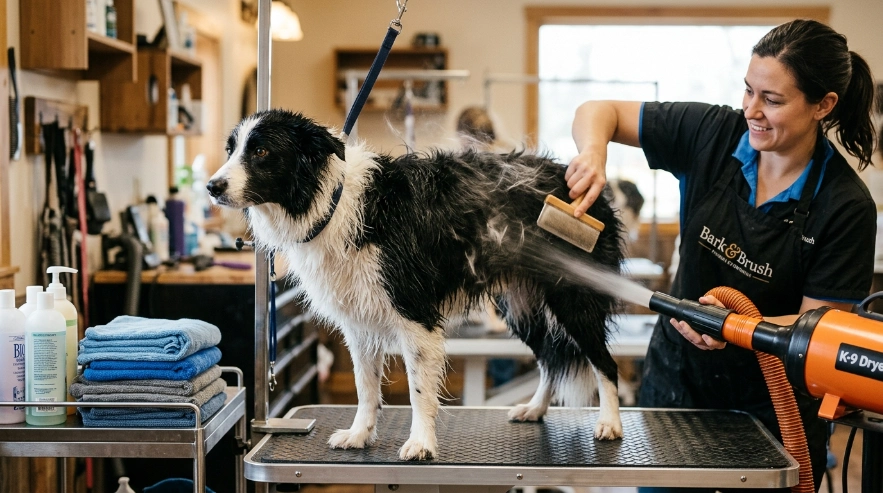
Drying is often the longest part of the grooming process. A wet undercoat can take hours to air dry naturally.
If the undercoat stays damp too long, it can develop mildew. This creates a terrible “wet dog” smell. It can also cause hot spots.
You must actively remove as much moisture as possible. Start by squeezing the water out with your hands.
Vet note: Damp undercoats are breeding grounds for yeast and bacteria. Thorough drying prevents painful skin infections known as acute moist dermatitis.
Grab your microfiber towels next. Do not rub the towel back and forth vigorously.
Rubbing creates massive tangles in rough-coated dogs. Instead, press the towel firmly against their body. Let the fabric absorb the moisture.
Once they are towel-dried, you have two choices. You can air dry or use a blow dryer.
| Drying Method | Pros | Cons |
|---|---|---|
| Air Drying | Quiet, low stress for anxious dogs. | Takes very long, risks damp spots. |
| High-Velocity Dryer | Fast, blows out dead undercoat easily. | Loud noise scares some dogs initially. |
I highly recommend a high-velocity pet dryer. It literally blasts the water off the coat.
It also blows out any remaining loose hair. If you use a human hair dryer, always use the cool setting. Heat damages their fur.
Keep the nozzle moving constantly. Never hold heat on one spot for more than a second.
Brush them gently as they dry. This straightens the hair and prevents mats from forming.
Section Takeaway: Use microfiber towels to press moisture out without tangling the fur, and finish with a cool-air blow dryer to prevent hot spots.
Handling Bath Time Anxiety
Many Border Collies despise taking baths. Their high intelligence makes them easily suspicious of new routines.
If they had a bad experience previously, they will remember it. You must rebuild their confidence slowly.
Never drag your dog into the bathroom. Forcing them only increases their panic and resistance.
- Create positive associations: Feed them treats in the dry tub first.
- Use a non-slip mat: Slipping terrifies them; secure their footing immediately.
- Keep calm energy: They mirror your emotions during stressful events.
Start with waterless sessions. Put them in the tub and just praise them heavily.
Turn the water on slightly, away from them. Let them hear the sound without getting wet. Reward calm behavior instantly.
Gradually introduce water to their paws. Work your way up their legs slowly.
Training Tip: Use a high-value treat like boiled chicken exclusively for bath time. They will start looking forward to the tub.
Keep the first few baths very short. Wash just the muddy parts and get them out.
You can wash the rest of the dog another day. Building trust is more important than a perfectly clean coat right now.
If anxiety remains severe, consider professional grooming. Groomers have specialized equipment that speeds up the process.
Section Takeaway: Build trust slowly by using high-value treats, securing their footing with non-slip mats, and keeping early bath sessions extremely short.
Common Bathing Mistakes to Avoid
Even experienced owners make simple grooming errors. These mistakes can harm your dog’s skin.
Washing the face incorrectly is a major issue. Never pour water directly over their head.
Water in the nose is terrifying for dogs. Soap in the eyes causes severe stinging.
- Using human shampoo: Disrupts their delicate skin pH balance.
- Skipping the pre-brush: Turns loose fur into solid, painful mats.
- Poor rinsing: Leaves soap residue that causes intense itching.
- Bathing too often: Strips natural oils and dries out the skin.
Instead of pouring water, use a damp washcloth for the face. Wipe around their eyes and muzzle gently.
If you must use soap on their face, use tearless puppy shampoo. Apply it with your fingers very carefully.
Another mistake is ignoring the paws. Mud hides deep between the paw pads.
Vet note: Neglected paw pads can harbor bacteria and yeast, leading to pododermatitis. Always inspect between the toes during bath time.
Use your fingers to massage soapy water between their toes. Rinse this area extremely well.
Finally, do not let them outside immediately after drying. A freshly bathed dog loves to roll in the dirt.
Keep them inside for at least an hour. Let their coat dry completely before they run around the yard.
Section Takeaway: Avoid pouring water over the head, strictly use dog-safe products, and clean thoroughly between the paw pads to prevent infections.
Frequently Asked Questions
Can I use baby shampoo on my Border Collie?
You can use baby shampoo in an emergency, but it is not ideal long-term. While gentler than adult human shampoo, it still has the wrong pH balance for dog skin. Always use a dedicated canine shampoo.
How do I stop my Border Collie from shaking water everywhere?
Keep a hand gently placed on the back of their neck during the bath. Dogs usually start a shake from their head. If you control the head movement, you can often delay the shake until you hold a towel up.
Do Border Collies need conditioner?
Yes, rough-coated Border Collies benefit greatly from dog-safe conditioner. It helps moisturize the skin after shampooing and significantly reduces tangling in the long topcoat. It makes brushing them out much easier.
Why does my dog smell worse after a bath?
A foul smell after bathing usually means the undercoat is still damp near the skin. Moisture trapped in thick fur breeds bacteria and yeast. Ensure you use a high-velocity dryer to dry them completely.
At what age can I give a Border Collie puppy their first bath?
You can give a puppy their first bath around 8 weeks old. Make sure the room is very warm and use lukewarm water. Puppies cannot regulate their body temperature well, so dry them quickly and thoroughly.
Final Thoughts on Bathing Your Border Collie
Bathing your Border Collie does not have to be a miserable chore. With the right preparation, it becomes manageable.
Remember that their double coat is a complex system. It needs proper care to function correctly.
Stick to a reasonable schedule of 8 to 12 weeks. Brush them often between baths to keep the dirt away.
- Always prepare your tools first.
- Brush before you turn on the water.
- Rinse until the water is completely clear.
If you take your time, your dog will learn to tolerate the tub. Some even learn to enjoy the warm water massage.
Focus on positive reinforcement. Make the bathroom a place where good things happen.
Your dog’s coat will look spectacular. They will feel comfortable in their own skin.
Enjoy the bonding time. A clean Border Collie is a happy, healthy companion.
