

Quick Answer
The best shampoo for a Border Collie with sensitive skin is a mild, dog-specific, fragrance-free formula that cleans without stripping the coat’s natural oils. I usually look for simple formulas with soothing or moisturizing ingredients and follow American Kennel Club dog-care guidance when evaluating basic grooming choices.
What I Look For
- Dog-specific formula: Choose shampoo designed for canine skin rather than human hair.
- Fragrance-free option: Less perfume means fewer unnecessary ingredients contacting sensitive skin.
- Gentle moisturizers: Colloidal oatmeal, aloe, glycerin, and similar ingredients may help support dry skin.
- Easy rinsing: Shampoo trapped inside a Border Collie’s dense undercoat can cause irritation.
- Simple ingredient list: I prefer avoiding unnecessary dyes, strong perfumes, and harsh cleansing formulas.
- Vet-directed medication: Persistent itching, sores, odor, or infection needs veterinary evaluation rather than stronger shampoo guesswork.
Before You Buy
- Match the shampoo to your Border Collie’s actual skin problem, not simply the word “sensitive” on the bottle.
Border Collies can have rough or smooth coats, but both varieties carry a protective double coat. When the skin underneath becomes dry, itchy, or reactive, choosing shampoo becomes more important than choosing the strongest cleaner.
I’ve found that gentle washing, patient rinsing, and complete drying matter as much as the bottle itself. This 2026 guide explains what to look for, what to avoid, and when shampoo alone isn’t enough.
In This Guide
- What Is a Sensitive-Skin Shampoo for a Border Collie?
- What Type of Shampoo Is Best for a Border Collie With Sensitive Skin?
- Which Shampoo Ingredients Should You Look For?
- What Should You Avoid in a Sensitive-Skin Shampoo?
- How Should You Bathe a Sensitive-Skin Border Collie?
- How Often Should You Shampoo a Border Collie With Sensitive Skin?
- When Does Sensitive Skin Need Veterinary Help?
- Frequently Asked Questions
- Choosing the Right Shampoo for Your Border Collie
What Is a Sensitive-Skin Shampoo for a Border Collie?
A sensitive-skin shampoo is a dog-specific cleanser designed to remove dirt without unnecessarily drying or irritating the skin. For a Border Collie, it also needs to rinse cleanly through a dense double coat.
Simple definition: A Border Collie’s sensitive-skin shampoo is a mild canine cleanser that prioritizes skin-barrier comfort, moisture, and easy rinsing over heavy fragrance or aggressive cleaning.
Border Collies have a soft insulating undercoat beneath their protective outer coat. Rough-coated dogs also have longer feathering around areas such as the chest, legs, and tail.
That coat can make shampoo residue harder to notice. A product can seem gentle yet still cause trouble when it isn’t rinsed completely.
What does sensitive skin look like?
Sensitive skin isn’t a diagnosis by itself. Owners usually use the term when their dog reacts easily to grooming products or develops mild dryness and itching.
- Dry flakes: Small flakes may appear through the coat or near the skin.
- Increased scratching: Your dog may scratch more after bathing.
- Redness: The belly, armpits, groin, paws, or other exposed areas may look irritated.
- Excessive licking: Repeated paw or skin licking may indicate discomfort.
- Dull coat: A harsh bathing routine can leave the coat feeling dry instead of flexible.
Those signs can also occur with allergies, fleas, infection, or other skin conditions. That’s why changing shampoo isn’t always the complete solution.
What Type of Shampoo Is Best for a Border Collie With Sensitive Skin?
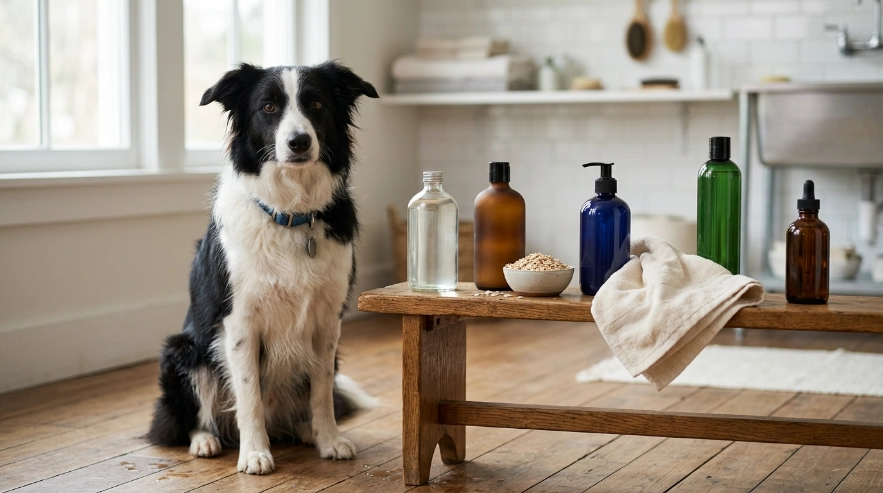
For an otherwise healthy Border Collie with mildly sensitive skin, I would start with a mild, fragrance-free, dog-specific shampoo. Hypoallergenic or oatmeal-based formulas are useful categories to consider.
The word “hypoallergenic” isn’t enough by itself. I still read the ingredient list and choose the simplest formula that matches the dog’s needs.
| Shampoo Type | Best For | Main Advantage | Important Caution |
|---|---|---|---|
| Fragrance-free sensitive-skin | Routine bathing | Fewer unnecessary scent ingredients | Still check the complete ingredient list |
| Colloidal oatmeal | Mildly dry or itchy skin | Often chosen for soothing skin care | Doesn’t diagnose the cause of itching |
| Moisturizing formula | Dry-feeling skin and coat | Supports moisture retention | Heavy formulas may require extra rinsing |
| Medicated shampoo | Specific diagnosed skin problems | Targets a particular condition | Use with veterinary guidance |
| Strong deodorizing shampoo | Persistent coat odor | Heavy cleansing and scent | Often not my first choice for reactive skin |
For routine care, gentler is usually the better starting point. The ASPCA also advises choosing products formulated specifically for pets and discussing individual shampoo needs with a veterinarian.
Which Shampoo Ingredients Should You Look For?
Ingredients don’t need to sound exotic to be useful. I prefer formulas built around gentle cleansing and moisture rather than long lists of fragrances and cosmetic extras.
Colloidal oatmeal
Colloidal oatmeal is finely processed oatmeal used in many skin-care formulas. It’s a common choice for dogs with mildly dry or itchy skin.
Oatmeal shampoo won’t fix every cause of itching. It works best as supportive grooming when the skin problem is mild or already understood.
Aloe vera and moisturizing ingredients
Aloe, glycerin, and similar moisturizing ingredients often appear in gentle dog shampoos. They may help the coat and skin feel less stripped after washing.
- Colloidal oatmeal: Common in soothing dog shampoos.
- Aloe vera: Often included in moisturizing formulas.
- Glycerin: Helps attract and retain moisture in cosmetic formulations.
- Vitamin E: Commonly added to skin- and coat-care products.
- Mild cleansing agents: Clean without requiring an aggressive degreasing formula.
I also pay attention to how easily the shampoo spreads after dilution. A Border Collie’s undercoat is dense, so controlled application helps prevent concentrated shampoo from sitting in one spot.
Current veterinary-reviewed guidance from PetMD likewise emphasizes dog-appropriate formulas and matching shampoo ingredients to the dog’s specific skin or coat need.
What Should You Avoid in a Sensitive-Skin Shampoo?
I avoid choosing a shampoo mainly because it smells strong, produces huge amounts of foam, or promises extreme cleaning. Those qualities aren’t necessary for a sensitive-skinned Border Collie.
Human shampoo is another poor routine choice. Products made for human hair and skin aren’t formulated around the same needs as canine skin.
Be cautious with unnecessary extras
- Heavy perfume: Strong fragrance adds another potential source of irritation.
- Unnecessary dyes: Color doesn’t improve your dog’s cleanliness.
- Aggressive degreasers: Strong oil removal may be too drying for routine sensitive-skin care.
- Human shampoo: Use a canine-specific formula for regular bathing.
- Random essential oils: Don’t assume a plant-derived ingredient is automatically appropriate for dogs.
- Unneeded medication: Antibacterial or antifungal ingredients should match an actual skin problem.
One label term also shouldn’t make the decision for you. “Natural,” “gentle,” and “hypoallergenic” can sound reassuring, but the full formula matters more.
Vet note: If your Border Collie reacts after a bath, stop using the suspected product and contact your veterinarian when symptoms are persistent, painful, widespread, or worsening.
How Should You Bathe a Sensitive-Skin Border Collie?
The shampoo can be excellent and the bath can still irritate skin if the coat isn’t rinsed properly. My biggest priority is getting water and rinse flow all the way through the double coat.
- Brush before wetting. Remove loose undercoat, dirt, grass, and manageable tangles first.
- Use lukewarm water. Avoid water that feels hot against your own wrist.
- Wet the coat completely. Work slowly until water reaches the undercoat and skin.
- Apply shampoo evenly. Follow the product’s dilution and application directions.
- Massage gently. Use your fingertips instead of aggressive scratching.
- Rinse longer than you think. Continue until the water runs clear and the coat no longer feels slippery.
- Blot with towels. Press water from the coat instead of rough rubbing.
- Dry the undercoat fully. Pay attention to the chest, neck, rear, tail base, and other dense areas.
Residue is easy to miss around the chest and thick rear coat. I check those areas with my fingertips before ending the rinse.
I also keep shampoo away from the eyes and inner ears. The American Veterinary Medical Association is a useful general source when owners need veterinary guidance beyond routine grooming.
Vet note: Follow your veterinarian’s bathing instructions when using a prescription or medicated shampoo, including any required contact time.
How Often Should You Shampoo a Border Collie With Sensitive Skin?
There isn’t one bathing schedule that suits every sensitive-skinned Border Collie. Coat condition, activity, allergies, veterinary treatment, and how dirty the dog gets all affect timing.
For a healthy dog, I prefer bathing when the coat needs it rather than automatically shampooing every few days. Brushing and spot cleaning can handle many small messes between full baths.
Use the skin as your feedback
If the coat becomes dry and flaky after baths, review both the shampoo and bathing frequency. Poor rinsing can also create post-bath itching that looks like product sensitivity.
- Muddy paws: Rinse or spot-clean instead of washing the entire dog.
- Light surface dirt: Brush once the coat is dry.
- Strong overall dirt or odor: A full dog-shampoo bath may make sense.
- Veterinary skin treatment: Follow the schedule your vet gives you.
During periods of heavy seasonal shedding, brushing becomes especially important. Removing loose undercoat before bathing also makes rinsing and drying easier.
When Does Sensitive Skin Need Veterinary Help?
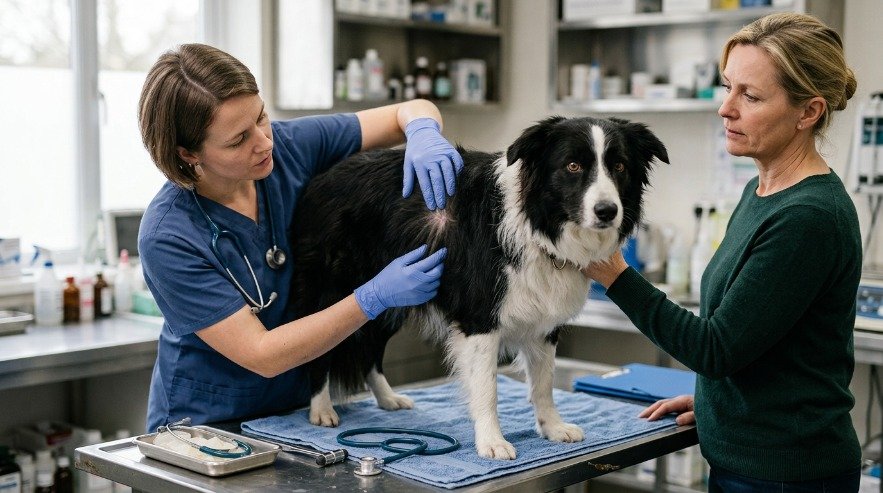
Shampoo is grooming care, not a diagnosis. Persistent itching may come from allergies, parasites, bacterial or yeast infections, or other skin problems.
A dog that keeps scratching despite a gentle shampoo needs more than repeated product changes. Increasing bath frequency can sometimes make already irritated skin harder to manage.
Signs I wouldn’t ignore
- Intense itching: Scratching interrupts sleep or normal activities.
- Open sores: Broken, bleeding, or moist areas need attention.
- Hair loss: Bald patches develop around irritated skin.
- Strong skin odor: An unusual persistent odor may accompany a skin problem.
- Crusts or bumps: New lesions deserve veterinary assessment.
- Ear problems: Head shaking, discharge, or repeated ear scratching occurs.
- Swelling or hives: Sudden reactions can require prompt care.
Medicated shampoos can be useful when they’re matched to the underlying condition. Antibacterial, antifungal, and other therapeutic products shouldn’t be chosen just because they’re stronger.
Vet note: Ask your veterinarian to identify the likely cause before starting medicated shampoo, especially when symptoms are severe or recurrent.
Frequently Asked Questions
Is oatmeal shampoo good for a Border Collie with sensitive skin?
Oatmeal shampoo can be a useful choice for mildly dry or itchy skin when the formula is made specifically for dogs. It shouldn’t replace veterinary care when itching is severe, recurrent, or accompanied by redness, sores, odor, or hair loss.
Should I use hypoallergenic shampoo on my Border Collie?
A fragrance-free hypoallergenic dog shampoo is a sensible starting option for many dogs that react easily to grooming products. Check the complete ingredient list because the word “hypoallergenic” alone doesn’t tell you everything about the formula.
Can I use human sensitive-skin shampoo on a Border Collie?
I wouldn’t use human shampoo for routine Border Collie bathing. Choose shampoo formulated specifically for dogs because canine skin and coat have different needs, especially when you’re already dealing with dryness or irritation.
Why is my Border Collie itchy after a bath?
Post-bath itching may come from shampoo residue, an irritating ingredient, water temperature, over-bathing, dry skin, or an unrelated skin condition. Rinse thoroughly and discontinue a product that repeatedly causes problems.
Is fragrance-free shampoo better for sensitive skin?
Fragrance-free shampoo removes an unnecessary variable and is often my preferred starting point for a sensitive dog. It still needs to be dog-specific, gentle, appropriate for your dog’s age, and thoroughly rinsed from the coat.
Does my Border Collie need medicated shampoo?
Not necessarily. Medicated shampoo is most useful when a veterinarian identifies or suspects a condition that the active ingredients can address. Using medication without knowing the cause of the problem may delay proper treatment.
Can I change shampoos if my Border Collie’s skin becomes dry?
Yes, changing to a simpler moisturizing or sensitive-skin dog shampoo may help when a current product appears drying. Also review bath frequency and rinsing technique, since the shampoo isn’t always the only reason skin feels dry.
Choosing the Right Shampoo for Your Border Collie
The best shampoo for a Border Collie with sensitive skin is usually a simple, mild, dog-specific formula that prioritizes skin comfort over perfume or aggressive cleaning. Fragrance-free, oatmeal, and moisturizing formulas are good categories to evaluate.
Don’t judge the routine by shampoo alone. Brush first, use lukewarm water, rinse the double coat completely, and make sure the undercoat dries.
If itching keeps returning, look beyond the bottle. A veterinarian can help identify whether allergies, parasites, infection, or another problem is causing the irritation.
As of 2026, that’s still the approach I trust most: use the gentlest product that does the job, watch the skin’s response, and treat persistent symptoms as a health question rather than a grooming problem.
