

Quick Answer
You can tell a Border Collie loves you when they repeatedly choose to stay near you, seek your attention, relax around you, make soft eye contact, follow your movements, and invite you into activities they enjoy. Because the Border Collie is an alert, people-focused herding breed, love often appears as cooperation, trust, and wanting to do things with you rather than constant cuddling.
Common signs your Border Collie loves you
- Stays close: Your dog chooses your room or resting area even when nothing exciting is happening.
- Soft eye contact: Their face and body remain relaxed while they look toward you.
- Checks in: During walks or play, they regularly look back to see where you are.
- Seeks interaction: They bring toys, lean against you, nudge your hand, or invite play.
- Relaxed sleep: They comfortably nap near you or expose vulnerable positions while resting.
- Chooses you: They voluntarily return to you even when other interesting things are nearby.
Best way to confirm it
- Look for several relaxed, voluntary behaviors that repeat across different situations instead of judging one gesture alone.
Border Collies can be intensely devoted without acting like stereotypical lap dogs. Their affection often shows through attention, teamwork, trust, and the quiet decision to stay connected with you.
My rule is simple: I trust repeated, voluntary behavior more than one dramatic gesture. This guide will help you read those patterns without confusing affection with herding, excitement, or stress.
In This Guide
- What Does Love Look Like in a Border Collie?
- What Are the Clearest Signs Your Border Collie Loves You?
- Why Does My Border Collie Stare at Me and Follow Me?
- Is It Love, Herding, Attention-Seeking, or Stress?
- Do Border Collies Show Affection Differently From Other Dogs?
- How Can You Strengthen Your Bond With a Border Collie?
- When Can a Change in Affection Mean Something Else?
- Frequently Asked Questions
- What Should You Remember About Border Collie Love?
What Does Love Look Like in a Border Collie?
A Border Collie’s love usually looks like voluntary connection, trust, and engagement. These dogs were developed to work closely with handlers, so paying attention to you can become a major part of their relationship style.
Definition: A Border Collie’s affectionate bond is a repeated pattern of choosing contact, cooperation, play, rest, or attention with a trusted person while showing relaxed body language.
Don’t judge affection by tail wagging alone. A dog’s ears, eyes, mouth, posture, tail, movement, and surroundings should be read together, as explained in this dog body language guide.
A loving Border Collie may be glued to your leg. Another may prefer lying three feet away while watching everything you do.
Both can represent a strong bond. Personality, age, socialization, past experiences, and household routine all affect how affection appears.
Look for choice, not tolerance
The strongest clue is that your dog chooses interaction when they could do something else. A dog who walks over and rests beside you has made a meaningful social choice.
That tells you more than a dog remaining still while being hugged. Staying still can sometimes mean tolerance rather than enjoyment.
What Are the Clearest Signs Your Border Collie Loves You?
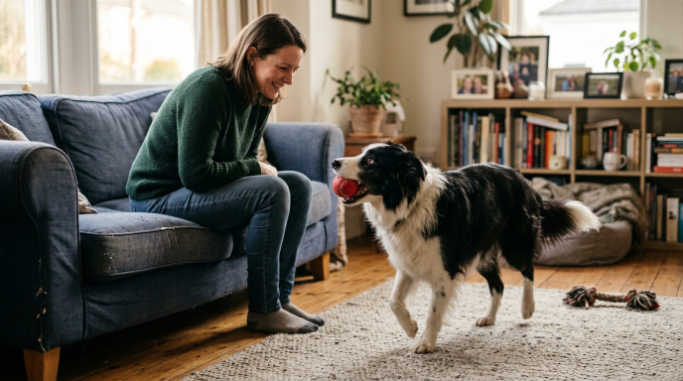
No single behavior proves love by itself. Several of these signs appearing regularly form a much stronger picture.
- They follow you by choice: Your Border Collie moves from room to room with you even when food, toys, or walks aren’t involved.
- They check in during walks: A quick glance back shows that your location still matters while they explore.
- They relax near you: Resting, sighing, stretching out, or sleeping comfortably suggests they feel secure.
- They seek gentle contact: Leaning against your leg, nudging your hand, or resting their head on you can invite affection.
- They bring you toys: Sharing a favorite ball or tug toy can mean, “Join me in something I value.”
- They greet you warmly: Loose movement, a relaxed face, and happy engagement when you return can reflect attachment.
- They make relaxed eye contact: Soft eyes are different from the fixed, intense stare used during herding or high arousal.
- They respond to your voice: Ears turning toward you or immediate orientation shows that your communication matters.
- They choose you during uncertainty: A dog may move closer or look toward a trusted person when something unfamiliar appears.
- They invite you to play: Play bows, bouncing movements, or presenting a toy often signal positive social engagement.
- They cooperate willingly: A bonded Border Collie often enjoys training because working together becomes rewarding.
- They settle after activity: Choosing to decompress beside you after exercise can be one of the quietest signs of attachment.
Trust is especially important because affection is easier to interpret when your dog feels safe. Relaxed cooperation and voluntarily seeking you out are also common signs that a dog trusts you.
Watch the pattern across normal days. A dog doesn’t need to display all 12 signs to have a strong relationship with you.
Why Does My Border Collie Stare at Me and Follow Me?
Border Collies often stare and follow because they are highly attentive dogs that were bred to respond to human direction. In a relaxed home setting, those behaviors can become signs of social connection.
Context decides the meaning. A loose dog gazing at you from the sofa is communicating something different from a crouched dog intensely tracking moving feet.
Soft looking versus the Border Collie “eye”
The breed is famous for the eye, an intense visual focus used to influence livestock. That concentrated stare is part of the Border Collie’s herding heritage.
Affectionate eye contact tends to look softer. The dog’s face stays relaxed, their muscles aren’t rigid, and they can easily disengage.
Why they follow you around the house
Following can mean companionship, anticipation, habit, curiosity, or a desire for activity. Many Border Collies quickly learn that their person predicts walks, games, training, meals, and interesting jobs.
Ask what happens when nothing rewarding follows. If your dog still chooses to lie nearby while you work, read, or cook, social attachment becomes a stronger explanation.
- Affection pattern: relaxed following with easy settling.
- Activity pattern: persistent following combined with toy dropping or excited pacing.
- Herding pattern: intense staring, blocking movement, circling, or reacting strongly to moving feet.
- Stress pattern: inability to settle, panting, pacing, whining, or distressed behavior when distance increases.
Is It Love, Herding, Attention-Seeking, or Stress?
The same behavior can have different meanings. Reading the whole situation prevents you from labeling every stare, lick, or shadowing behavior as affection.
| Behavior | More Likely Affection | Possible Other Meaning | What to Check |
|---|---|---|---|
| Following you | Loose body and settles nearby | Anticipation or separation distress | Can the dog relax when you stop moving? |
| Staring | Soft eyes and relaxed face | Herding focus or tension | Is the body loose or crouched and rigid? |
| Licking | Relaxed social interaction | Appeasement, stress, or attention-seeking | Look for lip licking, turning away, or stiffness |
| Leaning on you | Voluntary, relaxed contact | Seeking reassurance | Does the dog remain comfortable and loose? |
| Bringing a toy | Invitation to interact together | Demand for stimulation | Can the dog stop and settle afterward? |
Don’t assume licking always means kisses
Licking can happen during friendly interaction, but it can also appear when a dog feels uncomfortable. Turning away, lip licking, pinned ears, freezing, or stiffness deserve attention.
The same caution applies to human affection. Some dogs tolerate hugging and kissing without enjoying it, so check your dog’s response rather than assuming human gestures translate directly into canine language.
You can learn more about this distinction in PetMD’s explanation of how dogs respond to kisses and hugs.
Do Border Collies Show Affection Differently From Other Dogs?
Many Border Collies express closeness through doing things with you. Their working heritage makes interaction, responsiveness, and shared tasks especially natural outlets.
An affectionate Border Collie might therefore choose a training session over lying on your lap. That doesn’t make the relationship weaker.
Work can become social bonding
A five-minute recall game, a short trick session, or structured fetch gives your dog a clear way to communicate with you. Success, praise, movement, and teamwork happen together.
This is one reason a dog may light up when you pick up a training pouch. The activity itself has become part of the relationship.
- Rough-coated Border Collies: coat length doesn’t determine affection or personality.
- Smooth-coated Border Collies: they use the same broad canine communication signals.
- Working-line dogs: some may show especially strong interest in tasks and movement.
- Companion dogs: many develop routines centered on family interaction and household activities.
Individual personality still matters more than a simple stereotype. VCA also emphasizes connection through play, walks, gentle interaction, and respecting a dog’s comfort when discussing how pets recognize loving relationships.
How Can You Strengthen Your Bond With a Border Collie?
Build the bond by becoming predictable, enjoyable, and safe to be around. Border Collies learn patterns quickly, so your everyday habits matter.
- Use positive training: Reward behaviors you want instead of relying on intimidation or physical corrections.
- Train in short sessions: Five to ten focused minutes can be more useful than one long, frustrating session.
- Play together: Fetch, tug, scent games, hide-and-seek, and trick training create shared experiences.
- Give them choices: Let your dog approach for petting instead of forcing contact.
- Respect rest: A sleeping or retreating dog doesn’t need constant interaction.
- Reward check-ins: Praise your Border Collie when they voluntarily look toward you during walks.
- Meet mental needs: Rotate training games, puzzles, sniffing opportunities, and appropriate jobs.
- Be consistent: Clear household rules make your responses easier for your dog to understand.
Don’t turn every interaction into obedience practice. Quiet companionship matters too.
Sometimes the best bonding session is a calm walk followed by resting in the same room. Your Border Collie learns that being with you doesn’t always require high excitement.
Use consent during physical affection
Pet your dog gently for a few seconds, then pause. If they move closer or ask for more, continue.
If they turn away or leave, respect that choice. Giving a dog control over contact can support trust instead of weakening it.
When Can a Change in Affection Mean Something Else?
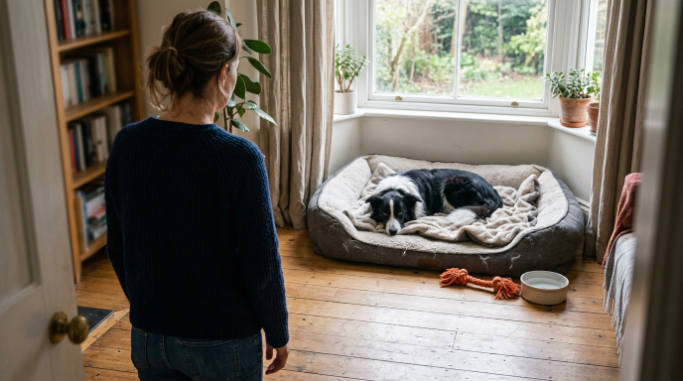
A temporary change doesn’t automatically mean your Border Collie loves you less. Environment, routine, maturity, stress, tiredness, and physical comfort can all influence social behavior.
Pay more attention when the change is sudden and unusual for your individual dog. Compare today’s behavior with their normal baseline rather than another Border Collie’s personality.
- Less cuddling: the dog may simply want more space or feel warm.
- More following: a routine change or uncertainty may increase checking behavior.
- New avoidance: look for environmental changes or uncomfortable interactions.
- Difficulty settling: review exercise, stimulation, household stress, and daily routine.
- Sudden withdrawal with other changes: consider discussing the behavior with your veterinarian.
Vet note: A sudden, persistent behavior change can sometimes occur alongside illness, injury, or discomfort. Contact your veterinarian if withdrawal, unusual clinginess, or irritability appears with changes in appetite, movement, sleep, bathroom habits, or signs of pain.
Never punish growling, retreating, or other warnings. Those signals give you useful information that your dog needs more space.
As of 2026, the safest approach remains simple: read the whole dog, consider the context, and respect communication before deciding what a behavior means.
Frequently Asked Questions
Does my Border Collie following me everywhere mean they love me?
It can be a strong sign of attachment when your Border Collie follows you with relaxed body language and can settle nearby. Following can also reflect anticipation, habit, boredom, or anxiety, so look at the dog’s posture and ability to relax when you aren’t interacting.
Why does my Border Collie put a paw on me?
A paw can request attention, petting, play, food, or reassurance. If your dog approaches voluntarily with a loose body and repeats the gesture during friendly interaction, it may be part of their affectionate communication style.
Do Border Collies pick one favorite person?
Some Border Collies develop an especially close relationship with the person who trains, exercises, feeds, or works with them most often. They can still form strong, affectionate relationships with several household members.
Why does my Border Collie sleep next to me?
Choosing to sleep near you often suggests comfort and trust because resting makes a dog less alert to the environment. Some Border Collies prefer lying beside the bed or across the room while still wanting social closeness.
Does a Border Collie staring at me mean affection?
A soft gaze paired with relaxed muscles can occur during affectionate interaction. A hard, fixed stare with a crouched or tense posture may instead reflect herding focus, arousal, uncertainty, or another emotional state.
Why doesn’t my Border Collie like cuddling?
Not every affectionate Border Collie enjoys prolonged physical contact. Your dog may prefer play, training, following you, resting nearby, or brief petting, and those choices can still reflect a secure relationship.
How long does it take for a Border Collie to bond with a new owner?
There is no fixed timetable because age, background, temperament, routine, and previous experiences all matter. Focus on predictable care, positive interaction, appropriate activity, and respecting boundaries while the relationship develops naturally.
What Should You Remember About Border Collie Love?
The best answer to “How can I tell if my Border Collie loves me?” comes from patterns. Look for a dog who voluntarily seeks you out, relaxes near you, checks in, communicates comfortably, and enjoys sharing everyday life with you.
Don’t measure your relationship by cuddling alone. For many Border Collies, love looks like teamwork, trust, attention, play, and quietly choosing to stay close.
If you want that bond to grow, keep your communication clear and your training positive. Give your Border Collie enough physical activity, mental work, rest, choice, and calm time with you.
Watch what your Border Collie repeatedly chooses when they don’t have to choose you. Those voluntary moments often tell you the most.
