

Quick Answer
Border Collies can show behaviors that look like ADHD, including high activity, impulsive reactions, and trouble settling. However, most energetic Border Collies don’t have a clinical disorder. Veterinary sources describe canine hyperkinesis as possible but uncommon, and there is still no universal diagnostic standard for it.
Signs worth looking at
- Constant motion: Your dog struggles to rest even after suitable activity.
- Poor impulse control: Small triggers cause immediate, intense reactions.
- Little focus: Your dog cannot stay with simple tasks in calm settings.
- Repetitive behavior: Circling, shadow chasing, barking, or other patterns become hard to interrupt.
- No off-switch: Your Border Collie rarely relaxes, even at home.
How to check
- First look at sleep, exercise, mental work, stress, and routine. If the behavior stays extreme or suddenly changes, book a veterinary exam.
I’ve heard the ADHD joke countless times around Border Collies. A young BC races around the room, watches every movement, grabs a toy, drops it, then stares at the window like another job just arrived.
I’ve lived with that intensity too. The important part is learning where normal Border Collie drive ends and a genuine behavior or health problem might begin.
In This Guide
- Can Border Collies actually have ADHD?
- Why do Border Collies seem so hyper?
- What does normal Border Collie energy look like?
- How is ADHD-like behavior different from hyperkinesis or anxiety?
- Does my Border Collie need more exercise or a vet?
- How do I calm an overactive Border Collie?
- What else can look like ADHD?
- Frequently asked questions
- The bottom line
Can Border Collies Actually Have ADHD?
Dogs can display hyperactivity, impulsivity, and inattention that resemble human ADHD. Veterinary behavior literature often uses the term hyperkinesis for the more serious clinical pattern.
That does not mean every fast-moving Border Collie has a disorder. As of 2026, veterinary sources still stress the need to separate unusual hyperactivity from normal breed behavior.
Definition: Canine hyperkinesis is an unusually severe pattern of excessive activity, impulsivity, poor focus, and difficulty settling that goes beyond what would normally be expected for that dog’s age, breed, environment, and training.
This distinction matters with Border Collies. They were developed for demanding herding work, where movement, rapid reactions, environmental awareness, and persistence are useful traits.
Research also makes the simple “Border Collies have ADHD” idea shaky. One large study of canine hyperactivity, impulsivity, and inattention found Border Collies among the breeds with relatively low inattention scores.
In other words, a Border Collie racing around your garden may still have excellent attention. The question is often what the dog is paying attention to, not whether attention exists.
True hyperactivity appears uncommon
The VCA discussion of excitable and hyperactive dogs makes an important point. Genuine hyperactivity disorders appear to be rare compared with ordinary high-energy behavior.
That’s been my practical experience too. Many dogs called “ADHD” become far easier to live with once their routine includes useful work, calm training, enough sleep, and planned downtime.
Vet note: Extreme or sudden behavioral changes deserve a veterinary check. Don’t try to diagnose canine ADHD or hyperkinesis at home.
Why Do Border Collies Seem So Hyper?
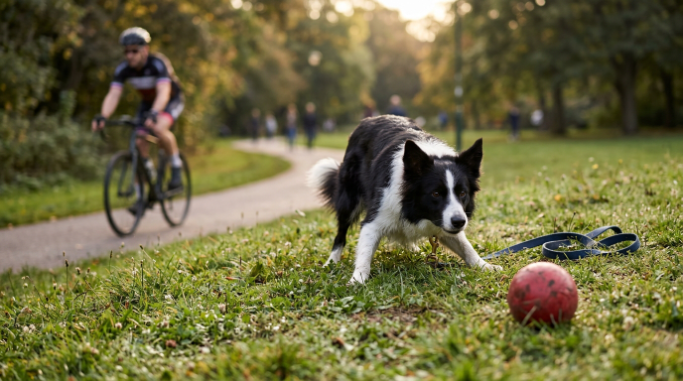
Border Collies can look hyper because their working heritage rewards speed, awareness, stamina, and quick responses. Those traits don’t disappear because the dog now lives beside a sofa instead of a sheep field.
The American Kennel Club’s guidance on hyperactive dogs even uses a Border Collie example when explaining why breed needs matter.
They notice movement fast
A Border Collie may lock onto bicycles, children running, birds, cars, or a ball rolling across the floor. That intense attention is connected to generations of selection for livestock work.
Owners sometimes interpret the fast switch from one moving object to another as distraction. In many cases, the dog is doing exactly what a movement-sensitive herding breed tends to do.
They learn patterns almost too well
My Border Collies have always noticed tiny routines. Pick up one pair of shoes, touch a certain leash, or open one cupboard, and suddenly you have an audience.
That sharp pattern recognition can create demanding behavior. If barking once made you throw the ball, a clever Collie may decide barking is part of the fetch command.
Excitement can feed more excitement
Another trap is trying to solve every restless moment with harder exercise. You can accidentally build a fitter dog who still hasn’t learned to relax.
I prefer a mix of movement and thinking:
- Purposeful walks with time to sniff
- Short obedience or trick sessions
- Controlled tug or fetch
- Scent-search games
- Chewing or food enrichment
- Quiet rest after activity
The goal isn’t to drain the battery to zero. It’s to teach the dog how to move between activity and calm.
What Does Normal Border Collie Energy Look Like?
A healthy, well-managed Border Collie can be extremely active and still be normal. The biggest clue is whether the dog can eventually regulate itself.
A high-drive dog may explode into action when the frisbee appears. Ten minutes later, that same dog may lie quietly while you make coffee.
Common normal behaviors
- Fast reactions: Your dog notices movement and sounds almost instantly.
- Strong work drive: Training, games, and jobs are highly rewarding.
- Intense staring: The classic Border Collie “eye” can appear during play or herding behavior.
- Quick learning: New patterns are picked up after surprisingly few repetitions.
- Excitement before activity: Shoes, leads, toys, and routines can trigger anticipation.
- Ability to recover: Your dog can settle after needs have been met.
That final point gets my attention most. A busy dog isn’t automatically a problem dog.
I also watch sleep. Young Border Collies can become wild when overtired, much like an exhausted child who somehow becomes louder instead of sleepier.
Don’t compare your dog only with another Border Collie
Breed traits give us a useful starting point, not a perfect template. I’ve met Border Collies who would happily work until sunset and others who were much easier-going.
Age, breeding line, health, training history, stress, and environment all change what “normal” looks like. Judge patterns across your own dog’s day.
How Is ADHD-Like Behavior Different From Hyperkinesis or Anxiety?
The behaviors can overlap, which is why labels are risky. Look at the whole pattern rather than one symptom like running, barking, or poor focus.
| Pattern | Typical clues | What often helps clarify it |
|---|---|---|
| Normal high drive | Strong energy, quick reactions, intense interest in movement, but can learn and settle | Balanced activity, training, sleep, and a predictable routine |
| Under-stimulation | Pestering, barking, chewing, stealing objects, pacing, inventing games | More suitable physical and mental outlets |
| Over-arousal | Frantic play, grabbing, jumping, poor listening after exciting events | Lower-intensity sessions, pauses, decompression, and calm reinforcement |
| Anxiety or fear | Scanning, panting, inability to relax, avoidance, sound sensitivity, reactivity | Identifying triggers and getting qualified behavioral help |
| Possible hyperkinesis | Persistent excessive activity and poor regulation across settings, beyond expected breed behavior | Veterinary examination and behavioral assessment |
Context is the key. A Border Collie who ignores you beside running sheep but focuses beautifully in your kitchen isn’t simply “unable to pay attention.”
The environment may be overpowering the skill. Training around distractions must be built gradually.
Does My Border Collie Need More Exercise or a Vet?
Start by asking whether your dog’s basic behavioral needs are being met. If they are, yet the behavior remains extreme, veterinary help becomes more important.
Try improving the daily routine first
I don’t use one magic exercise number for every Border Collie. Puppies, adults, seniors, working dogs, and dogs with health issues need different plans.
For a healthy adult, one sample morning from my own style of management might look like:
- Take a 30-minute walk with plenty of sniffing and environmental exploration.
- Add 5 to 10 minutes of focused training.
- Use breakfast in a puzzle, scatter feed, or scent-search activity.
- Then encourage a quiet rest period instead of starting another high-speed game.
Later in the day, I might add fetch, tug, another walk, or more training. The exact mix changes with the dog.
The ASPCA’s canine enrichment guidance also highlights sniffing, searching, food puzzles, and other outlets for natural dog behavior.
When I would call the vet
- A calm dog suddenly becomes restless or frantic
- Your dog rarely sleeps or settles normally
- Activity seems excessive even in quiet surroundings
- Repetitive behaviors become difficult to interrupt
- Your dog appears distressed rather than happily energetic
- Behavior changes come with appetite, mobility, digestive, or neurological changes
- You have already improved routine and training with little effect
Don’t assume a behavioral change is “just the breed.” Pain and medical problems can change behavior too.
Vet note: A veterinarian can rule out physical causes and decide whether referral to a veterinary behaviorist is appropriate.
How Do I Calm an Overactive Border Collie Without Exhausting Them?
The answer isn’t endless running. A Border Collie also needs practice doing nothing.
That sounds almost insulting to the breed, but settle skills have been some of the most useful training I’ve done.
Reward calm before asking for calm
Owners often notice wild behavior because it’s loud. Quiet behavior passes unnoticed.
When your Collie lies down voluntarily, calmly place a treat between the paws. Keep your voice low and avoid turning the moment into another game.
Use shorter thinking sessions
I usually prefer several 5- to 10-minute training sessions over one long drill. Border Collies learn fast, and repetition can turn sharp focus into frustration.
Stop while the dog still wants more. That keeps training clean.
Give the nose a job
Sniffing is one of my favorite ways to lower the temperature without doing nothing. Hide food around a room, scatter kibble safely in grass, or teach a simple “find it” game.
These activities ask for concentration without the repeated adrenaline spike that can come with frantic ball chasing.
Build an off-switch into exciting games
During tug or fetch, pause regularly. Ask for a simple behavior such as sit, down, hand target, or brief eye contact before restarting.
The lesson becomes: excitement can stop, and starting again doesn’t require chaos.
Protect downtime
Some Border Collies keep going because humans keep offering jobs. A quiet room, predictable evening routine, and fewer exciting triggers can help an overtired dog settle.
PetMD’s guidance for high-energy dogs makes the same broad distinction between genuine hyperactivity and dogs whose daily physical, mental, or social needs aren’t working for them.
What Else Can Look Like ADHD in a Border Collie?
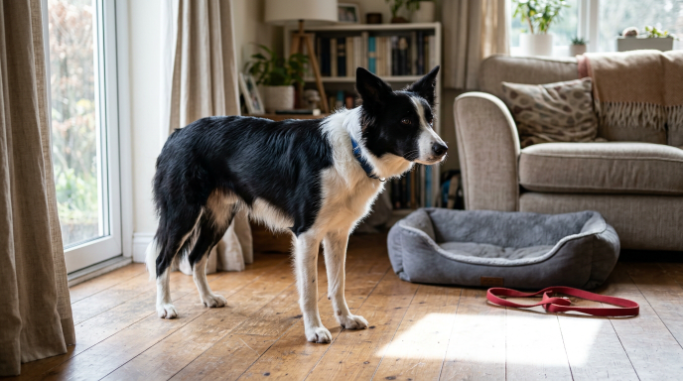
Several different problems can create restless, distracted, or impulsive behavior. Treating all of them as “ADHD” can send you in the wrong direction.
Anxiety and fear
An anxious Border Collie may constantly scan its surroundings. Outside, the dog may appear unable to focus because it is monitoring potential threats.
Look for tension, avoidance, panting, sound sensitivity, freezing, or explosive reactions. Those clues point in a different direction than cheerful high energy.
Compulsive behavior
Border Collies can become intensely interested in movement, shadows, reflections, or repetitive games. Repetition becomes more concerning when the dog struggles to disengage or the behavior interferes with eating, sleeping, or normal life.
This deserves professional assessment. Simply adding more fetch may make some repetitive patterns worse.
Pain or another medical problem
Restlessness can also come from discomfort. A dog that cannot find a comfortable position may pace, move repeatedly, or seem unable to settle.
Sudden changes deserve extra attention. I take a new behavior more seriously when it appears without an obvious change in routine.
Adolescence and incomplete training
Young dogs often have more enthusiasm than self-control. A teenage Border Collie may understand “come” perfectly in the kitchen yet apparently forget the word beside a football game.
That doesn’t prove an attention disorder. The skill may simply be too weak for that level of distraction.
Vet note: Anxiety, compulsive behavior, pain, neurological problems, and other medical conditions require individual assessment. Your veterinarian is the right starting point when behavior seems abnormal or severe.
Frequently Asked Questions
Are Border Collies naturally hyperactive?
Border Collies are naturally energetic, alert, and work-focused, but that isn’t the same as clinical hyperactivity. A well-adjusted Border Collie should still be able to rest and recover when its physical, mental, and emotional needs are met.
Why does my Border Collie never seem tired?
You may be building stamina faster than you’re building calm behavior. Mix physical activity with scent work, short training sessions, chewing, exploration, sleep, and intentional downtime instead of relying only on running or fetch.
Can dogs really be diagnosed with ADHD?
Veterinary literature describes hyperkinesis and ADHD-like patterns in dogs. However, diagnosis isn’t as simple or standardized as human ADHD diagnosis, so persistent symptoms should be assessed by a veterinarian rather than labeled at home.
Does my Border Collie’s short attention span mean ADHD?
Not necessarily. Distraction can come from excitement, anxiety, insufficient training, adolescence, strong herding instincts, or an environment that’s too difficult. Notice whether your dog can focus normally in quieter settings.
Will more exercise calm my Border Collie?
Appropriate exercise often helps, but endless intense exercise isn’t the complete answer. Border Collies also need mental enrichment, impulse-control skills, sleep, and practice relaxing when nothing exciting is happening.
At what age do Border Collies calm down?
Many dogs gain better self-control as they mature, but there isn’t one age when every Border Collie suddenly becomes calm. Training, genetics, daily routine, health, and individual temperament all affect the timeline.
When should I seek professional help?
Contact your veterinarian if your Border Collie cannot settle, suddenly changes behavior, shows repetitive or distressed behavior, sleeps poorly, becomes unusually reactive, or stays extremely restless despite an appropriate routine and training plan.
The Bottom Line: Your Border Collie Probably Doesn’t Need an ADHD Label
Most Border Collies described as having ADHD are displaying some mix of breed drive, excitement, insufficient stimulation, over-arousal, adolescence, or undeveloped impulse control. Those things can look dramatic in a dog bred to notice and react quickly.
I’ve found it more useful to ask, “What is this dog telling me?” than to start with a label. Look at sleep, stress, exercise, training, environment, and the dog’s ability to recover after excitement.
If your Border Collie can focus, learn, play hard, and later curl up peacefully, high energy is probably part of the package. Give that brain useful work, but teach rest with the same care you teach recall.
If your dog cannot switch off or seems distressed, don’t simply exercise harder. Get your veterinarian involved and work out what is driving the behavior.
