

Quick Answer
No, not all Border Collies have anxiety. Border Collies are alert, energetic herding dogs, so their natural intensity can sometimes look like nervousness, but anxiety is an individual behavior issue rather than a guaranteed breed trait. The AKC Border Collie profile describes the breed as bright, energetic, and highly work-focused.
Signs worth watching
- Persistent pacing: Your dog struggles to settle even after normal exercise and rest.
- Stress panting: Heavy panting appears when your dog isn’t hot or exercising.
- Avoidance: Your Border Collie hides, retreats, freezes, or refuses to approach something.
- Body tension: You notice tucked posture, pinned ears, trembling, or repeated lip licking.
- Separation distress: Barking, destruction, drooling, or escape attempts happen mainly when the dog is alone.
How to check it
- Look at the trigger, body language, and how quickly your dog settles afterward. A veterinarian should assess new, severe, or worsening behavior.
I’ve met Border Collies that could sleep through a busy afternoon and others that noticed every door, bird, bicycle, and dropped spoon. A Border Collie, BC, or working collie can be intense without being anxious.
The important question isn’t whether the breed has anxiety. It’s whether your dog is showing fear or stress that affects normal life.
In This Guide
- Do all Border Collies have anxiety?
- Why do Border Collies seem anxious?
- What does anxiety look like in a Border Collie?
- How can you tell anxiety from normal Border Collie intensity?
- What causes anxiety in Border Collies?
- How do you help an anxious Border Collie?
- Can anxiety be prevented in Border Collie puppies?
- When should an anxious Border Collie see a vet?
- Border Collie anxiety FAQ
Do All Border Collies Have Anxiety?
No. Anxiety isn’t something every Border Collie is born with, and breed alone can’t tell you whether a dog will become anxious.
As of 2026, I would never label a Border Collie as anxious simply because it’s intense or highly alert. Individual temperament, early experiences, health, environment, and learning history all matter.
A Border Collie’s anxiety is: ongoing fear or nervous anticipation around a real or expected trigger. It becomes concerning when the dog struggles to cope, settle, eat, learn, or return to normal afterward.
Breed traits can still affect what owners notice. Border Collies were developed for demanding livestock work that rewards awareness, fast reactions, stamina, and close attention to movement.
Those traits don’t equal anxiety. They can simply make a Border Collie look more switched on than a laid-back companion breed.
Every Border Collie is different
Two littermates can respond very differently to the same environment. One may shrug off traffic while another needs careful work around buses, motorcycles, or crowds.
- Genetics: Temperament can differ between families and individual dogs.
- Socialization: Early experiences help shape responses to unfamiliar situations.
- Learning: One frightening event can change how a dog reacts later.
- Health: Pain or illness can make a normally steady dog behave differently.
- Lifestyle: Too little rest, enrichment, or predictability can increase stress.
That’s why I focus on the dog in front of me. The breed gives context, but behavior gives the answer.
Why Do Border Collies Seem Anxious?
Border Collies can appear anxious because they’re observant, fast-reacting working dogs. A dog that tracks every movement isn’t automatically frightened.
Their classic herding style includes intense visual focus often called eye. It’s the concentrated stare a working Border Collie may use while controlling livestock.
High awareness can be mistaken for nervousness
I’ve watched Border Collies enter a new place and scan it before relaxing. They’ll notice the swinging gate, distant dog, rolling stroller, and person carrying a bag.
That can look like worry. Sometimes it’s simply information gathering.
- Watching moving objects: Often connected to herding interest.
- Following the owner: Can reflect engagement rather than separation anxiety.
- Restless energy: May mean the dog needs an appropriate outlet or better rest habits.
- Quick reactions: Alert dogs often respond before slower dogs do.
- Intense staring: Can be normal working focus when the body remains loose.
Being busy isn’t the same as being calm
One mistake I see is trying to exercise every restless Border Collie into exhaustion. That can build a fitter dog without teaching an off-switch.
Physical activity matters, but so do sniffing, problem-solving, sleep, and calm downtime. A healthy routine needs both activity and recovery.
Section Takeaway: Border Collie intensity can resemble anxiety, but context matters. Look for fear, distress, and poor recovery instead of judging energy alone.
What Does Anxiety Look Like in a Border Collie?
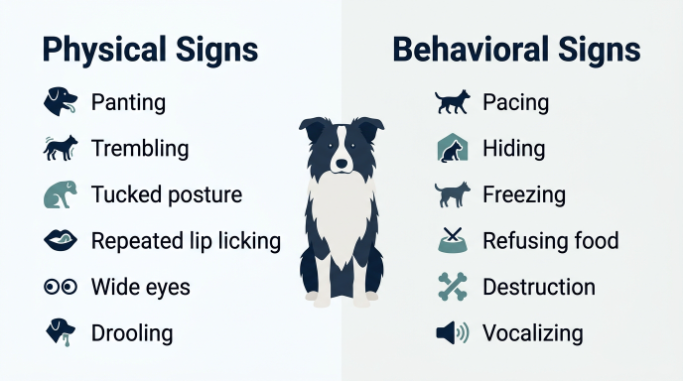
An anxious Border Collie usually shows a pattern of stress around particular situations. One isolated yawn or bark doesn’t prove anxiety.
I look for clusters of behavior and changes from that dog’s normal baseline. The PetMD guide to dog anxiety also emphasizes reading body language and considering possible triggers.
Common physical signs
- Panting: Especially when the dog isn’t hot or physically active.
- Trembling: Shaking may appear around noises, unfamiliar places, or anticipated events.
- Tucked posture: The tail, ears, and whole body may pull inward.
- Repeated lip licking: This may appear with other stress signals.
- Wide eyes: You may see more white around the eye than usual.
- Drooling: Sudden excessive drooling can accompany intense stress.
Behavioral signs
- Pacing: The dog repeatedly walks without settling.
- Hiding: Your Border Collie seeks distance or a protected space.
- Freezing: The dog becomes still instead of approaching or escaping.
- Refusing food: A normally food-motivated dog suddenly ignores good treats.
- Destruction: Chewing or scratching may occur during separation distress.
- Vocalizing: Barking, whining, or howling increases around a specific trigger.
A phone video can be useful when behavior happens while you’re away. It lets you see whether your dog settles or remains distressed.
Keep the video for your veterinarian or behavior professional. It can be more useful than trying to remember every detail afterward.
How Can You Tell Anxiety From Normal Border Collie Intensity?
Watch the dog’s body and recovery, not just the activity itself. A focused Border Collie can look dramatic while still feeling comfortable.
| What you notice | Often normal Border Collie intensity | More concerning for anxiety |
|---|---|---|
| Staring | Focused on a ball, sheep, movement, or training task with a loose body | Fixed attention plus trembling, avoidance, panting, or inability to disengage |
| Pacing | Brief movement before an expected walk, game, or job | Repetitive pacing that continues despite chances to settle |
| Barking | Short bursts during excitement or play | Persistent barking tied to fear, isolation, or a specific trigger |
| Following you | Chooses to stay nearby but can rest independently | Panics, scratches doors, or cannot cope when access to you ends |
| Reaction to novelty | Notices the change, investigates, then moves on | Avoids, freezes, flees, or stays highly stressed after the event |
Try the treat-and-recovery check
When the situation is safe, notice whether your dog can respond to simple cues and take a familiar treat. Don’t force food or move closer to a feared trigger just to test the dog.
Also watch what happens after the trigger disappears. Recovery tells me more than one dramatic reaction does.
What Causes Anxiety in Border Collies?
There isn’t one Border Collie anxiety cause. Fear can develop through genetics, experiences, environmental changes, medical problems, or several factors together.
Lack of safe early exposure
Puppies need gentle introductions to normal life. The goal isn’t to expose them to everything at once.
Good socialization means pairing new sights, sounds, surfaces, people, and situations with safety. Flooding a worried puppy can have the opposite effect.
Frightening experiences
A dog can form a strong association after one scary event. A thunderstorm, rough dog encounter, fall, or frightening car ride may change later behavior.
Sudden routine changes
- A move to a new home
- A family member leaving
- A major change in work hours
- A new pet or baby
- Longer periods spent alone
Separation-related distress
Some Border Collies become distressed when left alone, but closeness to an owner doesn’t automatically mean separation anxiety. The important signs happen during anticipated or actual separation.
The ASPCA separation anxiety guide describes behaviors such as persistent vocalizing, destruction near exits, pacing, house soiling, and escape attempts.
Pain or another medical problem
A sudden behavior change deserves medical attention. Pain, inflammation, illness, and age-related changes can alter how a dog responds to normal situations.
Vet note: New or worsening anxiety-like behavior should be discussed with your veterinarian, especially when it appears suddenly.
How Do You Help an Anxious Border Collie?
Start by reducing unnecessary stress and identifying the trigger. Training works better when the dog feels safe enough to think.
I don’t try to make a worried Border Collie “face the fear” until it gives up reacting. I work at a distance or intensity where the dog can still function.
1. Identify patterns
Keep a simple log for one or two weeks. Note what happened before the reaction, what your dog did, and how recovery looked.
- Time and location
- Possible trigger
- Distance from the trigger
- Body-language changes
- Whether the dog could eat or respond
- How long settling seemed to take
2. Give the dog predictable routines
Regular meals, walks, sleep, toilet breaks, and quiet periods can make daily life easier to predict. Predictability doesn’t mean every day must be identical.
3. Use short reward-based training
Five to ten focused minutes can be enough for many sessions. Stop while your Border Collie is still successful rather than drilling until frustration appears.
- Reward checking in with you.
- Teach a relaxed mat or bed behavior.
- Practice easy cues away from triggers first.
- Use food, play, or access to something the dog enjoys.
- Increase difficulty in small steps.
4. Balance exercise with decompression
A Border Collie needs useful physical and mental activity, but nonstop ball throwing isn’t a complete anxiety plan. Sniff walks, food searches, controlled training, chewing, and quiet rest all serve different purposes.
5. Avoid punishment for fear
Scolding a fearful dog doesn’t teach the dog that the situation is safe. It can make the trigger predict another unpleasant event.
Reward-based work gives me much clearer information. If the dog can’t take food or perform an easy known behavior, I often need more distance or a simpler setup.
Section Takeaway: Helping an anxious Border Collie is less about tiring the dog out and more about safety, predictable routines, controlled exposure, and gradual learning.
Can Anxiety Be Prevented in Border Collie Puppies?
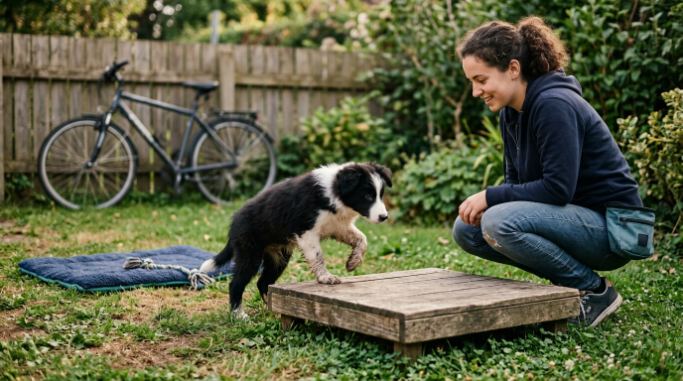
You can’t guarantee that a puppy will never develop anxiety. You can still give the puppy useful coping skills from the beginning.
Early positive exposure matters, but quality matters more than collecting hundreds of experiences. One calm introduction is better than forcing a frightened puppy through a crowded event.
Build confidence in small pieces
- Surfaces: Introduce grass, carpet, safe flooring, steps, and stable platforms.
- Sounds: Let household and outdoor noises happen at manageable levels.
- People: Allow the puppy to approach instead of forcing greetings.
- Handling: Pair gentle paw, ear, and body handling with rewards.
- Independence: Practice short, comfortable periods apart from the family.
- Rest: Give the puppy a quiet place where nobody bothers it.
I also teach young Border Collies that watching isn’t always the same as chasing. That matters in a herding breed that can become fascinated by bicycles, children, cars, or running animals.
Keep training calm and age-appropriate. Confidence grows through successful repetitions, not pressure.
When Should an Anxious Border Collie See a Vet?
Talk to a veterinarian when anxiety is severe, appears suddenly, causes injury, or interferes with normal life. Medical causes should be considered before assuming every behavior problem is purely training-related.
Make an appointment sooner if you notice:
- Sudden personality or behavior changes
- Panic or escape attempts
- Self-injury during confinement or separation
- Loss of appetite linked with ongoing stress
- Aggression connected with fear
- Severe noise or environmental phobias
- Behavior that keeps getting worse
- Signs of pain, confusion, or illness
Your veterinarian may look for medical contributors and discuss the next step. Some dogs also benefit from a qualified trainer, veterinary behaviorist, or other behavior professional experienced with fear.
Medication isn’t a failure when a veterinarian believes it’s appropriate. For some dogs, lowering overwhelming anxiety makes behavior work possible.
Vet note: Never give a Border Collie human anxiety medication, sedatives, or supplements without discussing them with your veterinarian first.
Border Collie Anxiety FAQ
Are Border Collies naturally nervous dogs?
No. Border Collies are often intense, alert, sensitive to their surroundings, and quick to react, but those traits aren’t the same as anxiety. A nervous Border Collie shows fear or stress patterns that affect behavior and coping rather than simple enthusiasm or working focus.
Why does my Border Collie follow me everywhere?
Following you can reflect attachment, curiosity, habit, or the breed’s strong handler focus. It becomes more concerning when your dog cannot relax without you or shows distress such as barking, destruction, drooling, or escape behavior during separation.
Can lack of exercise cause Border Collie anxiety?
Too little appropriate activity can contribute to restlessness and unwanted behavior, but exercise alone doesn’t explain every anxiety problem. Border Collies also need mental work, sleep, predictable routines, and opportunities to calm down after activity.
Can too much exercise make a Border Collie more restless?
It can contribute to a cycle where the dog expects constant high-intensity activity. I prefer a balance of physical exercise, short training sessions, sniffing, enrichment, and genuine downtime rather than trying to exhaust the dog every day.
Are Border Collies more anxious than Australian Shepherds?
You can’t reliably predict an individual dog’s anxiety from that comparison alone. Border Collies and Australian Shepherds are both active herding breeds, but temperament varies within each breed, and genetics, socialization, health, experiences, and lifestyle all influence behavior.
Can a Border Collie grow out of anxiety?
Some puppy fears improve with maturity and good experiences, but persistent anxiety shouldn’t simply be ignored. Early support is useful because repeated fearful reactions can become practiced patterns, especially when the dog keeps facing the same trigger without relief.
How do I know if my Border Collie’s anxiety is serious?
Take it seriously when fear interferes with eating, sleeping, walking, learning, staying alone, or normal family life. Panic, escape attempts, self-injury, sudden behavioral changes, or fear-related aggression are good reasons to contact your veterinarian promptly.
The main takeaway is simple: not every Border Collie has anxiety, and intensity isn’t a diagnosis. Learn your dog’s normal behavior, watch for patterns of fear, and act early when stress starts affecting everyday life.
If you’re unsure, record what happens and bring those observations to your veterinarian or a qualified behavior professional. Clear information makes the next step much easier.
