

Quick Answer
Lilac is commonly considered one of the rarest Border Collie colors and is often called the rarest recognized standard color. However, there is no official registry census proving one color is always the rarest. The American Kennel Club’s Border Collie information also makes an important point: this breed occurs in many colors and patterns.
What makes lilac unusual?
- Two recessive traits: Lilac generally requires both brown pigment and dilution genes to come together.
- Distinct appearance: The coat may look dusty brown, silvery taupe, or pale chocolate.
- Uncommon pairing: Fewer breeding pairs carry the required combination than genes for common black-and-white coats.
- Rarer patterns exist: Lilac merle and lilac tricolor merle can be harder to encounter than solid lilac combinations.
- Color isn’t quality: Temperament, working ability, health, and responsible breeding matter more than rarity.
After living and working with Border Collies for years, I’ve learned how misleading the word “rare” can be. An unusual coat gets attention quickly, but color tells you little about the dog underneath it.
As of 2026, lilac remains a good answer to “what is the rarest color of Border Collie?” Still, there are several important exceptions and genetic details worth knowing.
In This Guide
- What Is the Rarest Border Collie Color?
- Why Are Lilac Border Collies So Rare?
- What Does a Lilac Border Collie Look Like?
- Which Other Border Collie Colors Are Rare?
- Does a Rare Coat Color Affect Health?
- Are Rare Border Collie Colors Recognized?
- Should You Choose a Border Collie for Its Color?
- Frequently Asked Questions
What Is the Rarest Border Collie Color?
Lilac is commonly described as the rarest standard Border Collie color. More complex combinations, such as lilac merle or lilac tricolor merle, may be even harder to find.
I use the word “commonly” on purpose. Major breed registries don’t publish a yearly count showing exactly how many dogs are born in every color.
There is no official rarity ranking
You’ll often see websites confidently rank Border Collie colors from common to rare. Those rankings usually come from breeder experience and observation rather than a complete population database.
That distinction matters. A color that is almost never seen in one country might appear more often within a breeder population elsewhere.
- Black and white: Easily the color combination most people associate with Border Collies.
- Black tricolor: Also familiar in many working and companion lines.
- Brown or red: Less common than black, but far from extraordinary.
- Blue and merle: More unusual and visually distinctive.
- Lilac: Requires a less common genetic combination.
- Lilac merle: Combines already-unusual dilution with a merle pattern.
The official AKC breed standard takes a refreshingly practical approach. It permits Border Collies in any color or combination and says no color should receive preference over another.
That’s exactly how I think about these dogs. A coat may catch my eye first, but movement, confidence, responsiveness, and temperament tell me far more.
Why Are Lilac Border Collies So Rare?
A lilac Border Collie needs a particular combination of color-related genes. In simplified terms, the dog expresses both brown pigment and dilution.
A Border Collie’s lilac color is a diluted form of brown or chocolate pigment. It can create a muted brown-gray appearance rather than deep chocolate.
How the brown and dilution genes work
Dogs receive gene variants, called alleles, from their parents. Several genetic locations influence the final coat instead of one single “color gene.”
The B locus influences whether eumelanin, the dark pigment, appears black or brown. Two recessive brown variants can produce brown pigment.
The D locus affects pigment intensity. Two recessive dilution variants can lighten eumelanin, creating colors such as blue from black or pale brown from brown.
- Black pigment: Full-strength eumelanin appears black.
- Brown pigment: Recessive variants at the B locus change black eumelanin toward brown.
- Dilution: Recessive variants at the D locus lighten pigment.
- Lilac: Brown pigment combined with dilution creates the distinctive pale tone.
The VCA overview of canine coat-color genetics explains how the B and D loci modify eumelanin. It also shows why coat genetics become complicated quickly.
Why don’t breeders simply produce more lilac puppies?
A responsible breeding program shouldn’t begin with “How do I make this rare color?” Health, temperament, structure, genetic diversity, and working suitability should come first.
That’s especially true with Border Collies. They were developed as working sheepdogs, not as decorative dogs selected mainly for unusual coats.
I’ve met striking Borders that photographed beautifully but weren’t dogs I’d choose for every household. I’ve also known ordinary black-and-white Borders whose balance and trainability were exceptional.
Color is easy to see. Quality takes longer to evaluate.
What Does a Lilac Border Collie Look Like?
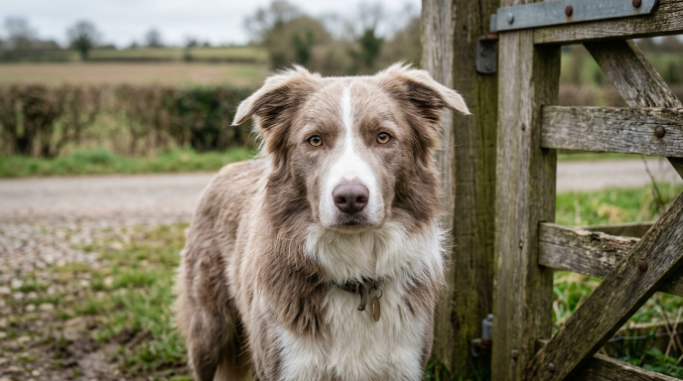
A lilac Border Collie usually has a soft, diluted brown coat. Depending on lighting, it can appear taupe, dusty chocolate, silver-brown, or slightly lavender-gray.
The word “lilac” can confuse first-time owners. You shouldn’t expect a purple dog.
Look at pigment, not only the body coat
The nose, lips, and eye rims can help when you’re comparing diluted colors. Lilac dogs generally lack the strong black pigment you’d expect on a typical black-and-white Border Collie.
Puppy coats can also change as they mature. Indoor lighting and phone-camera processing make identification even less reliable.
- Coat: Pale brown-gray or muted chocolate.
- Nose: Usually lighter brown or diluted in appearance rather than black.
- Eyes: Shade varies and shouldn’t be used alone to identify coat genetics.
- White markings: May appear on the face, chest, neck, legs, and tail tip.
- Pattern: Lilac can occur alongside other inherited markings and patterns.
When color identification matters for breeding, I wouldn’t rely on photographs. DNA testing and known parentage provide much stronger evidence.
For a companion dog, the exact label matters much less. Your Border Collie won’t know whether the paperwork says lilac, brown, blue, or another shade.
Which Other Border Collie Colors Are Rare?
Lilac isn’t the only uncommon option. Slate, sable variations, unusual merles, Australian red, and combined rare patterns may all be encountered less frequently than classic black and white.
Here is a simplified comparison of several colors you may hear about.
| Color or Pattern | Basic Appearance | Key Genetics, Simplified | How Often Seen |
|---|---|---|---|
| Black and white | Black base with white markings | No brown or dilute expression needed | Very common |
| Brown/red | Chocolate or liver-colored pigment | Recessive brown expression | Less common |
| Blue | Diluted gray-black | Dilution affecting dark pigment | Uncommon |
| Lilac | Diluted brown or taupe | Brown plus dilution expression | Rare |
| Blue merle | Mottled black and gray areas | Merle affecting dark pigment | Uncommon |
| Lilac merle | Mottled diluted brown tones | Lilac-producing genes plus merle | Especially rare |
What about Australian red?
Australian red, sometimes called ee red or recessive red, works differently from brown. The genetic mechanism can mask darker coat patterns that a dog carries underneath.
This distinction matters around merle breeding. A dog can genetically carry merle while its visible coat makes that difficult to recognize.
The AKC’s explanation of merle genetics discusses hidden and cryptic merle and recommends DNA testing when breeding dogs from merle-producing lines.
Section Takeaway: Lilac is among the rarest recognizable colors, but rare pattern combinations can be even less common. No trustworthy registry publishes a definitive worldwide rarity leaderboard.
Does a Rare Coat Color Affect a Border Collie’s Health?
Rare doesn’t automatically mean unhealthy. A responsible breeder can produce an unusual-colored dog while still prioritizing health and temperament.
The concern is how the genes are combined and how strongly a breeder selects for appearance over everything else.
Merle deserves special attention
Merle is a pattern rather than a single base color. One copy of the merle variant can create the familiar patchy appearance.
Breeding two merle dogs together can produce double-merle puppies. Those dogs face a greater risk of serious hearing and vision problems.
- One merle parent: Merle can be inherited without producing a double-merle puppy when the other parent is genetically non-merle.
- Two merle parents: A mating can produce double-merle offspring.
- Hidden merle: Visual inspection alone doesn’t always identify every genetically merle dog.
- Best approach: Appropriate DNA testing helps breeders understand the genes their dogs carry.
Dilute coats also deserve sensible observation. Some dilute-colored dogs in certain breeds can develop a condition called color dilution alopecia, which causes hair thinning and skin problems.
That doesn’t mean every dilute Border Collie will develop it. The VCA guidance on color dilution alopecia explains the condition and its relationship with recessive dilute coloring.
Vet note: If a Border Collie develops unexplained hair loss, flaky skin, itching, eye problems, or hearing concerns, ask your veterinarian for an examination instead of assuming coat color is the cause.
Are Rare Border Collie Colors Recognized?
Border Collies are unusually diverse in appearance. The AKC breed standard states that the breed may appear in all colors or combinations of colors and markings.
It also says colors should be judged equally. Color and markings remain secondary to physical evaluation and movement.
Recognition doesn’t make a color desirable
A registry accepting a color isn’t the same as recommending breeders pursue that color. Those are separate questions.
When I evaluate a Border Collie, I’m far more interested in the dog’s ability to move comfortably, learn, recover from excitement, and interact appropriately.
- Temperament: Look for a stable dog suited to your household.
- Health: Ask about appropriate hereditary disease screening.
- Structure: Sound movement matters throughout an active dog’s life.
- Working drive: Border Collies can require significant physical and mental engagement.
- Color: Treat it as a preference, not your main selection criterion.
PetMD’s Border Collie breed guide also describes several coat colors while emphasizing the breed’s working background and substantial care needs.
This matters more than the novelty of a lilac puppy. The prettiest Border Collie can still be a poor match for an owner who wants an easygoing, low-activity companion.
Should You Choose a Border Collie for Its Color?
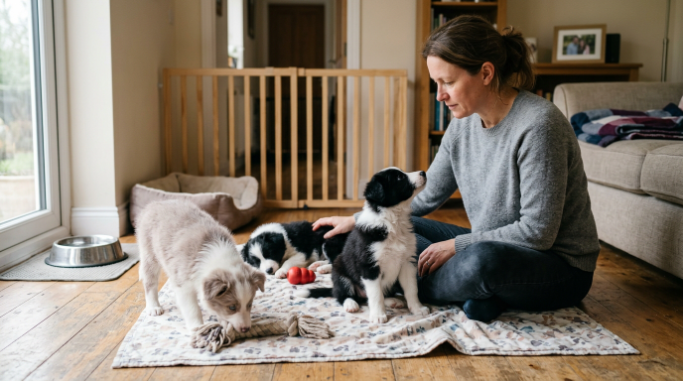
I wouldn’t choose one primarily because its coat is rare. Pick the Border Collie whose health, temperament, energy level, and breeding background fit your life.
A good breeder should be able to talk for much longer about their dogs than about colors.
Questions I would ask a breeder
- Why this pairing? The answer should involve health, temperament, structure, work, or overall quality.
- Which health tests were completed? Ask for documentation rather than a simple verbal promise.
- How are puppies raised? Early handling, socialization, and suitable experiences matter.
- How do you match puppies? Temperament should influence placement.
- Was merle DNA testing needed? This becomes important where merle may be present or hidden.
- Can I meet relatives? Observing adult dogs can reveal useful temperament information.
The ASPCA’s responsible breeding criteria emphasizes health, function, genetic screening, good care, and behavioral stability over appearance.
That approach makes sense for Border Collies. Their intelligence and herding heritage produce wonderful dogs, but they’re not automatically easy pets.
My rule when a rare puppy catches your eye
Imagine that same puppy with an ordinary black-and-white coat. Ask yourself whether you would still want the dog.
If the answer is yes because the temperament, breeder, health background, and lifestyle fit are right, color can become a pleasant bonus.
If the answer is no, keep looking. Rare shouldn’t become more important than suitable.
Section Takeaway: Choose the dog first and the color second. A rare coat lasts a lifetime, but so do the dog’s energy, temperament, health needs, and training requirements.
Frequently Asked Questions
What is the rarest Border Collie color?
Lilac is commonly described as one of the rarest Border Collie colors and is frequently called the rarest standard color. However, there is no official worldwide registry count that proves a definitive ranking, and combinations such as lilac merle may be encountered even less often.
Is lilac rarer than blue merle in Border Collies?
Generally, yes. Blue merle Border Collies are unusual but well known, while lilac requires both brown and dilution genetics to be expressed. Adding merle to a lilac base creates an even less commonly seen combination.
Are all lilac Border Collies merle?
No. Lilac describes the diluted brown base color, while merle is a separate pattern. A Border Collie can therefore be lilac without merling or can inherit both the lilac-producing genetic combination and merle.
Is a rare-colored Border Collie more expensive?
Some breeders charge more for unusual colors because demand exceeds availability. Price alone doesn’t indicate quality, though. Health testing, responsible breeding, temperament, puppy raising, and breeder support are much more useful measures than coat rarity.
Are rare Border Collie colors unhealthy?
Not automatically. Coat color alone doesn’t determine whether a dog is healthy. Certain genetic combinations deserve extra care, however, particularly double merle breeding and some dilute-color concerns. Responsible genetic screening reduces avoidable risks.
Can two merle Border Collies be bred together?
Responsible guidance recommends avoiding merle-to-merle breeding because it can produce double-merle puppies with increased risks of hearing and vision abnormalities. Genetic testing is useful when merle may be hidden or difficult to recognize visually.
What is the most common Border Collie color?
Black and white is the classic and most familiar Border Collie color combination. The breed also occurs in brown, red, blue, sable, merle, tricolor, lilac, and many other combinations and markings.
So, what is the rarest color of Border Collie? Lilac is the best simple answer, with an important qualification. It is widely considered among the rarest standard colors, while complex variations such as lilac merle can be even harder to encounter.
Enjoy the unusual coat, but don’t let rarity make the decision for you. A healthy, stable, well-matched Border Collie will matter far more every day than the color listed on its registration papers
