

Quick Answer
The person who suits a Border Collie best is active, patient, consistent, and interested in doing things with their dog every day. This working collie usually thrives with someone who enjoys training, problem-solving, outdoor activity, or dog sports and understands the breed’s high-energy working temperament.
A good Border Collie owner usually has these qualities:
- Active lifestyle: They enjoy regular walks, games, training, hiking, or another form of purposeful activity.
- Time to engage: They can give the dog attention beyond feeding and a quick walk.
- Patient mindset: They understand that a clever dog still needs clear, repeated training.
- Love of learning: They enjoy teaching skills and finding new ways to challenge the dog’s brain.
- Consistent routine: They can provide predictable exercise, rest, training, and household rules.
The main test
- Ask whether you want an intelligent companion that participates in your life, rather than a dog that is happy doing very little.
People often ask me what kind of personality owns a Border Collie successfully. I think lifestyle matters more than age, job title, home size, or whether someone looks traditionally “outdoorsy.”
As of 2026, my answer is simple: the best owner gives this dog useful things to do. Below, I’ll break down what that looks like in ordinary life.
In This Guide
- What kind of person usually owns a Border Collie?
- Why does the Border Collie’s working background matter?
- What personality traits make a good Border Collie owner?
- What is daily life with a Border Collie like?
- Border Collie vs Australian Shepherd: which owner fits each?
- Who probably should not own a Border Collie?
- How can you tell if a Border Collie fits your lifestyle?
- Frequently asked questions
- Is the Border Collie owner lifestyle right for you?
What Kind of Person Usually Owns a Border Collie?
A typical successful Border Collie owner likes involvement. They don’t expect the dog to entertain itself for most of the day and then switch off automatically at night.
The ideal Border Collie owner often enjoys having a routine built around shared activities. Walking, hiking, fetch, obedience work, agility, scent games, and trick training can all become part of everyday life.
- Outdoor people: Hikers, runners, walkers, campers, and people who spend time outside often appreciate the breed’s enthusiasm.
- Training enthusiasts: People who find dog training enjoyable usually have plenty to explore with a Border Collie.
- Dog-sport owners: Agility, rally, obedience, herding, and similar activities can provide structured outlets.
- Hands-on families: Families that share dog responsibilities can give a Border Collie more interaction throughout the day.
- Active retirees: Retirement can provide useful flexibility for people who want walking, training, and dog-centered hobbies.
That doesn’t mean every owner is an athlete. A thoughtful person who enjoys moderate exercise and frequent training may be a better match than a marathon runner who has little time for the dog.
Is there a “Border Collie owner personality”?
There isn’t one personality type. I see successful owners who are quiet and methodical, while others are social, competitive, and constantly looking for their next outdoor adventure.
The common thread is engagement. They enjoy noticing what their dog is thinking and adjusting the activity instead of simply trying to wear the dog out.
Section Takeaway: A Border Collie owner doesn’t need a specific job, age, or personality. They do need time, consistency, curiosity, and a lifestyle that includes the dog.
Why Does the Border Collie’s Working Background Matter?
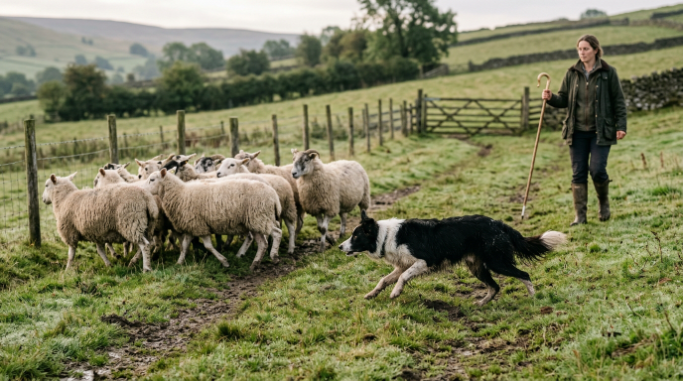
Border Collies were developed as livestock herders, not passive companion dogs. Their working heritage helps explain their focus, stamina, responsiveness, and desire to control movement.
The American Kennel Club’s Border Collie profile describes the breed as a highly intelligent work-oriented member of the Herding Group. That history still shows up in modern family dogs.
What is a Border Collie’s herding instinct?
A Border Collie’s herding instinct is the inherited tendency to notice, follow, gather, and influence moving animals. Some dogs may direct similar behavior toward running children, bicycles, other pets, or anything that moves quickly.
The famous Border Collie eye is part of this working style. It refers to the intense stare a dog may use while controlling livestock.
- Movement matters: Fast motion may immediately catch the dog’s attention.
- Patterns matter: Many Border Collies quickly learn household routines and predict what happens next.
- Jobs matter: Purposeful tasks can satisfy the brain in ways that aimless activity may not.
- Training matters: Recall, settling, impulse control, and appropriate outlets are especially valuable skills.
Intelligence can surprise new owners. A Border Collie may learn the behavior you intended, plus several patterns you never planned to teach.
I’ve found this is why consistency matters so much. If one rule applies Monday but disappears Tuesday, a clever dog will notice the gap.
Does intelligence make the breed easier?
Not automatically. Intelligence usually means the dog learns quickly, but it also means boredom and inconsistent rules can become obvious problems.
A smart dog still needs guidance. The owner must teach useful behaviors instead of assuming intelligence produces good manners by itself.
What Personality Traits Make a Good Border Collie Owner?
The strongest trait is patience combined with consistency. Border Collies often respond beautifully when the person handling them stays clear, calm, and predictable.
You don’t need to dominate the dog. You need to make desirable choices easier to understand and worthwhile to repeat.
- Observant: You notice excitement, fatigue, frustration, and changes in body language.
- Consistent: Household rules don’t change according to your mood.
- Curious: You enjoy discovering what motivates your individual dog.
- Patient: You can repeat a skill without turning every mistake into a battle.
- Flexible: You change an activity when the dog isn’t understanding it.
- Realistic: You accept that clever working dogs still need daily management.
Do Border Collies need an experienced owner?
Experience helps, but it isn’t the only route to success. A first-time owner who studies the breed and enjoys training can sometimes provide a better home than an experienced owner seeking a low-effort pet.
New owners should be comfortable asking for help. The ASPCA’s guidance on finding appropriate behavioral help explains why different behavior concerns may call for group training or individual professional support.
Are Border Collies good for older adults?
Age alone doesn’t decide the match. An active older adult or retiree with time for daily engagement may suit the breed well.
The better question is whether the person’s mobility, stamina, schedule, and support system match the individual dog. A young high-drive dog can demand more physical management than an older, settled Border Collie.
I would choose temperament and lifestyle fit before choosing by appearance. A beautiful black-and-white coat tells you far less about daily compatibility than energy, training history, and behavior.
What Is Daily Life With a Border Collie Like?
Daily life works best when physical exercise and mental work appear together. A longer walk can help, but walking alone doesn’t always satisfy a dog bred to think while moving.
I prefer several useful activities across the day rather than one exhausting session. That makes the routine easier to sustain and gives the dog repeated chances to focus and settle.
What might a practical day look like?
This sample isn’t a universal exercise prescription. It simply shows how an engaged owner might combine movement, training, and rest.
- Morning: A 30–45 minute brisk walk with several minutes of loose-leash or recall practice.
- Midday: A short food puzzle, scent search, or 5–10 minute training session.
- Late afternoon: Fetch, hiking, structured play, or another active outing suited to the dog.
- Evening: Calm chewing, mat training, grooming, or relaxed family time.
- Throughout the day: Planned rest so constant stimulation doesn’t become the new expectation.
One mistake I’ve seen is turning every free minute into high-speed ball throwing. That can create a dog that becomes fitter without becoming better at settling.
Training calm behavior matters too. “Place,” “settle,” waiting at doors, and relaxing while the family eats can be as useful as flashy tricks.
What kinds of hobbies work well with Border Collies?
The breed suits owners who like hobbies that include learning and movement. You don’t need sheep or a competition field to give the dog meaningful work.
- Hiking and trail walking
- Agility or rally training
- Trick training
- Disc and controlled fetch games
- Scent work
- Obedience training
- Canine fitness exercises
- Herding lessons where responsibly available
This is where I think Border Collies appeal to hobby-minded owners. The dog can become a genuine partner in an activity rather than simply a companion waiting at home.
What about grooming and routine care?
Border Collies commonly have rough or smooth double coats. Regular brushing, nail care, dental care, veterinary visits, and general preventive care still belong in the schedule.
PetMD’s Border Collie care overview also notes that the breed can face inherited health concerns. Responsible ownership therefore includes planning for routine veterinary care and unexpected medical expenses.
Vet note: Your veterinarian should guide preventive care, health screening, exercise changes, and any concerns about your individual dog’s health.
Section Takeaway: The easiest Border Collie routine combines exercise, thinking, training, calm time, and ordinary care. More speed isn’t always the answer.
Border Collie vs Australian Shepherd: Which Owner Fits Each?
Border Collies and Australian Shepherds attract many of the same people. Both are intelligent herding breeds that generally suit active owners who enjoy training.
They aren’t interchangeable, though. Individual temperament matters more than a simple breed stereotype, especially when choosing a puppy or rescue dog.
| Trait | Border Collie | Australian Shepherd |
|---|---|---|
| Typical height | 18–22 inches | 18–23 inches |
| Typical weight | 30–55 pounds | 40–65 pounds |
| Breed group | Herding | Herding |
| Work style | Often highly focused on movement, direction, and handler cues | Active ranching heritage with strong herding and work drive |
| Good owner fit | Someone who enjoys frequent mental work, training, and active partnership | Someone wanting an energetic, trainable herding companion and active family dog |
For me, the useful question isn’t which breed is “better.” It’s which individual dog’s drive, temperament, size, and social style fit your household.
Meet adult dogs when possible. Speaking with responsible breeders, breed rescues, trainers, and veterinarians can also give you a clearer picture than photographs alone.
Who Probably Should Not Own a Border Collie?
A Border Collie can be wonderful in the right home and exhausting in the wrong one. Wanting an intelligent dog isn’t enough if your daily routine leaves little room for that intelligence.
The breed may be a poor fit when someone wants a dog that needs minimal interaction. Long periods alone followed by a short bathroom walk can leave many working-breed dogs without suitable outlets.
A Border Collie may not suit you if:
- You dislike training: Teaching and reinforcing everyday skills will feel like a burden.
- Your schedule is packed: You regularly lack time for exercise, play, interaction, and care.
- You want low involvement: Your ideal dog mostly relaxes without asking for structured activity.
- You dislike routine: Consistent boundaries and repeatable habits don’t fit your household.
- You can’t manage herding behavior: Chasing or controlling movement could create problems in your environment.
- You choose by appearance: Coat color matters more to you than temperament and lifestyle compatibility.
Does a big yard solve the problem?
No. A large yard can make exercise and play more convenient, but square footage doesn’t replace interaction.
A Border Collie alone in a large fenced space may still have nothing meaningful to do. Meanwhile, a committed owner in a smaller home may provide walks, training, activities, and structured rest.
Can a busy person own one?
Some can, but the routine needs a realistic plan. Daycare, dog walkers, family help, training classes, and planned enrichment can support a busy household, although they don’t remove the owner’s responsibility.
The AVMA’s guidance on selecting a dog for your lifestyle emphasizes considering exercise, grooming, companionship, care, and long-term responsibility before bringing a dog home.
How Can You Tell if a Border Collie Fits Your Lifestyle?
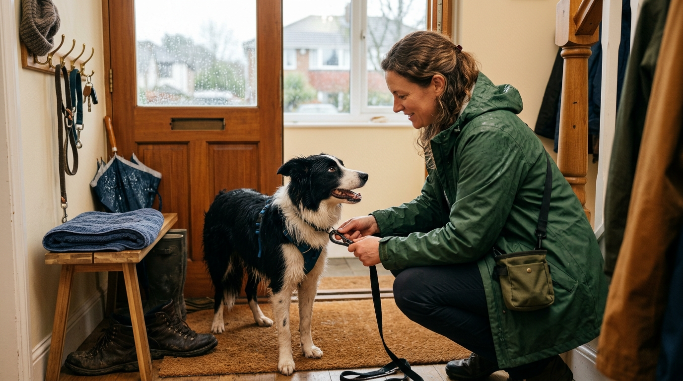
Look at what you already do, not the lifestyle you hope a new dog will force you to create. Sustainable routines make better ownership plans than ambitious promises.
I use a simple test. Imagine an ordinary rainy Tuesday six months after the excitement of getting the dog has faded.
Ask yourself these questions:
- Do I enjoy daily activity? Not just on weekends or when the weather is perfect.
- Can I train regularly? Five or ten focused minutes can be useful when repeated consistently.
- Do I enjoy problem-solving? Clever dogs sometimes create puzzles you didn’t request.
- Can I provide structure? Exercise, meals, training, quiet time, and household rules need some predictability.
- Can I afford long-term care? Food, veterinary care, training, equipment, grooming, and emergency costs add up.
- Does everyone agree? Family members should understand the dog’s needs and household rules.
- Can I adjust later? Puppies, adults, and senior dogs need different routines over time.
Don’t answer based on your best day. Answer based on your busiest normal week.
What should you do before getting one?
Spend time with adult Border Collies if you can. Watching a trained adult work, rest, and move through normal life gives you information that puppy photos cannot provide.
- Talk with responsible Border Collie breeders or rescue groups.
- Ask about the individual dog’s energy and temperament.
- Discuss your household, children, pets, and activity level honestly.
- Observe how the dog responds to movement and new environments.
- Plan training and veterinary care before bringing the dog home.
- Consider an adult or senior Border Collie if a puppy’s intensity doesn’t fit your lifestyle.
A good match doesn’t require perfection. It requires expectations that resemble the life you can consistently provide.
Section Takeaway: Judge your real schedule, not your ideal schedule. The right Border Collie owner can keep meeting the dog’s needs long after the novelty wears off.
Frequently Asked Questions
What personality type likes Border Collies?
Border Collies often appeal to active, curious, patient people who enjoy learning with their dogs. Many owners like outdoor hobbies, training, puzzles, dog sports, or structured routines, although there is no single personality type required.
Are Border Collie owners usually active?
Successful owners are generally willing to provide regular physical activity, but they don’t have to be elite athletes. Mental stimulation, training, purposeful play, and calm skills are also important parts of a balanced routine.
Can a first-time dog owner handle a Border Collie?
Yes, some first-time owners do well when they research the breed, commit to training, and seek qualified help when needed. A first-time owner looking for a low-maintenance dog, however, may find the breed demanding.
Are Border Collies good for retirees?
They can suit active retirees who have enough mobility, time, and interest for regular engagement. Temperament and age matter, so an adult or older Border Collie may fit some retirees better than a high-drive puppy.
Do you need a farm to own a Border Collie?
No. Border Collies can live successfully without livestock when owners provide appropriate exercise, training, mental challenges, social interaction, and rest. A farm or large yard alone does not guarantee that those needs are met.
Do Border Collies need another dog for company?
Not necessarily. Some enjoy canine companions, while others are strongly focused on their human handlers. Compatibility, introductions, resources, and each dog’s temperament matter more than assuming every Border Collie needs another dog.
What is the biggest mistake new Border Collie owners make?
A common mistake is focusing only on physical exercise while overlooking training, mental stimulation, and settling skills. Constant high-intensity activity can create an increasingly fit dog without teaching it how to relax around the house.
Is the Border Collie Owner Lifestyle Right for You?
The right person for a Border Collie isn’t defined by age, income, profession, or whether they own acres of land. The best fit is someone who enjoys giving an intelligent working dog time, structure, activity, and meaningful interaction.
If your hobbies already include walking, hiking, training, outdoor time, or learning new skills, a Border Collie may slide naturally into your routine. If you’re hoping the dog will create those habits for you, think more carefully.
