

Quick Answer
The best shampoo for an itchy Border Collie is usually a mild, dog-specific, fragrance-free formula containing colloidal oatmeal or other moisturizing ingredients. If the itching comes with odor, greasy skin, sores, or repeated infections, use a medicated shampoo only after your veterinarian identifies the cause; the AKC dog shampoo guidance also stresses choosing products suited to a dog’s coat and skin.
What to Look For
- Colloidal oatmeal: A good first choice for mildly dry, irritated, or itchy skin.
- Fragrance-free formula: Reduces unnecessary perfumes and additives that may irritate sensitive skin.
- Dog-specific shampoo: Choose a product made for canine skin rather than human hair or household cleaning.
- Moisturizing ingredients: Ceramides and similar barrier-supporting ingredients can help dry skin retain moisture.
- Medicated ingredients: Chlorhexidine or antifungal ingredients belong in a vet-guided treatment plan when infection is suspected.
Check Before Bathing
- Look for fleas, redness, sores, strong odor, greasy patches, hair loss, and repeated paw chewing before assuming shampoo alone will fix the itch.
A Border Collie can start scratching for many reasons, and the shampoo bottle is only one part of the answer. This intelligent working sheepdog also has a dense double coat that can trap allergens, moisture, loose undercoat, and shampoo residue close to the skin.
I prefer to choose shampoo by the skin problem instead of by fragrance or marketing claims. In this guide, I’ll show you what works for mild itch, when medicated shampoo makes sense, and when scratching needs veterinary attention instead of another bath.
In This Guide
- What Shampoo Is Best for an Itchy Border Collie?
- Why Is My Border Collie Itchy?
- Which Shampoo Type Should You Choose?
- Which Shampoo Ingredients Help Itchy Skin?
- What Shampoo Ingredients Should You Avoid?
- How Do You Shampoo an Itchy Border Collie?
- When Does Itching Need a Veterinarian?
- Frequently Asked Questions
- Final Takeaway
What Shampoo Is Best for an Itchy Border Collie?
For mild itching without wounds or infection signs, I would start with a fragrance-free colloidal oatmeal shampoo formulated for dogs. It offers soothing cleansing without jumping straight to stronger medicated ingredients.
A Border Collie’s itchy-skin shampoo should clean the skin while protecting moisture and avoiding unnecessary irritants. It shouldn’t simply make the coat smell stronger.
My first-choice formula for mild itch
- Dog-specific: The label should clearly state that the shampoo is made for dogs.
- Fragrance-free: Skip heavy perfumes when the skin is already reactive.
- Colloidal oatmeal: This can soothe mild irritation and support the skin barrier.
- Moisturizing: Look for gentle conditioners, ceramides, or similar skin-supporting ingredients.
- Easy to rinse: Thick residue is difficult to remove from a Border Collie’s undercoat.
PetMD notes that dog-formulated oatmeal shampoos can help soothe mild itching and support the skin barrier. Their current guidance for itchy dogs also warns that persistent or severe itching may need treatment for an underlying cause.
That distinction matters. Shampoo may make your Border Collie more comfortable, but it cannot cure every reason a dog scratches.
Vet note: Persistent itching, skin lesions, unusual odor, or significant redness should be evaluated by your veterinarian.
Why Is My Border Collie Itchy?
An itchy Border Collie may be reacting to allergies, parasites, dry skin, contact irritants, or bacterial or yeast overgrowth. Shampoo choice works best after you have some idea which problem you are dealing with.
Pruritus is the veterinary term for itching. You may notice scratching, paw licking, chewing, rubbing, or repeated attention to one part of the body.
Common clues to check before buying shampoo
- Dry flakes: Mild dryness may respond to a moisturizing oatmeal shampoo.
- Seasonal itching: Pollen, grass, and environmental allergens can settle on the coat and paws.
- Flea exposure: A sensitive dog may react strongly even when you don’t immediately see many fleas.
- Greasy coat and odor: These can appear with bacterial or yeast skin problems.
- Red paws or belly: Allergies and contact irritation often affect areas that touch the environment.
- Open sores: Scratching and chewing can damage skin and lead to secondary problems.
The ASPCA’s dog grooming guidance recommends pet-specific shampoo and advises owners to discuss shampoo choice with a veterinarian when skin needs are involved.
One mistake I avoid is repeatedly bathing an itchy dog without checking the skin first. Each new bath can hide the pattern that would help explain what’s causing the problem.
Vet note: Don’t assume allergies are responsible until parasites, infections, and other skin problems have been considered.
Which Shampoo Type Should You Choose?
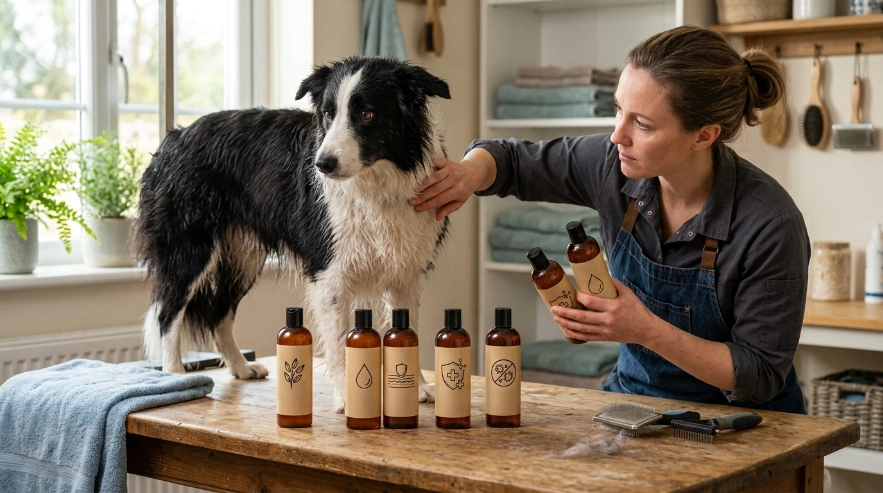
The best shampoo depends more on the type of itch than on the Border Collie breed name printed on the bottle. Use the least aggressive formula that matches the problem.
| Shampoo Type | Best Use | Typical Ingredients | Important Limit |
|---|---|---|---|
| Soothing oatmeal | Mild dry or irritated skin | Colloidal oatmeal, moisturizers | Doesn’t treat infection or parasites |
| Hypoallergenic | Sensitive or easily irritated skin | Simple fragrance-free cleansing base, moisturizers | “Hypoallergenic” doesn’t guarantee zero reactions |
| Barrier-supporting | Dry or compromised skin | Ceramides, fatty-acid or moisturizing ingredients | Underlying disease may still need treatment |
| Antibacterial | Veterinary-diagnosed bacterial skin problems | Often chlorhexidine, commonly around 2–4% | Use according to veterinary directions |
| Antifungal combination | Diagnosed or suspected yeast involvement | Chlorhexidine plus miconazole or ketoconazole | Not a routine shampoo for uncomplicated itch |
I don’t choose a medicated bottle simply because it sounds stronger. Stronger isn’t automatically better when the actual problem is dry skin or environmental irritation.
Vet note: Medicated shampoos target specific skin conditions, so ask your veterinarian which active ingredient and bathing schedule fit your dog.
Which Shampoo Ingredients Help Itchy Skin?
For uncomplicated itching, the most useful shampoo ingredients are usually soothing and moisturizing rather than aggressively antiseptic. Medicated ingredients become more important when a veterinarian identifies infection or another specific skin disorder.
Colloidal oatmeal
Colloidal oatmeal is finely processed oatmeal designed to disperse through water and contact the skin. It can soothe mild irritation while helping the skin retain moisture.
This is why oatmeal is my default starting point when a Border Collie’s skin looks mildly dry but otherwise healthy. I still stop using it if the dog becomes itchier after bathing.
Ceramides and moisturizing ingredients
Ceramides are lipids that help form part of the skin’s protective barrier. Barrier-supporting shampoos can be useful when dry skin accompanies the itch.
These formulas are especially appealing when you want gentle cleaning without a strong degreasing effect. A comfortable skin barrier matters more than creating an unusually squeaky-clean coat.
Chlorhexidine and antifungal ingredients
Chlorhexidine is an antimicrobial ingredient used in veterinary dermatology. Miconazole and ketoconazole are antifungal ingredients that may appear in combination shampoos for yeast-related skin problems.
The Merck Veterinary Manual’s topical treatment guidance describes antimicrobial shampoos containing chlorhexidine combined with antifungal ingredients for appropriate veterinary skin conditions.
These aren’t products I would use as casual “extra-strength” shampoo. The active ingredient needs to match the diagnosed or suspected problem.
Vet note: Follow the product label and veterinary instructions for medicated shampoo contact time, frequency, and treatment length.
What Shampoo Ingredients Should You Avoid?
Avoid choosing products based mainly on perfume, foaming power, or a claim that they strip every trace of oil. An itchy Border Collie needs a comfortable scalp and skin surface, not a harsh deep clean.
Human shampoo
Human shampoo isn’t my routine substitute for dog shampoo. Products made for people may contain fragrances and cleansing systems that don’t suit sensitive canine skin.
Strong fragrances
A pleasant smell doesn’t mean a formula is gentle. When a dog is already itchy, I prefer fragrance-free products whenever possible.
Essential oils and homemade mixtures
Don’t assume a plant-derived ingredient is automatically safe for dogs. Concentrated essential oils can cause problems, and homemade mixtures are difficult to dose or evaluate consistently.
Harsh degreasers
Degreasing ingredients have legitimate veterinary uses for certain oily skin disorders. They can also be drying, so they aren’t my first choice for a Border Collie with simple dry itch.
- Choose dog shampoo over human shampoo.
- Favor fragrance-free formulas for sensitive skin.
- Avoid adding essential oils yourself.
- Don’t mix different medicated shampoos without veterinary guidance.
- Stop using a product if redness or itching gets worse.
Vet note: If a shampoo seems to trigger swelling, hives, breathing changes, or another sudden severe reaction, seek veterinary help immediately.
How Do You Shampoo an Itchy Border Collie?
The right shampoo can still fail if it stays trapped in a Border Collie’s dense undercoat. Thorough preparation, rinsing, and drying matter just as much as the formula.
1. Brush before the bath
Remove loose undercoat, dirt, burrs, and small tangles while the coat is dry. Water can tighten existing tangles and make the coat harder to rinse.
2. Inspect the skin
Part the fur around the belly, armpits, neck, paws, rump, and tail base. Look for fleas, redness, scabs, odor, greasy patches, broken skin, and hair loss.
3. Use lukewarm water
Soak the coat gradually until water reaches the skin beneath the protective outer hair. Hot water can make already-irritated skin less comfortable.
4. Apply shampoo gently
Follow the shampoo label for dilution and application. Massage with your fingertips rather than scratching the skin with your nails.
5. Respect contact time
A normal soothing shampoo may not need a long contact period. Medicated products can require specific timing, so never invent your own schedule.
VCA’s medicated shampoo guidance explains that antibacterial, antifungal, and allergy shampoos are selected according to the condition being treated.
6. Rinse deeper than you think
Separate the coat with your fingers while rinsing the chest, neck, belly, hindquarters, and tail area. Continue until the hair no longer feels slippery.
7. Dry the undercoat
Blot with absorbent towels instead of scrubbing longer coat sections back and forth. Use comfortable, low-heat or cool airflow if your dog accepts a dryer.
I always check close to the skin before calling the dog dry. A rough-coated Border Collie can look dry on top while the undercoat still feels cool and damp.
Section Takeaway: Good itch relief requires more than buying the right shampoo. Brush first, inspect the skin, rinse completely, and make sure the dense undercoat dries.
Vet note: If bathing repeatedly seems necessary to control severe itching, ask your veterinarian about the underlying cause instead of increasing bath frequency on your own.
When Does Itching Need a Veterinarian?
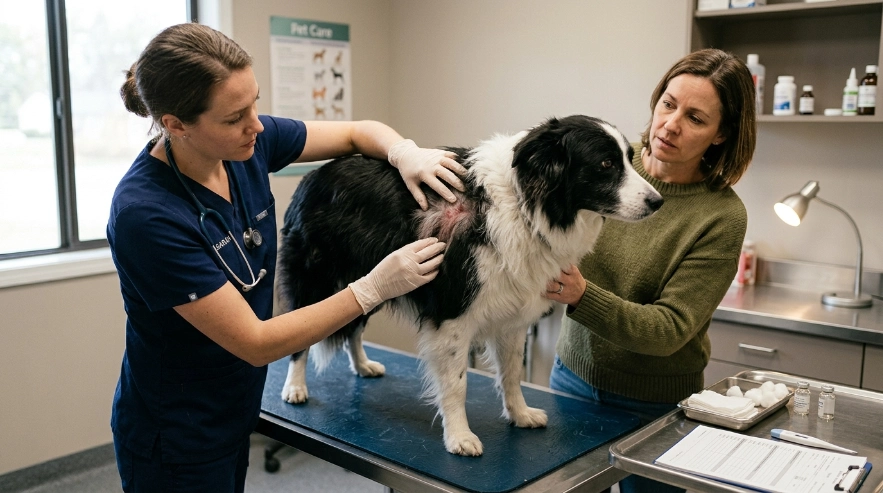
A shampoo is appropriate for mild grooming-related irritation, but persistent itching deserves investigation. Allergies, parasites, bacterial infections, yeast overgrowth, and other skin diseases can look similar at home.
Contact your veterinarian if you notice:
- Persistent scratching: The itch continues despite gentle bathing and routine parasite prevention.
- Open sores: Scratching or chewing has damaged the skin.
- Hair loss: Bald patches or thinning develop around itchy areas.
- Strong odor: The skin smells yeasty, sour, or unusual even after drying.
- Greasy skin: Oily areas return quickly after bathing.
- Marked redness: The belly, paws, ears, or other areas look inflamed.
- Ear problems: Head shaking, discharge, odor, or painful ears accompany the skin itch.
- Sudden severe reaction: Facial swelling, breathing trouble, collapse, or widespread hives require urgent veterinary care.
For an itchy dog, the most useful question often isn’t “Which shampoo is strongest?” It is “What is making this dog itch?”
Once the cause is clearer, shampoo becomes easier to choose. Your veterinarian may recommend soothing care, parasite control, allergy management, antimicrobial treatment, or another approach.
Section Takeaway: Shampoo can relieve symptoms, but recurring itch usually needs a cause-based plan. Redness, sores, odor, hair loss, and severe discomfort are reasons to involve your veterinarian.
Vet note: Don’t delay veterinary assessment when an itchy Border Collie is damaging its skin or becoming increasingly uncomfortable.
Frequently Asked Questions
Is oatmeal shampoo good for an itchy Border Collie?
Yes. A dog-specific colloidal oatmeal shampoo is a sensible first choice for mild dry or irritated skin because it can soothe itching and support moisture retention. It will not treat fleas, bacterial infections, yeast infections, or every allergy.
Can I use human shampoo on my itchy Border Collie?
I would avoid routine use of human shampoo. Choose a shampoo made specifically for dogs, especially when your Border Collie’s skin is already itchy or sensitive.
How often should I bathe an itchy Border Collie?
There isn’t one correct schedule for every itchy dog. A veterinarian may recommend more frequent bathing for certain allergies or skin diseases, while unnecessary repeated shampooing can worsen dryness in other dogs.
Is medicated shampoo better than oatmeal shampoo?
Not automatically. Oatmeal shampoo suits many cases of mild dry irritation, while medicated shampoo targets specific problems such as bacterial or yeast involvement and should be chosen according to the underlying condition.
What shampoo is best for a Border Collie with allergies?
A fragrance-free hypoallergenic or soothing dog shampoo may help wash environmental allergens from the coat. Dogs with ongoing allergic dermatitis often need a broader veterinary treatment plan because shampoo alone may not control the underlying inflammation.
Why is my Border Collie still itchy after a bath?
The original cause may still be present, or shampoo residue may remain inside the dense undercoat. Parasites, allergies, infection, over-bathing, product sensitivity, and incomplete rinsing are all possibilities worth checking.
Should I use flea shampoo when my Border Collie is scratching?
Don’t assume fleas are responsible simply because your dog scratches. Flea shampoo can kill some parasites present during washing, but effective ongoing flea prevention is usually more important than relying on shampoo alone.
Vet note: A veterinarian can help distinguish ordinary dry skin from allergy, parasite, bacterial, fungal, and other causes of persistent itching.
Final Takeaway
For a mildly itchy Border Collie with otherwise normal skin, my first choice is a gentle, fragrance-free, dog-specific shampoo with colloidal oatmeal or moisturizing ingredients. It cleans without immediately reaching for strong medicated ingredients.
Match the shampoo to what you see on the skin. Dry flakes call for a different approach than greasy odor, sores, flea exposure, or repeated paw chewing.
- Start with a mild dog-specific soothing shampoo for uncomplicated itch.
- Choose fragrance-free products when the skin is sensitive.
- Brush the double coat before bathing.
- Rinse until no shampoo residue remains near the skin.
- Dry the dense undercoat completely.
- Don’t use medicated shampoo simply because it sounds stronger.
- See your veterinarian when itching persists or skin changes appear.
As of 2026, I still use the same simple rule with Border Collie skin care: solve the cause instead of repeatedly covering the symptom. The right shampoo can make an itchy dog more comfortable, but knowing when shampoo isn’t enough is just as important.
