

Quick Answer
Border Collie shedding after a bath is usually normal because washing, rinsing, towel drying, and brushing loosen dead hairs already sitting in the double coat. You may notice much more fur for a day or two, especially during seasonal shedding. However, shedding with itching, redness, bald patches, sores, or heavy dandruff may signal a skin problem rather than normal coat release. If flakes or irritation appear too, check this guide to Border Collie dry skin after a bath.
What to check first
- Loose fluffy hair: Dead undercoat often comes free during washing and drying.
- No bare skin: Normal shedding should not create obvious bald patches.
- Season matters: A bath during a heavy shedding period can release a surprising amount of coat.
- Brush after drying: A gentle post-bath grooming session removes hair the bath loosened.
- Watch the skin: Redness, sores, strong itching, or patchy hair loss deserves closer attention.
What I would do
- Dry the coat thoroughly, brush out the released undercoat gently, and monitor the skin rather than giving another bath.
Seeing a cloud of fur after bathing a Border Collie can look alarming. I’ve had baths where the tub seemed clean, then the drying and brushing stage produced enough loose undercoat to fill my hand several times.
In most cases, the bath did not suddenly cause new hair loss. It simply helped release hairs that were already ready to leave the coat.
In This Guide
- Why Is My Border Collie Shedding More After a Bath?
- Is Post-Bath Shedding Normal or Too Much?
- Does Bathing Cause a Border Collie to Shed?
- How Should I Brush a Border Collie After a Bath?
- What Bathing Mistakes Can Make Shedding Look Worse?
- Do Rough and Smooth Border Collies Shed Differently After Baths?
- When Does Shedding After a Bath Need a Vet?
- How Can I Reduce Loose Hair After Future Baths?
- Frequently Asked Questions
Why Is My Border Collie Shedding More After a Bath?
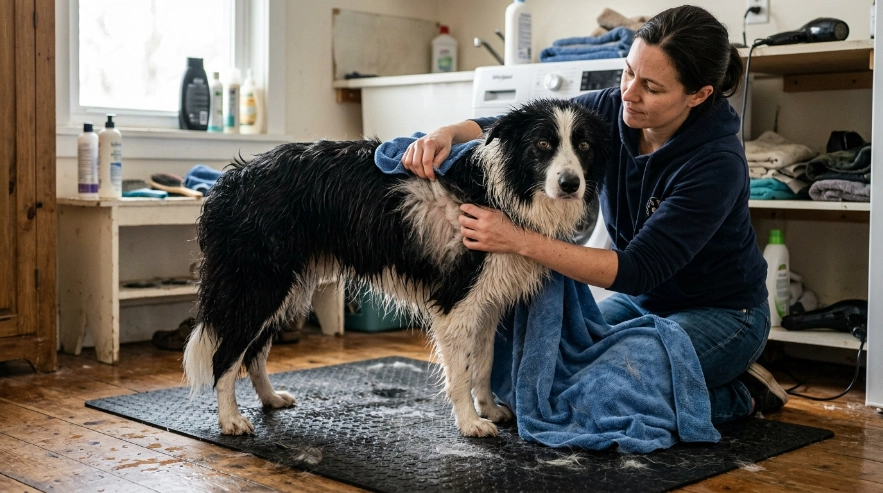
Your Border Collie may appear to shed more after bathing because water and physical grooming loosen dead hairs trapped inside the coat. Drying and brushing then pull those hairs away from the surrounding live coat.
A Border Collie’s double coat consists of a protective outer coat and a softer undercoat. Both rough-coated and smooth-coated Border Collies have this basic two-layer structure.
The American Kennel Club’s Border Collie breed information describes both coat varieties as dense, weather-resistant double coats. That dense undercoat can hold loose hair long after each strand has finished its normal growth cycle.
The bath releases hair that was already loose
Think of bathing as the first stage of a deep grooming session. Water reaches between hairs while your hands, shampooing, rinsing, towels, and airflow disturb loose fur.
The result becomes obvious during drying. What looks like sudden shedding is often accumulated dead coat finally coming free.
- Water: Separates and moves hairs within the dense coat.
- Massage: Loosens dead hairs while shampoo is worked through the fur.
- Rinsing: Carries some loose hair away.
- Towel drying: Releases additional hairs through gentle friction.
- Air drying or blow drying: Separates loose undercoat from surrounding fur.
- Brushing: Removes the hairs that remain trapped after drying.
Seasonal coat changes make the effect stronger
Border Collies shed throughout the year, but seasonal coat changes can increase the amount dramatically. A bath that lands during a heavy shedding period may release much more undercoat than one given several weeks earlier.
PetMD’s Border Collie grooming guide also notes that the breed sheds regularly and benefits from routine brushing. That ongoing turnover explains why loose hair can collect beneath a coat that looks tidy from above.
Section Takeaway: A bath usually exposes existing shedding rather than creating it. The dense undercoat simply makes the released hair look more dramatic.
Is Post-Bath Shedding Normal or Too Much?
Post-bath shedding is usually normal when the skin looks healthy and the remaining coat stays evenly covered. The amount of hair matters less than what is happening underneath it.
Here is the comparison I use before worrying about a pile of fur.
| What You Notice | More Likely Normal | Needs Closer Attention |
|---|---|---|
| Loose hair after drying | Yes, especially during shedding season | If hair comes out with irritated skin |
| Skin appearance | Normal color with no sores | Red, crusted, moist, bleeding, or inflamed |
| Coat coverage | Even coverage remains | Bald or visibly thinning patches |
| Dog’s behavior | Comfortable and acting normally | Repeated scratching, licking, chewing, or rubbing |
| Timing | Settles after grooming | Keeps worsening for days |
Part the coat instead of judging it only from above. I check the neck, chest, belly, armpits, tail base, rear legs, and behind the ears.
Loose fur without skin changes is usually a grooming issue. Loose fur combined with abnormal skin changes is a different situation.
*Vet note: Persistent hair loss, strong itching, redness, sores, or bald spots should be discussed with your veterinarian.*
Does Bathing Cause a Border Collie to Shed?
Bathing does not usually create the normal shedding cycle. It makes existing loose hair easier to see and remove.
The distinction matters. Owners sometimes respond to a large post-bath shed by bathing again, which is rarely necessary.
Bathing can help remove loose undercoat
Dogs with substantial undercoat can release significant dead hair during a bath. VCA’s dog grooming and coat-care guidance notes that dogs with heavy undercoats may benefit from bathing during seasonal shedding periods.
That does not mean shampoo is a de-shedding cure. Regular brushing remains the main way I manage loose Border Collie coat.
Overbathing is different
Too-frequent bathing can irritate or dry some dogs’ skin, particularly when harsh products are involved. Skin irritation may then produce scratching, licking, dandruff, or abnormal hair loss.
That is not the same process as ordinary seasonal shedding. If the skin is uncomfortable, investigate the bathing routine rather than assuming every loose hair is normal.
Before planning another wash, ask whether the dog is genuinely dirty or smelly. This guide on signs your Border Collie needs a bath can help separate a real bathing need from routine coat maintenance.
How Should I Brush a Border Collie After a Bath?
Dry the coat thoroughly, then remove loosened fur with controlled brushing rather than aggressive scraping. Work in sections so you reach the undercoat instead of skimming across the top.
My post-bath routine
- Blot with towels. Press water from the coat instead of rubbing the fur into circles.
- Dry through the undercoat. Check near the skin, not only the outer hairs.
- Separate the coat. Work through the neck, chest, sides, rear legs, belly, and tail in sections.
- Brush gently. Use a suitable pin brush, slicker, comb, or undercoat tool for the individual coat.
- Remove loose fur gradually. Stop if the tool catches firmly or appears to scrape the skin.
- Finish with a comb check. Look for hidden tangles around feathering and friction areas.
If shampoo is difficult to remove, fix that before worrying about shedding. A dense undercoat can hide residue, so use the detailed method in this guide to rinse a Border Collie’s thick coat thoroughly.
Do not force out every hair
A common mistake is treating de-shedding like a contest. Once the obviously loose coat is gone, repeated hard brushing can irritate healthy skin and damage hair.
I prefer several gentle grooming sessions over one marathon session when a dog is blowing a lot of undercoat. The dog stays more comfortable, and I can see how the coat settles between sessions.
What Bathing Mistakes Can Make Shedding Look Worse?
Several bathing mistakes can make a normal shed look more dramatic or leave the skin and coat in worse condition. Most are easy to prevent.
- Skipping the pre-bath brush: Loose undercoat stays packed inside the coat until water releases it.
- Bathing a tangled coat: Existing knots can tighten when wet.
- Using too much shampoo: Excess product makes thorough rinsing harder.
- Using human shampoo: Products formulated for people are not the best choice for routine canine bathing.
- Scrubbing in circles: Vigorous friction can create tangles in longer feathering.
- Rubbing hard with towels: Twisting the wet coat increases friction and knotting.
- Leaving the undercoat damp: The outer hair can feel dry while moisture remains closer to the skin.
- Brushing too aggressively: Excess pressure can irritate skin and pull healthy coat.
The ASPCA’s dog grooming recommendations advise brushing before bathing, using pet-formulated shampoo, rinsing carefully, and drying the dog thoroughly.
If tangles are your main problem, follow this routine for preventing tangles during a Border Collie bath. Removing knots before water touches the coat makes post-bath grooming much easier.
Do Rough and Smooth Border Collies Shed Differently After Baths?
Both rough and smooth Border Collies shed because both varieties have double coats. The difference is mostly how the loose hair looks and where it becomes trapped.
Rough-coated Border Collies
Rough coats have longer hair and feathering around areas such as the chest, legs, belly, and tail. Loose undercoat may remain hidden among those longer hairs until bathing and brushing release it.
These coats also deserve extra tangle checks. Feathering can hold damp hair and knots more easily than the flatter coat across the back.
Smooth-coated Border Collies
Smooth coats look shorter and easier to manage, but the undercoat still sheds. The released hair may simply appear shorter and less tangled.
Do not assume the smooth variety needs no undercoat grooming. A hand passed over the top of the coat cannot always reveal loose hair sitting underneath.
The AKC’s double-coat grooming guidance also cautions against treating shaving as a solution for shedding. Maintaining the protective coat is a better long-term approach.
If you are considering trimming before washing, see what should and should not be cut in this Border Collie pre-bath trimming guide.
When Does Shedding After a Bath Need a Vet?
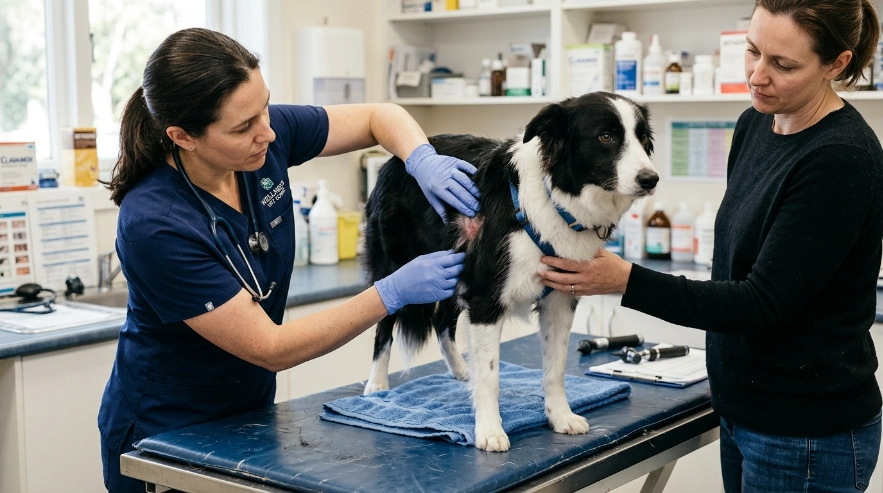
Call your veterinarian when post-bath shedding comes with abnormal skin, obvious discomfort, or patchy hair loss. Normal shedding should not leave your Border Collie with sore skin or clear bald areas.
Hair loss can have many causes unrelated to the bath itself. The timing may simply make an existing condition easier to notice.
Signs I would not ignore
- Bald patches: Areas where the skin becomes clearly visible.
- Persistent itching: Repeated scratching, biting, licking, or rubbing.
- Redness: Inflamed skin beneath the coat.
- Scabs or sores: Crusted, bleeding, moist, or painful areas.
- Strong odor: An unusual smell coming from the skin or coat.
- Heavy dandruff: Flaking that continues after the dog is completely dry.
- Coat texture change: Hair that becomes unusually brittle, dull, or easy to pull out.
- Repeated reaction: The same abnormal shedding after every bath.
The ASPCA notes that excessive hair loss can be associated with problems such as parasites, infections, allergies, and other medical conditions. Those possibilities cannot be diagnosed accurately by looking at loose fur alone.
Take a few photos if the problem develops after bathing. Also record the shampoo used, bath date, skin changes, and how long the shedding continues.
That information can make the pattern clearer for your veterinarian. It also prevents you from repeatedly switching products without knowing what triggered the problem.
*Vet note: Seek veterinary advice for persistent or worsening hair loss, significant itching, red skin, wounds, bald areas, or any sudden change in your Border Collie’s normal coat.*
How Can I Reduce Loose Hair After Future Baths?
You cannot stop healthy Border Collie shedding, but you can keep loose hair from accumulating in the coat. Consistent grooming before and after baths makes the biggest difference.
Brush before the bath
I consider this the most useful step. Remove loose coat while it is dry so less hair ends up in the tub, towels, dryer, and post-bath brush.
Pay special attention to the neck, chest, rear legs, tail, and behind the ears. Work down toward the undercoat instead of brushing only the surface.
Use only as much shampoo as needed
More shampoo does not mean a cleaner coat. It can simply create more rinsing work inside a dense double coat.
If estimating the right quantity is difficult, use this guide on how much shampoo to use for a Border Collie.
Dry the coat completely
A damp undercoat can clump together and make loose hair harder to manage. Check the coat near the skin before deciding the dog is finished drying.
When using a dryer, choose comfortable airflow and keep it moving rather than concentrating heat on one spot. Watch your dog’s comfort throughout the process.
Keep grooming consistent between baths
As of 2026, the simple routine still wins for me. I would rather brush a manageable amount of loose hair regularly than wait until weeks of dead undercoat come out during one bath.
- Routine weeks: Brush thoroughly at least once or twice each week, adjusting for the individual coat.
- Heavy shedding: Increase grooming frequency as loose undercoat appears.
- Muddy days: Use brushing, paw cleaning, or spot rinsing when a full shampoo bath is unnecessary.
- Before bathing: Remove loose coat and tangles first.
- After bathing: Dry thoroughly and perform a gentle coat check.
Section Takeaway: You cannot eliminate normal shedding, but regular brushing keeps dead undercoat from building up until bath day. The goal is a healthy coat, not a zero-hair Border Collie.
Frequently Asked Questions
Why is my Border Collie shedding like crazy after a bath?
A bath can loosen large amounts of dead undercoat that were already ready to shed. The effect is especially noticeable during seasonal coat changes, when drying and brushing may release far more fur than you normally see during daily activity.
How long does shedding last after a Border Collie bath?
The biggest release often happens during drying and the first few grooming sessions afterward. Continued shedding can still be normal because Border Collies shed routinely, but sudden patchy hair loss or worsening skin symptoms should not be dismissed as ordinary post-bath shedding.
Should I brush my Border Collie before or after bathing?
Do both. Brush before bathing to remove loose undercoat, dirt, and tangles, then brush again after the coat is thoroughly dried to remove hair loosened during washing and drying.
Can shampoo make my Border Collie shed more?
Ordinary dog shampoo should not create normal seasonal shedding. However, an irritating product, excessive bathing, or shampoo residue may contribute to itching or skin problems that can involve abnormal hair loss.
Should I use a de-shedding tool after a bath?
An appropriate undercoat tool can help remove loose fur once the coat is dry, but use gentle pressure and match the tool to your dog’s coat. Stop if it catches, scratches the skin, or appears to remove healthy coat aggressively.
Does blow drying make a Border Collie shed more?
Airflow can make shedding look heavier because it separates loose undercoat from the surrounding fur. It does not necessarily mean the dryer caused the hairs to die or enter the shedding cycle.
Is it normal to see clumps of Border Collie hair after bathing?
Loose tufts can be normal during a heavy undercoat shed if the skin beneath remains healthy and evenly covered. Clumps associated with bald areas, redness, sores, strong itching, or pain deserve veterinary attention.
The main takeaway: Border Collie shedding after a bath usually means the wash and drying process released dead hair already sitting inside the double coat. Dry the coat thoroughly, brush gently, and expect more loose fur during seasonal shedding.
Focus on the skin as much as the hair. If your Border Collie stays comfortable with an evenly covered coat, the post-bath fur pile is usually a grooming problem rather than a medical one.
If you see bald patches, persistent itching, redness, sores, or repeated abnormal hair loss after baths, contact your veterinarian. Healthy shedding can be messy, but it should not make your dog uncomfortable.
