
Can Dogs Be Neutered at Any Age? A Practical Guide for Border Collie Owners

Yes — in many cases, dogs can be neutered at almost any age, and there is usually no strict upper age limit. But a vet should clear the dog based on overall health status before surgery.
What matters most is not the number on the calendar. It’s the dog’s overall health, the reason for surgery, and how safely anesthesia and recovery are likely to go. A healthy adult dog may be a straightforward candidate. A senior dog with a heart murmur, kidney disease, or poor mobility may need extra testing first. A very young puppy may be physically able to undergo surgery, but timing still needs to be weighed against growth, behavior, and breed-specific considerations.
For Border Collie owners, that nuance matters. This breed is athletic, fast-growing, and often mentally intense. Timing can affect not just surgery planning, but joint development, maturity, and behavior management.
Can dogs be neutered at any age?
In practical terms, yes, dogs can often be neutered as puppies, adults, or older seniors. The ASPCA’s general guidance indicates that neutering is commonly done in the puppy stage or later, depending on the dog and the veterinarian’s recommendation, but the best timing can vary by individual case. ASPCA guidance on spay/neuter timing
That said, there is no universal “too old” line that applies to every dog. A fit 10-year-old may be a better surgical candidate than a younger dog with uncontrolled disease. In other words, age is a clue, not the final answer.
A useful way to think about it:
- Puppy: surgery may be physically possible, but timing should account for breed and maturity.
- Adult: often the simplest stage for decision-making if the dog is healthy.
- Senior: still possible in many cases, but the pre-op workup becomes more important.
For most owners, the real question is not “Is my dog too old?” It’s “Is my dog healthy enough for anesthesia, and does the timing still make sense for this breed and this life stage?”
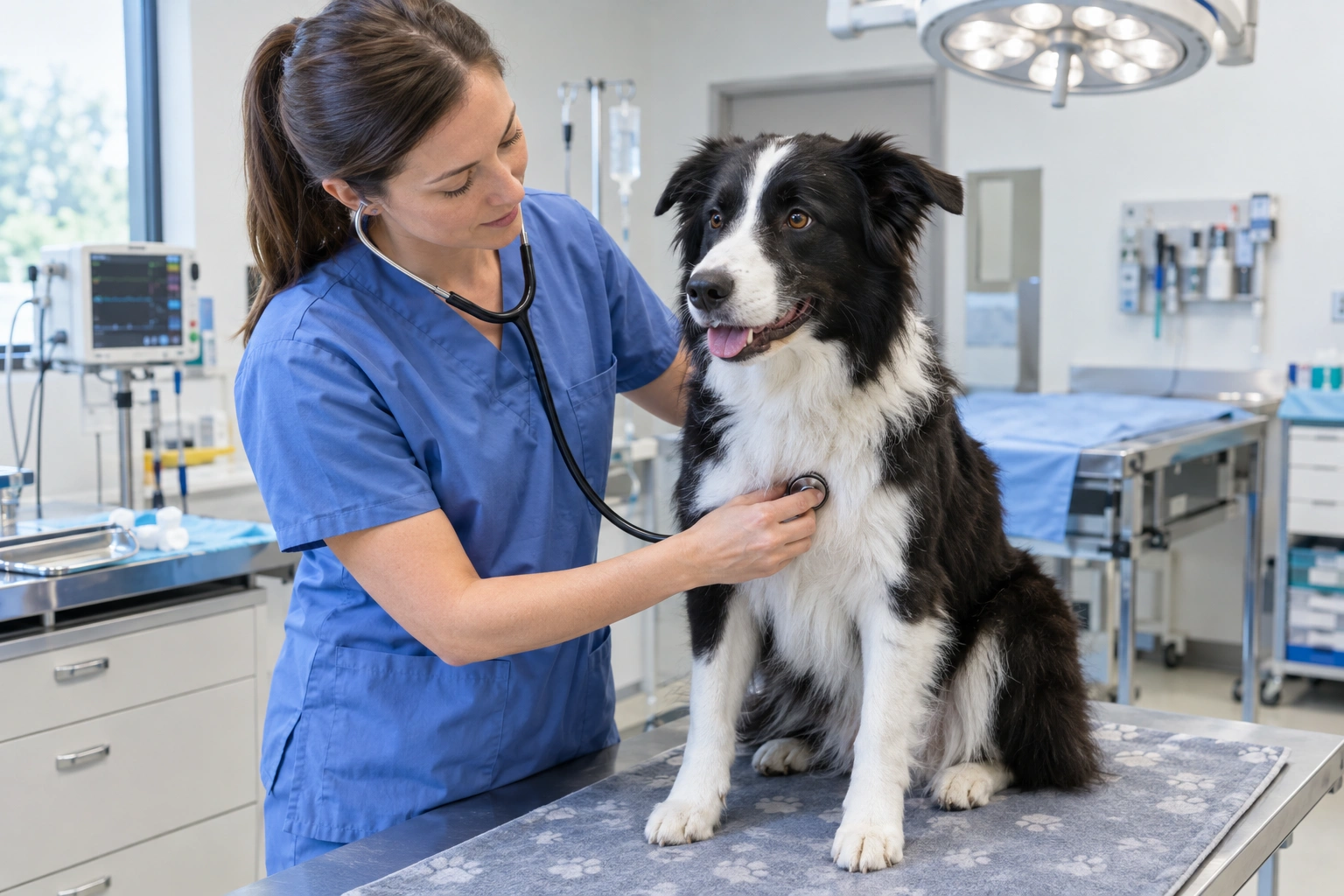
What actually determines whether an older dog can be neutered safely
Chronological age matters less than medical risk. A veterinarian is usually looking at how several factors work together: whether the dog can tolerate anesthesia, whether any underlying disease is stable, and whether recovery is likely to be smooth enough to justify surgery now.
The main factors are:
Overall health status
A dog with normal energy, stable weight, and a clean physical exam is usually a better candidate than a dog that looks tired, breathes heavily, or has unexplained weight loss.
Heart, kidney, liver, and endocrine function
These systems are central to anesthesia safety. If one of them is compromised, the risk profile changes. A dog with well-managed disease may still be eligible, but the plan may need adjustment.
Mobility and body condition
Overweight dogs often have a harder time with anesthesia and recovery. Dogs with arthritis or weakness may also struggle with post-op rest, stairs, or getting up and down safely.
Recovery capacity
Some dogs bounce back quickly. Others need closer monitoring, more help moving around, and stricter activity control.
Reason for neutering
If the surgery is being considered to address roaming, marking, testicular disease, or reproductive risk, the benefit may be strong enough to justify a later-life procedure. If the reason is less urgent, the vet may suggest waiting or not proceeding.
A simple decision rule helps here: if the dog is medically fragile, ask for a pre-surgical workup before assuming surgery is safe.
How neutering risk changes across puppies, adults, and senior dogs
The age group changes the conversation because the risks are not identical.
| Life stage | Typical upside | Typical downside | Practical takeaway |
|---|---|---|---|
| Puppy | Early prevention of unwanted litters; may reduce some hormone-driven behaviors sooner | Timing may intersect with growth and skeletal development | Best decided with breed and size in mind |
| Adult | Often the most balanced stage for surgery planning | Some hormone-related behaviors may already be established | Usually the easiest stage for a clear yes/no decision |
| Senior | Can still be done if the dog is healthy | Higher chance of needing extra screening and slower recovery | Health status matters more than age alone |
For younger dogs, the big question is often developmental. For older dogs, the big question is surgical tolerance.
This is where breed matters. The Kennel Club notes that neutering timing can depend on physical and sexual maturity, which varies by breed; smaller dogs often mature earlier than larger breeds. The Kennel Club’s neutering guidance
What a vet should check before neutering an adult or senior dog
Before surgery, a proper vet visit should do more than confirm that the dog “looks okay.” For an adult or senior dog, the pre-surgery workup should usually include:
Physical exam
The vet checks heart and lung sounds, body condition, hydration, temperature, and any signs of pain or illness. This is the first filter for whether anesthesia is reasonable.
Pre-anesthetic bloodwork
This is commonly recommended for adult and senior dogs, especially as they get older or if there are any health concerns. Bloodwork helps reveal issues that are not obvious on exam, such as anemia, kidney problems, liver concerns, or metabolic abnormalities. It is often routine in older dogs, but it is not always mandatory for every healthy patient.
Additional diagnostics when needed
Depending on the dog, the vet may recommend:
– chest X-rays
– an ECG
– urinalysis
– blood pressure measurement
– further tests for endocrine disease
That extra testing is not “overcautious.” It is how a vet reduces the chance of being surprised once anesthesia starts. These tests are usually recommended when the physical exam, age, or history suggests a higher anesthetic risk.
If your dog is a rescue with unknown history, or an older dog that has not had recent wellness care, assume the vet may want more than a routine pre-op visit.
When extra testing or specialist clearance is needed
Some dogs need a more cautious path before neutering. That does not automatically mean “no.” It means “not yet, or not without more information.”
Common reasons for extra clearance
- heart murmur
- kidney disease
- liver disease
- diabetes or other endocrine disorders
- chronic respiratory disease
- unexplained weight loss
- history of fainting, collapse, or exercise intolerance
- poor mobility or severe arthritis
- unknown medical history
A murmur, for example, may be harmless or may signal a problem that changes the anesthesia plan. Kidney disease may alter how the body handles medications and fluids. Respiratory disease may make airway management more complicated.
If the dog is medically complex, your vet may suggest postponing surgery until a condition is stable, or referring you to a specialist for a more detailed anesthesia assessment.
Border Collie and other breed-specific timing considerations
Border Collies are not the same as a toy breed or a giant breed. They are athletic, energetic, and often still filling out physically when owners first start thinking about neutering. That matters because timing is not only about reproduction; it can also intersect with development, body condition, and orthopedic screening.
Research and veterinary guidance increasingly suggest that timing should be individualized by breed, sex, and size rather than treated as a one-size-fits-all rule. The AKC Canine Health Foundation has discussed possible links between earlier neutering and some orthopedic or cancer risks in certain dogs, but the evidence is not identical across all breeds, so these decisions should be individualized with a veterinarian. AKC Canine Health Foundation on neutering age
For a Border Collie, the practical question is often this:
- Is the dog still growing?
- Are there behavior reasons to neuter sooner?
- Is the dog physically mature enough that delaying surgery may be reasonable?
- Does the dog have any orthopedic concerns already, or a family/personal history that makes joint screening worth discussing?
A healthy Border Collie that is still maturing may benefit from a more individualized timeline than a small companion breed with fewer orthopedic concerns, but that should be a vet-guided decision rather than a blanket rule.
Benefits and trade-offs of neutering later in life
Later-life neutering can still make sense. It may be chosen because the dog was previously intact for health, behavioral, or ownership reasons, or because the owner adopted an adult dog and is now planning surgery.
Potential benefits of waiting
- the dog may be more skeletally mature
- some breed-related orthopedic concerns may be easier to weigh
- you may have more information about the dog’s behavior and health
- the dog may be large enough and stable enough for a more predictable surgical plan
Potential downsides of waiting
- anesthesia planning may become more complex with age
- recovery may be slower in less fit dogs
- hormone-driven behaviors may already be established
- accidental breeding risk continues until surgery happens
There is a trade-off here. Waiting can be smart for certain breeds and body types, but delaying too long in a dog with behavior problems or reproductive risk can create new headaches. The best timing is the one that fits the dog in front of you, not the average dog.
What recovery looks like for an adult or senior dog
Recovery after neutering is usually straightforward, but age and health can change the pace.
A younger adult dog may be back to normal routines quickly, while a senior dog may need more supervision and a quieter environment. The actual incision healing still needs the same basic care, but the dog’s energy level, comfort, and mobility can affect how easy that care is to manage.
Plan for:
- restricted activity during early healing
- leash-only bathroom trips
- no running, jumping, or rough play
- monitoring the incision daily
- watching for swelling, redness, discharge, or unusual lethargy
Older dogs may also need practical help with stairs, slippery floors, or getting in and out of the car. If your Border Collie is used to constant exercise, that temporary restriction can be frustrating. A calm recovery plan matters as much as the surgery itself.
One practical tip: arrange the home before surgery day. Set up a quiet resting area, block off furniture if your dog likes to jump, and keep the leash, cone, and medications in one place.
When neutering may not be recommended right now
Some dogs should not be scheduled for surgery until a veterinarian says the risks are controlled.
That includes dogs that are:
– actively ill
– unstable on current treatment
– showing signs of heart, kidney, liver, or respiratory compromise
– significantly underweight or overweight without a plan
– weak, collapsing, or unable to tolerate normal activity
– dealing with an unresolved medical issue
In these cases, the right move may be to stabilize the condition first, then reassess. Sometimes surgery is still possible later. Sometimes the vet will decide the dog is not a good candidate for anesthesia at that time.
This is where owners should resist the urge to “just get it done.” A rushed decision is rarely the safest one.
Questions to ask your veterinarian before scheduling neutering
Bring a short checklist to the appointment. It helps you get a clearer answer than “yes, probably.”
Ask:
1. Is my dog a good anesthesia candidate right now?
2. Do you recommend pre-anesthetic bloodwork or any other testing?
3. Does my dog’s breed or size change the timing recommendation?
4. Are there any medical concerns that should be addressed first?
5. Should we wait for more maturity, especially for an athletic breed like a Border Collie?
6. What recovery restrictions should I expect for my dog’s age and condition?
7. If we delay surgery, what changes would make you reconsider?
Those questions turn a vague yes/no into a real plan.
Bottom line
Dogs can often be neutered at many ages, including as adults and, in some cases, as seniors. There is usually no fixed upper age cutoff. The real issue is whether the dog is healthy enough for anesthesia, whether the timing makes sense for the breed, and whether the expected benefits outweigh the risks.
For Border Collies, that decision deserves extra attention because they are athletic, active, and often still developing when owners first start thinking about neutering. A good veterinarian will look at the whole dog, not just the calendar.
If you want more context on life-stage planning for active dogs, our guide on how long dogs can be left alone can help you think about recovery support and supervision needs. And if you’re wondering whether fertility can linger after surgery, see our article on whether a male dog can still mate after being neutered.