
Can Dogs Get Heat Rash? What Border Collie Owners Should Know

Yes—dogs can develop skin irritation that looks and behaves a lot like heat rash, especially after hot weather, humidity, exercise, swimming, or being damp under a thick coat. In practice, the problem is often less about a single “official” diagnosis and more about a cluster of mild skin reactions caused by heat, moisture, and friction.
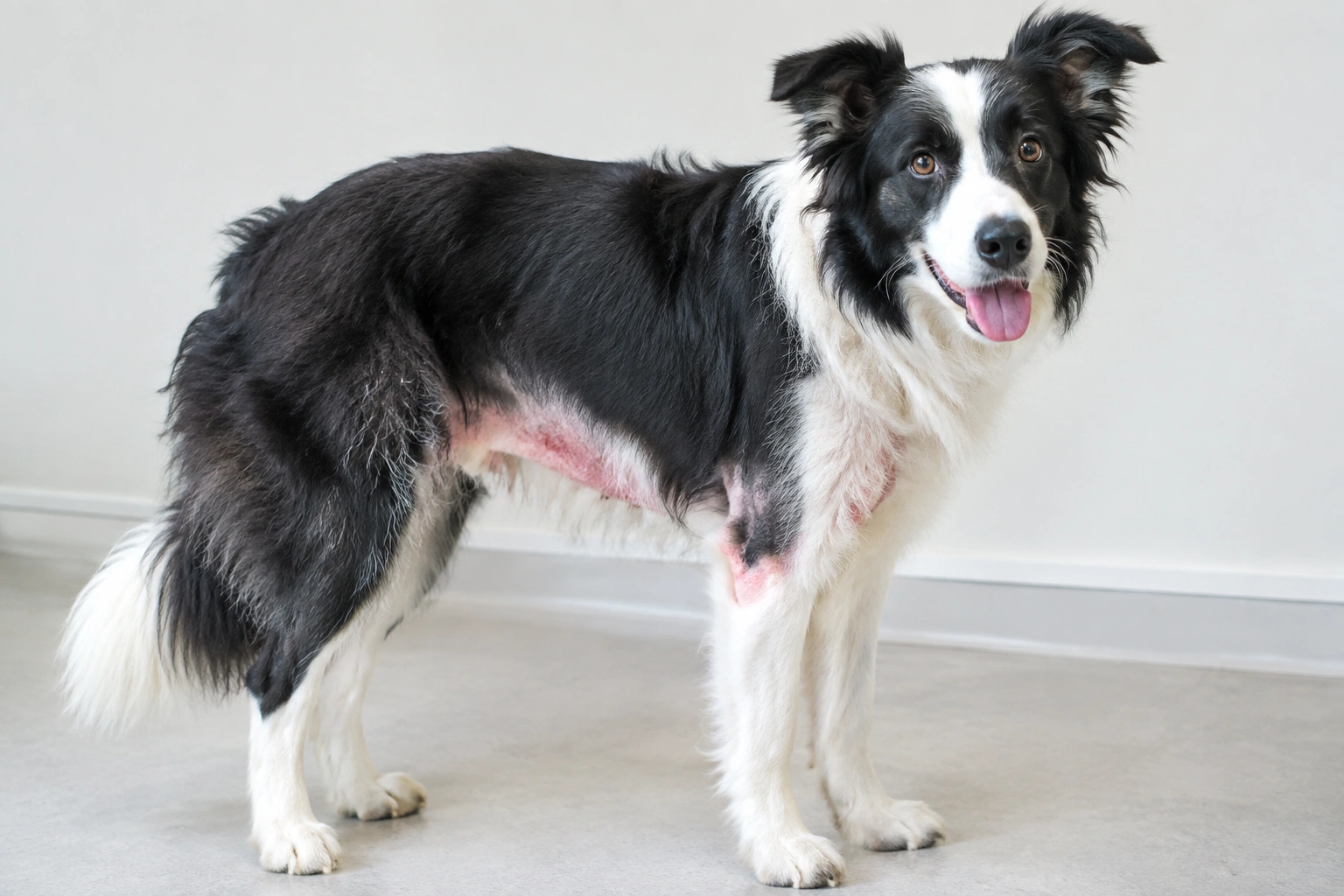
That distinction matters. A red patch after a humid hike may be a simple irritation that settles with cooling and drying. But the same red patch could also be an early hot spot, an allergic flare, an insect bite reaction, or part of a more serious heat problem. Your job is not to guess perfectly. Your job is to notice the pattern, calm the skin safely, and watch for the signs that mean a vet needs to look at it.
For Border Collie owners, this comes up more often than many people expect. Border Collies are active, quick to overdo exercise, and often carry a coat that can trap moisture close to the skin if it stays damp. That combination can create the right setup for irritation, especially in summer or after rain, swimming, or a long run.
What Heat Rash Looks Like on a Dog
A heat-related rash on a dog usually shows up as mild redness, warmth, and irritation in an area where air circulation is poor or moisture lingers. Some dogs also get small bumps, a slightly rough texture, or obvious itching. Others just seem uncomfortable and keep licking, rubbing, or shifting position.
The most common places are the belly, groin, armpits, neck, and skin folds. Those spots tend to stay warmer and damper than the rest of the body. A collar can also create a local problem on the neck, especially if the dog exercised hard, got wet, and then stayed damp for a while.
Here’s the practical clue I look for: if the skin is red but still dry, mildly itchy, and the dog otherwise seems normal, that leans toward a simple irritation. If the area is getting wetter, smellier, more swollen, more painful, or spreading quickly, you need to think beyond heat rash. Hair loss or broken skin is not usually expected with a mild heat rash; those changes make hot spots or another skin problem more likely.
A quick visual checklist can help you separate mild heat rash from an early hot spot:
- Mild heat rash: dry or slightly warm skin, light redness, small bumps, mild itch, no odor, no oozing, skin still intact
- Early hot spot: moist or wet-looking skin, stronger redness, possible hair loss from licking, odor, oozing or crusting, pain or tenderness, can spread fast
A few examples help:
- A Border Collie comes in from a humid hike with a red, itchy patch in the armpit where the front leg rubbed.
- A dog that swam, then lay in the sun while still damp, develops mild redness on the belly and groin.
- A collar area turns pink and irritated after a long walk in warm weather.
Those are the kinds of patterns that point to heat, moisture, and friction working together.
Heat Rash vs. Hot Spots, Allergies, Insect Bites, and Heat Stroke
This is the section that prevents a lot of mistakes. Many skin problems look similar at first, but they do not need the same response.
| Condition | What it often looks like | Common locations | Urgency | What to do next |
|---|---|---|---|---|
| Heat-related skin irritation | Mild redness, warmth, small bumps, itching | Belly, groin, armpits, neck, skin folds | Usually low if mild and dog is otherwise normal | Cool, dry, and monitor closely |
| Hot spot | Moist, oozing, very itchy, often rapidly worsening | Neck, hips, thighs, under collar, anywhere the dog licks or scratches | Moderate to high | Vet visit often needed, especially if spreading |
| Allergic flare | Redness, itching, recurring irritation, sometimes ears or paws too | Paws, belly, face, ears, armpits | Varies | Watch for a pattern and call a vet if it keeps returning |
| Insect bite reaction | Local swelling, a bump, sudden itchiness | Exposed skin, face, legs, belly | Usually low unless swelling is severe | Monitor for spread or facial swelling |
| Heat stroke | Heavy panting, weakness, vomiting, confusion, collapse, very hot body | Whole body issue, not just skin | Emergency | Seek urgent veterinary help immediately |
The biggest difference is this: heat rash is mostly a skin problem. Heat stroke is a whole-body emergency. A dog can have red skin after a hot walk and still be fine, but if that same dog is weak, wobbly, vomiting, or panting hard enough that it cannot settle, stop thinking about the rash and treat it as a heat emergency.
Hot spots deserve special caution because they often begin as a small irritated patch and then become moist, infected, and painful very quickly. A hot spot is usually more dramatic than simple heat rash: it tends to ooze, smell, and spread as the dog licks or scratches.
Allergies can blur the picture because they often cause redness and itching too. The clue there is repetition. If the same dog gets irritated in multiple seasons, or the ears and paws are involved too, allergies move higher on the list.
Insect bites are usually more sudden and more localized. A single raised bump or swollen area after time outdoors may point more toward a bite than heat rash.
Why Heat, Humidity, Friction, and Trapped Moisture Trigger Skin Irritation
Skin gets irritated when heat and moisture stay trapped against it long enough to soften the outer layer and increase rubbing. That is why a wet dog lying in a warm room can develop more irritation than the same dog that dries quickly in a cool, breezy space.
Humidity matters because it slows evaporation. A dog may look only slightly damp, but the skin underneath can still be staying wet for a long time. Add friction from running, collar pressure, or skin-on-skin rubbing in the armpits or groin, and you have a recipe for redness.
Border Collies are worth mentioning here because they are built for movement. They run, turn, crouch, and push themselves harder than many breeds. That activity is great for fitness, but it also means more rubbing and more chances for damp fur to sit against the skin.
The body areas most likely to react are the ones with poor airflow:
- armpits
- groin
- belly
- neck under a collar or harness
- skin folds, if the dog has them
A simple way to think about it: the combination of heat plus trapped moisture plus friction is what usually causes the problem. Remove one of those three, and the odds improve quickly.
Are Border Collies More Likely to Get Heat-Related Skin Irritation?
Border Collies are not automatically destined to get heat rash, but their lifestyle and coat can make them a bit more vulnerable in the wrong conditions. They are active enough to generate friction, and their coat can hold moisture if they swim, run in rain, or stay damp after a bath.
The trade-off is important. You do not want to overreact by shaving a healthy double coat without a good reason. A double coat helps protect the skin and can actually support temperature regulation when it is maintained properly. The goal is not to remove the coat; the goal is to keep it clean, brushed, and dry enough that it can do its job.
That is why prevention is less about “shorter is better” and more about airflow, drying, and smart timing. A well-maintained coat is often a better grooming approach than a drastic clip unless a veterinarian specifically recommends otherwise.
What You Can Safely Do at Home
If the skin problem looks mild and your dog otherwise seems normal, the first move is to reduce heat and moisture, then stop the friction.
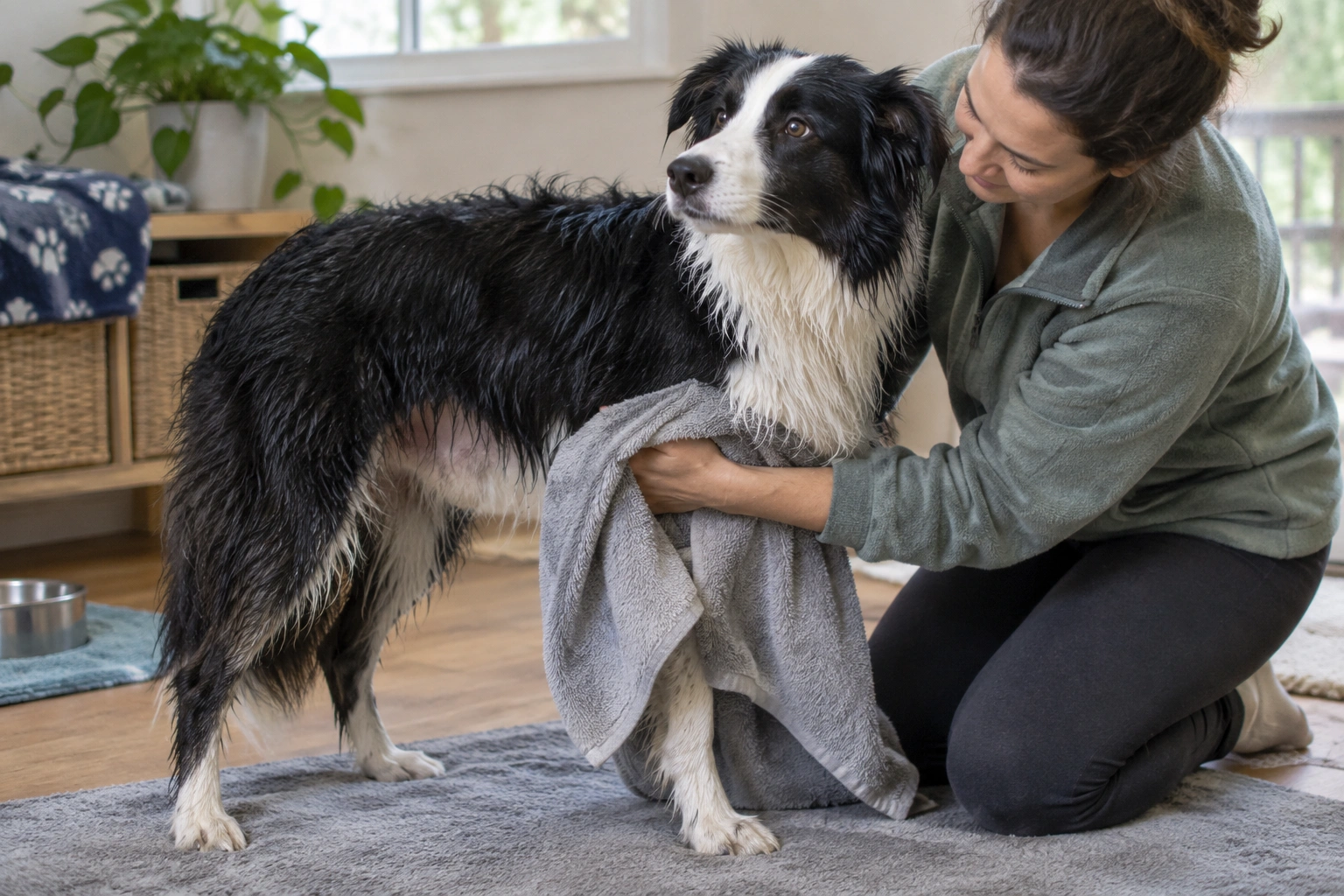
Use this sequence:
- Move the dog into shade or a cool indoor area.
- Remove collar or harness if it is rubbing the irritated spot.
- Gently dry the coat, especially the belly, armpits, groin, and neck.
- Give the skin a chance to breathe.
- Watch for improvement over the next several hours.
If the area is only mildly red and dry, cooling and drying may be enough, and you can monitor it closely for changes. If the dog keeps licking the area, that raises the risk of a hot spot, so preventing licking becomes more important. In that case, the right next step depends on how the skin looks and whether it is getting worse.
A fan can help if the dog is comfortable with it. Cooling should be steady and calm, not dramatic. If the dog is panting heavily, weak, or acting unwell, think about heat illness rather than a simple rash.
Do not bathe the dog again right away, and avoid harsh cleansers that can irritate the skin further. Do not apply human creams, powders, essential oils, or medicated ointments unless a veterinarian has told you they are safe for that exact situation. Dogs lick, and some products that are harmless on human skin can cause stomach upset or worse when ingested. Thick ointments can also trap more moisture and make the area worse.
If the dog keeps licking the area, that alone can turn a mild irritation into a hot spot. In that case, preventing licking is part of treatment, but the right method depends on how severe the skin looks. A vet can help you decide whether an e-collar or other barrier is appropriate.
When a Rash Needs a Veterinarian
A mild patch that improves once the dog is cool and dry can often be watched at home. But certain changes mean it is no longer a simple wait-and-see situation.
Call your veterinarian promptly if you notice any of the following:
- the redness is spreading
- the skin is painful to touch
- there is swelling
- you see discharge, pus, or crusting
- the area smells bad
- the dog is licking or scratching nonstop
- the skin is broken or wet
- the dog seems tired, feverish, or generally unwell
- there is no improvement after a short period of cooling and drying
Seek urgent care right away if the dog also has signs of heat stroke such as heavy panting that does not settle, vomiting, weakness, confusion, wobbliness, or collapse. Skin irritation and heat stroke can happen in the same hot outing, but the second one is an emergency.
A useful decision rule: if the issue is only skin-deep, localized, and clearly improving after cooling, home care may be enough for the moment. If it is spreading, painful, moist, or paired with whole-body symptoms, a vet should see the dog.
How to Prevent Heat Rash from Coming Back
Prevention is mostly about stopping moisture from sitting against the skin.
After swimming, rain, or a bath, dry the coat well rather than letting the dog air-dry in warm, humid conditions. That matters more than most owners realize. A damp coat in still air can keep the skin irritated long after the exercise is over.
Exercise timing also matters. For a Border Collie, the temptation is to keep the routine intense, but the safer choice in hot weather is often earlier mornings or later evenings, with shorter bursts instead of long, continuous work. The dog still gets exercise; you just reduce the time spent overheating or rubbing in damp fur.
Other practical prevention steps:
- keep fresh water available
- offer shade during outdoor time
- check the armpits, groin, and belly after wet or sweaty activity
- clean and dry harnesses and collars that hold moisture
- brush the coat regularly so air can move through it more easily
If your dog repeatedly gets irritated in the same area, look at the cause before you look at the symptom. A harness that rubs during runs, a collar that stays damp, or a coat that is not drying properly may be the real issue.
For Border Collies, that often means making a few small changes rather than one big change. A better exercise schedule, a more careful drying routine, and less rubbing from gear usually do more good than any quick fix.
When to See a Veterinarian or Certified Trainer
If you are dealing with skin irritation only, a veterinarian is the right professional. If the dog’s discomfort is leading to constant licking, scratching, or trouble settling around gear, a certified trainer can help with the behavior side after the medical issue is addressed. But if the skin is red, painful, oozing, or worsening, medical evaluation comes first.
That order matters. Behavior work cannot solve an infected hot spot, and no amount of grooming advice can replace an exam when the dog may be sick.
For more on related dog-health warning signs, you may also find our guides on whether dogs can get a cold and do dogs get pink eye useful when you are trying to sort out what is minor and what needs a vet.
FAQ
Can dogs actually get heat rash?
They can develop heat- and moisture-related skin irritation that looks a lot like heat rash in people. The practical question is less about the label and more about whether the skin is mildly irritated or something more serious.
What does heat rash look like on a dog?
Usually mild redness, warmth, small bumps, itching, or a rough patch of skin. Common spots include the belly, groin, armpits, neck, and skin folds.
Is heat rash dangerous?
Mild irritation is usually not dangerous by itself, but it can be confused with hot spots, allergies, or heat stroke. The danger comes from missing the real problem.
Can I use human cream on my dog’s rash?
Not without veterinary guidance. Many human products are unsafe if licked or can trap moisture and worsen the irritation.
How fast should it improve?
If it is truly a mild heat-related irritation, you should usually see at least some improvement after cooling, drying, and removing friction. If it worsens or stays the same, call your vet.
Are Border Collies at higher risk?
They can be, mainly because they are active and often have coats that can hold moisture after exercise, rain, or swimming. Good drying and smart exercise timing help a lot.
A Calm, Practical Rule to Follow
If the skin looks mildly red and the dog otherwise acts normal, cool the dog, dry the coat, and watch closely. If the area is wet, smelly, painful, spreading, or paired with weakness or heavy panting, stop treating it like a simple rash and get veterinary help.
That rule keeps you from overreacting to a minor irritation and, just as importantly, from underreacting to a real problem.
