
How to Clean a Bath Mat After Bathing a Border Collie

Quick Answer: To clean a bath mat after bathing a Border Collie, remove loose fur and dirt first, then wash the mat according to its care label. Use a suitable laundry detergent, rinse away shampoo residue, and let the mat dry completely before putting it back on the bathroom floor. Rubber-backed and memory foam mats may require special care.
Bathing a Border Collie can leave more than wet paw prints behind. Loose fur, muddy residue, shampoo, and excess water can collect in the bath mat, making it dirty or unpleasant to use again.
Knowing how to clean a bath mat after bathing a Border Collie helps control odors, remove trapped hair, and keep the bathroom cleaner between grooming sessions. The right method depends on the mat’s material, backing, and manufacturer’s care instructions.
What You Need Before Cleaning the Bath Mat
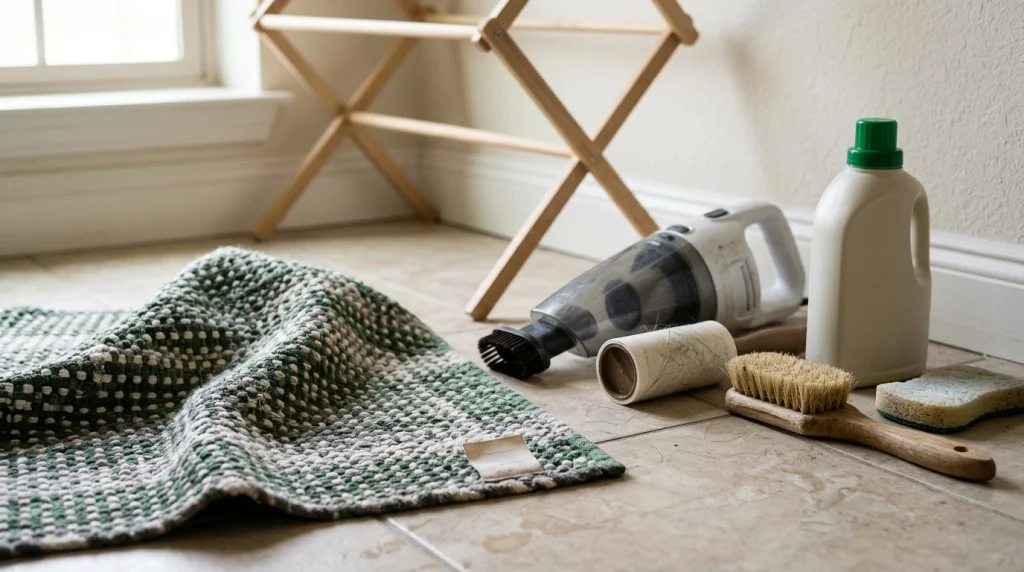
Gather your cleaning supplies before starting. Having everything ready makes it easier to remove dog hair and wash the mat without spreading dirt around the bathroom.
- A vacuum cleaner or lint roller for loose dog hair.
- A soft brush for dried mud and stubborn fur.
- A suitable laundry detergent.
- A clean cloth or sponge for spot cleaning.
- Access to a washing machine or a basin for hand washing.
- A drying rack or a clean, well-ventilated drying area.
Check the care label before using a washing machine, hot water, bleach, or a dryer. Some mats tolerate regular machine washing, while others can lose their shape, shed fibers, or develop damaged backing when cleaned incorrectly.
Step 1: Remove Loose Border Collie Hair
Start by removing as much loose fur as possible before wetting the bath mat. Border Collies have a double coat, and loose hair can become tangled in fabric fibers when it mixes with water.
- Take the mat outside or move it to an area where loose hair can be collected easily.
- Shake it gently to release loose fur, dust, and dried dirt.
- Vacuum both sides if the material and backing can tolerate vacuuming.
- Use a lint roller or soft brush to collect hair embedded in the surface.
- Inspect the corners and edges, where fur and dirt often accumulate.
If the mat is wet, remove the excess water gently before brushing. Avoid pulling aggressively at the fibers because this can damage the surface or loosen the backing.
Practical tip: Removing loose fur before washing helps prevent hair from spreading across the mat or collecting inside the washing machine. A quick shake and brush after each dog bath can also make the next cleaning session easier.
Step 2: Check the Bath Mat’s Material
Not every bath mat should be cleaned in the same way. Check its care label and identify the material before choosing a washing method.
| Mat Type | Recommended Cleaning Approach | Important Caution |
|---|---|---|
| Cotton | Machine wash if the label permits. | Avoid excessive heat if the label prohibits it. |
| Microfiber | Use a suitable gentle wash cycle. | Avoid fabric softener if the manufacturer advises against it. |
| Rubber-backed | Wash only if the backing is machine-washable; otherwise hand wash. | High heat can damage or crack the backing. |
| Memory foam | Follow the manufacturer’s specific washing instructions. | Aggressive washing or wringing can damage the foam. |
| Stone or rigid mat | Clean the surface with the method recommended by its manufacturer. | Do not treat it like a fabric mat. |
When the care label is missing, use the gentlest cleaning method appropriate for the material. Do not assume that every mat is safe for machine washing or tumble drying.
Step 3: Wash the Bath Mat in a Washing Machine
If the care label confirms that the mat is machine-washable, washing it with an appropriate detergent is usually a convenient way to remove dirt, body oils, and shampoo residue.
- Shake off remaining dirt. Remove visible mud, fur, and debris before loading the mat.
- Check the washing machine capacity. Do not overload the drum, as the mat needs room to move and rinse properly.
- Add suitable detergent. Use the amount recommended on the detergent packaging and follow the mat manufacturer’s instructions.
- Select an appropriate cycle. Choose the cycle and water temperature permitted by the care label.
- Rinse thoroughly. If detergent or shampoo remains in the fibers, use an additional rinse when appropriate for the material and machine.
- Inspect the mat after washing. Check for lingering fur, residue, unpleasant odors, or damaged backing before drying it.
A fragrance-free detergent may be a sensible option for households concerned about fragrance exposure, especially when a dog has sensitive skin. However, fragrance-free products are not automatically hypoallergenic, and any product should be used according to its label.
Do not add bleach or other cleaning chemicals unless the mat’s care instructions specifically permit them. Never mix cleaning products, particularly bleach with ammonia or acidic cleaners.
Step 4: Hand-Wash a Bath Mat That Needs Gentle Care
Hand washing can be a useful alternative for delicate mats, certain rubber-backed designs, or items whose care labels prohibit machine washing.
- Shake or brush away loose fur and dried dirt.
- Fill a clean basin or bathtub with water at the temperature recommended by the manufacturer.
- Add a small amount of suitable detergent and mix it into the water.
- Submerge the mat if its material allows it, then gently work the cleaning solution through the soiled areas.
- Use a soft cloth or brush to clean visible marks without scrubbing aggressively.
- Drain the dirty water and rinse until the detergent and loosened dirt are removed.
- Press the mat gently to remove excess water without twisting or wringing materials that can be damaged.
Pay special attention to the areas where your Border Collie’s paws usually land. These sections can collect mud, shampoo, and loose hair even when the rest of the mat appears clean.
If the mat has a rubber or foam backing, avoid prolonged soaking unless the manufacturer says it is safe. Excess moisture may become trapped in some materials and make complete drying more difficult.
Step 5: Remove Shampoo Residue, Mud, and Stubborn Hair
Some bath mats need extra attention after a particularly messy grooming session. Choose the cleaning method based on what remains on the mat rather than applying multiple products at once.
For Shampoo Residue
Rinse the affected area with clean water if the material permits. Shampoo can leave a slippery film, so continue rinsing until the surface no longer feels soapy. If residue remains, repeat the recommended wash rather than adding stronger chemicals.
For Dried Mud
Allow wet mud to loosen or dry enough to brush away without pushing it deeper into the fibers. Remove the loose dirt, then wash the mat according to its care label. Avoid aggressive scraping that could damage the surface.
For Embedded Dog Hair
Use a lint roller, fabric-safe brush, or vacuum suitable for the mat. Move gently across the surface and check seams and edges. If hair remains after washing, remove it after the mat has dried enough for safe handling.
For Persistent Marks
Spot-test any approved cleaning product on a hidden area first. Follow the product label, rinse as directed, and avoid combining different cleaners. If a stain does not respond to routine cleaning, check the manufacturer’s guidance before trying a stronger treatment.
Keep the surrounding bathroom clean, too
Water and fur can spread beyond the mat during grooming. For related advice, read how to keep the bathroom floor dry after a Border Collie bath and how to make a Border Collie bath mat non-slip.
Step 6: Dry the Bath Mat Completely
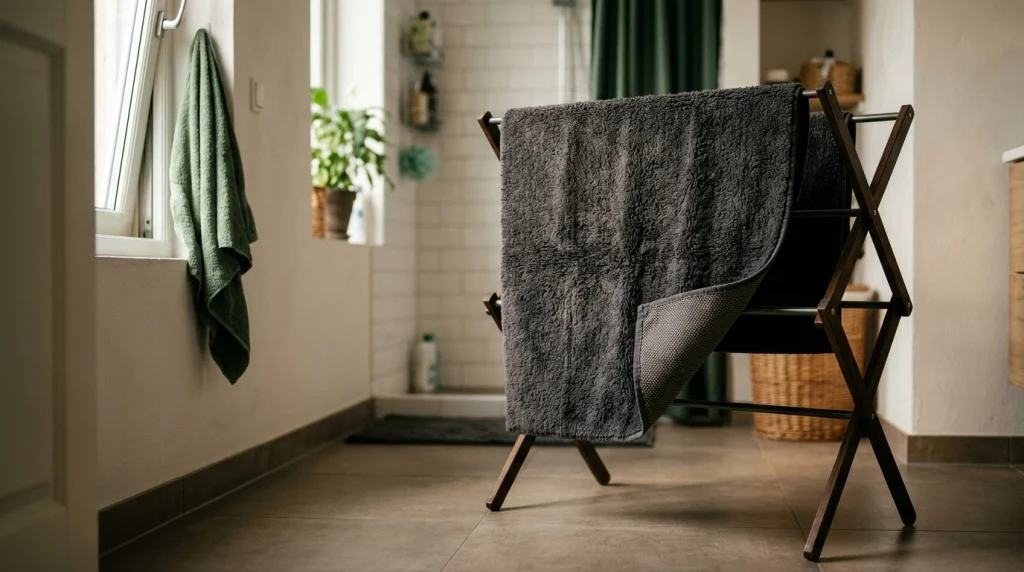
Drying is just as important as washing. A mat that remains damp can develop a musty smell, and moisture trapped beneath a mat can affect the bathroom floor.
- Check the care label to determine whether tumble drying is permitted.
- Remove excess water gently without damaging the mat or its backing.
- Hang the mat over a suitable rack or lay it flat in a well-ventilated area, as appropriate for its construction.
- Keep the mat away from surfaces that could be damaged by dripping water.
- Turn or reposition it when needed so both sides can dry.
- Check the thickest sections, corners, and backing before putting it back on the floor.
Do not use high heat on a rubber-backed or foam mat unless its manufacturer explicitly permits it. Heat can damage some backing materials, while inadequate airflow can leave damp areas hidden underneath.
Before replacing the mat, make sure the bathroom floor beneath it is also dry. A completely dry mat placed on a wet floor can still trap moisture underneath.
How Often Should You Clean a Bath Mat After Dog Bathing?
The best cleaning schedule depends on how often you bathe your Border Collie, how dirty the mat becomes, and how quickly it dries.
- After every bath: Remove loose fur, rinse away visible shampoo residue when appropriate, and hang the mat to dry.
- When visibly dirty: Wash the mat according to its care label instead of allowing mud or grime to build up.
- When it smells musty: Check whether the mat is fully dry and clean it if needed.
- After a particularly muddy bath: Inspect the mat and surrounding floor and clean them promptly.
- After illness or contamination: Follow appropriate cleaning guidance for the specific situation and the mat material.
There is no single washing interval that suits every household. A mat used for frequent baths or one that stays damp may need attention more often than a mat used occasionally in a well-ventilated bathroom.
Common Bath Mat Cleaning Mistakes to Avoid
- Washing before removing loose fur: Hair can become tangled in the fibers and spread through the wash.
- Ignoring the care label: An unsuitable cycle or temperature can damage fabric, foam, or backing.
- Using too much detergent: Excess detergent can be harder to rinse away and may leave residue.
- Putting a damp mat back on the floor: Trapped moisture can contribute to unpleasant odors and damp flooring.
- Using excessive heat: Some rubber-backed and foam mats can be damaged by hot dryers or direct heat.
- Mixing cleaning products: Combining chemicals can create hazardous fumes or reactions.
- Assuming cleaning always means disinfection: Routine washing removes dirt, but special contamination or illness may require additional precautions.
The CDC advises cleaning pet supplies according to their material and instructions, and notes that cleaning is generally sufficient for routine situations. Disinfection may be appropriate in specific circumstances, such as certain illnesses or contamination with urine or feces. See the CDC guidance on cleaning and disinfecting pet supplies for more information.
Choosing a Suitable Laundry Detergent
A basic laundry detergent that is compatible with the mat’s care instructions is usually sufficient for routine washing. If you prefer to avoid added fragrance, compare product labels and choose a fragrance-free option suitable for the fabric and washing method.
Optional cleaning supply: Fragrance-free laundry detergent
Compare available fragrance-free laundry detergents and check their directions before use. Choose a product that suits the bath mat’s material and rinse it thoroughly.
Never apply laundry detergent directly to your Border Collie’s skin or coat unless the product is specifically intended for that use. Keep cleaning products stored safely and keep your dog away from cleaning solutions and freshly treated surfaces until they are safe to access.
Frequently Asked Questions
Can I wash a dog bath mat in the washing machine?
Yes, if the care label says it is machine-washable. Remove loose fur first, use an appropriate detergent, and select a suitable cycle and temperature. Rubber-backed and memory foam mats may require a different method.
How do I remove Border Collie hair from a bath mat?
Shake the mat, then use a vacuum suitable for its material, a lint roller, or a soft brush. Removing hair before washing usually makes the cleaning process easier.
Why does my bath mat smell after washing?
A musty smell can indicate that the mat has not dried completely or that dirt and residue remain in the fibers. Check the care label, wash it again if appropriate, rinse thoroughly, and dry both sides completely.
Can I use bleach to clean a bath mat after bathing my dog?
Only use bleach if the mat’s manufacturer permits it and the product label provides appropriate directions. Never mix bleach with ammonia, vinegar, acids, or other cleaning products, and keep your dog away from cleaning chemicals.
How can I stop the bath mat from becoming slippery?
Remove shampoo residue, allow the mat and floor to dry, and use a mat with a suitable non-slip backing. Check the backing regularly for wear and follow the manufacturer’s cleaning instructions to avoid damaging its grip.
Should I disinfect the bath mat after every dog bath?
Routine cleaning is generally sufficient after an ordinary bath. Additional disinfection may be needed in certain illness or contamination situations, but the method must be appropriate for the mat’s material and the disinfectant’s label.
Final Thoughts
Cleaning a bath mat after bathing a Border Collie is straightforward when you remove loose hair first, choose a washing method suited to the material, and allow the mat to dry completely. These simple steps help control dirt, shampoo residue, and lingering odors.
Make a quick mat check part of your regular grooming routine. Clean it whenever it becomes dirty, follow its care label, and ensure both the mat and the bathroom floor are dry before your dog uses the area again.
“`