
How Long a Dog Hotspot Lasts: Realistic Healing Times and What to Watch For

A dog hotspot can look dramatic fast: a red, wet, irritated patch one day can become a larger, painful sore by the next. The good news is that many hotspots improve quickly once the licking stops and the skin is cleaned and dried properly. The less comforting truth is that the timeline depends heavily on how early you catch it, how much your dog can keep bothering it, and whether there’s infection or an underlying trigger behind the flare-up.
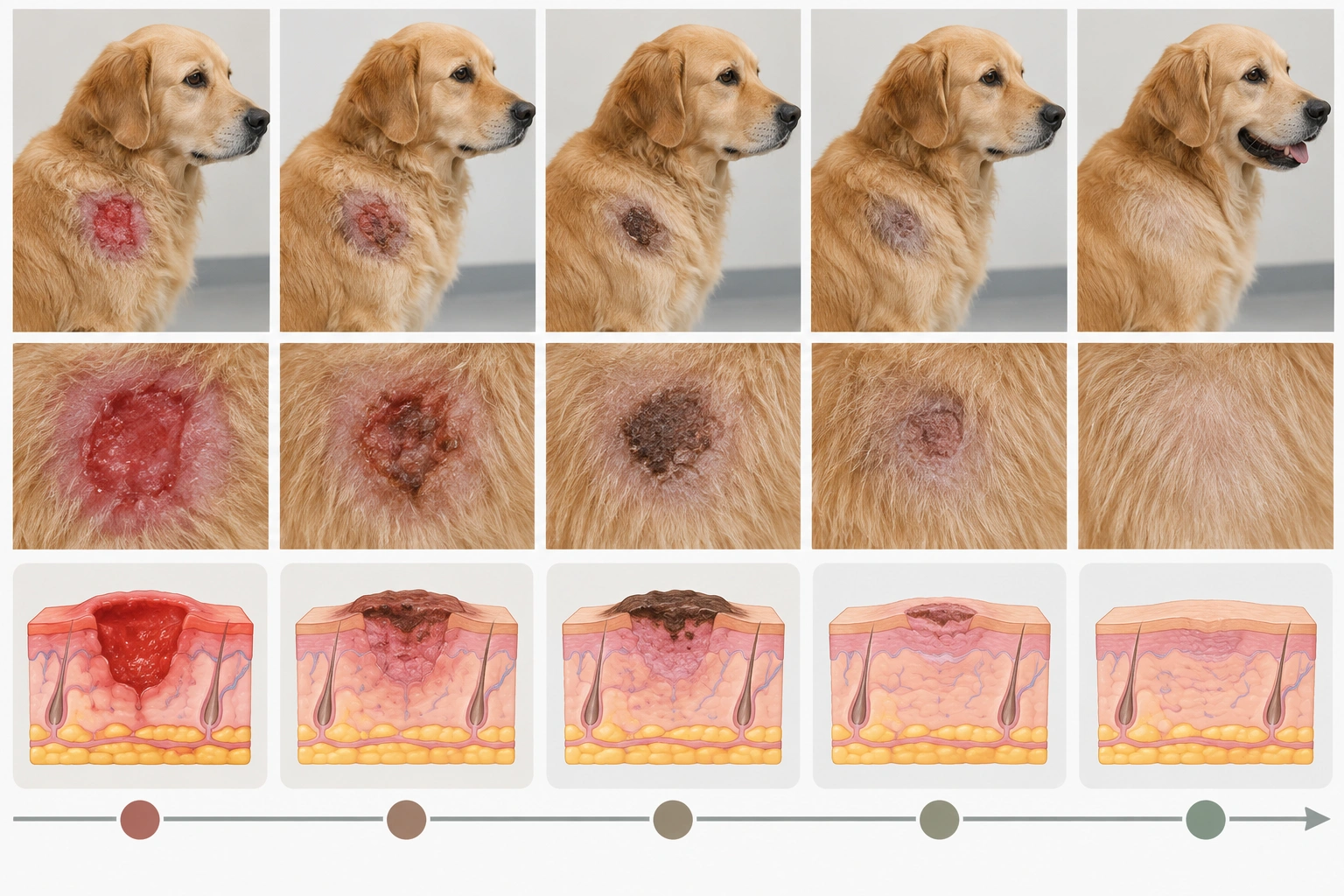
If you’re asking how long a hotspot lasts on a dog, the practical answer is this: mild cases often start improving within 3 to 7 days after treatment begins, while more severe cases may take 1 to 2 weeks to fully settle and 3 to 4 weeks to look completely healed, including hair regrowth. Some sources note that hair may begin growing back around two weeks after treatment starts, though the exact timing varies and the skin may still be finishing its recovery. Those are realistic ranges, not guarantees.
For Border Collies in particular, this matters because they are often active, alert, and quick to lick, scratch, or rub at anything uncomfortable. A small hotspot on a neck, flank, or hip can become a much bigger problem if your dog keeps working at it.
How Long a Dog Hotspot Usually Lasts
A typical hotspot does not heal in a single day. Once treatment starts, many improve noticeably within a few days, but “improving” and “fully healed” are not the same thing.
A useful baseline is:
- First 24 to 72 hours: the sore should stop expanding and begin drying if treatment is working
- About 3 to 7 days: many mild hotspots look clearly better
- About 1 to 2 weeks: many lesions are healed or close to healed with proper care
- About 3 to 4 weeks: most hotspots are fully healed, with hair growing back
The key point is that the clock starts when treatment starts, not when the lesion first appeared. A hotspot that sat untreated for several days before you noticed it may already be deeper, larger, or infected by the time you begin home care.
A hotspot that is still wet, spreading, or painful after a short window of treatment is not following a normal course and needs a closer look.
[Image: Dog hotspot healing timeline chart]
What Makes One Hotspot Heal Fast and Another Linger
Hotspots are not all the same. Two dogs can have similar-looking lesions and very different recovery times.
Size and depth matter
A small, superficial patch that is caught early usually dries out faster than a thick, inflamed lesion with raw skin underneath. The deeper the skin damage, the longer it takes for the surface to close.
Licking and scratching are the biggest delay
This is the main reason hotspots drag on. Every time your dog licks, chews, or scratches the area, the skin gets re-wet and re-injured. That keeps the inflammation going and can turn a manageable sore into a much larger one.
Moisture slows healing
Hotspots thrive in damp conditions. Thick coats, swimming, rain, humid weather, or trapped moisture after bathing can all make the skin harder to dry. If the area stays damp, the lesion tends to stay active longer.
Infection changes the timeline
Once bacteria are involved, a hotspot usually becomes more painful, more smelly, and slower to resolve. Cornell’s veterinary guidance notes that if the sore is more than 24 hours old, infection is more likely and veterinary care is recommended. That does not mean every older lesion is dangerous, but it does mean you should be more cautious rather than assuming it will simply dry up on its own.
Underlying triggers can keep restarting it
If fleas, allergies, ear irritation, anal gland discomfort, or another skin trigger is still present, the hotspot may heal and then return. In that case, the lesion itself is only part of the problem.
What Normal Healing Looks Like Day by Day
You do not need to memorize dermatology terms. You do need a clear picture of what improvement should look like.
Day 1 after treatment begins
The area should be cleaned, dried, and protected from licking. It may still look angry, but it should not be getting bigger hour by hour. If it is clearly expanding, that is a warning sign.
Days 2 to 3
A working treatment plan usually shows early change: less moisture, less odor, and less frantic scratching. The skin may still be red, but the lesion should begin to look less raw and more contained.
Days 4 to 7
This is the point where many mild hotspots start to dry out and shrink. The surface may look more like a scab than a wet sore. If the dog is still leaving it alone, the skin has a much better chance of closing.
Around 2 weeks
Hair regrowth may begin. That does not mean the skin is fully back to normal, but it is a reassuring sign that the irritation is settling.
By 3 to 4 weeks
Most hotspots are fully healed, though coat recovery can lag behind skin recovery. A patch may look pink or thin-haired for a while even after the lesion itself is gone.
If your dog’s hotspot is not following this general pattern, reassess rather than waiting and hoping.
Signs the Hotspot Is Getting Worse or May Be Infected
A hotspot that is healing should look less active over time. These signs point the other way:
- Redness spreading beyond the original area
- More swelling or heat
- Thick discharge, pus, or a foul smell
- Increasing pain when touched
- The dog guarding the area or acting unusually sensitive
- Continued licking, biting, or scratching despite your efforts
- No visible improvement after a short home-care window
- Lethargy, feverish behavior, or acting generally unwell
A lesion can be small and still be a problem if it is becoming more painful or more inflamed. Size alone does not tell the whole story.
If the area is oozing, smelly, or clearly worsening, home care is usually not enough.
Home Care That Can Shorten Recovery Time
Home care can help a mild hotspot recover faster, but only if the lesion is caught early and your dog can be stopped from irritating it further.
Clean gently, then dry thoroughly
Use a mild, dog-safe approach to cleaning. Cornell notes that a mild soap can be used gently on the surface. The goal is not to scrub the skin raw. The goal is to remove debris, reduce surface contamination, and dry the area well.
Keep the area exposed to air when possible
Airflow helps drying. Thick bandaging or covering the area can trap moisture and slow recovery unless your veterinarian specifically tells you to protect it another way.
Clip fur if it is trapping moisture
Long coat around the lesion can hold dampness against the skin and make it harder to inspect. Careful clipping around the area often helps both drying and monitoring, especially on breeds with dense coats.
Watch the first 48 to 72 hours closely
This is the window where you learn whether home care is working. If the lesion is shrinking, drying, and becoming less irritated, that is a good sign. If it is not, do not keep repeating the same approach indefinitely.
For a broader look at how treatment timelines compare with other common dog procedures, see this practical timeline for dog dental cleaning and this guide to how long neutering a dog takes.
When an Elizabethan Collar Becomes Necessary
If your dog keeps licking or scratching the hotspot, an Elizabethan collar or similar barrier is often the difference between healing and a drawn-out mess.
Use a barrier when:
- Your dog goes back to the lesion as soon as you look away
- The skin is being reopened by scratching or chewing
- You cannot reliably supervise the dog
- The hotspot is on a spot your dog can reach easily, such as the flank, hip, or base of the tail
The trade-off is obvious: an e-collar is inconvenient, and most dogs dislike it. But repeated self-trauma is one of the fastest ways to turn a small hotspot into a much larger one. If the dog cannot leave it alone, the collar is not optional—it is part of treatment.
When to Stop Home Treatment and Call a Veterinarian
Home care is reasonable only for a small, mild hotspot in a dog that otherwise seems normal and can be prevented from licking it.
Call your veterinarian if any of these apply:
- The hotspot is rapidly spreading
- It is very painful
- It smells bad or is draining pus
- Your dog seems lethargic or unwell
- The lesion is not clearly improving within a few days
- The sore is more than 24 hours old and looks infected
- The hotspot keeps coming back
- You are not sure it is actually a hotspot
That last point matters. A lesion that resembles a hotspot may actually be ringworm, mange, or another skin condition that needs different treatment.
How Vets Treat Hotspots That Do Not Resolve on Their Own
When a hotspot is more severe, a veterinarian may recommend prescription treatment such as:
- Antibiotics if infection is present or strongly suspected
- Anti-itch medication to reduce the urge to lick and scratch
- Topical treatment to calm inflammation and support healing
- Clipping and cleaning of the area to remove trapped moisture and damaged hair
- Pain relief or anti-inflammatory medication when appropriate
This is where professional care differs from home management. At home, you are trying to stop the cycle of irritation and keep the skin clean and dry. In the clinic, the vet can assess whether the lesion is infected, painful enough to need medication, or actually something else entirely.
If your dog is miserable, the lesion is large, or the skin is not responding to basic care, prescription treatment is often the faster and safer route.
How to Tell a Hotspot Apart from Other Skin Problems
A hotspot is usually a moist, inflamed, irritated patch that appears quickly and can spread fast.
Hotspot versus ringworm
Ringworm often causes more circular hair loss and scaling than a wet, oozy lesion. It may not look as inflamed as a hotspot, but it needs different treatment and can spread to other animals or people.
Hotspot versus mange
Mange often involves intense itching and skin changes in a broader pattern rather than one sudden moist patch. A vet exam is important because the treatment is not the same.
Hotspot versus simple irritation
A patch of rubbing or mild redness may calm down with basic care, but once the skin is raw, wet, painful, or expanding, it is no longer just “a little irritation.”
If you are unsure, do not guess. Misidentifying the problem is one of the easiest ways to delay recovery.
How to Prevent Hotspots From Coming Back
A hotspot that heals but returns later is usually telling you the trigger was never fixed.
Check for fleas and other parasites
Even one flea bite can set off a cycle of scratching in a sensitive dog. If your dog has recurring summer hotspots, flea control should be part of the prevention plan.
Look at allergies
Environmental or food allergies can keep the skin itchy and reactive. If your dog keeps getting hotspots in the same season or after certain exposures, ask your vet whether allergies need to be investigated.
Manage moisture
Dry your dog well after swimming, rain, or baths. Border Collies with dense coats can hold moisture close to the skin longer than people expect.
Groom for airflow, not just appearance
Regular coat care helps you spot early irritation and reduce trapped dampness. It also makes it easier to notice a small patch before it becomes a large one.
Address the itch, not just the lesion
If the underlying itch remains, the hotspot may heal and then reappear in another place. Prevention means removing the reason your dog feels compelled to scratch.
Mild Hotspot vs Severe Hotspot: A Quick Comparison
| Situation | What it usually looks like | Best next step | Expected timeline |
|---|---|---|---|
| Mild hotspot | Small, localized, early, not very painful | Clean, dry, prevent licking | Often improves in 3 to 7 days |
| Severe hotspot | Large, smelly, painful, oozing, or spreading | Veterinarian visit | Often takes 1 to 2 weeks or longer |
| Home care only | Dog is normal, lesion is small, licking can be stopped | Short trial of careful care | Should show improvement within a few days |
| Veterinary care | Infection, pain, recurrence, or no improvement | Prescription treatment may be needed | Usually more reliable for complicated cases |
| Hotspot look-alike | Circular scaling, widespread itch, or unusual pattern | Vet exam to confirm diagnosis | Depends on the true cause |
When to See a Veterinarian or Certified Trainer
For a hotspot, the professional you need is usually a veterinarian, not a trainer. A certified trainer can help with the practical side of preventing licking through management routines, but skin lesions need medical assessment.
See a veterinarian promptly if the lesion is painful, spreading, infected, or not improving quickly. If your dog is repeatedly damaging the area, ask for help with a management plan that makes licking harder and recovery more likely.
FAQ
How long should a dog hotspot take to dry out?
Many hotspots begin drying within about a week after treatment starts, though milder ones may improve sooner and more severe ones may take longer.
Can a hotspot heal on its own?
Some very mild spots may settle if the licking stops and the area stays clean and dry, but many hotspots worsen without treatment. If it is wet, painful, or spreading, do not wait.
Why does my dog’s hotspot keep coming back?
Recurring hotspots usually mean the trigger is still there. Fleas, allergies, moisture, or constant licking are common reasons.
Should I use an e-collar for a hotspot?
If your dog keeps licking or scratching the area, yes. Preventing self-trauma is often essential for healing.
How do I know if it is infected?
Bad odor, pus, increasing redness, swelling, pain, or your dog seeming unwell are all reasons to suspect infection and call your vet.
Can a hotspot be mistaken for ringworm?
Yes. Ringworm can look similar at first, especially if there is hair loss and scaling. A vet exam helps avoid using the wrong treatment.
A hotspot is usually not a long-term problem if you catch it early, stop the licking, and keep the skin clean and dry. If the sore is still spreading, smelly, or painful after a short home-care window, book a veterinarian visit instead of waiting it out. If it is drying, shrinking, and your dog is leaving it alone, you can usually continue home care and monitor closely. The cases that linger are usually the ones where the dog keeps reopening the lesion, the infection has already taken hold, or the underlying trigger never gets addressed. That is the decision point that matters most: not just how the sore looks today, but whether the conditions that caused it are still in place.
