

Quick Answer
A healthy adult Border Collie often does well with about 30–60 minutes per walk, usually across one or two purposeful walks each day. However, walking should be only part of the roughly 90–120 minutes of daily physical activity many active adults need, alongside play, training, safe running, and mental work. The American Kennel Club also emphasizes that this energetic herding breed needs substantial activity and mental stimulation.
What changes the right walking time?
- Age: Puppies need shorter, gentler outings, while conditioned adults can handle longer walks.
- Fitness: Increase distance gradually instead of expecting an unconditioned dog to manage long walks immediately.
- Walk style: A sniff-heavy training walk can be more satisfying than fast pavement mileage.
- Other exercise: Hiking, agility, herding, fetch, and training can reduce how much walking is needed that day.
- Health: Pain, injury, joint problems, or sudden fatigue should change the exercise plan.
A useful starting point
- Split activity across the day and judge the result by your dog’s recovery, behavior, enthusiasm, and ability to settle afterward.
If you’re asking how long should you walk a Border Collie, the answer isn’t simply “as long as possible.” Border Collies, sometimes called Borders or BCs, need movement, thinking, training, sniffing, and enough downtime to recover.
I’ve found that the quality of a walk matters almost as much as its length. This guide explains practical walking times by age, how to adjust them, and how to tell whether your routine is working.
In This Guide
- How long should a Border Collie walk each day?
- How long should each Border Collie walk be?
- How long should you walk a Border Collie by age?
- Is walking enough exercise for a Border Collie?
- How do you know if your Border Collie needs more or less walking?
- What type of walk is best for a Border Collie?
- When should you shorten a Border Collie’s walk?
- What does a good daily walking routine look like?
- Frequently asked questions
How Long Should a Border Collie Walk Each Day?
For a healthy adult Border Collie, I use 90–120 minutes of total daily physical activity as a practical starting range. Walking can make up around 60–120 minutes of that total, depending on what else the dog does.
A dog that spends 40 minutes hiking, 20 minutes training, and 20 minutes playing controlled fetch may need less leash walking. A dog with no other activity may benefit from longer or more frequent walks.
Definition: A Border Collie’s daily exercise need is the total amount of appropriate physical movement and mental engagement that lets the dog stay fit, behave normally, recover comfortably, and settle at home.
As of 2026, reputable breed guidance still describes the Border Collie as a highly energetic herding dog. Their working heritage matters because generations of these dogs were selected to move, concentrate, respond to handlers, and control livestock.
That doesn’t mean every pet Border Collie needs hours of running. Individual energy, genetics, training, health, and lifestyle create major differences.
- Lower-key adult: May be comfortable near the lower end when walks include sniffing and training.
- Young active adult: May need considerably more purposeful activity across the day.
- Working or sport dog: Conditioning and workload should match the specific activity.
- Recovering dog: Needs a plan based on veterinary guidance rather than breed averages.
One mistake I avoid is trying to “empty the tank” every day. Continually adding harder exercise can create a fitter dog without teaching that dog how to relax.
Section Takeaway: A healthy adult Border Collie often needs substantial daily activity, but walking time should be balanced with training, enrichment, play, and rest rather than treated as a mileage contest.
How Long Should Each Border Collie Walk Be?
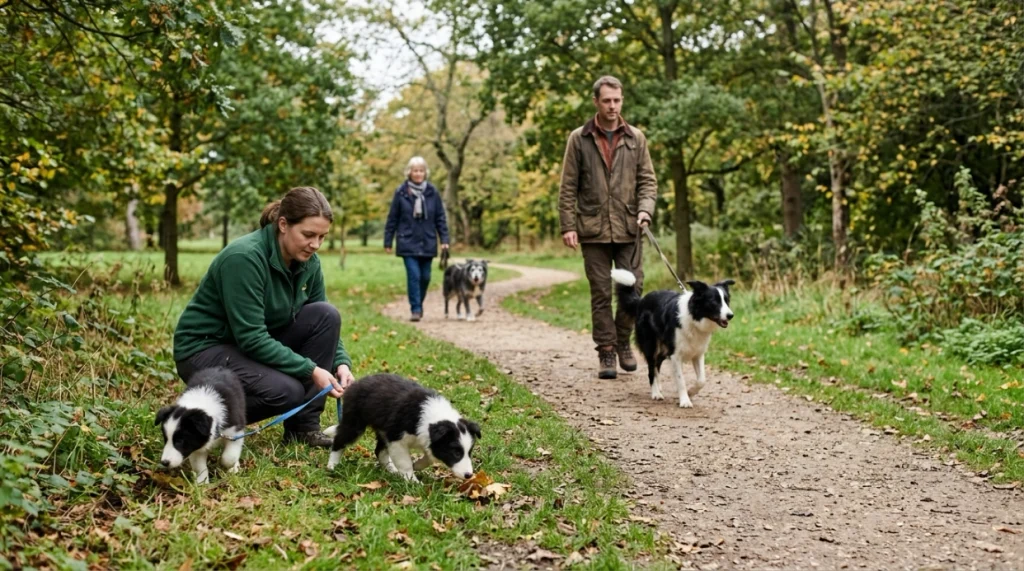
For many healthy adults, 30–60 minutes per walk works well. Two balanced outings are often easier on the dog than putting the entire day’s activity into one long session.
A morning walk might be purposeful and brisk. The evening outing could be slower, with more time for sniffing and decompression.
Why I don’t chase one perfect number
I pay more attention to what happens during and after the walk. A Border Collie who returns home relaxed and can settle comfortably is giving useful feedback.
Distance alone tells you little. Forty minutes involving sniffing, recall practice, direction changes, and calm observation can challenge the brain more than an hour of repetitive pavement walking.
- 20–30 minutes: Useful for shorter outings, warm days, seniors, or days containing other exercise.
- 30–45 minutes: A practical everyday range for many adult Borders.
- 45–60 minutes: Suitable for many fit adults when conditions are comfortable.
- 60+ minutes: Better treated as a conditioned hike or longer adventure rather than an automatic daily requirement.
Build duration gradually when your dog hasn’t been walking regularly. Muscles, paw pads, joints, and cardiovascular fitness all need time to adapt.
How Long Should You Walk a Border Collie by Age?
Age changes what a sensible Border Collie walking routine looks like. Puppies shouldn’t follow an adult fitness program, while seniors may benefit from shorter and more frequent outings.
The ranges below are practical starting points, not medical limits. Your veterinarian should guide exercise when growth, injury, pain, or health conditions are concerns.
| Life Stage | Practical Walk Length | Main Focus | Watch For |
|---|---|---|---|
| Young puppy | 5–15 minutes per gentle outing | Exploration, socialization, leash skills | Fatigue, reluctance, excessive impact |
| 4–6 months | 15–25 minutes per outing | Sniffing, training, varied surfaces | Forced pace or repetitive running |
| 6–12 months | 20–40 minutes, gradually increased | Impulse control, exploration, skills | Over-arousal and heavy repetitive impact |
| Healthy adult | 30–60 minutes per walk | Fitness, sniffing, training, variety | Poor recovery or compulsive exercise |
| Senior | 15–30 minutes, often more frequently | Comfortable low-impact movement | Stiffness, limping, slower recovery |
Border Collie puppy walks
A puppy walk is partly an education session. I care more about confidence, safe exploration, and leash skills than covering a certain distance.
A puppy stopping, sitting down, or losing enthusiasm is information. I wouldn’t drag the puppy onward just to finish a planned route.
Adult Border Collie walks
Adults can usually handle longer sessions once they’re conditioned. I still mix steady walking with sniffing, training, and occasional higher-energy activity.
Senior Border Collie walks
Older Borders often still love getting outside. Shorter walks can protect comfort while preserving mobility, enrichment, and routine.
Vet note: Growth rates and age-related changes vary between dogs, so ask your veterinarian about appropriate exercise if you have concerns about joints, mobility, growth, or pain.
Is Walking Enough Exercise for a Border Collie?
Walking alone often isn’t enough for a young, healthy Border Collie. These dogs were bred to use their brains while moving, so mental engagement matters alongside physical exercise.
This is where Border Collies differ from dogs satisfied by a predictable neighborhood loop. Many Borders return physically warmer but mentally ready for another job.
I like to combine walking with several other outlets:
- Training: Practice recalls, heel positions, stays, tricks, or directional cues for 5–10 minutes.
- Scent work: Hide food or toys and let the dog solve the search independently.
- Controlled play: Tug, retrieve games, and structured fetch can add intensity without dominating the entire routine.
- Dog sports: Herding, agility, rally, obedience, and similar activities challenge movement and concentration.
- Calm enrichment: Food puzzles, chewing, and settling exercises teach the dog that life isn’t constant action.
Veterinarian-authored information from PetMD also notes that walking needs vary with breed, age, and energy level. That individual variation matters even within a demanding breed like the Border Collie.
I’ve seen the difference when a walk contains a small job. Five minutes of thoughtful recall and scent searching can change the entire feel of an otherwise ordinary outing.
Section Takeaway: Don’t judge a Border Collie’s routine by walking minutes alone. A better daily plan combines useful movement with problem-solving, training, play, and deliberate quiet time.
How Do You Know If Your Border Collie Needs More or Less Walking?
Your dog’s behavior and recovery can tell you more than a generic exercise chart. Look for patterns across several days instead of judging one energetic afternoon.
Signs your Border Collie may need more useful activity
- Restless pacing: Your dog repeatedly moves around and struggles to settle.
- Demand behavior: Barking, nudging, pawing, or constantly presenting toys becomes persistent.
- Destructive boredom: Chewing, digging, stealing objects, or inventing unwanted jobs increases.
- Movement fixation: Your dog starts obsessively monitoring people, pets, bicycles, shadows, or other motion.
- Poor focus: Your Border seems unable to engage because excess energy and arousal are spilling over.
More walking isn’t always the only answer. A dog receiving plenty of physical exercise may need scent work, training, novelty, or better practice settling.
Signs the current workload may be too much
- Lagging behind on a familiar route
- Repeatedly stopping or refusing to continue
- Unusual stiffness after rest
- Sore or damaged paw pads
- Reluctance to exercise the following day
- Persistent heavy panting after normal recovery time
- Sudden changes in gait or movement
Sudden exercise intolerance deserves more attention than ordinary tiredness. Don’t assume a normally active Border Collie has simply become lazy.
Vet note: Limping, obvious pain, collapse, unusual breathing, persistent fatigue, or a sudden decline in exercise tolerance warrants veterinary advice.
What Type of Walk Is Best for a Border Collie?
The best Border Collie walk has a purpose beyond covering distance. I rotate walk styles because each one meets a slightly different physical or mental need.
1. Sniff walks
Let your Border stop and investigate safe smells instead of maintaining a strict heel throughout the outing. Sniffing slows the pace while giving the brain useful information to process.
2. Training walks
Build short exercises into a normal route. Recalls, position changes, waits, hand targets, and calm road crossings can turn familiar streets into a working session.
3. Brisk fitness walks
A steady pace can help condition a healthy adult. Build duration slowly, especially if the dog has been inactive.
4. Decompression walks
A quiet location with space to sniff and move naturally can help lower excitement. Use a suitable leash setup and choose areas away from traffic or uncontrolled dogs.
5. Hiking and adventure walks
Conditioned adult Border Collies often enjoy trails because changing terrain, smells, and surroundings provide variety. Increase distance gradually instead of jumping from neighborhood walks to an all-day hike.
- For fitness: Use steady, purposeful walking.
- For enrichment: Allow sniffing and exploration.
- For training: Add short skill sessions.
- For confidence: Explore manageable new environments.
- For calmness: Choose quiet routes with less stimulation.
The ASPCA is also a useful general resource for responsible dog care and enrichment. Whatever style you choose, keep the experience safe and appropriate for the individual dog.
When Should You Shorten a Border Collie’s Walk?
Shorten or modify a walk when conditions make the normal routine harder or less safe. Border Collie enthusiasm can sometimes hide the fact that the body needs a lighter day.
Hot weather
Exercise earlier or later when temperatures are cooler. Bring water on longer outings and avoid pushing through obvious signs of heat stress.
Cold or difficult conditions
Border Collies have weather-resistant double coats, but that doesn’t make every dog immune to cold, ice, wind, or dangerous surfaces. Age, coat condition, acclimation, and health still matter.
After an inactive period
Don’t return immediately to the old distance after illness, a long break, or several sedentary weeks. Rebuild conditioning with shorter sessions and gradual increases.
Health or mobility changes
A senior or recovering dog may do better with three short outings instead of one long walk. Comfortable movement is more valuable than meeting an arbitrary minute target.
- Choose flatter routes when joints are sensitive.
- Reduce speed before reducing all movement.
- Give the dog more opportunities to sniff.
- Watch how the dog moves later that day.
- Adjust the next outing based on recovery.
The American Veterinary Medical Association provides broader veterinary health resources for pet owners. Your own veterinarian remains the right person to advise on exercise restrictions for an individual medical condition.
Vet note: Exercise recommendations should be individualized for dogs with orthopedic, heart, respiratory, neurological, or other health conditions.
What Does a Good Daily Border Collie Walking Routine Look Like?
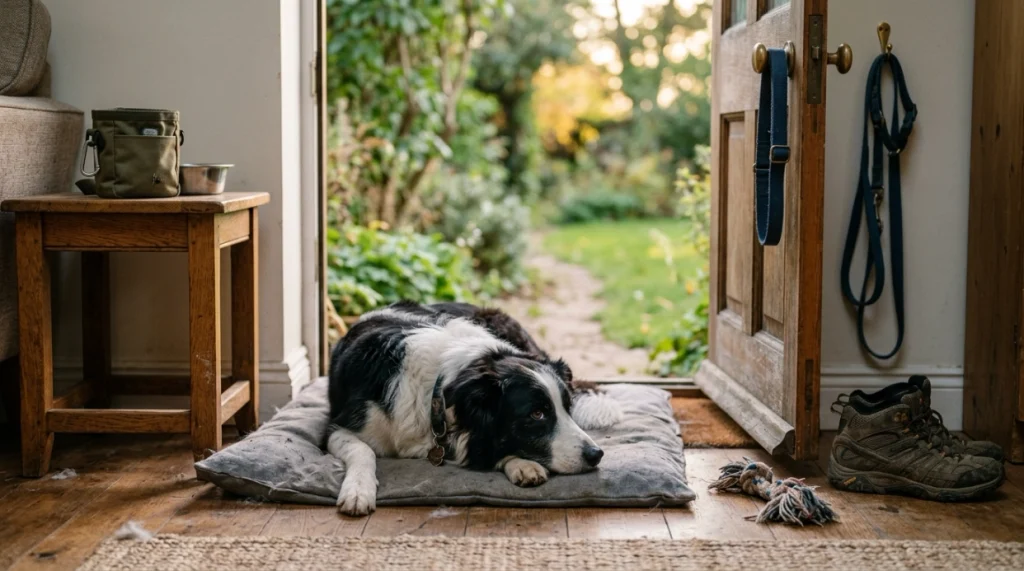
A useful routine spreads activity across the day instead of creating one giant exercise block. It also leaves room for genuine rest.
Here’s an example I would consider for a healthy, conditioned adult Border Collie living primarily as a companion dog.
| Time | Activity | Example Duration |
|---|---|---|
| Morning | Brisk walk with sniff breaks and recall practice | 35–45 minutes |
| Midday | Short training or scent game | 5–10 minutes |
| Afternoon | Controlled tug, fetch, or free movement | 15–20 minutes |
| Evening | Relaxed sniff walk | 30–40 minutes |
| Later evening | Calm chew, mat work, or rest | As appropriate |
This isn’t a prescription. A farm dog, agility competitor, adolescent pet, quiet adult, or senior Border Collie will need a different routine.
I also change the plan from day to day. A long weekend hike might replace a normal walk, while the following day may deliberately be easier.
Rest belongs in the schedule. Border Collies need to learn that being calm is part of normal life, not evidence that another activity is overdue.
Section Takeaway: Build a repeatable routine that mixes walking, thinking, active play, and rest. Then adjust the minutes according to your individual Border Collie’s response rather than chasing a universal target.
Frequently Asked Questions
Is one hour of walking enough for a Border Collie?
One hour may be enough walking on a day that also includes training, safe running, active play, or another physical outlet. For many healthy adults, however, one hour of slow walking with no other exercise or mental activity may leave important needs unmet.
Should I walk my Border Collie twice a day?
Two walks per day works well for many adult Border Collies because it spreads movement and enrichment across the day. A typical routine might include one 30–60 minute purposeful walk and another shorter or more relaxed outing.
Can you walk a Border Collie too much?
Yes. Excessive distance, sudden increases, repetitive high-impact exercise, hot-weather activity, or ignoring fatigue can cause problems even in an athletic breed. Increase conditioning gradually and reduce the workload if your dog shows poor recovery, soreness, reluctance, or gait changes.
How long should I walk a Border Collie puppy?
Keep puppy walks short, gentle, and focused on exploration rather than endurance. Several brief outings are usually more appropriate than one long forced walk, and your veterinarian can advise on exercise that matches your puppy’s growth and individual health.
How far can an adult Border Collie walk?
A conditioned, healthy adult can become an excellent walking and hiking companion, but there isn’t one safe distance for every Border Collie. Terrain, temperature, pace, fitness, health, age, and previous conditioning all affect how far an individual dog should go.
Why is my Border Collie still hyper after a long walk?
Physical tiredness doesn’t always satisfy a Border Collie’s brain. Try adding short training sessions, sniffing opportunities, scent games, food puzzles, and deliberate calm practice instead of automatically making every walk longer or faster.
Do Border Collies need off-leash exercise?
Off-leash activity can be useful, but it isn’t mandatory if you can’t provide it safely or legally. Long-line walks, secure fields, training games, hiking, tug, scent work, and structured sports can all contribute to an effective exercise routine.
Final takeaway: For most healthy adult Border Collies, start with purposeful walks of roughly 30–60 minutes and build a complete daily routine around movement, training, enrichment, and rest. Watch your own dog closely, adjust for age and health, and choose sustainable activity over trying to exhaust your Border every day.
