
How Often to Wash a Border Collie Bath Mat

Quick Answer
Wash your Border Collie’s bath mat about once a week if it is used regularly, and sooner whenever it becomes muddy, heavily covered in hair, smelly, or soaked with dirty water. If the mat stays damp in a humid bathroom, clean and dry it more frequently. Always follow the manufacturer’s washing instructions and let the mat dry completely before using it again.
A Border Collie’s bath mat can collect loose undercoat, muddy paw prints, shampoo residue, and moisture during ordinary grooming. A regular cleaning schedule helps prevent dirt and odors from accumulating while keeping the surface comfortable and suitable for your dog.
The right frequency depends more on how the mat is used and how quickly it dries than on your dog’s breed alone. A mat used for muddy outdoor returns may need washing after a single session, while one used occasionally for a clean bath may remain suitable until its next scheduled wash.
How Often Should You Wash the Mat?
Once a week is a practical starting point for a frequently used bath mat. Increase the frequency when the mat repeatedly gets wet, collects substantial hair, or comes into contact with mud, urine, feces, or other contaminants.
There is no universal cleaning interval specifically established for Border Collie bath mats. The following schedule is a practical household guideline based on use, visible contamination, and drying conditions rather than a breed-specific veterinary standard.
| Mat condition or use | Suggested cleaning schedule |
|---|---|
| Used regularly for routine baths | About once a week |
| Used after muddy walks or outdoor adventures | After heavy soiling, even after one use |
| Frequently soaked or slow to dry | Clean as needed and improve drying between uses |
| Occasionally used and kept clean and dry | Inspect after each use and wash when dirty; a longer interval may be reasonable |
| Exposed to vomit, feces, urine, or contaminated water | Clean promptly before reuse |
These intervals are starting points, not guarantees that a mat is hygienic until a particular day. A mat that smells unpleasant or feels slimy on Wednesday should not wait until the weekend simply because it was washed the previous Saturday.
What Makes a Border Collie Bath Mat Need More Frequent Washing?
Border Collies can bring dirt and loose fur into the bathing area after walks, hikes, play sessions, and grooming. Their dense double coat can also leave hair on an absorbent drying mat, especially when the dog is shedding.
Pay particular attention to these conditions:
- Mud and outdoor dirt: Wash the mat after a particularly muddy bath or when dirty paw prints cover its surface.
- Heavy shedding: Remove loose hair frequently so it does not accumulate in the fabric, backing, or drainage openings.
- Repeated wetting: A mat used several times in one day may need cleaning sooner than one used only occasionally.
- Warm, humid conditions: Moisture may evaporate slowly, so allow extra time for drying and check the underside as well as the top.
- Body fluids or other contamination: Clean promptly according to the material’s care instructions rather than waiting for the regular wash day.
A mat does not need to look visibly dirty to require attention. Trapped hair, detergent residue, and moisture beneath a rubber-backed mat can be easy to overlook, particularly if the upper surface appears clean.
Does Every Bath Mean the Mat Needs Washing?
No. A clean mat used for a short bath does not automatically require a full laundry cycle after every use. If it has only collected a little clean water and loose hair, remove the hair, rinse away residue when appropriate, and let the mat dry thoroughly.
However, washing after every use is reasonable when the mat becomes visibly dirty, absorbs substantial grime, or is used by a dog with a veterinary-identified contagious skin condition. Follow your veterinarian’s cleaning instructions if an infection or parasite problem is involved.
How Can You Tell When the Mat Needs Cleaning?
Use a quick inspection after each bath instead of relying entirely on a calendar. Several signs indicate that the mat should be washed or cleaned before it is used again.
- Unpleasant odor: A musty or sour smell can indicate retained moisture or accumulated grime.
- Visible dirt or stains: Mud, dark paw marks, and residue from grooming products call for cleaning.
- Noticeable hair buildup: Hair trapped in the mat can hold dirt and make the surface harder to rinse thoroughly.
- Slippery or sticky areas: Shampoo residue, body oils, and cleaning-product buildup may affect the surface.
- Persistent dampness: A mat that remains wet underneath needs attention before it is used again.
- Visible mold or mildew: Stop using the mat until it has been cleaned appropriately. Replace it if contamination cannot be removed completely.
Smell and appearance are useful warning signs, but neither is a complete hygiene test. A mat can contain trapped dirt or moisture without developing an obvious odor.
How Should You Wash a Border Collie Bath Mat?
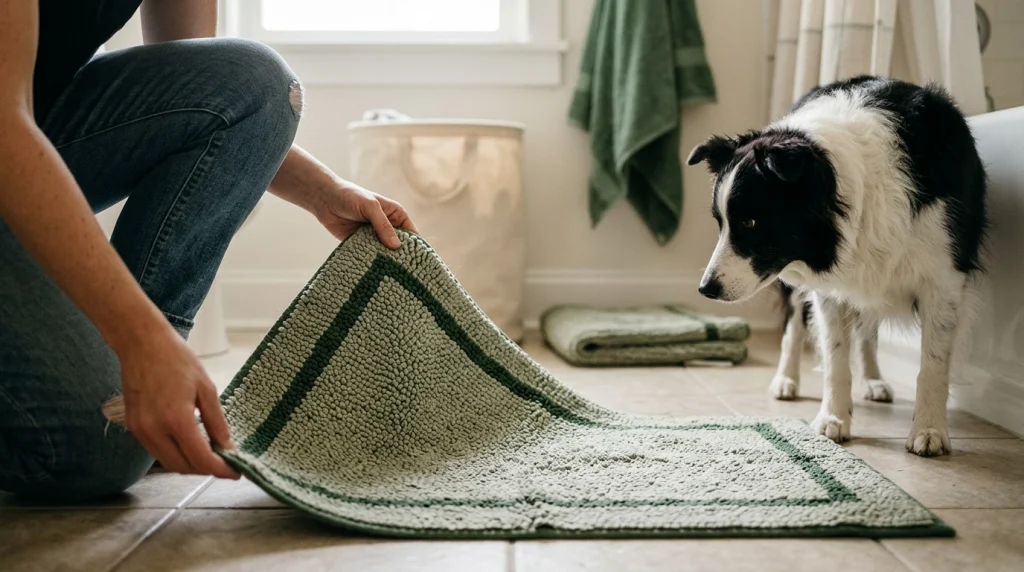
The correct method depends on whether you use an absorbent fabric mat outside the tub or a rubber mat inside it. These mats perform different jobs and may require different cleaning methods.
1. Remove Loose Hair and Dirt First
Shake the mat outdoors if appropriate, or remove loose fur with a vacuum, lint roller, or suitable brush. Pick off visible clumps of hair before adding water so they do not spread through the wash or collect in the machine’s filter.
For an in-tub rubber mat, inspect the suction cups, grooves, and drainage holes. Hair and soap film can collect in these areas, even when the top appears clean.
2. Check the Care Label
Read the manufacturer’s instructions before putting a mat in the washing machine. Some fabric mats are machine washable, while rubber-backed, memory-foam, or suction-cup designs may require hand washing or a specific temperature and drying method.
Do not assume that a mat is dryer-safe simply because its fabric can be machine washed. Excessive heat can damage some backings, adhesives, and nonslip surfaces.
3. Wash With a Suitable Detergent
For a machine-washable fabric mat, use the recommended cycle and an appropriate amount of detergent. A mild, fragrance-free detergent is a sensible option for a mat your dog contacts directly, especially if your dog has sensitive skin.
For a rubber or suction-cup mat, wash it by the method permitted by the manufacturer. Use a suitable cleaner, gently scrub grooves and suction cups, and rinse thoroughly so no cleaning residue remains.
Do not mix cleaning chemicals or use strong disinfectants unless the product label and mat manufacturer permit that use. If your dog has a diagnosed skin infection or parasite infestation, ask your veterinarian whether ordinary washing is sufficient.
4. Rinse and Inspect the Underside
Check for remaining suds, trapped hair, and residue around seams or suction cups. Rinse as directed until the mat is free of visible cleaner, since leftover products may irritate paws or reduce grip.
Pay attention to the underside of absorbent mats and the attachment points of rubber mats. Dirt and moisture can remain hidden where the mat touches the floor or bathtub.
5. Dry It Completely Before Reuse
Dry the mat according to its care label. Hang or spread a washable fabric mat so air can circulate, and make sure the underside is not trapped against a wet floor. Allow rubber mats to drain and dry fully around their grooves and suction cups.
Do not return a damp mat to a closed bathroom cabinet or leave it folded while wet. If it remains damp for an extended period, improve ventilation and use a second mat while the first dries.
Tip
Keep two suitable mats available if your Border Collie bathes frequently. You can use the clean, completely dry mat while the other is being washed or aired out, without rushing the drying process.
Why Drying Matters as Much as Washing
Washing removes accumulated dirt, but drying prevents the mat from remaining damp between uses. A wet mat stored in a poorly ventilated space can develop musty odors, and prolonged moisture may encourage mold or mildew growth.
This matters particularly in humid weather or bathrooms with limited ventilation. Even when the upper surface feels dry, a thick absorbent layer or rubber backing can retain moisture underneath.
After cleaning, spread the mat out rather than leaving it bunched up. If possible, use a well-ventilated drying area and turn the mat over when its care instructions allow. Before putting it back, check that both sides are dry and that there is no lingering odor or visible contamination.
Keep the bathroom floor dry as well. A clean mat can still become unsafe if water or shampoo residue accumulates underneath it, so check the floor and the mat’s grip before your Border Collie steps onto it.
When Should You Replace the Bath Mat Instead of Washing It?
Regular washing cannot repair a damaged backing or restore every worn surface. Replace the mat when it no longer cleans up properly or cannot provide reliable footing.
- The fabric remains stained or smells musty after appropriate cleaning and thorough drying.
- The backing is peeling, cracking, separating, or becoming brittle.
- Suction cups no longer hold securely on a compatible, clean surface.
- The mat curls, bunches up, or slides when pressure is applied.
- There is persistent mold or mildew that cannot be removed according to the manufacturer’s instructions.
For an in-tub mat, stability is especially important because a slipping dog may lose its footing while turning or trying to exit. Do not continue using a mat that shifts beneath your dog’s paws, even if it looks clean.
If the mat is structurally sound but has accumulated ordinary dirt, cleaning is usually the first step. If it remains contaminated, damaged, or unreliable after cleaning, replacement is the more sensible option.
How to Keep the Mat Cleaner Between Washes
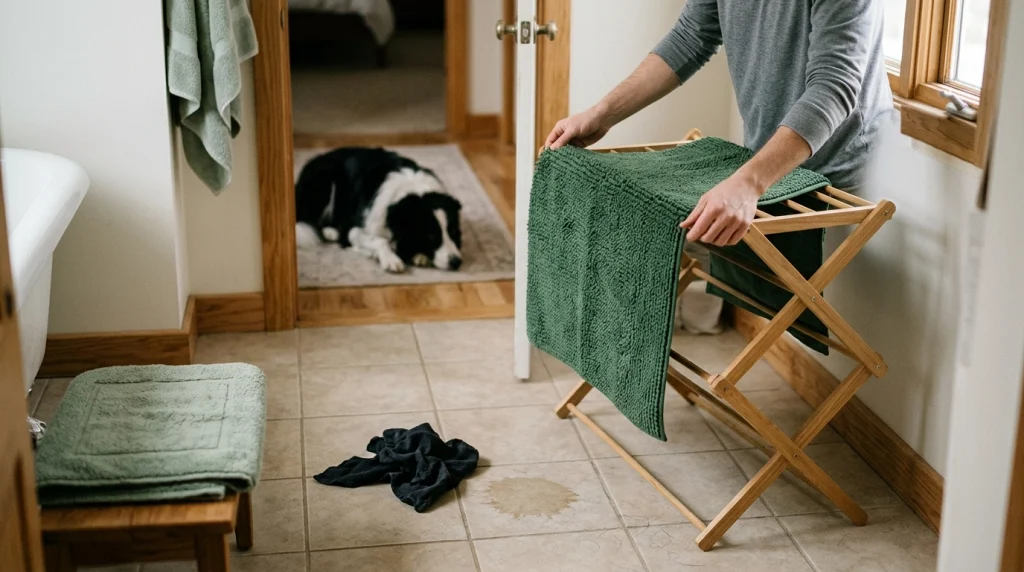
A few small habits can reduce buildup and make the weekly wash easier without turning every bath into a major laundry task.
- Brush your Border Collie before bathing to remove loose hair and debris.
- Rinse mud from paws before the dog steps onto an absorbent drying mat.
- Remove loose fur after each use rather than allowing it to collect in the fabric.
- Hang the mat or spread it out immediately after use so moisture can escape.
- Clean soap residue from the mat and the surface beneath it.
- Keep a separate clean mat available if the usual one is still drying.
- Inspect the mat’s grip before every bath, particularly if it uses suction cups.
For a safer setup, see our guides on creating a non-slip bathing area for a Border Collie and keeping the bathroom floor dry after a Border Collie bath. Both address the wider bathing area, which matters as much as the mat itself.
If your mat repeatedly moves during bathing, our guide to keeping a Border Collie bath mat from slipping explains what to check before the next bath.
Related Product
Washable, Non-Slip Dog Bath Mat
A washable mat with a suitable nonslip backing can make routine cleaning easier; check its care label, drainage, and grip compatibility before choosing one for your Border Collie.
As an Amazon Associate, we earn from qualifying purchases.
Frequently Asked Questions
Can I wash my Border Collie’s bath mat after every bath?
Yes. Washing after every bath is reasonable if the mat becomes dirty or heavily wet, provided its material tolerates frequent cleaning. If it remains clean after a brief use, removing loose hair and drying it completely may be sufficient until the next scheduled wash.
Can I put a dog bath mat in the washing machine?
Only if the manufacturer says it is machine washable. Fabric mats may tolerate a washing machine, but some rubber-backed, foam, and suction-cup mats require hand cleaning or specific care to prevent damage.
What should I do if the mat smells bad after washing?
Check for trapped hair, detergent residue, and moisture in thick fabric or underneath the backing. Clean it again according to the care instructions and dry both sides completely. Replace it if the odor persists or mold cannot be removed safely.
Should I wash a bath mat used by a dog with a skin infection more often?
Follow your veterinarian’s cleaning instructions because the appropriate method depends on the condition and any prescribed treatment. Prompt cleaning and thorough drying are sensible, but ordinary laundering may not be sufficient for every infection or parasite.
Can a damp bath mat make my Border Collie sick?
A damp mat is not proof that your dog will become ill, but prolonged moisture can encourage mold or mildew and create an unpleasant, unhygienic surface. Wash contaminated mats promptly and dry them completely before reuse.
How can I tell whether a dog bath mat needs replacing?
Replace it if it remains contaminated after cleaning, develops persistent mold or odor, has a damaged backing, or no longer grips securely. For an in-tub mat, reliable traction is essential, so do not reuse one that slides under pressure.
Conclusion
For a Border Collie bath mat used regularly, washing about once a week is a sensible starting point. Clean it sooner after muddy baths, heavy contamination, or repeated wet use, and never rely on the calendar when the mat smells unpleasant or remains damp.
Remove loose fur after use, follow the manufacturer’s cleaning instructions, and let both sides dry completely before putting the mat back. Inspect its backing and grip regularly, too. A clean mat that stays securely in place is more useful than one that looks fresh but slides under your dog’s paws.