
How to Give a Border Collie Better Grip in the Bath

Quick Answer
To give your Border Collie better grip in the bath, install a secure, textured non-slip mat that covers the dog’s standing area, keep the tub free of slippery soap residue, and check that the mat stays firmly attached when wet. Keep nails and paw-pad fur properly maintained, use gentle handling, and provide traction when entering and leaving the tub. If your dog remains unsteady despite a secure surface, stop bathing and investigate possible pain or mobility problems.
Border Collies are agile dogs, but agility on grass does not guarantee stability inside a bathtub. Smooth surfaces become harder to stand on when water, shampoo, and nervous movements are involved.
The goal is not to prevent every movement. It is to create a bathing setup where your dog can stand naturally, shift weight, and cooperate without constantly struggling for balance.
1. Give Your Border Collie a Secure Standing Surface
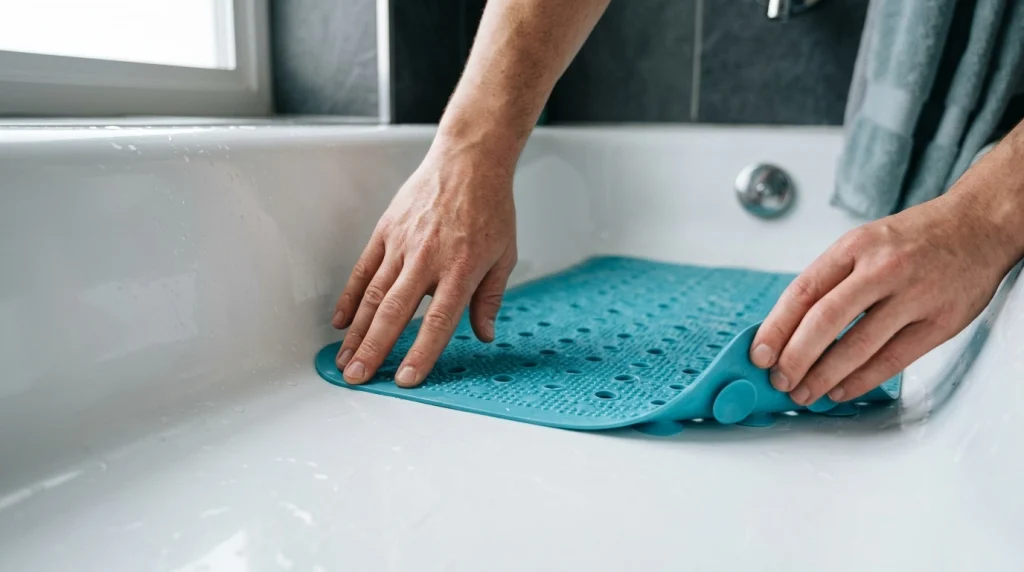
A properly fitted non-slip mat is the most useful starting point for improving bathtub traction. It provides a textured surface for the paws while helping prevent contact with slippery porcelain, acrylic, or fiberglass.
The PetMD dog-bathing guide, reviewed by a veterinarian, recommends preparing a safe, non-slip bathing environment before introducing water.
Choose a mat that fits all four paws
A small mat may keep the front paws steady while leaving the back paws on exposed tub flooring. This becomes especially problematic when your Border Collie turns, steps backward, or adjusts its stance during rinsing.
Look for these practical features:
- A textured upper surface: Provides a more dependable contact surface for wet paws.
- A secure underside: Helps prevent the entire mat from sliding.
- Enough coverage: Allows all four paws to remain supported during ordinary movement.
- Flat edges: Reduces the chance of a paw catching beneath a curled corner.
- Drainage openings: Allow water and diluted shampoo to move toward the drain.
- Easy cleaning: Makes it practical to remove accumulated hair and shampoo after bathing.
Suction-cup mats are often suitable for clean, smooth tubs. However, textured or uneven floors can prevent the cups from sealing correctly.
For a detailed explanation of that surface limitation, see our guide on preventing bathtub slipping.
Test the grip before your dog enters
Do not assume a mat is secure because its packaging says non-slip. Check its stability in the actual bathtub.
- Remove soap film, loose hair, and dirt from the tub floor.
- Install the mat according to its instructions.
- Press suction cups firmly against compatible surfaces, when applicable.
- Push the mat gently from different directions to check for movement.
- Wet the surface and repeat the stability check.
- Replace or reposition the mat if an edge lifts or the mat slides.
A mat that moves underneath a dog’s weight can be more hazardous than expected. Its stability matters as much as the grip texture on top.
Safety Check
Never rely on suction cups that fail to attach securely to your bathtub. If the surface is incompatible with the mat, choose another appropriate traction solution or bathing location before washing your dog.
2. Improve Your Border Collie’s Natural Paw Traction
Even an excellent bath mat cannot compensate for every paw-related problem. Overgrown nails, excess fur between paw pads, and painful feet may affect how comfortably a dog stands.
Keep nails at a comfortable length
Overgrown nails may interfere with normal paw placement and traction. A useful warning sign is nails repeatedly clicking on hard floors or extending far enough to affect how the toes contact the ground.
According to VCA Animal Hospitals’ mobility guidance, keeping nails appropriately short and managing excess fur around the toes can help improve a dog’s traction.
Do not cut nails excessively short in an attempt to improve grip. The sensitive quick inside the nail can bleed and cause pain if damaged.
If your Border Collie resists nail trimming, gradually introduce paw handling with rewards or arrange professional grooming assistance.
Check fur around the paw pads
Border Collies may develop longer hair around and between their toes. When excess hair extends over the pads, it can reduce direct contact between the pads and the standing surface.
Check whether the pads are exposed naturally when the dog stands. If excess fur needs trimming, use suitable grooming tools and avoid cutting close to the sensitive skin between the toes.
For a dog with particularly hairy paws, a professional groomer can help maintain an appropriate length without removing unnecessary protective fur.
Look for sore or irritated paws
Inspect the feet for cuts, cracked pads, swelling, foreign objects, or tenderness. A dog avoiding pressure on one paw may appear to be slipping when the underlying issue is discomfort.
If you notice limping, significant pain, bleeding, or a persistent change in how your dog stands, avoid forcing a bath and contact your veterinarian.
3. Set Up the Bath to Reduce Sudden Movements
Better traction works best when the dog does not need to scramble, turn repeatedly, or react to unexpected water pressure.
Prepare the bathing area before bringing your Border Collie inside. Gather shampoo, towels, a rinsing cup or sprayer, and suitable rewards so that everything remains within reach.
Our Border Collie bathing essentials guide explains how to organize these supplies for a double-coated dog.
Use comfortable water temperature
Choose lukewarm water rather than water that feels hot. Introduce it gradually, starting around the lower body instead of directing a sudden stream toward the face.
If using a handheld sprayer, begin with gentle pressure. Strong sprays can startle a nervous dog and lead to quick movements that challenge its footing.
Keep the dog in a natural standing position
Encourage your Border Collie to stand with its paws comfortably spaced rather than stretched outward. Work around the dog where possible instead of repeatedly turning it.
Use a gentle, steadying touch when needed, but do not pull the legs into position or hold the dog upright by its collar.
If you need both hands for shampooing or rinsing, having another calm adult help supervise can make the process easier.
Practical Tip
Keep the bath brief and predictable. Reward calm standing and pause when your Border Collie begins repeatedly shifting its feet. Restoring a comfortable stance is more useful than continuing to wash while the dog is unstable.
4. Help a Nervous Border Collie Feel Secure
A dog that feels frightened may move faster and less predictably, even on a grippy surface. Improving confidence is therefore part of improving bath-time stability.
For a Border Collie that already fears the bathtub, practice brief, positive sessions without washing.
- Allow your dog to approach the bathroom voluntarily and reward calm exploration.
- Introduce the dry, secured bath mat outside the tub so its texture becomes familiar.
- Encourage your dog to stand on the mat and reward relaxed behavior.
- Progress to entering the prepared, dry tub only when your dog is comfortable and can do so safely.
- Practice standing briefly, then guide the dog out without turning on the water.
- Introduce a small amount of gentle water during a later session, increasing exposure gradually.
The American Kennel Club’s bath-anxiety guidance similarly emphasizes gradual familiarization and rewarding calm behavior.
Avoid chasing, dragging, or forcing a frightened dog into the tub. Those experiences can make the next bath more difficult.
If your Border Collie becomes extremely distressed, a professional groomer experienced with fearful dogs or a veterinarian can help identify a safer approach.
5. Make Entering and Leaving the Bath Safer
Grip problems do not end at the bathtub floor. The transition across the tub edge and onto wet bathroom flooring can also be difficult.
Place a separate non-slip mat on the bathroom floor where your dog will step after bathing. It should lie flat and remain secure when the floor is damp.
Before your Border Collie leaves the tub:
- Turn off the water and finish rinsing away shampoo.
- Check that the exit area is clear of bottles, towels, and obstacles.
- Keep a stable, dry landing surface ready.
- Guide the dog slowly rather than encouraging a sudden jump.
- Provide appropriate lifting or mobility assistance if the dog cannot safely step across the edge.
- Dry the paws and remove water from the surrounding floor.
Do not attempt to lift a struggling dog without adequate control and physical assistance. If your Border Collie cannot enter or leave the bathtub safely, a walk-in shower or accessible grooming setup may be more suitable.
For related problems involving wet surfaces and loss of footing, our guide to causes of bath slipping explains how traction problems can differ from pain or weakness.
6. Why Does Your Border Collie Still Slip Despite a Bath Mat?
If your dog remains unsteady after adding a mat, identify whether the mat is moving, the paws are sliding on its surface, or the dog is having difficulty standing independently.
These are different problems and require different responses.
| What You Notice | Possible Explanation | What to Do |
|---|---|---|
| The whole mat slides | Poor attachment or incompatible tub surface | Stop, clean and test the mat, or change the setup |
| Paws slide while the mat stays still | Insufficient top-surface grip, residue, or paw-related factors | Rinse residue, inspect paws, and consider another mat texture |
| Dog scrambles when water starts | Fear, surprise, or uncomfortable spray | Pause and return to gradual bath training |
| Legs buckle or dog repeatedly loses balance | Possible pain, weakness, or mobility issue | End the bath and seek veterinary assessment |
The important distinction is whether the surface is failing or your dog is unable to maintain balance even when the surface remains secure.
Unexplained weakness, repeated falling, or difficulty standing should not be treated as an ordinary bath-mat problem.
7. Keep the Grip System Effective Between Baths
A mat can lose reliability when hair, soap film, or grime collects around the underside. Cleaning and checking it between uses helps maintain a more predictable bathing surface.
After each bath, remove the mat if recommended by its manufacturer, rinse away shampoo and hair, and allow it to dry thoroughly. Inspect suction cups for deformation or damage before the next use.
Also examine the mat for hardened surfaces, cracks, persistent odors, or edges that no longer lie flat.
Before every bath, repeat a quick wet-surface stability test. A mat that worked previously should not automatically be assumed secure again.
Pay attention to the whole route your dog follows, including the bathroom floor and exit area. Clean, dry surfaces and predictable handling remain important even after the bathtub itself has been improved.
8. When Is a Different Bathing Setup the Better Choice?
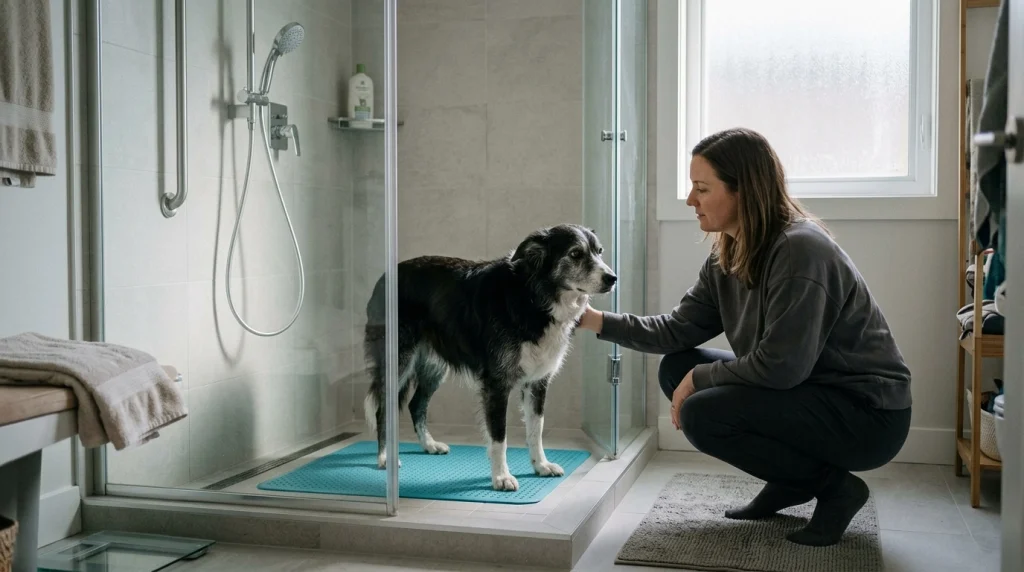
A traditional bathtub is not always the safest option, particularly for a dog with limited mobility, severe bath anxiety, or a tub surface that will not hold a suitable non-slip mat.
A low-entry shower with an appropriate traction surface may reduce the need to step over a high edge. A professional grooming facility may also have equipment better suited to supporting an older or physically uncomfortable dog.
If your Border Collie is suddenly unstable, reluctant to bear weight, or struggling on ordinary household floors as well as in the bath, arrange a veterinary assessment before trying another bathing method.
For dogs with ongoing mobility limitations, changing the bathing environment may be more effective than repeatedly replacing mats.
Related Product
Non-Slip Dog Bathtub Mat
A textured, properly secured bath mat can provide more dependable footing for your Border Collie. Check size, drainage, and compatibility with your bathtub before choosing one.
As an Amazon Associate, we earn from qualifying purchases.
Frequently Asked Questions
Can I use a regular human bathtub mat for my Border Collie?
Yes, provided the mat is safe for the specific bathtub, stays firmly attached when wet, offers suitable paw traction, and covers enough standing space. A dog-specific label is less important than actual stability, fit, and surface compatibility.
Are suction-cup mats safe for textured bathtubs?
Not necessarily. Many suction-cup designs require a smooth, clean surface to form a reliable seal. Textured or uneven bathtub floors may prevent attachment. Follow the manufacturer’s compatibility instructions and never use a mat that fails a wet stability test.
Can I use a towel instead of a non-slip bath mat?
A towel may provide temporary cushioning or traction, but it can bunch, become waterlogged, and slide. It should not be considered a dependable substitute when it cannot remain secure under your dog’s paws. A properly fitted bathing mat is generally the more practical option.
Will trimming my Border Collie’s paw hair improve grip?
Removing excess fur that covers the paw pads may improve contact with the standing surface. However, trimming should be careful and limited to what is necessary. Avoid cutting sensitive skin or removing protective fur unnecessarily.
Should I use dog socks or traction boots during bathing?
Ordinary socks can become wet and slippery, and traction footwear is not automatically suitable for bathing. Only consider a product specifically appropriate for wet use and your dog’s needs. Improving the bathing surface is usually the simpler first step.
What if my senior Border Collie cannot stand securely in the tub?
Stop the bath rather than forcing the dog to remain standing. Older dogs may have pain, weakness, or mobility limitations that require veterinary evaluation. A low-entry bathing area, appropriate physical support, or professional grooming assistance may be safer.
Final Thoughts
Giving your Border Collie better grip in the bath starts with a secure, appropriately sized non-slip surface. Combine it with sensible paw care, gradual handling, gentle water pressure, and a safe exit area to make bathing more comfortable and controlled.
Always check that the mat stays secure under wet conditions. If slipping continues despite reliable traction, investigate the dog’s physical comfort rather than assuming another mat will solve the problem.
