
Why Does My Border Collie Slip in the Bath?

Quick Answer
Your Border Collie usually slips in the bath because the smooth, wet bathtub floor provides too little grip for their paws. Shampoo residue, long nails, fur covering the paw pads, and nervous movements can make slipping worse. A secure non-slip mat often solves the main problem. However, slipping that continues on a stable surface, especially with limping or weakness, may indicate a paw injury or mobility problem that needs veterinary attention.
A Border Collie may run confidently across grass, climb steps, and make sharp turns during play, yet struggle to stand still in a bathtub. That difference can seem strange until you consider how much the surface beneath their paws has changed.
Bathing also introduces unfamiliar sounds, water, and handling. A dog that feels unstable may suddenly shift its weight, scramble, or try to escape. Understanding what causes that reaction makes it easier to prevent another stressful bath.
Why Do Border Collies Lose Their Grip in the Bathtub?
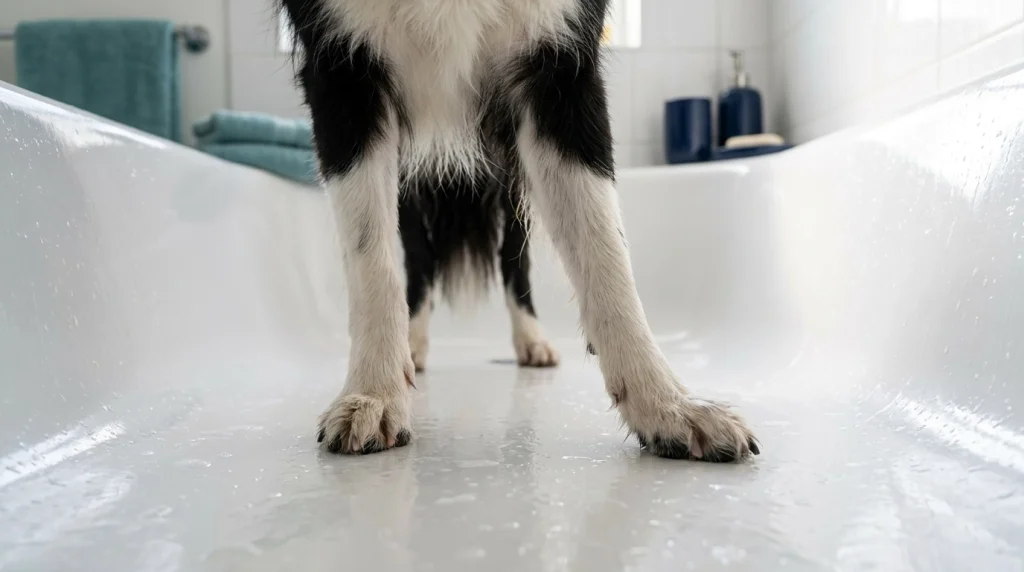
Border Collies lose traction when their paws cannot create enough friction against the bathtub floor. Smooth surfaces become especially difficult when covered with water, soap, or shampoo residue.
Outdoor surfaces provide small irregularities that help dogs maintain their footing. Grass, soil, and rough pavement offer more texture than smooth bathtub enamel or acrylic.
A bathtub also limits the space available for adjusting balance. Your dog cannot always widen its stance or move naturally when its paws begin sliding.
According to veterinarian-reviewed bathing guidance from PetMD, creating a non-slip bathing environment is an important part of keeping dogs comfortable and safe.
The problem is usually environmental rather than a sign that Border Collies naturally have poor balance.
7 Common Reasons Your Border Collie Slips During a Bath
Several factors can cause the same slipping behavior. The most useful approach is to check the bathing surface first, then look at your dog’s paws, movements, and comfort level.
1. The Bathtub Floor Is Too Smooth
A smooth bathtub surface is the most likely cause when your Border Collie walks normally elsewhere but slides as soon as they enter the tub.
Wet paws can have difficulty gripping polished surfaces. As your dog shifts its weight, one paw may slide sideways, forcing the others to compensate.
This can create a chain reaction in which all four legs move unexpectedly.
What to check: Does your dog slip before shampoo or rinsing begins? If so, the tub surface itself is a strong suspect.
2. Shampoo and Soap Residue Reduce Traction
Shampoo left on the bathtub floor may make an already slippery surface even harder to stand on.
Soap can spread beneath the paws as you wash and rinse your dog’s coat. Product buildup from earlier baths can also remain on the floor.
Watch whether slipping begins or becomes worse during shampooing.
What helps: Clean the tub before bathing, use only the amount of dog shampoo needed, and rinse product residue away thoroughly. Avoid leaving conditioner or other slippery products where your dog stands.
3. Long Toenails Affect Paw Contact
Overgrown nails may interfere with the way your Border Collie’s paws meet the ground.
When nails become too long, they can change toe position and reduce comfortable, stable contact with a surface. This is particularly noticeable on smooth flooring.
The American Kennel Club’s nail care guidance explains that long nails can reduce traction and affect normal foot position.
Check for nails that repeatedly click against hard floors, curl excessively, or appear to affect your dog’s stance.
Do not cut nails extremely short to improve grip. The sensitive quick inside each nail can bleed if cut. Ask a veterinarian or groomer for help if you are unsure how much to trim.
4. Excess Fur Covers the Paw Pads
Some Border Collies develop enough fur between their paw pads that hair extends across parts of the gripping surface.
When this hair becomes wet and lies against a smooth bathtub floor, it may interfere with direct paw-pad contact.
Look underneath each paw while your dog is relaxed and standing on a dry, secure surface.
If long hair covers the pads, a groomer can carefully tidy the excess. Avoid cutting deep between the toes or using sharp scissors close to the skin.
Not every Border Collie needs paw-pad trimming. Remove only hair that genuinely interferes with hygiene or footing.
5. Fear Makes Your Dog Move Suddenly
A frightened Border Collie may slip because its movements become hurried or unpredictable.
Water sounds, an unfamiliar bathtub, close handling, or a previous fall can make a dog nervous. If your dog tries to jump away or shifts weight rapidly, keeping its feet planted becomes harder.
A dog may also remember an earlier bad experience and become tense before the next bath even begins.
Common signs of discomfort include trembling, repeatedly attempting to leave, crouching, struggling, and refusing to approach the bath.
These signs do not prove that fear caused the original slip, but they can make an existing traction problem worse.
6. The Bath Mat Moves Under Your Dog
A bath mat is not automatically safe just because it has a textured surface.
If the mat slides, curls, or lifts when your Border Collie moves, it creates a second unstable surface inside the tub.
Suction-cup mats generally need a suitable clean, smooth surface to attach properly. Textured, uneven, or incompatible bathtub finishes may prevent secure attachment.
Before bathing: Press the mat into place and test whether it shifts under firm hand pressure. If it moves, do not rely on it to support your dog.
For detailed positioning and setup instructions, see our guide on preventing bath slips.
7. Pain or Mobility Problems Affect Stability
Although the tub is usually responsible, discomfort or a mobility issue can also contribute to slipping.
A sore paw, injured nail, joint pain, or reduced muscle strength may make it difficult for your dog to shift its weight or maintain balance.
Older dogs and dogs recovering from injuries may have more difficulty coping with slick surfaces.
Pay attention if your Border Collie also slips on dry floors, struggles to rise, avoids stairs, favors one leg, or seems unusually unsteady.
These signs deserve veterinary assessment rather than repeated attempts to finish bathing.
Warning
If your Border Collie suddenly cannot stand, repeatedly collapses, shows severe pain, or develops sudden loss of balance, stop the bath and seek urgent veterinary care. Do not assume a bathtub surface explains new or serious coordination problems.
How Can You Identify the Main Cause of Slipping?
The best clue is when and where your Border Collie loses traction. A simple observation often separates a surface problem from fear or physical discomfort.
Use this table to narrow down what may be happening.
| What You Notice | Possible Cause | Next Check |
|---|---|---|
| Slips immediately upon entering | Smooth tub floor | Test a secure non-slip surface |
| Slips mostly during shampooing | Soap residue | Check rinsing and product buildup |
| Feet slide on other smooth floors | Nails, paw fur, or mobility | Inspect paws and normal walking |
| Scrambles when water starts | Fear or sudden movement | Observe reaction to water and sounds |
| Mat shifts under the paws | Poor mat attachment | Check fit and stability |
| Slips despite secure footing | Possible discomfort or mobility issue | Arrange veterinary evaluation |
These observations help identify possibilities, but they are not a medical diagnosis. More than one cause can be present at the same time.
What Should You Do When Your Border Collie Starts Slipping?
Stop washing and help your dog regain secure footing. Continuing while the paws are sliding can increase panic and the risk of injury.
- Pause the water. Turn off the sprayer and avoid sudden movements.
- Stay calm. Speak gently and avoid pulling your dog into an unnatural standing position.
- Support safely. Keep your dog from scrambling or jumping while you prepare a secure exit.
- Check the surface. Look for a shifting mat, shampoo residue, or an uncovered slippery area.
- End the bath if necessary. Guide your dog onto a dry, non-slip surface and towel-dry gently.
- Inspect for discomfort. Watch for limping, tenderness, unusual posture, or a reluctance to walk.
Do not force a frightened dog to remain in the tub. If the bath cannot continue safely, finish essential cleaning another way and address the footing problem before the next attempt.
For the complete washing sequence, including coat preparation and rinsing, see our Border Collie bathing guide.
Can a Non-Slip Bath Mat Prevent the Problem?
A properly fitted non-slip mat can greatly improve traction when the main problem is a slick bathtub floor. It creates a textured standing area so paws do not rely entirely on the smooth tub surface.
However, not all mats are suitable for every bathtub. A mat must remain stable when wet and provide enough coverage for your dog’s natural stance.
Consider these practical requirements:
- Full standing coverage: All four paws should fit comfortably on the gripping surface.
- Secure attachment: The mat should not slide, fold, or lift when your dog shifts weight.
- Suitable surface: Confirm that the mat’s attachment method works with your tub finish.
- Good drainage: Water should not accumulate excessively beneath the standing area.
- Easy cleaning: Hair and soap residue should be simple to remove after each bath.
A temporary towel may improve grip in some circumstances, but it can bunch up or slide. A stable, correctly fitted mat is generally a more dependable option.
Practical Tip
Check the mat before your dog enters the tub, not after slipping begins. A bath mat that feels grippy on top can still be unsafe if its underside moves against the bathtub.
Why Does My Border Collie Panic After Slipping Once?
A previous slip can make your Border Collie associate bathing with losing control of its footing. The dog may anticipate another unpleasant experience before the water even starts.
That expectation can lead to hesitation, stiff movements, trembling, or attempts to leave.
The American Veterinary Society of Animal Behavior discusses how unpleasant handling experiences, including slippery bathtubs, can contribute to fearful reactions.
The goal is to rebuild confidence without forcing another difficult bath.
Begin with short, calm sessions near the bathroom. Reward relaxed behavior and let your dog explore a secure, dry bathing area voluntarily.
Once your dog is comfortable, introduce small amounts of water gradually while maintaining safe footing.
If fear remains intense, a qualified reward-based trainer or veterinary behavior professional can help create a gradual training plan.
How Can You Make Future Baths Safer?
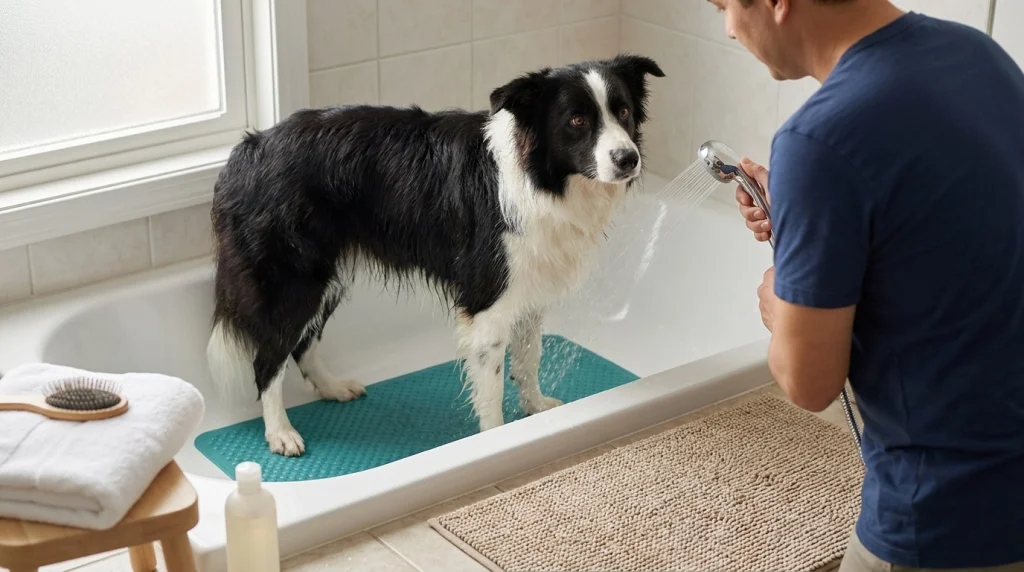
Preventing future slips requires more than placing something underneath the paws. The entire bathing setup should support stable movement and calm handling.
- Prepare the bathtub first. Clean away soap residue and secure the non-slip surface.
- Check nails and paw pads. Look for overgrown nails, excessive paw hair, or signs of irritation.
- Use lukewarm water. Avoid sudden temperature changes that may startle your dog.
- Keep water pressure gentle. A low-pressure sprayer or rinsing cup may be less stressful.
- Allow natural standing. Avoid stretching the legs apart or forcing your dog into an awkward position.
- Prepare a dry exit. Place a secure mat outside the tub and keep towels nearby.
- Keep sessions manageable. Pause when your dog becomes overwhelmed instead of rushing to finish.
Good preparation also helps with the Border Collie’s dense double coat. Brushing before bathing and rinsing thoroughly can make the washing process more controlled.
If you need a broader preparation checklist, our Border Collie bathing routine covers the full grooming process.
When Should Slipping Become a Veterinary Concern?
Occasional slipping on a smooth bathtub floor is usually a traction issue. Repeated slipping despite a stable surface deserves closer attention.
Arrange veterinary evaluation if you notice any of the following:
- Slipping or stumbling outside the bathroom
- Limping, stiffness, or visible discomfort
- Difficulty standing up or climbing stairs
- Dragging a paw or unusual paw placement
- New weakness or worsening coordination
- Reluctance to bear weight on one or more legs
If your dog suddenly loses the ability to stand, collapses, or becomes severely unsteady, seek urgent veterinary advice.
Do not use a successful bath mat test to rule out a medical problem if other concerning symptoms are present.
Related Product
Non-Slip Dog Bathtub Mat
A textured bathtub mat may improve paw traction during bathing. Choose one that fits your tub securely and provides enough standing space for your Border Collie.
As an Amazon Associate, we earn from qualifying purchases.
Frequently Asked Questions
Is it normal for a Border Collie to slip in the bathtub?
Slipping is common on wet, smooth bathtub surfaces, but it should not be ignored. Providing secure footing can reduce the risk of falls and stressful movements.
Can a Border Collie slip even when using a bath mat?
Yes. A mat may slide if it is poorly attached, too small, or incompatible with the bathtub surface. Your dog may also slip because of paw, balance, or mobility problems.
Does wet paw fur make slipping worse?
It can. Excess fur covering the pads may reduce direct contact with the standing surface. Keeping paw hair neatly maintained can help when overgrowth is interfering with traction.
Should I hold my Border Collie tightly during a bath?
No. Tight restraint can increase fear or cause uncomfortable movements. Provide secure footing, use gentle support when needed, and stop if your dog becomes distressed.
Can puppies be more likely to slip during baths?
Puppies may struggle with unfamiliar bath surfaces and react suddenly to water or handling. A stable mat and gentle introduction can help them learn to stand comfortably.
What if my Border Collie refuses to enter the bathtub after falling?
Do not force another bath. Reintroduce the bathing area gradually using a secure dry surface, calm encouragement, and rewards. Seek professional behavior support if the fear persists.
Final Thoughts
Your Border Collie most likely slips in the bath because the wet bathtub surface cannot provide enough traction. Soap residue, long nails, excess paw fur, or nervous movements can make the problem worse.
Start by checking the bathtub surface and providing stable footing. If slipping continues outside the bath or comes with signs of pain or weakness, seek veterinary advice. A safe bath should allow your Border Collie to stand comfortably without struggling to maintain balance.
