
Is Pneumonia in Dogs Contagious? What Owners Need to Know

If your dog has a cough and you’re worried about pneumonia, the first thing to understand is this: pneumonia in dogs is not always contagious. Whether it can spread depends on what caused it. Most canine pneumonia is not contagious to people, but whether it can spread to other dogs depends on the underlying cause.
That distinction matters because the next step is different in each case. A dog with infectious pneumonia may need to be kept away from other dogs right away. A dog with aspiration pneumonia, on the other hand, is usually sick because something was inhaled into the lungs, not because the condition itself is being passed around.
If your dog is breathing normally, eating, and only has a mild cough, you may have a little time to call your vet and sort out the cause. If your dog is working harder to breathe, seems weak, or has pale or blue gums, treat it as urgent.
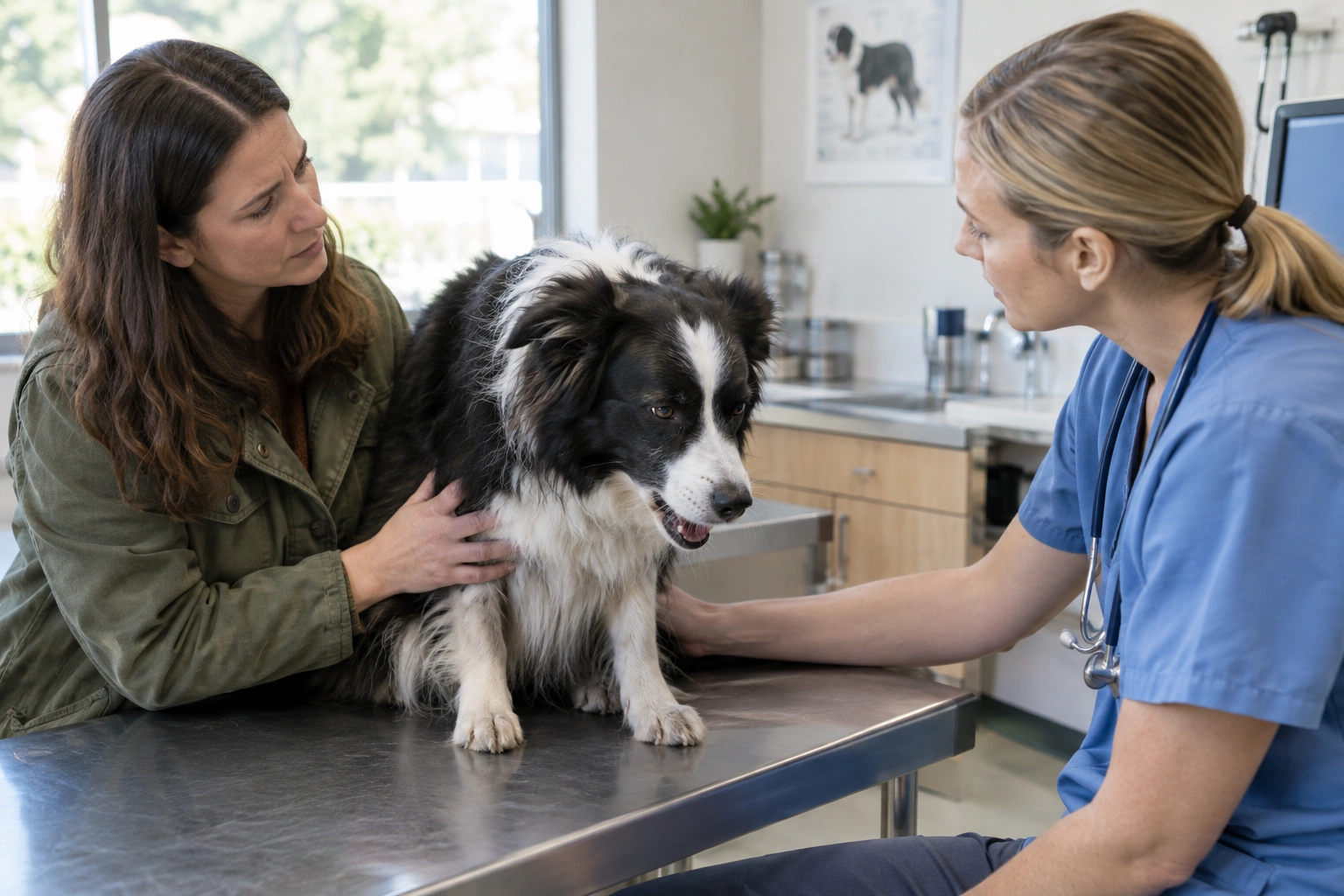
Quick Answer: Is Pneumonia in Dogs Contagious?
Sometimes, but not always.
Pneumonia is a description of inflammation or infection in the lungs, not a single disease. That means contagiousness depends on the underlying cause. Some infectious causes can spread between dogs. Others cannot.
Here’s the practical rule I use with owners:
- If the cause is unknown, isolate the dog from other dogs now.
- If the dog is struggling to breathe, seek veterinary care the same day or sooner.
- If the vet confirms a non-contagious cause, isolation may still be wise for comfort and recovery, but the spread risk is different.
That approach protects your other pets while you wait for a diagnosis. It also prevents the common mistake of assuming every cough is “just a cough” or, on the other hand, assuming every pneumonia case is equally contagious.
For a broader look at respiratory signs and when they become serious, the ASPCA’s guidance on coughing and breathing problems is a useful general reference.
What Pneumonia in Dogs Actually Means
Pneumonia means the lungs are inflamed, often because of infection, inhaled material, or both. In plain terms, the airways and air sacs stop working normally, so the dog has a harder time moving oxygen in and out.
That’s why two dogs can both be diagnosed with pneumonia and still have very different risks:
- One dog may have aspiration pneumonia after vomiting or swallowing the wrong way.
- Another may have bacterial pneumonia after a respiratory infection moves deeper into the lungs.
- A third may have fungal pneumonia, which is less common and usually tied to environmental exposure rather than direct dog-to-dog spread.
The label “pneumonia” tells you where the problem is. It does not tell you how it started. And that starting point is what determines whether it is contagious.
Which Types of Pneumonia Can Spread to Other Dogs?
This is the part owners need most: contagiousness depends on the cause.
Bacterial pneumonia
Some bacterial infections can spread between dogs, especially in close-contact settings like kennels, shelters, daycare, or multi-dog homes. The exact risk depends on the bacteria involved and how sick the dog is.
Viral pneumonia
Viruses that affect the respiratory tract can be contagious, and some may contribute to pneumonia or set the stage for a secondary lung infection. Viral respiratory disease often spreads through close contact, droplets, shared airspace, or contaminated surfaces.
Fungal pneumonia
Fungal pneumonia is usually not spread directly from dog to dog the way a cold-like illness can be. In many cases, the dog picks up the fungal spores from the environment. That means the risk is more about shared exposure than one dog “giving” it to another.
Aspiration pneumonia
This is the one many owners misunderstand. Aspiration pneumonia usually happens when a dog inhales vomit, food, liquid, or other material into the lungs. It is not typically contagious because it is not caused by a spreading infection in the first place.
Practical takeaway
If you do not yet know the cause, behave as if it could be infectious until your veterinarian says otherwise. That is the safest middle ground.
Pneumonia vs Kennel Cough vs Bronchitis
These conditions often get mixed up because they can all cause coughing. But they are not the same problem.
| Condition | Common pattern | Contagious risk | What it means for you |
|---|---|---|---|
| Pneumonia | Often cough plus lethargy, fever, fast breathing, or reduced appetite | Depends on the cause | Isolate until a vet clarifies the cause |
| Kennel cough | Usually a dry, hacking cough; dog may otherwise seem fairly bright | Often contagious | Keep away from other dogs and monitor closely |
| Bronchitis | Can cause chronic or repeated cough, sometimes worse with exercise | Not always contagious | Needs veterinary assessment if persistent |
| Aspiration pneumonia | Cough after vomiting, regurgitation, anesthesia, or swallowing trouble | Usually not contagious | Still needs prompt vet care because it can worsen fast |
A dog with kennel cough may still seem fairly normal between coughing spells. A dog with pneumonia is more likely to look genuinely unwell: tired, feverish, off food, or breathing faster than usual.
That said, owners should not try to diagnose this by cough alone. A wet-sounding cough does not prove pneumonia, and a dry cough does not rule it out. The breathing effort and the dog’s overall condition matter more.

For general respiratory disease comparison, VCA Hospitals has owner-friendly explanations that can help you understand why these conditions overlap.
Can Dogs with Pneumonia Infect People or Other Pets?
This depends on the cause.
Other dogs
If the pneumonia is caused by an infectious agent, other dogs may be at risk, especially through:
- close nose-to-nose contact
- shared water bowls or food bowls
- bedding, crates, or toys
- coughing in shared indoor air
- contaminated hands or clothing after handling the sick dog
People
Most canine pneumonia is not zoonotic, so the main concern is usually not human infection. Still, if the cause is unknown or if the dog has a confirmed infectious respiratory illness, basic hygiene is smart. People with weakened immune systems should be especially careful and should ask their own physician if they are concerned.
Other household pets
Cats and other pets are not the main concern in most cases, but they should still be kept away from the sick dog until the cause is known. Even when a disease does not usually cross species, shared surfaces and close contact can still spread germs around the home.
The safest household rule is simple: separate the sick dog from other pets until your veterinarian gives clear guidance.
Symptoms That Suggest Pneumonia Instead of a Simple Cough
A cough alone does not tell the whole story. Pneumonia becomes more likely when cough shows up with signs that the dog feels truly ill.
Watch for:
- rapid breathing
- labored breathing or belly effort
- fever
- lethargy
- reduced appetite
- nasal discharge
- weakness
- productive cough or wet cough
- exercise intolerance
- restlessness when lying down
These dogs are often energetic enough that a quiet change stands out if you know their normal baseline.
When Breathing Issues Become an Emergency
Some signs mean the dog should not wait for a routine appointment.
Seek same-day veterinary care if your dog has:
- a persistent cough plus fever or marked lethargy
- reduced appetite and worsening weakness
- fast breathing that does not settle at rest
- a recent history of vomiting, regurgitation, or choking
Seek emergency care now if you see:
- open-mouth breathing at rest
- blue, gray, or very pale gums
- collapse
- extreme distress or panic while breathing
- the dog cannot lie down comfortably
- rapid worsening over hours
Breathing trouble is one of those problems where waiting to “see if it passes” can backfire. Dogs can compensate for a while and then decline quickly.
How Veterinarians Confirm the Cause and Severity
A vet cannot tell contagiousness from a glance alone. They need to look at the whole picture.
Typical diagnostic steps may include:
- a physical exam and listening to the lungs
- chest X-rays to look for lung changes
- blood work to assess infection and overall health
- sometimes airway or respiratory sampling, depending on the case
Those tests help answer two questions:
- Is it really pneumonia?
- If so, what is most likely causing it?
That second question is what guides isolation advice. A dog with aspiration pneumonia needs a different plan than a dog with an infectious respiratory infection.
Treatment and What It Means for Contagiousness
Treatment depends on the cause and how sick the dog is.
A veterinarian may recommend:
- antibiotics for certain bacterial infections
- supportive care
- oxygen therapy in more severe cases
- hospitalization if the dog is struggling to breathe or dehydrated
- treatment aimed at the underlying cause, such as aspiration risk or fungal disease
What matters for owners is this: feeling a little better does not always mean the dog is no longer a spread risk. Coughing may improve before the underlying infection is fully controlled. That is why vet guidance matters more than guessing based on symptoms alone.
How Long a Dog with Pneumonia Should Be Kept Away from Other Dogs
There is no universal number that fits every case, because the safe isolation period depends on the cause, the severity, and what your vet finds.
Use this decision rule:
- Unknown cause: isolate immediately.
- Confirmed infectious cause: keep the dog away from other dogs until your vet says the risk is low enough to stop.
- Aspiration pneumonia: the dog may not be contagious, but separation can still help with rest, hygiene, and monitoring.
A simple rule of thumb: follow your vet’s clearance rather than symptom improvement alone when deciding when isolation can end.
If you live with multiple dogs, assume the sick dog should be separated until a veterinarian has identified the cause and given you a clear return-to-group plan.
Isolation and Cleaning Steps for Multi-Dog Homes
You do not need to turn your house into a hospital, but you do need a few practical barriers.
Do this right away
- Use separate food and water bowls.
- Keep the sick dog in its own crate, room, or gated area if possible.
- Avoid face-to-face greetings between dogs.
- Wash hands after handling the sick dog.
- Change clothing if you have been cleaning up coughing, discharge, or vomit.
Clean the high-contact items
- bowls
- bedding
- crate trays
- toys
- floors near resting areas
Use normal household cleaning practices and focus on consistency, not perfection. The goal is to reduce shared exposure, not to pretend you can sterilize a lived-in home.
One important trade-off
Strict isolation lowers spread risk, but it can also stress a social dog. For a Border Collie, that matters. If the dog is stable and your vet allows it, short calm interaction through a barrier may be better than total social deprivation. The key is to balance emotional needs with infection control.
How to Reduce Exposure in Kennels, Daycare, and Multi-Dog Settings
If your dog has recently been boarded, attended daycare, or stayed in a kennel, mention that to your vet. Those settings increase the chance that a respiratory illness could be infectious.
If a dog is sick or has had a known exposure:
- pause daycare and group classes
- avoid dog parks
- skip boarding until cleared
- tell the kennel or sitter about the illness
- keep an eye on other dogs in the household for cough, lethargy, or reduced appetite
In group settings, prevention is mostly about early separation and honest reporting. One dog staying home for a short period is far easier than managing illness through a whole household or kennel.
Common Mistakes Owners Make
These are the mistakes that create the most trouble:
- assuming every pneumonia case is contagious
- assuming a cough is harmless because the dog is still eating
- waiting too long when breathing becomes harder
- ending isolation as soon as the cough improves
- sharing bowls, bedding, or toys during the illness
- trying to manage labored breathing at home without veterinary input
The biggest one is simple: breathing changes matter more than the cough itself.
When to See a Veterinarian or Certified Trainer
For this topic, the professional you need is usually a veterinarian, not a trainer. A trainer can help with routine separation or crate comfort later, but breathing trouble is a medical issue first.
Call your vet promptly if:
- your dog has a new cough and you are unsure of the cause
- another dog in the home is now coughing
- your dog has been around a kennel, daycare, or sick dog
- the cough is lasting more than a day or two
- your dog seems tired, feverish, or less interested in food
Go urgently if:
- breathing looks difficult
- gums look pale or blue
- your dog collapses
- the dog is worsening instead of stabilizing
If you are unsure, it is safer to isolate first and ask questions second. That one step protects the rest of the household while you get a real diagnosis.
FAQs
Is pneumonia in dogs always contagious?
No. Pneumonia is a lung condition, not one single disease. Some causes can spread between dogs, while others, such as aspiration pneumonia, usually are not contagious.
Can my dog give pneumonia to people?
Usually, the main concern is other dogs, not people. Still, if the cause is unknown or infectious, use normal hygiene and be cautious around anyone with a weakened immune system.
How do I know if it is pneumonia or kennel cough?
You usually can’t know for sure at home. Kennel cough often causes a dry hacking cough in an otherwise fairly bright dog, while pneumonia more often comes with fever, weakness, faster breathing, or reduced appetite.
Should I isolate my dog right away?
Yes, until you know the cause. That is the safest choice in a multi-dog home.
When is pneumonia an emergency?
If your dog is struggling to breathe, has blue or pale gums, collapses, or worsens quickly, seek emergency veterinary care now.
How do vets confirm pneumonia?
They usually combine a physical exam with chest X-rays and other tests as needed. Those results help determine both severity and likely cause.
Can a dog with aspiration pneumonia infect other dogs?
Aspiration pneumonia is usually not contagious because it comes from inhaling material into the lungs, not from a spreading infection.
How long should my dog stay away from other dogs?
That depends on the cause and your vet’s advice. If the cause is unknown, keep the dog separated until a veterinarian gives you a clear plan.
Internal references for related reading
If you are trying to sort out another contagious eye issue at the same time, our guide on whether dogs can get pink eye explains how to think about spread risk and when to call the vet. For another example of how symptom overlap can mislead owners, see our article on whether dogs can get heat rash.
