
How to Prevent Water From Pooling Around a Border Collie Bath Mat

Quick Answer: To prevent water from pooling around a Border Collie bath mat, position the mat so it does not block the drain, remove hair and debris from drainage openings, control the amount of rinse water, and dry the surrounding floor after bathing. If water continues to collect, check the bathroom’s drainage and the mat’s design before the next bath.
Water pooling around a Border Collie bath mat can make the bathroom messy and create a slipping hazard for both you and your dog. It can also leave the mat and surrounding floor damp long after bath time ends.
The best solution is to identify where the water collects, improve its path toward the drain, and establish a simple drying routine after every bath.
1. Identify Why Water Is Pooling Around the Bath Mat
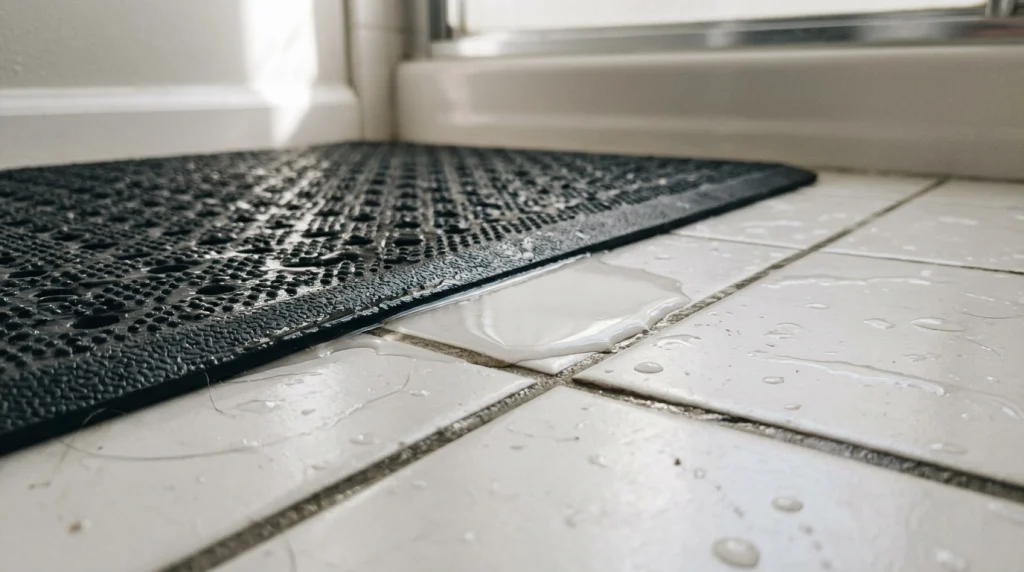
Before changing your bathing setup, observe where the water collects. The location of the puddle often provides a useful clue about the cause.
- Water collects around the mat’s edges: The mat may be directing runoff outward instead of allowing water to drain away.
- Water sits on top of the mat: The drainage holes may be too small, blocked, or unsuitable for the amount of water used.
- Water collects near the bathroom drain: Hair or other debris may be restricting drainage, or the floor may not slope effectively toward the drain.
- Water spreads across the floor: The shower spray may be too forceful, the bathing area may be poorly positioned, or water may be escaping from the washing area.
During the next bath, pay attention to where the first puddle forms. This can help you choose a targeted fix rather than repeatedly moving the mat without addressing the underlying problem.
2. Position the Bath Mat Without Blocking the Drain
A bath mat should provide your Border Collie with a stable surface while allowing water to move toward the drainage point. Placing it directly over a floor drain can interfere with runoff, depending on the mat’s construction.
- Locate the bathroom drain before placing the mat.
- Position the mat so that its edges and underside do not obstruct the drain opening.
- Keep the mat within a practical bathing area where you can control splashing.
- Check whether the floor naturally directs water toward the drain.
- After a small amount of water is introduced, observe whether it flows away or collects around the mat.
Do not assume that moving the mat a few inches will solve every drainage problem. If the bathroom floor has poor drainage or an unsuitable slope, repositioning the mat may only move the puddle to another location.
Practical tip: Keep the mat flat and stable. Avoid folding or propping it up in a way that could cause your dog to lose footing.
3. Choose a Bath Mat That Allows Water to Drain
Not every dog bath mat is designed to handle the same amount of water. A thick, solid mat may retain water underneath, while a mat with suitable drainage openings may allow runoff to pass through more easily.
When evaluating a replacement mat, consider these features:
- Drainage openings: Check that the openings are distributed across the surface and are large enough to pass water and loose hair without becoming easily blocked.
- Non-slip backing: The underside should grip the intended floor surface without sliding when wet.
- Easy cleaning: A mat that can be lifted, rinsed, and dried easily is more practical for regular dog bathing.
- Suitable size: The mat should provide enough room for your Border Collie to stand comfortably without extending unnecessarily into the main walking area.
- Floor compatibility: Confirm that the material is appropriate for your bathroom floor and follow the manufacturer’s cleaning instructions.
Drainage openings alone do not guarantee that a mat will prevent pooling. Water still needs a clear route across or beneath the mat and toward a functioning drain.
4. Remove Hair and Debris From the Mat and Drain
Border Collies have a double coat, and loose hair can accumulate during bathing. Hair mixed with soap residue and other debris may obstruct mat openings or contribute to a slow-draining bathroom drain.
Cleaning both the mat and the drain area regularly can help maintain water flow.
- Remove the mat after bathing when it is safe to do so.
- Pick up visible hair from the mat’s surface and underside.
- Rinse away shampoo residue and other debris according to the manufacturer’s instructions.
- Inspect the drainage openings and clear any visible blockage.
- Remove accessible hair from the drain cover without pushing debris farther into the pipe.
- Run a small amount of water to see whether drainage has improved.
Do not mix chemical drain cleaners or use harsh cleaning products on the mat unless the manufacturer confirms they are suitable. Keep cleaning products away from your dog and rinse cleaned surfaces thoroughly when appropriate.
If the drain remains slow after accessible debris has been removed, consider having the plumbing inspected instead of repeatedly treating the drain with chemicals.
5. Control the Amount and Direction of Rinse Water
The volume and direction of the water stream can influence how much water escapes beyond the bathing area. A strong spray aimed at the mat’s edges may send water onto the surrounding floor faster than it can drain.
Use these techniques to reduce unnecessary runoff:
- Use a gentle, controlled stream rather than a high-pressure spray.
- Keep the nozzle close enough to the dog’s coat to reduce splashing without making your dog uncomfortable.
- Rinse one section at a time instead of allowing water to run continuously across the entire bathing area.
- Avoid directing water toward the bathroom doorway or across the main walking path.
- Use a suitable container or handheld sprayer if it gives you better control than a fixed showerhead.
- Pause between sections to check whether water is draining properly.
Be patient when rinsing your Border Collie’s thick coat. Work systematically and make sure shampoo is removed according to the product’s directions without flooding the bathing area.
6. Keep Runoff Away From the Bathroom Floor
Even with a well-designed mat, some water may escape around the edges during bathing. A practical bathing setup should account for splashes and runoff rather than relying on the mat alone.
Consider the following adjustments:
- Use a suitable bathing area: Bathe your dog in a shower, tub, or designated washing space that can contain water safely.
- Use towels strategically: Keep absorbent towels nearby to wipe up small splashes promptly.
- Keep the doorway clear: Avoid allowing runoff to reach the entrance, where someone could step into a wet area unexpectedly.
- Check nearby items: Move electrical devices, paper products, and other water-sensitive items away from the bathing area.
- Maintain a clear walking path: Remove loose objects and keep the area around the dog free of trip hazards.
For more guidance, see our article on creating a non-slip bathing area for a Border Collie.
7. Dry the Mat and Floor After Every Bath
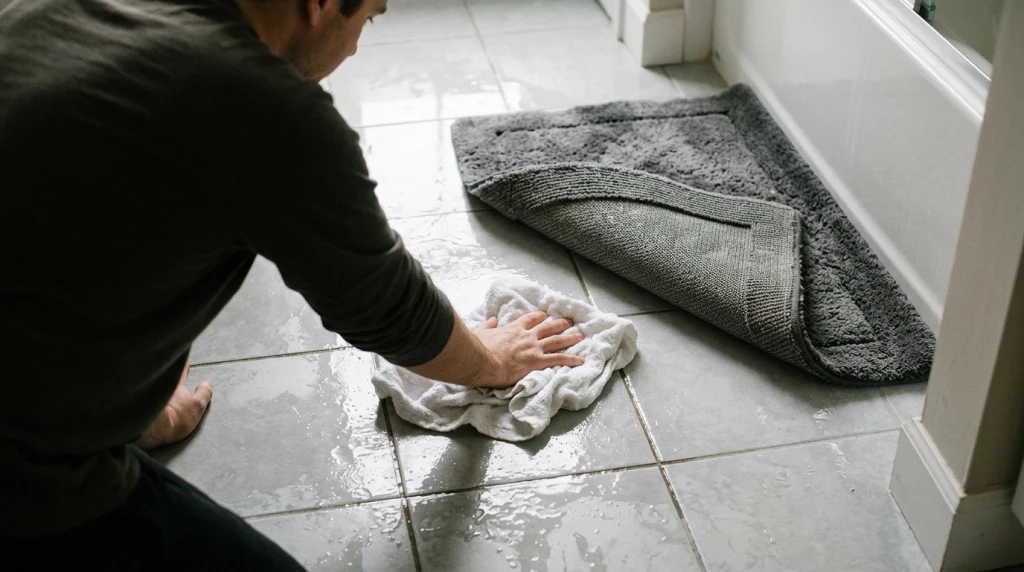
Removing standing water is important even when the mat appears to drain properly. Moisture trapped beneath a mat can keep the floor damp and create unpleasant odors over time.
Follow this post-bath routine:
- Turn off the water and allow excess water to drain.
- Help your Border Collie move safely away from the wet area.
- Lift the mat if its design permits and remove water trapped underneath.
- Wipe standing water from the surrounding floor with an absorbent towel or suitable floor wiper.
- Rinse and clean the mat when necessary.
- Allow the mat and floor to dry fully before placing the mat back in position.
- Ventilate the bathroom when possible to help moisture escape.
The U.S. Environmental Protection Agency recommends addressing moisture problems and drying wet materials to help prevent mold growth. Read its brief guide to mold, moisture, and your home for additional moisture-control guidance.
Important: Never leave a wet, slippery floor unattended if people or pets may walk through the area. Dry the floor promptly and keep your dog away until it is safe.
8. Troubleshoot Persistent Water Pooling
If water continues to collect despite changing the mat’s position and cleaning its openings, use the following checks to narrow down the problem.
| Problem | Possible cause | What to do |
|---|---|---|
| Water stays on top of the mat | Blocked openings or unsuitable mat design | Clean the openings or consider a more suitable drainage design. |
| Water collects beneath the mat | Trapped runoff or limited drainage | Lift and dry the mat, then check its position and construction. |
| Water surrounds the drain | Hair buildup or slow plumbing | Clear accessible debris and seek plumbing help if the problem persists. |
| Water spreads across the room | Excessive splashing or poor water containment | Reduce spray pressure and adjust the bathing setup. |
| The floor stays damp after bathing | Moisture trapped under the mat or inadequate ventilation | Lift the mat, dry the floor, and improve ventilation where possible. |
If water repeatedly pools in the same place, inspect the floor and drainage system rather than assuming the mat is entirely responsible. Persistent slow drainage, recurring leaks, or water entering areas outside the bathing space may require professional attention.
9. Establish a Simple Bath Mat Maintenance Routine
A consistent maintenance routine can help prevent recurring puddles and keep the bathing area cleaner between washes.
- Before bathing: Check that the drain is clear, the mat is flat, and the bathing area is ready.
- During bathing: Control the water stream and watch for early signs of pooling.
- Immediately afterward: Remove standing water and wipe the floor.
- After use: Clean the mat when necessary and let it dry fully.
- Periodically: Inspect the mat for damaged backing, clogged openings, or areas that remain damp.
If you also notice that the mat shifts during bathing, review our guide to preventing slips on a wet bathroom floor. Drainage and traction are related but separate issues, so both deserve attention.
Related Product Option
Non-Slip Dog Bath Mat With Drainage Openings
If your current mat traps water or is difficult to clean, you may want to compare dog bath mats with drainage openings and a stable non-slip backing. Check the dimensions, floor compatibility, cleaning instructions, and whether the design allows water to flow freely around the drain.
Remember that a new mat will not correct a blocked drain or a floor with poor drainage. Confirm that the product suits your bathing area before purchasing.
Frequently Asked Questions
Why does water pool around my Border Collie’s bath mat?
Water may collect because the mat blocks the drain, its openings are clogged, the water stream creates excessive splashing, or the bathroom drain is slow. Observe where the puddle forms to identify the most likely cause.
Should a dog bath mat cover the bathroom drain?
A mat should not obstruct the drain opening. Position it so water can reach the drain, and make sure the mat remains flat and stable during bathing.
Can dog hair cause water to pool around a bath mat?
Yes. Loose hair can collect in drainage openings or around a drain and contribute to restricted water flow. Regularly remove visible hair and clean the mat according to its manufacturer’s instructions.
How do I dry the area under a dog bath mat?
After bathing, lift the mat if its design allows, wipe away trapped water, and let both the mat and floor dry completely before replacing it. Ventilation can help the remaining moisture evaporate.
Will a mat with drainage holes prevent all water pooling?
No. Drainage openings can help water pass through the mat, but they cannot compensate for blocked plumbing, poor floor drainage, or excessive runoff. The mat must work with the bathroom’s drainage setup.
What should I do if water keeps pooling even after cleaning the mat?
Check the drain for accessible debris, reduce the amount of water used at once, and test whether the floor directs water toward the drain. If drainage remains slow or you suspect a leak or plumbing issue, contact a qualified professional.
Conclusion
Preventing water from pooling around a Border Collie bath mat starts with identifying the source of the water, keeping drainage openings clear, and positioning the mat so it does not obstruct the drain.
Control splashing during the bath and dry the mat and surrounding floor afterward. If puddles continue to form despite these steps, investigate the bathroom’s drainage rather than relying on the mat alone.
“`