
Should You Brush a Border Collie After Bathing?

Quick Answer
Yes, you should generally brush your Border Collie after bathing, but wait until the coat is mostly or completely dry before doing your main brushing session. Gently remove excess water with towels, dry the dense undercoat thoroughly, and then brush out loose hair and remaining tangles. Gentle brushing during controlled drying can also help separate the coat, provided you avoid pulling on wet, knotted hair.
Why Should You Brush a Border Collie After a Bath?
Brushing after a bath helps remove loosened hair, separate the coat, identify hidden tangles, and restore a neat appearance. It is particularly useful for Border Collies because their double coat consists of a protective outer layer and a dense undercoat.
Bathing can loosen dead hairs that remain trapped in the coat. Once the dog is dry, a suitable brush and comb can help remove those hairs before they accumulate around the body, legs, tail, and feathering.
Post-bath brushing also gives you an opportunity to inspect the skin. As you work through the coat, look for redness, unusual flakes, small wounds, persistent damp patches, or areas where the hair has become tightly tangled.
However, brushing is not automatically beneficial at every stage of drying. Wet hair can stretch, and forceful strokes through wet tangles can cause discomfort or breakage. The goal is to finish grooming without scraping the skin or pulling on the coat.
Should You Brush Before or After Bathing?
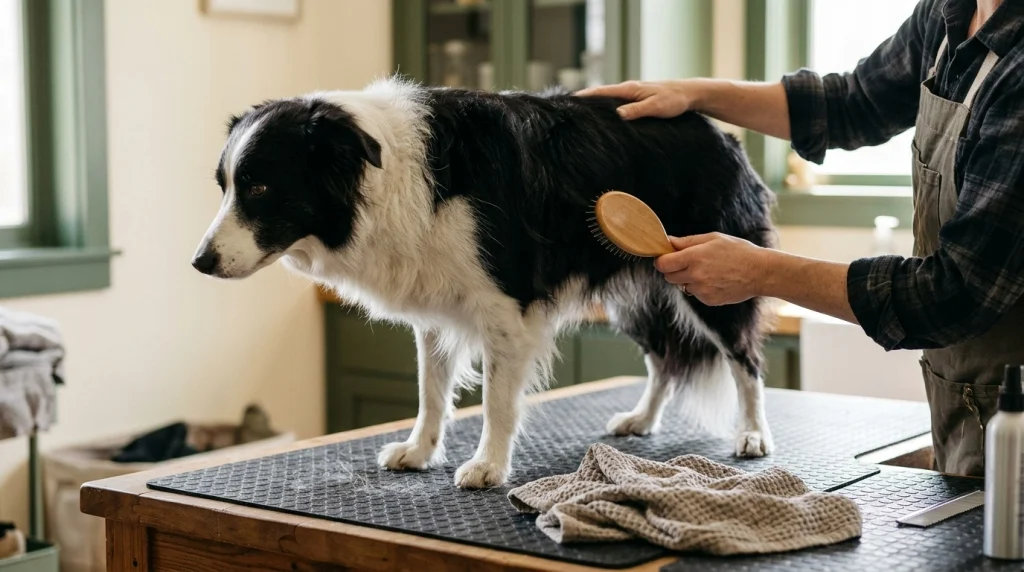
Do both, but make pre-bath brushing your priority for preventing tangles. Brush out loose hair, dirt, burrs, and manageable knots before wetting your Border Collie. After bathing, dry the coat and perform a finishing brush to remove remaining loose hair and check the result.
Water can make existing tangles more difficult to separate. Washing and rubbing a knotted coat may tighten some mats, particularly in longer feathering and areas where the hair naturally rubs together.
Before the bath, pay particular attention to:
- Behind the ears, where fine hair can knot easily.
- Under the front legs and around the armpits.
- The chest, belly, and longer hair on the legs.
- The tail, hindquarters, and base of the tail.
Remove small tangles gently before bathing. If a mat is tight against the skin, painful, or too large to loosen easily, do not force a brush through it. A professional groomer can assess whether it needs careful clipping or another approach.
For more detail on preparation, see our guide to brushing a Border Collie before a bath.
How Dry Should Your Border Collie Be Before Brushing?
For ordinary finishing and detangling, wait until the coat is mostly or completely dry. You can gently separate sections during controlled drying if needed, but avoid using a regular brush to pull through a saturated, tangled coat.
A Border Collie’s topcoat may feel dry while moisture remains trapped in the undercoat. This is especially relevant to rough-coated dogs with longer feathering and dogs with particularly dense coats.
Use the following checks before finishing the grooming session:
- Feel through the coat: Separate the hair with your fingers and check for dampness close to the skin.
- Check thicker areas: Examine the chest, belly, armpits, hindquarters, tail, and behind the ears.
- Use towels first: Press absorbent towels against the coat to remove excess water instead of rubbing vigorously.
- Dry gently: If your dog tolerates a dryer, use a pet-safe dryer on an appropriate low-heat or cool setting and keep the airflow moving.
Never use hot air close to the skin. Stop if your dog becomes distressed, overheated, or uncomfortable with the dryer.
The American Kennel Club’s guide to drying dogs properly explains why thorough drying helps prevent tangles and supports comfortable coat care.
Tip
Part the coat with your fingers rather than judging dryness by its surface alone. If the hair near the skin still feels wet, continue gentle drying before completing your main brush-through.
How to Brush Your Border Collie After Bathing
Once the coat is sufficiently dry, use a calm, section-by-section routine. Short, gentle strokes are more useful than repeatedly brushing the same patch or trying to remove every loose hair in one session.
1. Remove excess water and dry the coat
Start by pressing towels against the body, legs, chest, and tail. Avoid rough rubbing, which can encourage tangles in longer hair. Continue drying until the undercoat is no longer damp.
2. Choose a brush suited to the coat
A pin brush can help separate longer feathering, while a suitable slicker brush can lift loose hair and address minor tangles. A metal comb is useful for checking whether the coat is free of snags.
Use gentle pressure, particularly on the belly, armpits, ears, and other sensitive areas. An undercoat rake may help during heavy shedding, but it should not be dragged repeatedly over the same area or used to force out firmly attached hair.
3. Work in small sections
Begin with an easy area, then move systematically across the body. Separate the hair with your fingers and brush a small section at a time, following the direction of coat growth where practical.
For longer feathering, lift the outer hair gently so you can work through the coat beneath it. Avoid brushing only the surface, but never dig the brush into the skin to reach the undercoat.
4. Check the areas most likely to tangle
Give extra attention to behind the ears, the armpits, the chest, the rear legs, and the tail. These areas can hide small knots even when the rest of the coat looks smooth.
If the brush catches, stop and investigate. Use your fingers to loosen a minor snag, then try again gently. Do not yank the brush through a resistant knot.
5. Finish with a comb check
When the brush moves comfortably through the coat, use a suitable metal comb to check longer hair and other tangle-prone areas. The comb should pass through without force.
You do not need to remove every naturally shedding hair. A comfortable, separated coat with no painful tangles is a better goal than repeatedly brushing until no loose fur remains.
Which Brush Should You Use After a Border Collie Bath?
The right tool depends on your dog’s coat length, undercoat density, shedding level, and tolerance for grooming. A rough-coated Border Collie generally needs more attention to feathering, while a smooth-coated dog may be easier to finish but can still retain loose undercoat.
- Pin brush: Useful for separating longer hair and maintaining feathering.
- Slicker brush: Helpful for loose hair and minor tangles when used lightly.
- Metal comb: Useful for checking behind the ears, around the legs, and through longer sections.
- Undercoat rake: Best reserved for appropriate loose-undercoat removal, particularly during heavier shedding.
No single brush is necessary for every dog. Start with a gentle tool that suits the coat, then add a comb if you need a more reliable way to check for hidden knots.
Avoid aggressively scraping the skin or repeatedly using tools that cut or strip healthy hair. If a brush causes redness, discomfort, or unusual hair breakage, stop and reassess the tool and technique.
Does a Rough-Coated Border Collie Need More Post-Bath Brushing?
Usually, yes. A rough-coated Border Collie has longer hair and more visible feathering, which can make tangles easier to develop and harder to spot. Smooth-coated Border Collies still need brushing because their shorter topcoat does not eliminate the dense undercoat.
Adjust your routine to the individual dog rather than following a rigid schedule based on coat type alone.
- Rough coat: Inspect longer hair around the ears, chest, legs, hindquarters, and tail carefully.
- Smooth coat: Focus on loose hair, undercoat, and any areas where debris collects.
- Heavy shedding: Allow extra time to remove loose hair gently, without repeatedly working the same patch.
- Active outdoor dog: Check for grass seeds, burrs, mud, and small knots before and after bathing.
For a broader look at the differences, read our guide to Border Collie coat types.
What Post-Bath Brushing Mistakes Should You Avoid?
Most problems arise from brushing too aggressively, working on a coat that is too wet, or treating a tight mat as an ordinary tangle.
- Brushing forcefully while the coat is saturated: Wait until the coat is sufficiently dry for normal finishing and detangling.
- Pulling through tight mats: Stop if the knot resists, pulls the skin, or causes discomfort.
- Drying only the outer hair: Check the undercoat and thick areas for retained moisture.
- Overworking one patch: Repeated strokes in one place can irritate skin and damage hair.
- Using excessive heat: Keep dryer airflow gentle and moving, and avoid hot settings close to the skin.
- Shaving to avoid brushing: Routine shaving is not a substitute for maintaining a healthy double coat.
If matting is extensive, the skin is irritated, or grooming consistently causes pain, seek help from a qualified groomer or veterinarian as appropriate. The VCA Animal Hospitals guide to grooming and coat care advises against pulling at tangles and recommends professional care for severe matting.
What If Your Border Collie’s Coat Still Feels Damp or Tangled?
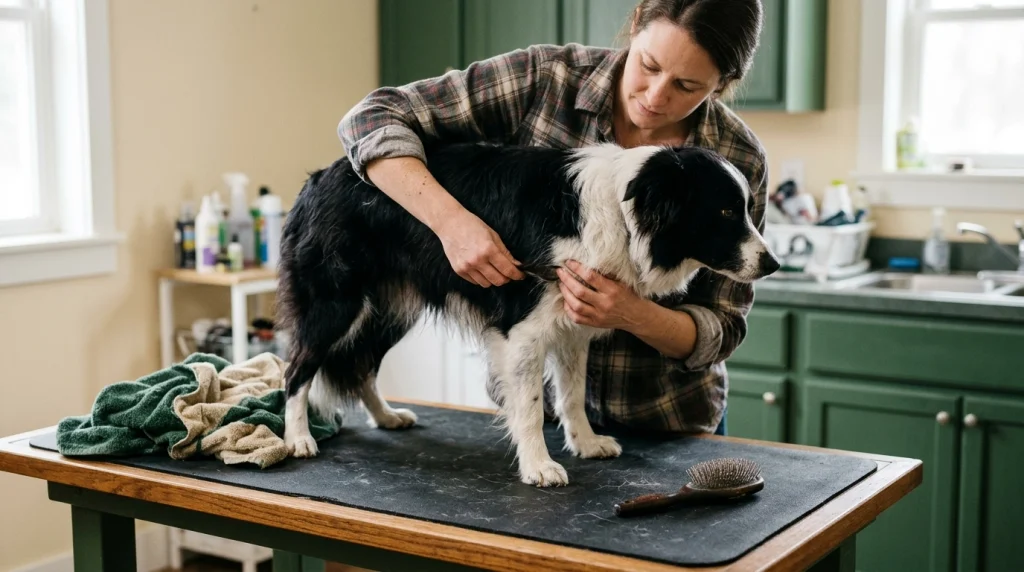
If the coat remains damp, continue gentle drying instead of trying to solve the problem with harder brushing. Check the undercoat and areas where the hair is thickest, and keep your dog in a comfortable environment while drying is completed.
If you find a small, loose tangle, carefully separate it with your fingers and a suitable comb. If the knot will not loosen easily, stop rather than pulling harder.
A persistent unpleasant odor, repeated itching, redness, sores, or unusual hair loss may indicate a skin issue rather than an ordinary grooming problem. Contact your veterinarian if these signs persist or are accompanied by discomfort.
For additional guidance on the drying stage, see our article on how to dry a Border Collie after a bath safely.
Frequently Asked Questions
Can I brush my Border Collie while its coat is still wet?
Gentle brushing or separating during controlled drying may be appropriate, but avoid pulling a regular brush through saturated, tangled hair. For your main finishing session, wait until the coat is mostly or completely dry.
Should I use a hair dryer before brushing my Border Collie?
You can use a pet-safe dryer before and during gentle coat separation if your dog tolerates it. Use an appropriate low-heat or cool setting, keep the airflow moving, and ensure the undercoat dries thoroughly.
How long should I brush my Border Collie after a bath?
There is no fixed duration. A well-maintained coat may need only a short finishing session, while longer feathering or heavy shedding requires more time. Stop when the coat is comfortable, separated, and free of manageable tangles.
Should I use a slicker brush or a pin brush after bathing?
Either may be appropriate depending on the coat. A pin brush helps separate longer hair, while a slicker brush can remove loose hair and address minor tangles. Use gentle pressure and choose the tool that works without irritating the skin.
Why does my Border Collie shed more after a bath?
Bathing and drying can loosen hairs that were already ready to shed. This can make loose fur more noticeable during post-bath brushing, particularly during seasonal shedding. Persistent bald patches or irritated skin are different and warrant veterinary advice.
Do I need to brush my Border Collie after every bath?
Usually, yes, once the coat is sufficiently dry. A gentle finishing brush helps remove loosened hair and check for tangles. Keep the session appropriate to the coat’s condition rather than brushing repeatedly just because the dog has been bathed.
Conclusion
Brushing your Border Collie after bathing is a useful part of coat maintenance, provided you choose the right time and technique. Remove loose hair and manageable tangles before the bath, towel-dry gently, and make sure moisture has not remained trapped in the undercoat before completing your main brush-through.
Use a pin brush, slicker brush, or comb suited to your dog’s coat, and pay particular attention to the ears, armpits, legs, and tail. Never force a brush through a tight mat or continue if grooming causes pain or skin irritation. A gentle finishing session helps keep the coat separated, comfortable, and easier to maintain between baths.