
How to Wash a Border Collie Bath Mat Safely

Quick Answer
To wash a bath mat used by a Border Collie, remove loose fur and dirt first, check the care label, and wash the mat with a mild detergent using a temperature and cycle suitable for its material. Protect rubber backing from excessive heat, rinse away detergent thoroughly, and let the mat dry completely before returning it to the bathing area. Hand-wash mats that are not machine washable.
A Border Collie’s bath mat can collect loose undercoat, muddy paw marks, shampoo residue, and moisture after just a few baths. Cleaning it properly helps keep the bathing area fresh while preserving the mat’s absorbency, texture, and grip.
The safest washing method depends on whether your mat is made from cotton, microfiber, rubber, PVC, or memory foam. Start by identifying the material rather than assuming every bath mat can go into the washing machine.
1. Check What Your Border Collie’s Bath Mat Is Made Of
Before washing, inspect the care label and underside of the mat. The surface may look like ordinary fabric while its backing contains rubber, latex, adhesive, or foam that can deteriorate with excessive heat or vigorous washing.
- Cotton or terry cloth: Usually straightforward to machine-wash if the label permits it. These mats absorb water but can hold loose fur and take time to dry.
- Microfiber or chenille: Often suitable for a gentle machine wash, although the backing and manufacturer’s instructions determine the correct settings.
- Rubber-backed fabric: Needs special attention because hot water, harsh agitation, or high dryer heat may damage or loosen the backing.
- Solid rubber or PVC: Usually cleaned by rinsing and scrubbing rather than laundering like a towel, unless the manufacturer explicitly permits machine washing.
- Memory foam: May become waterlogged or lose its shape. Check the care label before soaking or machine-washing it.
Also distinguish between a fabric mat placed outside the bathtub and a non-slip mat designed to sit inside it. An absorbent floor mat catches water from your dog’s coat, while an in-tub mat may have suction cups or drainage holes that require separate attention.
If the backing is already peeling, crumbling, or cracked, avoid putting the mat into a washing machine. Loose backing fragments can spread through the machine, and a deteriorated mat may no longer provide reliable traction.
2. Remove Border Collie Fur, Mud, and Debris Before Washing

Remove loose hair and visible dirt before wetting the mat. This prevents you from turning dry mud into a smear and helps keep accumulated fur from collecting in the washer or drain.
- Shake the mat outdoors. Hold it securely and shake out loose hair, dried mud, sand, and other debris. Avoid shaking it near food preparation areas.
- Brush or vacuum the surface. Use a vacuum suitable for the mat or a soft brush to lift hair from the fibers. Work gently around stitched edges, textured surfaces, and rubber backing.
- Remove dried mud carefully. Let damp mud dry enough to loosen, then brush it away. For remaining marks, blot or spot-clean with a little water and mild detergent appropriate for the material.
- Inspect the underside. Remove loose hair from suction cups, textured grooves, or the backing using a soft brush or cloth.
Border Collies have a double coat, and loose undercoat can cling to absorbent fibers. If the mat is used after every bath, a quick fur-removal routine before laundering can make each wash easier.
Do not use sharp tools to scrape hair from the mat. They may cut fibers, damage the non-slip layer, or create rough edges that catch your dog’s claws.
3. How to Wash the Mat in a Washing Machine
Machine-wash the mat only when its care instructions allow it. For a washable cotton or microfiber mat, use a suitable detergent, a cycle appropriate for the fabric, and the recommended water temperature rather than automatically choosing the hottest setting.
- Prepare the load. Remove loose fur and confirm that the mat fits without overloading the drum. A heavy, waterlogged mat needs enough room to move freely.
- Choose the right cycle. Use a normal or gentle cycle according to the label. For rubber-backed, padded, or delicate mats, use the gentler option when machine washing is permitted.
- Select the water temperature. Follow the care label. Cool or warm water is a sensible starting point for many backed mats, but unbacked fabrics may tolerate other settings when the manufacturer allows them.
- Add mild detergent. Measure according to the detergent instructions and load size. A fragrance-free, dye-free detergent can be a reasonable choice if your dog has sensitive skin.
- Rinse thoroughly. If the mat feels soapy or the washer allows an extra rinse, use it to help remove leftover detergent.
- Remove the mat promptly. Check that it has not become misshapen and move it to a suitable drying area.
You can wash a washable pet mat with other appropriate laundry if the items tolerate the same cycle and temperature. However, washing a heavily fur-covered or muddy dog mat separately can make debris management easier.
Skip fabric softener unless the manufacturer specifically recommends it. Residue can affect the absorbency of some textiles, which matters when the mat is supposed to catch water dripping from your dog’s coat.
Tip
Keep the care label’s temperature and drying limits as your main guide. A hotter wash is not automatically better if it damages the backing or causes the mat to shrink.
4. How to Hand-Wash a Rubber, PVC, or Delicate Bath Mat
Hand-washing is a practical alternative for mats that cannot tolerate machine agitation or whose labels specify surface cleaning. It is particularly useful for many solid rubber or PVC mats, as well as delicate items that must not be soaked.
- Move the mat to a suitable washing area. Use a laundry tub, bathtub, or outdoor cleaning area where the mat can be rinsed without spreading dirt to food preparation surfaces.
- Prepare mild soapy water. Use lukewarm water and a small amount of suitable detergent, following the manufacturer’s instructions.
- Clean the surface. Wipe fabric sections gently with a soft cloth or brush. On rubber or PVC, work around grooves, drainage holes, and suction cups where fur and soap can accumulate.
- Clean both sides. Turn the mat over and remove grime from the underside, especially if it contacts the bathtub or bathroom floor.
- Rinse until residue is gone. Use clean water to remove detergent and loosened debris. Pay attention to textured areas and suction cups.
- Remove excess water gently. Let the water drain or press a fabric mat lightly. Do not twist, wring, or sharply fold rubber-backed or foam mats.
For a mat that must not be immersed, follow its spot-cleaning instructions instead. Apply only the permitted amount of cleaning solution, wipe away the residue, and allow the surface to dry completely.
If your Border Collie uses a suction-cup mat inside the bathtub, inspect the cups after cleaning. They should be intact, free of residue, and able to attach securely to the intended surface before the next bath.
5. Remove Odors Without Leaving Harmful Residue
A musty smell usually signals that the mat needs more thorough cleaning, better rinsing, or more complete drying. Persistent odors can also indicate that moisture and dirt remain trapped in thick fibers or beneath the backing.
- For ordinary odors: Wash the mat with an appropriate detergent and rinse it thoroughly.
- For muddy or oily marks: Spot-clean first with a material-compatible cleaner, then wash as directed on the label.
- For a musty mat: Check whether the backing or dense pile is staying damp. Clean it again if appropriate and dry it fully before reuse.
- For persistent smells: Inspect for mildew, damaged backing, or trapped contamination. Replace the mat if it cannot be cleaned adequately.
Do not assume vinegar, baking soda, or a heavily scented detergent will disinfect the mat. The CDC’s guidance on cleaning pet supplies explains that cleaning removes dirt and germs, while disinfection is a separate process. It also notes that evidence does not establish vinegar as a reliable all-purpose disinfectant.
For routine bath-mat care, detergent and thorough rinsing are generally the sensible starting point. If the mat has been contaminated with feces, urine, or material from a sick pet, check whether it can be safely disinfected without damaging the material and follow the product label exactly.
Warning
Never mix bleach with vinegar, ammonia, or other cleaning products. Keep your Border Collie away from wet cleaning solutions, and do not return the mat to use until it has been thoroughly rinsed when required and is safe and completely dry.
6. Dry the Mat Completely Before Your Dog Uses It Again
Drying is as important as washing because a damp mat can develop unpleasant odors and leave the bathing area wet. The correct method depends on the material and whether the mat has a bonded backing.
- Unbacked cotton: Hang it on a suitable rack or use a dryer only if the care label permits it.
- Microfiber or chenille: Air-dry or use an approved low-heat setting according to the manufacturer’s instructions.
- Rubber-backed fabric: Air-drying is the safer default unless the manufacturer specifies otherwise. Avoid high dryer heat.
- Solid rubber or PVC: Hang or position it so water can drain from grooves, holes, and suction cups.
- Memory foam: Follow the exact drying instructions; avoid returning it to service while the inner material remains damp.
Allow air to reach both sides whenever possible. A thick mat can feel dry on the surface while remaining damp underneath, so check the backing and denser sections before putting it back on the floor.
The CDC’s guidance on cleaning and drying household items advises laundering washable textiles according to manufacturer instructions and drying them completely.
Place the mat back only on a clean, dry surface. If it is designed to sit inside the tub, reinstall it according to its instructions and check that it does not shift before allowing your dog to stand on it.
7. How Often Should You Wash a Border Collie’s Bath Mat?
Wash the mat whenever it becomes visibly dirty, develops an odor, feels slimy, or remains damp for too long. A mat used regularly after bathing may need more frequent cleaning than one used only occasionally.
For a practical routine, inspect the mat after every bath and remove loose fur or mud immediately. Wash it when the level of dirt or moisture calls for it, rather than relying on a rigid schedule that ignores actual use.
- After a muddy bath: Remove grit and hair promptly, then wash the mat if it is heavily soiled.
- After an ordinary bath: Rinse a non-absorbent in-tub mat if needed, and hang it to dry; launder a fabric mat according to its condition and care label.
- When the mat smells musty: Clean it and investigate whether poor airflow or trapped moisture is the underlying problem.
- After illness or bodily-fluid contamination: Clean promptly and use a compatible disinfection method if warranted by the situation.
There is no single washing frequency that fits every household. A mat used for frequent outdoor-to-bathroom cleanup will generally need more attention than a clean, dry mat used occasionally.
8. Common Bath Mat Washing Mistakes to Avoid
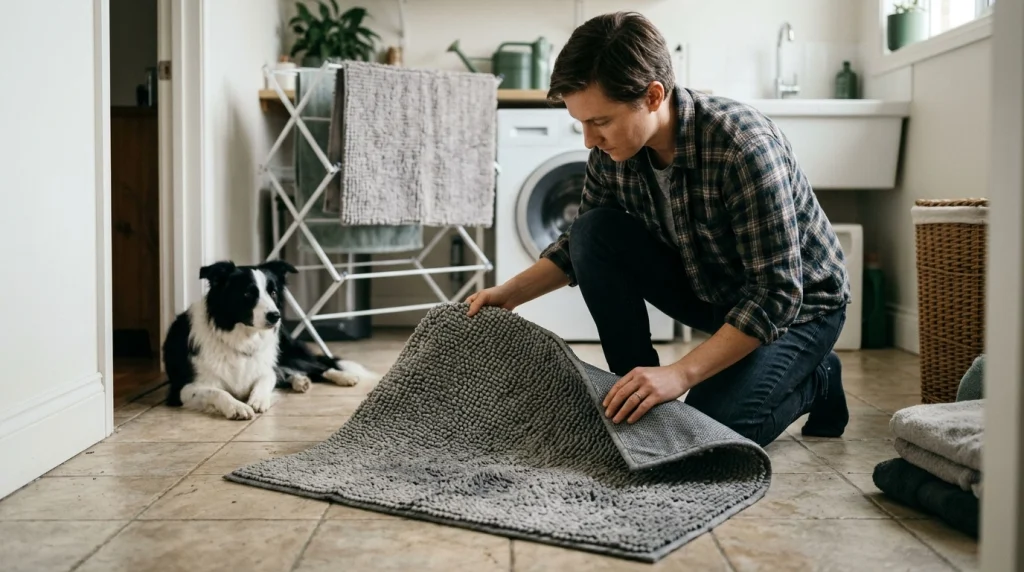
Most avoidable problems come from treating all mats as ordinary towels or focusing on smell while ignoring residue, backing damage, and moisture.
- Using excessive heat: High heat may damage rubber, latex, adhesives, or foam. Follow the label rather than choosing the hottest cycle by default.
- Skipping fur removal: Loose undercoat can collect in the washer and remain tangled in the mat. Brush or vacuum first.
- Using too much detergent: Excess detergent can leave residue that requires additional rinsing.
- Adding fabric softener automatically: It may reduce the absorbency of some textiles.
- Putting a damaged mat back into service: Cracked backing, curling edges, or loose suction cups can compromise stability.
- Leaving the mat folded while wet: Trapped moisture slows drying and encourages musty odors.
- Using disinfectants casually: Disinfectants must be appropriate for the material and used according to label directions. Never apply them to your dog.
If you need to improve the overall bathing setup, see our guide to making a Border Collie bath mat non-slip. For controlling drips and splashes after the bath, our guide to keeping the bathroom floor dry after a Border Collie bath covers the surrounding cleanup routine.
Frequently Asked Questions
Can I wash my Border Collie’s bath mat with regular towels?
Yes, if the mat is machine washable and the towels can tolerate the same cycle and temperature. Wash a heavily muddy or fur-covered mat separately when that makes debris easier to manage.
Should I use hot water to remove dog odors?
Not automatically. Use the warmest temperature allowed by the care label. Hot water can damage rubber-backed mats and some synthetic materials, so cleaning thoroughly and drying completely are more important than choosing heat indiscriminately.
Can I use bleach on a bath mat my dog uses?
Only if the mat’s manufacturer permits it and the bleach product is appropriate for the material. Follow its dilution and contact-time instructions, rinse when directed, and keep your dog away until the mat is safe to use.
Why does the mat still smell after washing?
Detergent residue, trapped hair, hidden dirt, or moisture beneath the backing may be responsible. Recheck the care instructions, clean the affected areas, rinse thoroughly, and dry both sides; replace the mat if the odor persists despite appropriate cleaning.
Can I put a rubber-backed bath mat in the dryer?
Do so only if the manufacturer explicitly permits the selected dryer setting. Air-drying is the safer default for many rubber-backed mats because excessive heat can crack, loosen, or deteriorate the backing.
How can I keep the mat clean between Border Collie baths?
Remove loose fur and mud promptly, hang the mat so it can dry, and inspect its underside for residue or damage. Wash it whenever dirt, odor, or moisture buildup warrants cleaning, and keep the surrounding bathing area dry.
Conclusion
To wash a bath mat used by a Border Collie safely, remove loose fur and mud first, identify the material, and follow the manufacturer’s washing instructions. Use a suitable detergent, avoid unnecessary heat, rinse away residue, and dry the mat completely on both sides.
Give extra attention to rubber backing, suction cups, and thick areas that can trap moisture. Clean the mat whenever it becomes dirty or smells unpleasant, and replace it if the backing deteriorates or it no longer stays securely in place. A clean, dry, stable mat helps keep your dog’s bathing area more comfortable and easier to maintain.