
What Causes Eye Drainage in Dogs? A Practical Guide for Border Collie Owners

Eye drainage in dogs is one of those symptoms that looks minor until it doesn’t. A small amount of soft crust after sleep can be normal if the eye looks comfortable. But persistent tearing, thick discharge, redness, squinting, or a dog that keeps pawing at the face can point to anything from allergies to a corneal injury.
For Border Collie owners, the key is not to guess from the discharge alone. Watch the whole pattern: one eye or both, clear or colored, mild or worsening, and whether your dog seems comfortable. That combination tells you far more than the “eye boogers” themselves.
What Eye Drainage in Dogs Means: Normal vs. Concerning
A small amount of clear crust in the corner of a dog’s eye after sleep is often normal. Dogs make tears all day, and a little dried residue can collect while they rest. If the eye looks white, the dog is acting normal, and the discharge disappears after a gentle wipe, that usually fits simple tear film residue rather than disease.
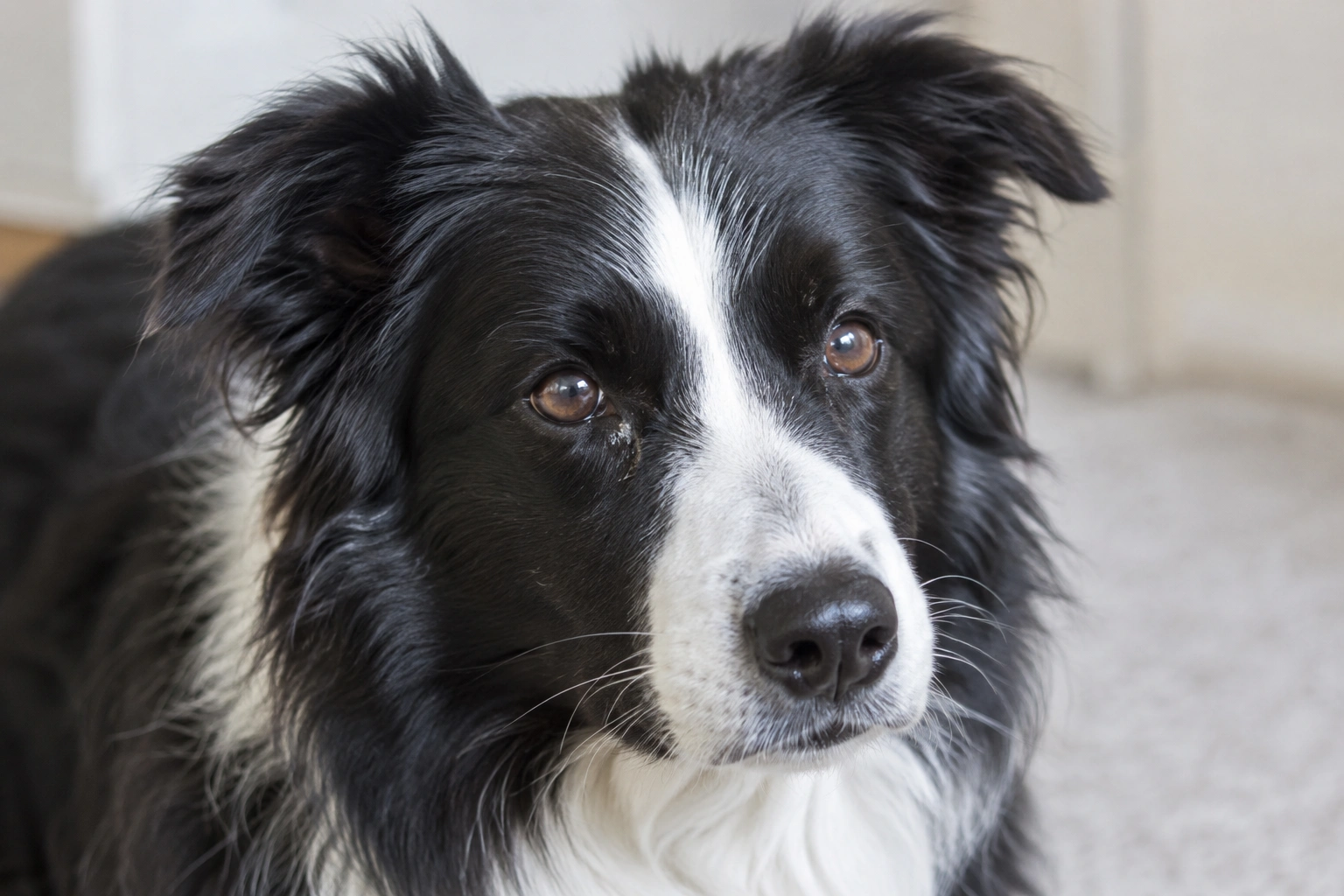
The problem starts when the drainage is new, persistent, thick, or paired with other symptoms. Redness, swelling, squinting, pawing, light sensitivity, cloudiness, or a change in behavior around the eye moves the issue from “monitor it” to “needs attention.”
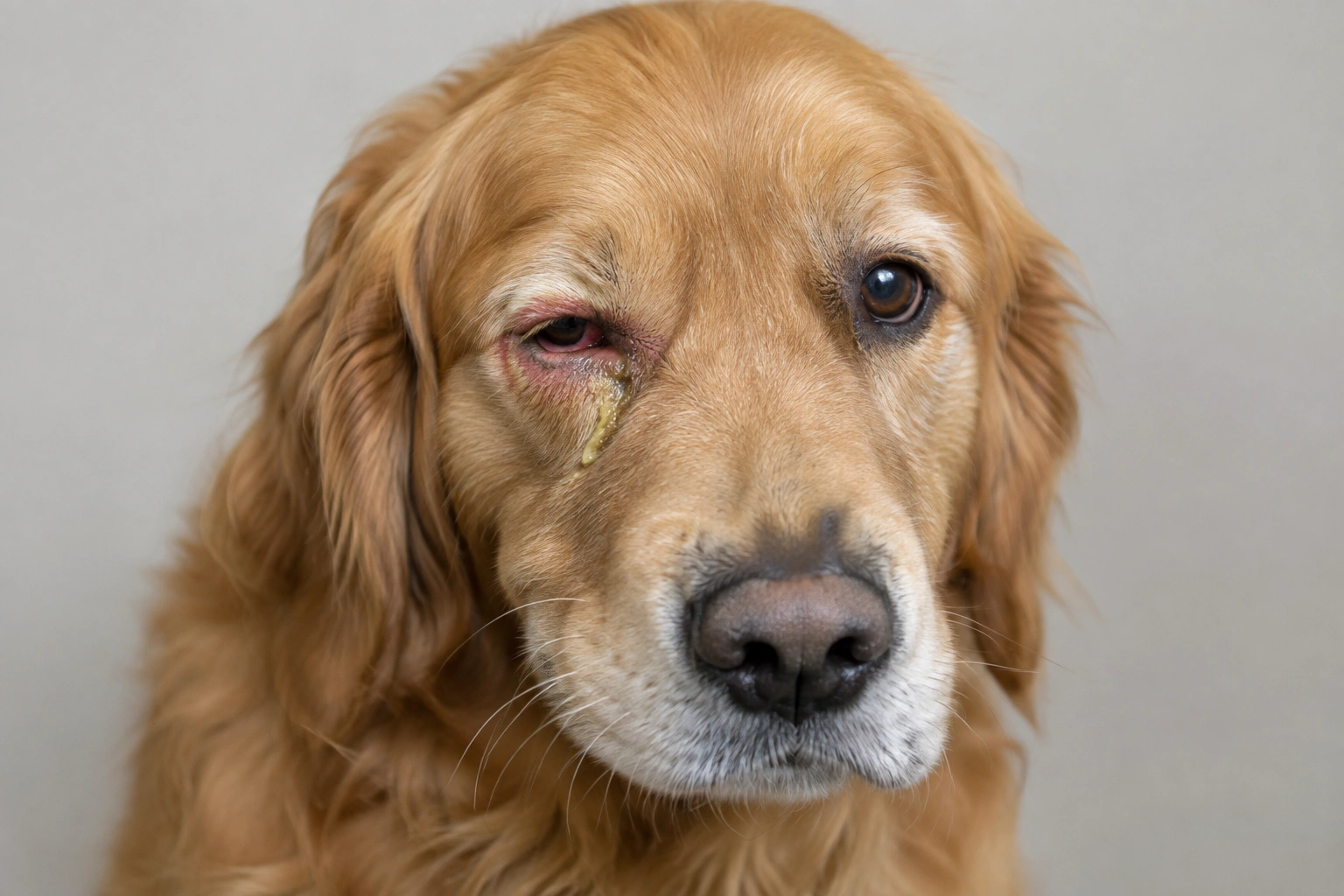
A useful rule: if the eye looks irritated, the discharge is not just a cosmetic issue.
What the Color, Texture, and Pattern of Discharge Can Suggest
Color is not a diagnosis, but it can help you narrow the possibilities.
| Discharge type | What it can suggest | How urgent it feels |
|---|---|---|
| Clear, watery | Allergies, irritation, blocked tear drainage, or an early foreign body or eye problem | Mild to moderate if no pain |
| White or gray mucus | Dry eye, irritation, conjunctivitis | Needs vet visit if persistent |
| Brown staining | Chronic tearing or tear overflow, not always infection | Monitor if the eye is comfortable |
| Yellow or green | Infection, significant inflammation, or debris trapped in the eye | Vet visit recommended |
| Thick, sticky, or foul-smelling | Infection or more serious inflammation | More concerning |
| One eye only | Foreign body, scratch, blocked tear duct, eyelid issue | More suspicious than both eyes |
| Both eyes | Allergies or environmental irritation are more likely | Often less urgent unless severe |
Clear discharge is often where owners get stuck. It can come from something mild, like pollen or dust, but it can also appear with a blocked tear duct, an early corneal problem, or a developing infection. So if the eye is watery but the dog is squinting, rubbing, or avoiding light, treat it as more than “just tears.”
Brown staining is another common point of confusion. It often reflects chronic tearing that has dried on the fur, not necessarily active infection. The stain is a clue that the eye has been watering for a while, which means you still need to ask why.
Common Causes of Eye Drainage in Dogs
Eye drainage is a symptom, not a disease. That matters, because the treatment depends on the cause.
Allergies and environmental irritation
Allergies can make a dog’s eyes watery and red. Pollen, dust, grass, and even household irritants can trigger this. The classic pattern is both eyes affected, mild redness, and a dog that otherwise seems fairly normal.
This is where timing helps. If the tearing shows up during a certain season, after lawn work, or on windy days, allergies move higher on the list. If the discharge improves when the environment changes, that also supports irritation rather than infection.
Conjunctivitis
Conjunctivitis is inflammation of the tissue around the eye. It can happen because of allergies, irritants, bacteria, viruses, or other disease processes. It often brings redness, discharge, and a “sticky” eye that looks worse after sleep.
If you want a deeper breakdown of pink-eye-type symptoms in dogs, I’ve covered that separately in Do Dogs Get Pink Eye? What Border Collie Owners Need to Know.
Foreign bodies and debris
A grass seed, dust, sand, or a tiny bit of plant material can irritate the eye enough to cause tearing and squinting. This often affects one eye more than the other and may appear suddenly after a walk, run, or play session.
This is one of the reasons I don’t like owners assuming every watery eye is allergies. The timeline matters. Sudden onset after outdoor activity points me toward debris or scratch before I think about chronic causes.
Dry eye
Dry eye, also called keratoconjunctivitis sicca, sounds backward because it can still cause discharge. When the eye does not produce enough healthy tears, the surface becomes irritated and the body may respond with thick mucus, redness, and discomfort.
A dog with dry eye may have recurring discharge that never quite clears up with wiping alone. That pattern deserves a veterinary exam because the eye surface can become damaged if the tear film stays poor.
Blocked tear duct or poor tear drainage
Sometimes the problem is not too many tears, but poor drainage. That can lead to constant watering, tear staining, and moisture around the eye. Epiphora is the term for this kind of excessive tearing, and it can happen when tears overflow instead of draining normally.
If you notice chronic wetness under the eye without much redness or pain, a drainage problem becomes more likely. It still needs a vet to sort out the cause, because blockage can happen for different reasons.
Eyelid and eyelash problems
Abnormal eyelids or eyelashes can rub the eye every time the dog blinks. Entropion, where the eyelid rolls inward, and ectropion, where it droops outward, can both create chronic irritation. Extra lashes or lashes growing in the wrong place can do the same thing.
These cases often come with repeated watering in the same eye, recurring redness, and a dog that acts annoyed by light or touch. If the irritation keeps returning, structural issues move higher on the list.
Corneal scratches and ulcers
The cornea is the clear outer surface of the eye. A scratch, scrape, or ulcer there can cause tearing, squinting, and pain. This is one of the more important causes to catch early because corneal damage can worsen if ignored.
A dog with a corneal problem may keep the eye partly closed, rub at it, or resist being touched near the face. That combination should not be watched casually at home.
Injury or trauma
A bump, scratch, or bite near the eye can cause drainage too. Trauma is especially important if the eye suddenly looks different after rough play, brush exposure, or an accident.
If the eye is painful, cloudy, or swollen after possible injury, do not wait to see whether it “settles down.”
How to Tell Allergy-Related Watering from Infection or Injury
This is the decision point many owners struggle with.
Allergy-related watering tends to be:
– both eyes
– watery rather than thick
– mild to moderate redness
– associated with itching or seasonal flare-ups
– less painful than infectious or traumatic causes
Infection or injury is more likely when:
– one eye is worse than the other
– discharge is yellow, green, or sticky
– the dog is squinting or holding the eye closed
– the eye looks cloudy or swollen
– the problem started suddenly after outdoor activity or rough play
A practical example: both eyes watering during pollen season, with mild rubbing but no pain, fits allergies better than a corneal ulcer. One eye suddenly blinking hard after running through brush is a different story and should be treated as a possible scratch or foreign body.
Red Flags That Mean the Eye Needs Veterinary Care
Some signs push this from “watch and clean” into “book the vet” quickly:
- squinting or keeping the eye closed
- pawing at the eye or rubbing the face
- cloudiness in the eye
- swelling around the eye
- strong redness
- light sensitivity
- thick yellow, green, or foul-smelling discharge
- obvious trauma
- vision changes or bumping into things
If the dog seems painful, the eye looks cloudy, or you suspect a scratch or object in the eye, that is urgent. Eye problems can worsen fast, and some conditions can threaten vision if treatment is delayed.
Glaucoma is one example of a serious eye disease where pressure inside the eye rises because drainage is impaired. It can damage the optic nerve and retina and may cause pain and vision loss. That is not a “wait and see” condition.
For general eye-care guidance, the AKC’s dog health resources and VCA Hospitals both offer useful veterinary background on common eye issues.
When Home Cleaning Is Reasonable and How to Do It Safely
Home cleaning makes sense only when the discharge is mild, the eye is not painful, and there are no red flags.
Use:
– clean gauze or a soft, lint-free cloth
– sterile saline if you have it
– gentle wiping from the inner corner outward
– a fresh piece of gauze for each pass
Avoid:
– rubbing the eye
– using cotton balls that shed fibers
– using human eye drops unless a vet prescribed them
– trying to pull out anything that looks stuck in the eye
Saline rinsing can help wash away loose surface debris, but it is not a substitute for removing a suspected foreign body or treating pain. If something is lodged in the eye, or if the dog is squinting or clearly uncomfortable, stop home care and call the vet.
The goal is to remove surface crust, not to “treat” the underlying cause. If the discharge keeps returning, cleaning is only a temporary comfort measure. It should not delay a veterinary exam.
A good boundary is simple: if the eye looks comfortable and the discharge is mild, cleaning is reasonable. If the dog acts painful, stop and call the vet.
What a Veterinarian May Check and Treat
A vet will usually want to know when the discharge started, whether one or both eyes are involved, and whether the dog has been rubbing or squinting. From there, the exam may include checking the eyelids, eyelashes, cornea, and tear production.
Common diagnostics can include:
– fluorescein staining to look for corneal scratches or ulcers
– tear testing if dry eye is suspected
– flushing the tear ducts if drainage seems blocked
– examining under the eyelids for debris or foreign material
– checking for infection, inflammation, or eyelid abnormalities
Treatment depends on the cause. Allergies may need environmental management or medication. Conjunctivitis may need prescription drops. Dry eye often needs long-term management. A foreign body may need removal. Structural eyelid problems may need more specialized care.
If the case is recurrent, complicated, or not improving, a veterinary ophthalmologist may be the right next step.
Border Collie Eye Issues: What Owners Should Watch For
Border Collies are active, outdoor dogs that can collect debris, brush seeds, and dust during work or play. That lifestyle alone can raise the odds of minor eye irritation.
What I watch for in Border Collies is recurrence. If the same eye keeps watering, if discharge keeps coming back after walks, or if the dog develops repeated redness or squinting, I stop treating it like a one-off annoyance.
The other thing to remember is that active dogs often hide discomfort well. A Border Collie may keep moving even with an irritated eye, so subtle signs matter: blinking more than usual, hesitating in bright light, or becoming reluctant to face wind or brush.
If your dog has repeated tearing or chronic staining, it is worth getting the eye checked rather than assuming it is just a cosmetic issue. Chronic irritation can become a bigger problem over time.
For related reading, my guide on how to treat cherry eye in dogs without surgery may also help if you notice a red swelling near the eye rather than discharge alone.
How to Monitor Eye Drainage Over Time
If the discharge is mild and you’re monitoring at home, track four things:
- Duration — Did it clear in a day, or has it lasted several days?
- Laterality — One eye or both?
- Color and texture — Clear, brown, white, yellow, green, thick, or sticky?
- Associated signs — Redness, squinting, pawing, cloudiness, swelling, or behavior changes?
This gives you a much clearer picture than memory alone. A problem that is stable and improving is very different from one that is getting thicker, changing color, or spreading to the other eye.
A simple note on your phone is enough. If you need to call the vet, those details help them decide how urgent the visit is and what tests may be needed.
When to See a Veterinarian or Certified Trainer
For eye drainage, the right professional is usually a veterinarian. A certified trainer is not the right first call unless the face-pawing is clearly a behavior issue after medical causes have been ruled out.
See a veterinarian promptly if:
– discharge is thick, colored, or foul-smelling
– the eye is red, swollen, cloudy, or painful
– your dog is squinting or pawing at the eye
– the problem keeps returning
– you suspect a scratch, foreign body, or trauma
That is the safest decision framework: mild and comfortable can be monitored briefly; painful, cloudy, or worsening needs veterinary care.
FAQ
Is a little eye crust in dogs normal?
Yes, a small amount of crust after sleep is often normal. The concern starts when it is persistent, thick, colored, or paired with redness or discomfort.
What does yellow or green discharge mean?
Yellow or green discharge is more concerning than clear tears. It can point to infection or significant inflammation and usually deserves a veterinary exam.
Can allergies cause watery eyes in dogs?
Yes. Environmental allergies can cause watery discharge and red, irritated eyes, especially when both eyes are involved.
When is eye drainage an emergency?
Treat it as urgent if your dog is squinting, pawing at the eye, keeping it closed, has cloudiness or swelling, or may have injured the eye.
Should I use human eye drops on my dog?
No, not unless your veterinarian specifically tells you to. Some human products can make the problem worse or mask a more serious condition.
Why does my dog keep getting brown tear stains?
Brown staining often reflects chronic tearing rather than a one-time infection. It can happen with poor drainage, ongoing irritation, or structural eye issues.
Do Border Collies get eye drainage more often?
They can develop eye drainage like any dog, especially if they spend a lot of time outdoors where debris and irritation are more likely. Recurring symptoms are the bigger concern than any single episode.
Can I just wipe the eye and wait?
Only if the discharge is mild, the eye looks comfortable, and there are no red flags. If the problem persists or the eye looks painful, wiping alone is not enough.
