
Why Your Dog Keeps Getting Eye Boogers: What’s Normal, What’s Not, and What to Do

If you keep finding crusty bits in the corners of your dog’s eyes, you’re not alone. Small amounts of eye discharge are common in dogs, and in many cases they’re just part of normal tear drainage. But recurring eye boogers can also be the first clue that something is irritating the eye, and the difference matters.
The practical question is not, “Does my dog ever get eye boogers?” Almost every dog does. The real question is, “Is this the usual small morning crust, or is the eye trying to tell me something?”
For Border Collie owners, this comes up often because active dogs spend more time in wind, grass, pollen, dust, and brush. That doesn’t automatically mean there’s a problem. It does mean you should look at the pattern, not just the mess.
Why dogs get eye boogers in the first place
Dogs make tears to keep the eye surface moist and healthy. Those tears don’t just sit there; they drain through small ducts at the inner corners of the eyes. Along the way, they can pick up dust, dead cells, oil, and mucus. When that mixture dries, it becomes the crust or “eye booger” you see.
That’s why a little bit of discharge after sleep is often normal. The eye has been doing housekeeping overnight, and the leftovers collect where the tears drain.
The important point is that eye discharge is a symptom, not a diagnosis. It can happen when the eye is perfectly healthy, but it can also happen when the eye is irritated, inflamed, scratched, infected, or not draining well.
Internal resource: If you want a broader breakdown of discharge types, see our related guide on why dogs have so many eye boogers.
What eye boogers are normal vs concerning
A useful way to judge eye discharge is to look at four things: color, texture, amount, and frequency.
Here’s the quick decision framework I use:
| What you see | What it often suggests | What to do |
|---|---|---|
| Small clear, white, or light brown crust, especially after sleep | Often normal tear drainage or mild irritation | Wipe gently and monitor |
| Watery discharge in both eyes after wind, dust, or pollen exposure | Environmental irritation or allergies | Clean the eyes and watch for other allergy signs |
| Thick yellow, green, or pus-like discharge | More likely infection or significant inflammation | Book a vet exam |
| Bloody discharge or discharge with a cloudy eye | Possible injury or serious eye problem | Seek veterinary care promptly |
| One eye only, especially if sudden | Foreign body, scratch, or localized irritation | Check carefully and call the vet if it persists |
| Frequent discharge plus squinting, pawing, redness, or swelling | Pain or active eye disease | Don’t just clean it; get the eye examined |
The biggest mistake is judging by appearance alone. A tiny amount of crust may be harmless in one dog, while the same-looking discharge could be the early stage of a problem if it comes with redness, squinting, or rubbing.
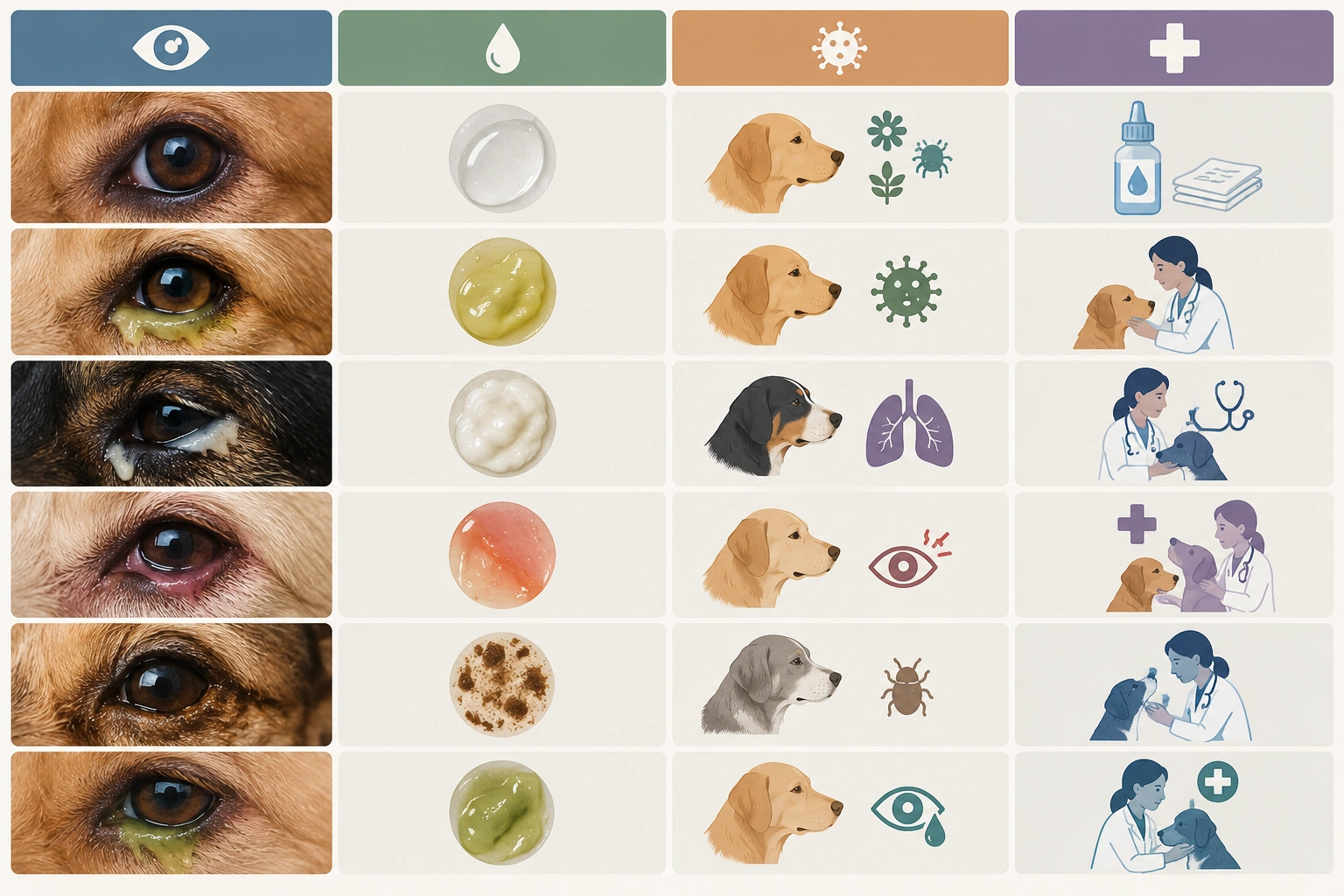
A second useful rule: one eye vs. both eyes matters. Both eyes often point more toward allergies or environmental irritation. One eye, especially if it starts suddenly, raises concern for a foreign body, scratch, or other local problem.
Common causes of recurring eye discharge in dogs
Recurring eye boogers usually come from one of a handful of causes. The trick is matching the pattern to the likely trigger.
Dust, wind, and pollen
Clear, watery discharge is often linked to simple irritation from dust, wind, or pollen. This is especially common after outdoor exercise, a windy walk, or time in tall grass. In an active Border Collie, that exposure may happen often enough that the eye never fully “resets” before the next outing.
If the discharge is mild and the dog otherwise seems comfortable, this is usually the category to consider first.
Allergies
Allergies can cause watery eyes, mild mucus, and recurring discharge in both eyes. You may also notice face rubbing, sneezing, paw licking, or seasonal flare-ups. Allergy-related discharge can look frustratingly similar to simple irritation, which is why the pattern matters more than a single episode.
A practical clue: if the discharge is worse during pollen season or after grass-heavy outings, and both eyes are involved, allergies move higher on the list.
Conjunctivitis
Conjunctivitis means inflammation of the tissue around the eye. It can happen for several reasons, including irritation, infection, or other underlying problems. The discharge may become thicker, the eyes may look red, and the dog may seem bothered by light or touch.
Conjunctivitis is not something to guess at for long if the discharge is increasing. If the eye looks inflamed or the discharge changes from mild and clear to thick and colored, a vet visit is the smarter move.
Blocked tear ducts or drainage issues
If tears are not draining normally, they can spill over and leave dampness or crust at the inner corners of the eyes. You may notice tear staining as well, especially on lighter coats. This is less about infection and more about moisture sitting where it shouldn’t.
A dog with chronic drainage issues may have recurring crust without looking obviously sick. That’s one reason repeated eye boogers should not be dismissed automatically as “just normal.”
Dry eye
Dry eye, or keratoconjunctivitis sicca, can produce a thick, sticky, white-gray discharge. It happens when the eye does not make enough healthy tears, so the surface becomes irritated and the body responds with abnormal gunk instead of normal lubrication.
This is one of those problems that can look like “just discharge” from a distance, but the eye often feels uncomfortable. If your dog is repeatedly getting thick white-gray material, especially with redness or rubbing, dry eye belongs on the vet’s radar.
Corneal scratches, ulcers, and foreign bodies
A scratch on the cornea, a grass seed, an eyelash, or another foreign body can cause sudden discharge in one eye. The dog may squint, blink a lot, paw at the face, or keep the eye partly closed. The discharge may start watery and then become thicker as inflammation builds.
This is where home cleaning has limits. If the eye is painful, closed, or clearly irritated, don’t assume you can wipe the problem away.
How to tell allergies, irritation, infection, and injury apart
These problems overlap, but a few clues can help narrow it down.
More likely allergies or mild irritation if:
- Both eyes are involved
- Discharge is clear or watery
- The dog is otherwise acting normal
- Symptoms are seasonal or follow outdoor exposure
- There’s mild face rubbing, sneezing, or watery eyes
What to do next: Clean the eyes gently with sterile saline or a vet-approved eye wipe, then monitor for a day or two. If it stays mild and predictable, that supports irritation or allergies. If it worsens, becomes thicker, or the dog starts squinting, call the vet.
More likely infection if:
- Discharge becomes yellow or green
- The eye looks red and inflamed
- The discharge thickens over time
- The problem doesn’t improve after a couple of days
- There’s swelling or obvious discomfort
What to do next: Schedule a vet exam rather than just continuing to wipe it away. Infection and other inflammatory eye problems can look similar at first, and they’re harder to sort out safely at home.
More likely injury or foreign body if:
- Only one eye is affected
- The change is sudden
- The dog is squinting or keeping the eye closed
- There is pawing at the eye or strong light sensitivity
- The problem began after brush, running, digging, or rough play
What to do next: Check the eye carefully if your dog allows it, but don’t keep poking around. If the eye looks painful, the dog won’t tolerate handling, or the discharge doesn’t settle quickly, call the vet promptly. Sudden one-eye discharge is a stronger warning sign than mild discharge in both eyes.
A useful trade-off to keep in mind: allergies and irritation are often more symmetrical; injury and foreign bodies are often more one-sided. That’s not a diagnosis, but it’s a strong triage clue.
Breed, coat, and anatomy factors that make eye boogers more noticeable
Some dogs simply show eye discharge more clearly than others. That can be because of coat color, facial hair, eye shape, or how much time they spend outdoors.
Border Collies are not a breed I’d call “eye-booger prone” in the same way as some flat-faced breeds, but they are often active, outdoors a lot, and exposed to wind, grass, seeds, and dust. That means they may collect more debris around the eyes even when nothing is medically wrong.
Longer facial hair can also trap moisture and make small amounts of discharge look worse than they are. On a darker coat, a tiny crust may be hard to notice until it builds up. On a lighter face, tear staining can make the issue look more dramatic.
The key distinction is this: visible discharge is not the same as disease. But if the same dog keeps getting it day after day, there’s usually a reason worth identifying.
Safe at-home cleaning and eye hygiene
If the eye looks comfortable and the discharge is minor, gentle cleaning is reasonable. The goal is to remove crust without adding irritation.
Here’s the safest approach:
-
Use sterile saline or a vet-approved eye wipe.
Saline is the simplest option when you just need to loosen crust. -
Soften the discharge first.
Hold a clean, damp pad against the crust for a few seconds so it releases instead of scraping off. -
Wipe gently outward.
Use a soft pad or gauze and move away from the eye, not across it. -
Use a fresh pad for each eye.
This helps avoid spreading irritation from one eye to the other. -
Stop if the dog resists or the eye looks painful.
Resistance can mean the eye is sore, not just dirty.
What not to use matters just as much:
– No peroxide
– No alcohol
– No scented products
– No human eye drops unless your vet specifically told you to use them
– No rough tissues or cotton that sheds fibers into the eye
There’s a trade-off here. Cleaning too aggressively can irritate the eye, but leaving crust to build up can hide a worsening problem and keep the skin damp. Gentle, occasional cleaning is the middle ground.
When recurring eye boogers need a vet visit
Some cases are safe to watch briefly. Others should be seen sooner.
Monitor at home for a short time if:
- Discharge is small, clear, or light brown
- Both eyes are mildly affected
- The dog is eating, active, and comfortable
- There is no redness, swelling, squinting, or pawing
- The discharge improves after cleaning and does not escalate
A short monitoring window is reasonable when the eye otherwise looks normal. If it stays mild and predictable, it’s less urgent than sudden pain or a one-eye change.
Call the vet if:
- Discharge is yellow, green, or thick
- It keeps coming back despite cleaning
- One eye is clearly worse than the other
- The eye is red, swollen, cloudy, or sensitive to light
- The dog is rubbing, squinting, or keeping the eye closed
- There is blood in the discharge
- The problem lasts more than a few days
Treat as urgent if:
- The eye appears painful
- The dog cannot open the eye normally
- The cornea looks cloudy or damaged
- A foreign body is suspected and the dog won’t tolerate handling
- Symptoms appeared suddenly after brush, debris, or trauma
If you want a simple rule, use this: if the eye looks uncomfortable, don’t keep calling it “just boogers.” Pain changes the situation.
For a deeper look at discharge color and what it may mean, our guide on green eye boogers in dogs covers the warning signs in more detail.
How to reduce repeat flare-ups
If the discharge keeps returning, the best prevention is usually environmental control, not more wiping.
A few practical steps help:
– Rinse or gently wipe the face after dusty hikes or windy walks
– Check the eyes after running through brush or long grass
– Keep facial hair trimmed enough that it doesn’t trap moisture
– Pay attention to seasonal patterns, especially pollen-heavy months
– Notice whether symptoms worsen after certain routes, fields, or weather
– Avoid letting a dog rub the face on carpets or grass if the eye is already irritated
The value of tracking patterns is that it helps you separate repeat exposure from a medical issue. If the eye boogers show up after every windy hike and disappear by the next day, that points in one direction. If they’re happening daily without a clear trigger, that points in another.
What to track before your vet appointment
A short, focused history can make the vet visit far more useful. Before you go, note:
- Which eye is affected, or whether it’s both
- The color and texture of the discharge
- Whether it’s constant or only after sleep/outdoor time
- Any redness, squinting, pawing, swelling, or light sensitivity
- Whether the dog has been in grass, brush, dust, or wind recently
- Whether the problem is seasonal
- Whether the eye looks cloudy or painful
- Whether the discharge changed suddenly or gradually
If possible, take a photo. Eye discharge can look different by the time you reach the clinic, and a picture from the worst moment is often more helpful than a normal-looking eye later in the day.
When to see a veterinarian or certified trainer
This topic is medical, so the professional to involve is your veterinarian, not a trainer. A certified trainer can help with cooperative care if your dog dislikes eye handling, but they cannot diagnose eye disease.
See a veterinarian promptly if the discharge is thick, colored, bloody, one-sided, or paired with pain, squinting, cloudiness, or swelling. If the issue is minor but keeps returning, a routine exam is still worthwhile because recurring discharge often has an underlying trigger that home cleaning won’t solve.
FAQ
Is it normal for my dog to get eye boogers every day?
Small amounts can be normal, especially if they appear after sleep and the eyes otherwise look comfortable. Daily discharge becomes more suspicious when it is thick, colored, one-sided, or linked to redness or rubbing.
What color eye discharge is most concerning?
Yellow, green, or bloody discharge is more concerning than clear or light brown crust. Thick discharge, especially with redness or pain, deserves a vet exam.
Why does only one eye keep getting boogers?
One-eye discharge often points to a foreign body, scratch, blocked drainage, or another local issue. It can also happen if one eye is more exposed to wind or debris.
Can allergies cause eye boogers in dogs?
Yes. Allergies often cause watery discharge, mild mucus, and recurring symptoms in both eyes. Seasonal flare-ups and face rubbing make allergies more likely.
Should I clean my dog’s eyes every day?
Only if needed. Gentle cleaning is fine when there’s a small amount of crust, but frequent aggressive wiping can irritate the eye. If you’re cleaning constantly, the underlying cause should be checked.
When is eye discharge an emergency?
If the eye is closed, painful, cloudy, suddenly very red, or the dog is pawing at it hard, treat it as urgent. Don’t wait and see if the eye looks worse later.
Can Border Collies get more eye boogers because they’re active?
Yes, activity can increase exposure to wind, dust, pollen, and debris. That can make discharge more noticeable, but repeated eye boogers should still be evaluated if they don’t stay mild and predictable.
What’s the safest thing to use to clean eye boogers?
Sterile saline or a vet-approved eye wipe is the safest simple option. Use a soft pad, loosen the crust first, and stop if the eye seems painful.
