
Why Your Dog Has Eye Boogers Every Day: What’s Normal, What Isn’t, and What to Do

If your dog wakes up with a little crust at the inner corners of the eyes, that can be normal. Dogs naturally produce tears that help clear away dust, oil, mucus, and tiny debris, and those leftovers can dry into small “eye boogers.” The key question is not whether discharge exists, but whether it is stable, mild, and comfortable-looking or whether it is changing, colored, heavy, or paired with pain.
A useful rule of thumb:
– Probably normal: a small amount of clear, white, or light crusty discharge that looks the same most days, especially after sleep, and your dog’s eyes are bright and comfortable.
– Needs a vet exam: discharge that is yellow, green, thick, smelly, worsening, one-sided, or paired with redness, squinting, pawing, swelling, or obvious discomfort.
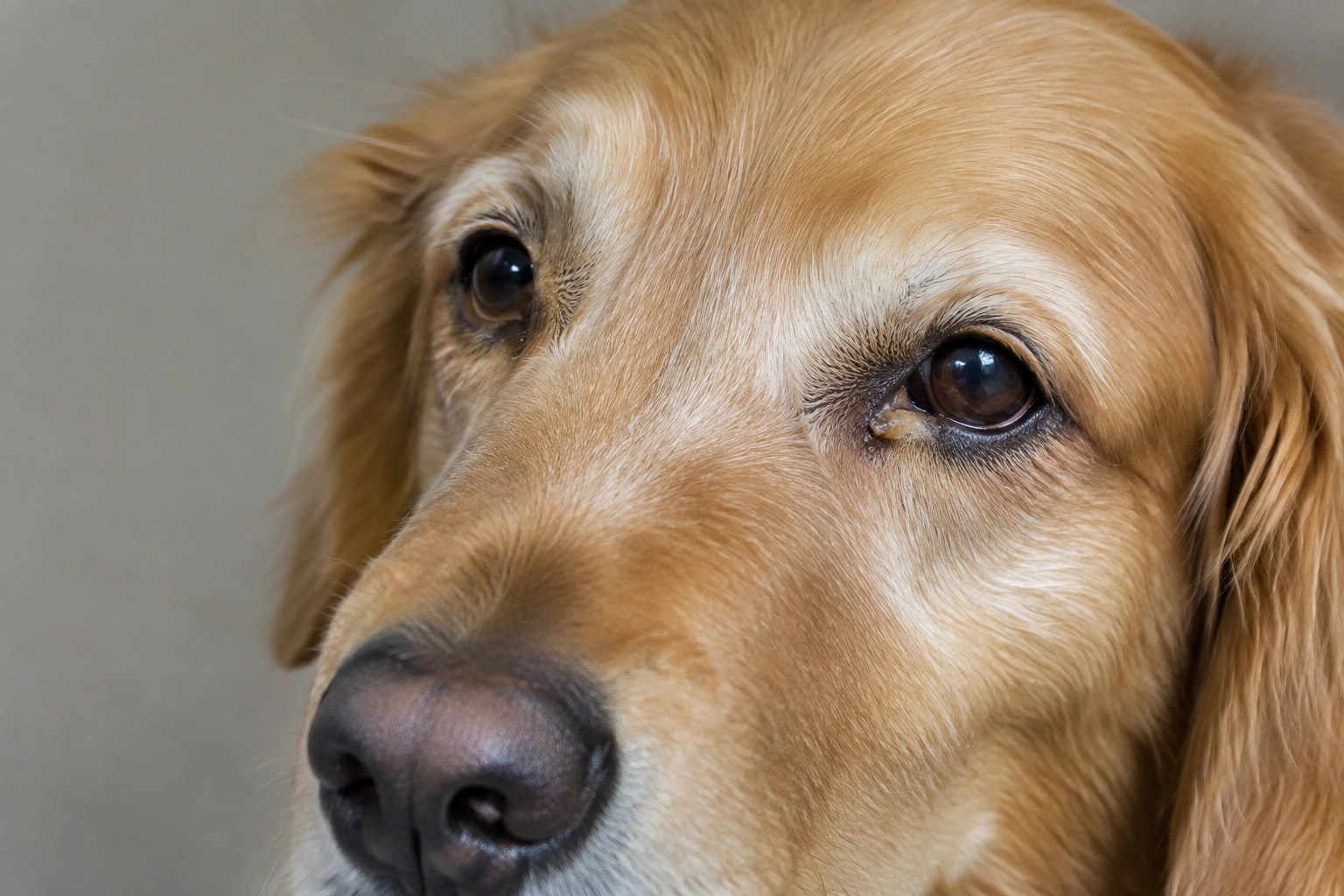
That distinction matters because frequent eye discharge can be harmless in some dogs, but it can also be the first sign of irritation, allergy, tear drainage problems, infection, dry eye, or a foreign body.
What dog eye boogers actually are
“Eye boogers” is a casual term for discharge that collects at the corners of a dog’s eyes. It can look crusty, gooey, watery, or thick depending on what is causing it. In many dogs, it is simply a mix of dried tears, oil, mucus, dust, dead cells, and other tiny debris that the eye is trying to clear away.
That cleanup process is normal. Tears keep the eye surface moist and help flush away irritants. When a small amount of tear fluid reaches the eye corners and dries, you may see a little crust in the morning or after a nap. Veterinary guidance from sources such as VCA Animal Hospitals and the American College of Veterinary Ophthalmologists describes mild discharge as common, while changes in color, amount, or comfort are more concerning.
The problem starts when the discharge becomes frequent enough to be noticeable every day and is no longer just a small, stable amount. At that point, you want to ask: is this simply how my dog’s eyes drain, or is something making the eyes produce extra fluid or mucus?
Common reasons a dog has eye discharge every day
Daily eye boogers can happen for several different reasons, and the pattern of the discharge often gives the first clue.
Normal tear drainage
Some dogs just produce enough tears to leave a little crust at the inner corners after sleep. If the discharge is small, the eyes look clear, and your dog is not rubbing or squinting, this may be normal for that individual dog.
This is especially common when the discharge is the same amount day after day. Consistency matters. A stable pattern is less concerning than a sudden change.
Allergies or environmental irritation
Dust, pollen, smoke, grass, or household irritants can make the eyes water more than usual. That extra tearing can dry into visible crust. In many dogs, allergy-related eye discharge is accompanied by mild redness, itchy skin, or seasonal flare-ups.
A practical clue: if the discharge gets worse after walks, after time outdoors, or during certain seasons, irritation or allergies move higher on the list.
Blocked or narrow tear ducts
Tears normally drain through small ducts near the inner corners of the eyes. If those ducts are narrowed or blocked, tears can overflow instead of draining properly. The result is often chronic wetness, tear staining, and recurring crust.
This is one reason some dogs seem to have “eye boogers” all the time even when they are otherwise healthy. The eyes may be producing a normal amount of tears, but the drainage system is not moving them away efficiently.
Dry eye
Dry eye sounds backward, but it can cause discharge too. When the eye does not make enough quality tears, the surface becomes irritated. The body may respond by producing a thicker, stickier discharge as a protective reaction.
Dry eye often comes with redness, squinting, and a dull or uncomfortable-looking eye surface. It is not a condition to watch casually if it is persistent.
Conjunctivitis
Conjunctivitis means inflammation of the tissue around the eye. It can be caused by infection, allergies, irritation, or other underlying issues. Discharge from conjunctivitis is often more noticeable than simple tear residue and may be yellow, green, or mucusy.
If one or both eyes are red and goopy, conjunctivitis becomes a real possibility, and a vet visit is the right next step.
Foreign body or corneal irritation
A blade of grass, dust particle, seed, or scratch on the cornea can trigger tearing and discharge. Often, this affects one eye more than the other. Your dog may paw at the eye, blink hard, or keep the eye partly closed.
This is one of the situations where “just cleaning it off” is not enough. The eye may be trying to protect itself from something that is still there.
Breed-related anatomy
Some dogs are simply more prone to daily eye discharge because of the shape of their faces or eyes. Short-nosed, flat-faced dogs and dogs with prominent eyes often have more tear overflow and more crusting because tears do not drain as neatly.
Daily discharge is more common in brachycephalic breeds because of facial anatomy and tear drainage, but a persistent change from baseline still warrants a vet visit.
That does not mean every bit of discharge is harmless. It means breed shape can make mild discharge more common, which can make it harder to spot when a real problem begins.
What the color and texture can tell you
Color is not a diagnosis, but it is a useful clue.
| Discharge look | What it may suggest | How concerned to be |
|---|---|---|
| Clear, watery, light crust | Normal tear drainage, mild irritation, or early allergy | Usually low concern if the eye looks comfortable |
| White or light gray crust | Dried tears, oil, mucus, dust | Often mild if stable and not worsening |
| Brown staining | Tear overflow and chronic moisture; sometimes seen in breeds prone to tearing | Usually not urgent by itself, but worth monitoring |
| Thick, yellow, or green discharge | Infection, inflammation, or more significant irritation | Vet exam recommended |
| Sticky, stringy mucus | Irritation, dry eye, allergy, or conjunctivitis | Needs closer attention if persistent |
| Sudden heavy discharge | Injury, foreign body, infection, or acute irritation | More urgent |
A small amount of clear or light crusty discharge is very different from thick yellow or green discharge. The latter usually means the eye is reacting more strongly and should be checked.
Also pay attention to texture. Watery discharge can point toward irritation or allergies. Thick, sticky, or gooey discharge is more concerning because it often shows the eye is producing more mucus, not just tears.
Breed and eye shape: when daily discharge is common
Some dogs are simply built in a way that makes eye discharge more likely. Dogs with short noses, shallow eye sockets, or prominent eyes may have more tear overflow because the tear drainage system is less efficient or the eyes are more exposed to air and debris.
That can lead to:
– frequent morning crusting
– tear staining under the eyes
– mild, recurring wetness at the inner corners
For these dogs, the goal is usually management, not elimination. Gentle cleaning can keep the area comfortable and reduce buildup, but it does not fix the anatomy. If the discharge suddenly changes, becomes one-sided, or looks infected, breed-related tearing should not be used as an excuse to ignore a problem.
A helpful comparison:
– Breed-related pattern: small, predictable, mostly clear or light crust, stable over time
– Possible illness: new, worsening, thicker, yellow/green, painful, or only on one side
Signs your dog’s eye discharge is a problem
These are the warning signs that move the issue from “watch and clean” to “call the vet”:
- redness of the white of the eye or eyelids
- squinting or keeping the eye closed
- pawing at the face or rubbing on furniture
- swelling around the eye
- one eye much worse than the other
- thick yellow or green discharge
- sudden increase in discharge
- obvious pain or sensitivity to light
- cloudy-looking eye surface
- a visible object, scratch, or injury
One-sided discharge is especially worth paying attention to. If only one eye is affected, a foreign body, scratch, or localized infection becomes more likely than a simple whole-body issue like mild tearing.
A quick decision framework
Ask yourself these four questions:
-
Has the discharge changed from your dog’s usual baseline?
A new pattern is more important than the existence of discharge itself. -
Does the eye look comfortable?
Bright, open, and unbothered is reassuring. Squinting or pawing is not. -
Has the color changed?
Clear or light crust is less concerning than yellow, green, or thick mucus. -
Is one eye worse than both?
One-sided problems deserve more caution.
If the answer points to change, discomfort, or a possible injury, don’t keep treating it like routine cleanup.
How to safely clean your dog’s eyes at home
Gentle cleaning can help with mild daily discharge, especially in dogs that tend to get small crusts around the eyes. The goal is to remove the buildup without irritating the eye surface.
Safe cleaning steps
-
Use clean hands.
Wash your hands first so you do not introduce more debris. -
Choose a safe product.
Sterile saline or vet-approved eye wipes are the safest options for routine cleaning.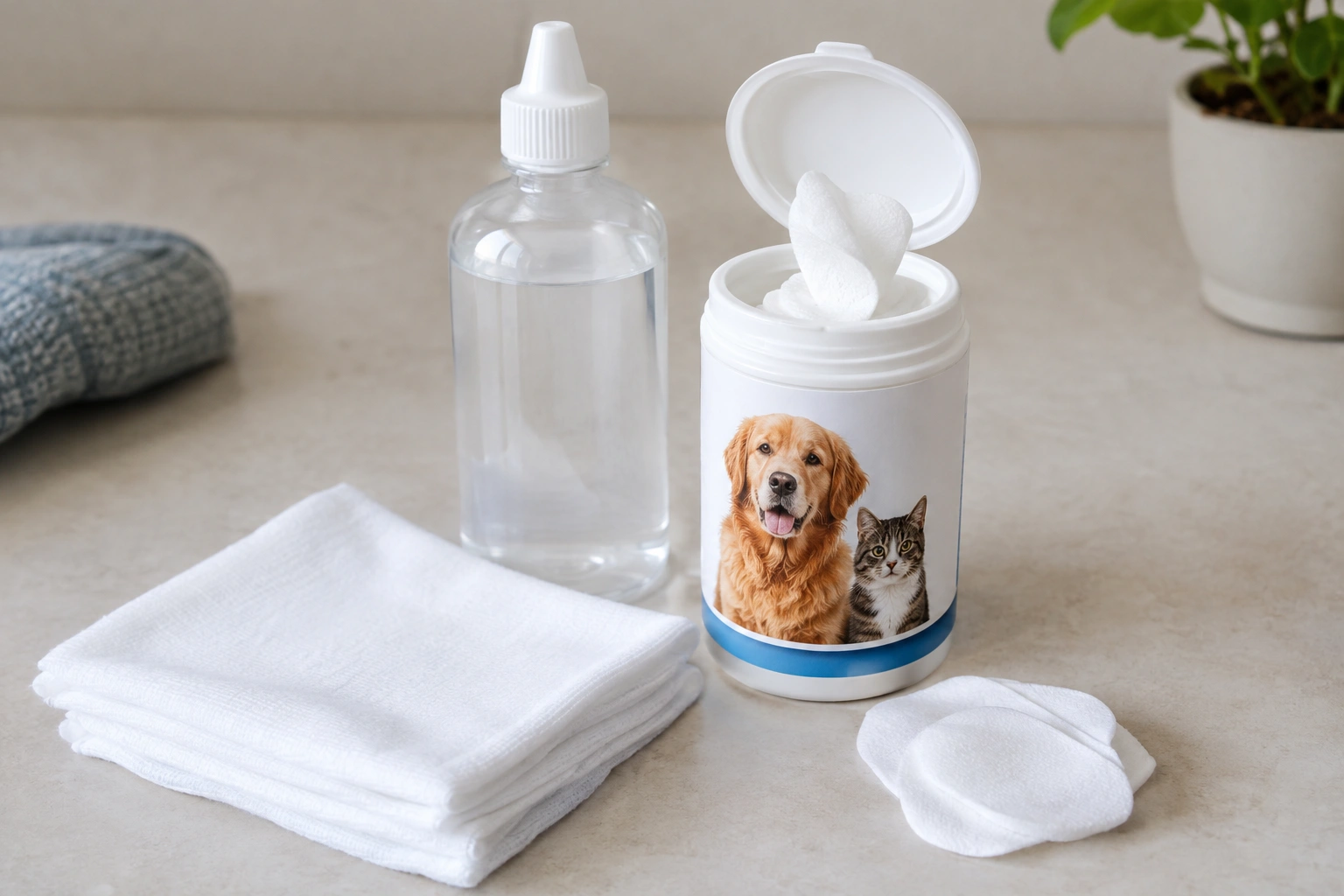
Use gentle, vet-safe cleaning methods only. -
Use separate pads or cloth sections for each eye.
This helps avoid spreading irritation or infection from one eye to the other. -
Soften the crust first.
If the discharge is dried on, hold a damp, clean cloth against it for a few seconds rather than rubbing immediately. -
Wipe gently outward.
Clean from the inner corner outward using light pressure. -
Stop if your dog seems uncomfortable.
If your dog pulls away, blinks hard, keeps the eye closed, or seems painful, stop and arrange a vet exam.
What not to use
Do not use:
– alcohol
– hydrogen peroxide
– human eye drops unless your vet specifically told you to
– scented wipes
– harsh soap
– cotton swabs right against the eye surface
Those products can irritate delicate eye tissue or make a small problem worse.
If the eye is painful, cloudy, or possibly scratched, do not keep cleaning it repeatedly at home. Repeated wiping can worsen irritation, and those signs need veterinary care instead.
The practical trade-off here is simple: home cleaning is useful for surface buildup, but it does not treat the cause. If you are cleaning the same eye boogers over and over, the discharge is a symptom, not the solution.
For more on when recurring discharge needs a closer look, see our guide to why your dog keeps getting eye boogers.
When home care is reasonable and when to call the vet
Home care is reasonable when all of these are true:
– the discharge is small and predictable
– the eyes are bright and open
– there is no redness, swelling, or pain
– the discharge is clear, white, or light crust
– the pattern has been stable for a long time
In that situation, cleaning the eyes once daily or as needed and watching for changes is sensible.
Call your veterinarian if:
– the discharge is new or clearly worsening
– it turns yellow, green, or thick
– only one eye is affected
– your dog is squinting or pawing at the eye
– the eye looks red, swollen, or cloudy
– the discharge keeps coming back despite gentle cleaning
If you want a broader overview of recurring discharge patterns, our article on why your dog has so much eye boogers may help you compare daily mild buildup with more concerning changes.
When eye discharge is urgent
Some eye problems should not wait for a routine appointment. Seek prompt veterinary care if your dog:
- is keeping the eye closed
- is in obvious pain
- has sudden heavy discharge
- may have been scratched or injured
- has marked swelling around the eye
- is pawing constantly at the face
- has a cloudy eye or sudden vision changes
- has thick yellow or green discharge along with redness or discomfort
A suspected foreign body or corneal scratch is especially important. Rubbing the eye can make the injury worse, so avoid trying to “flush out” or pick at anything visible unless your veterinarian instructs you to do so.
If your dog’s eye discharge is paired with pain, treat it as more than a grooming issue. Eye conditions can worsen quickly, and early treatment is usually easier on the dog.
The bottom line
Daily eye boogers are not automatically a problem. For many dogs, a small amount of clear or light crusty discharge is just normal tear drainage, especially after sleep. What matters is the pattern: changes from baseline, thick or colored discharge, one-sided discharge, or any sign of pain deserve veterinary attention.
If you are unsure, look at the whole picture rather than the crust alone. Color, amount, comfort, and whether one or both eyes are involved will tell you far more than the word “eye boogers” ever will.
FAQ
Is it normal for my dog to have eye boogers every day?
It can be. Some dogs naturally have a small amount of clear or light crusty discharge each day, especially after sleeping. If the eyes look comfortable and the amount stays the same, it may be normal for that dog.
What does yellow or green eye discharge mean?
Yellow or green discharge is more concerning than clear or white crust. It can suggest infection or significant inflammation and should be checked by a veterinarian.
Why is only one eye producing discharge?
One-sided discharge can point to a foreign body, scratch, blocked tear duct, or localized irritation. It is less likely to be simple normal tearing if only one eye is affected.
Can allergies cause daily eye boogers?
Yes. Allergies and environmental irritation can make a dog’s eyes water more, which may dry into crust or discharge. It often comes with itching, redness, or seasonal flare-ups.
What is the safest way to clean my dog’s eyes?
Use sterile saline or vet-approved eye wipes and wipe gently outward with a clean cloth or pad. Use a separate pad for each eye, and avoid cleaning repeatedly at home if the eye is painful, cloudy, or possibly scratched.
When should I call the vet?
Call if the discharge is new, worsening, thick, yellow or green, one-sided, or paired with squinting, redness, swelling, pawing, or pain.
