
Why Does My Dog Have So Much Eye Boogers? A Practical Guide for Dog Owners

If you keep finding crust, goop, or sticky bits in the corners of your dog’s eyes, the first question is simple: is this normal, or is something wrong?
For many dogs, a small amount of eye discharge is part of normal tear drainage. But “normal” has a pattern. It tends to be light, brief, and predictable — often most noticeable after sleep. When the amount increases, changes color, becomes one-sided, or comes with redness or discomfort, it stops being a harmless cleanup issue and starts looking like a health problem.
That distinction matters because the eye is not a place to guess for long. Mild irritation can turn into a scratch, and a scratch can become a corneal ulcer if it’s ignored.
What counts as normal dog eye boogers?
A little crust in the inner corners of the eyes, especially in the morning, is common. In many dogs, normal discharge is a small amount of light brown or clear crust that appears after sleep and then settles down during the day. In plain terms, if your dog wakes up with a tiny bit of dried goop but the eyes look bright, open, and comfortable, that often falls within normal tear drainage.
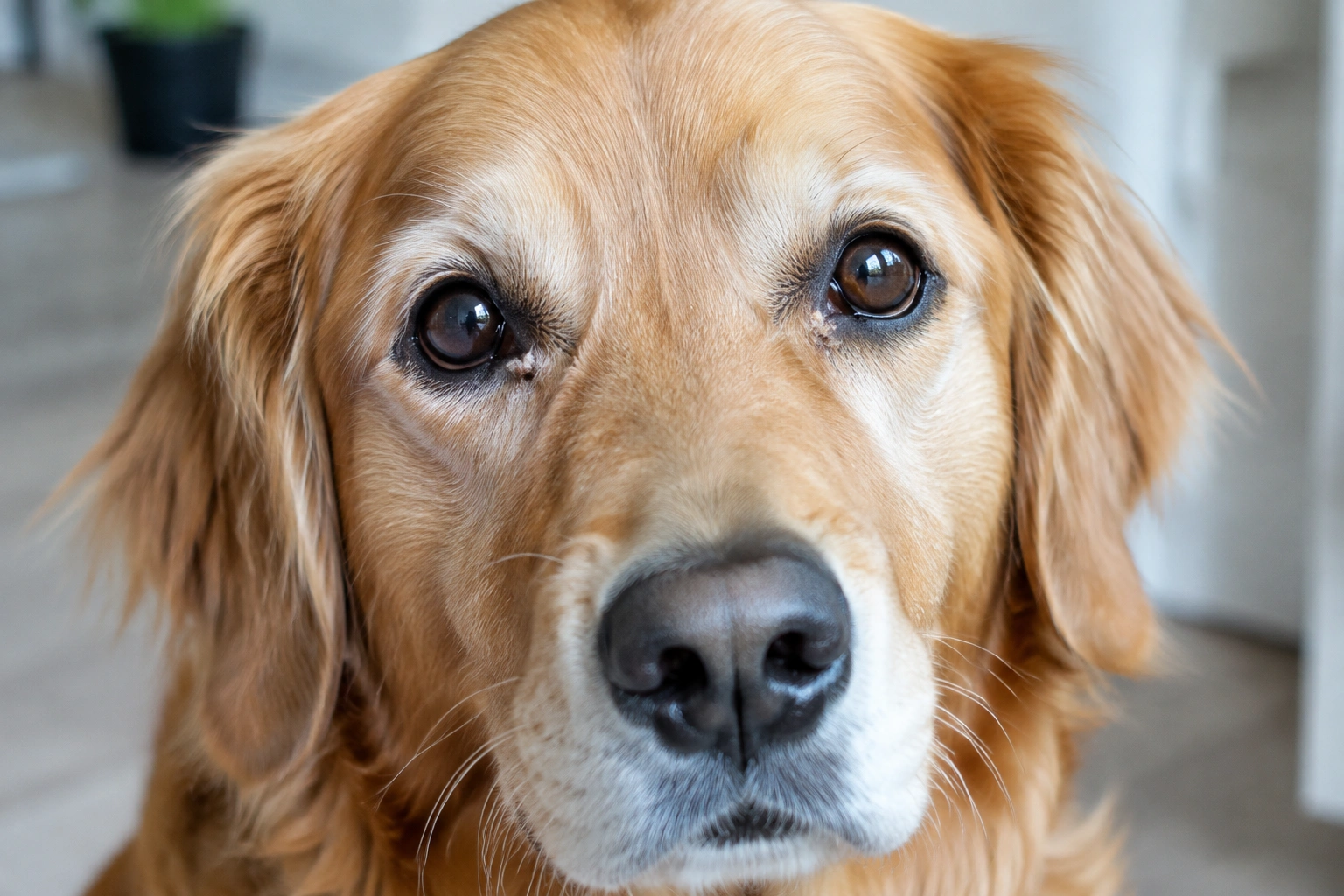
[Image placeholder: small morning crust can be normal]
The key word is small.
Normal discharge usually:
– shows up after sleep or a long nap
– is light in amount
– stays fairly consistent from day to day
– doesn’t come with squinting, redness, swelling, or rubbing
Once the discharge is building up through the day, increasing week by week, or changing from a dry crust to a wet or thick goop, the pattern is no longer reassuring.
Persistent discharge, even if it is clear, or discharge that returns throughout the day should be treated as abnormal.
A useful rule: if you’re cleaning the same eye every day and the amount keeps creeping up, treat that as a symptom, not a grooming issue.
What the color, texture, and timing can tell you
Discharge color and texture won’t diagnose the problem by themselves, but they do help narrow the possibilities.
| What you see | What it may suggest | What to do next |
|---|---|---|
| Small clear or slightly brown crust, mostly after sleep | Normal tear drainage or mild irritation | Clean gently and monitor |
| Watery clear discharge in both eyes | Allergy or environmental irritation, but sometimes early irritation or a foreign body | Watch for itching, sneezing, redness |
| Thick white or mucoid discharge | Dry eye or ongoing irritation | Book a vet visit |
| Yellow or green discharge | Infection, significant inflammation, or injury | Vet visit promptly |
| Brown staining with little active wet discharge | Chronic tear overflow, not always active disease | Monitor, but check for anatomy or drainage issues |
| Discharge mostly in one eye | Foreign body, scratch, blocked tear duct, or localized infection | More concerning; vet exam often needed |
The timing matters too. Morning crust alone is much less worrying than discharge that returns repeatedly throughout the day. If the eye is producing fresh discharge every few hours, the eye is likely reacting to something instead of simply clearing out overnight debris.
A second pattern to pay attention to is consistency. Clear and watery can fit mild irritation. Thick, stringy, or sticky discharge usually points toward a more significant problem, especially if the eye also looks red or uncomfortable.
Common causes of excessive eye discharge in dogs
There are several common reasons a dog may have more eye boogers than usual. The best next step depends on which pattern fits your dog.
Allergies and environmental irritation
Dust, pollen, mold, and similar irritants can make a dog’s eyes water more than usual. This often affects both eyes and may come with other signs such as face rubbing, sneezing, or seasonal flare-ups.
Allergy-related discharge is often watery rather than thick. The eyes may look mildly red, but the dog usually isn’t in obvious pain.
Trade-off: if the symptoms are mild and both eyes are involved, you may be able to monitor while reducing exposure to irritants. But if the discharge becomes thicker, one eye is worse, or the dog starts squinting, don’t keep assuming it’s “just allergies.”
Conjunctivitis
Conjunctivitis means inflammation of the tissue around the eye. It can happen for several reasons, including infection, irritation, or allergy. The eye often looks red, and the discharge may become thicker or more noticeable.
This is one of the reasons eye discharge should not be judged by appearance alone. A dog can still seem cheerful and active while the eye itself is inflamed.
Dry eye, or keratoconjunctivitis sicca
Dry eye is a common cause of thick, sticky discharge in dogs. When tear production is too low, the eye can’t stay properly lubricated, and the tears that are produced may become thick and mucoid instead of watery. The eye often looks red and irritated.
This is important because dry eye is not solved by wiping away the discharge. If the underlying tear film problem stays in place, the goop comes back.
Foreign bodies
A bit of dust, grass seed, or debris can get trapped in the eye or under the eyelid. This often causes one eye to water, squint, or produce discharge more suddenly than the other.
If a dog has one eye that suddenly looks irritated after running through brush or tall grass, think foreign body or scratch first, not allergy.
Corneal scratches or ulcers
A scratch on the surface of the eye can produce tearing, squinting, and discharge. Corneal ulcers are more serious because they can worsen quickly and threaten vision.
This is why pawing at the eye, keeping the eye closed, or obvious light sensitivity should move the situation out of the “clean and watch” category and into the “call the vet” category.
Blocked tear ducts
Tears normally drain through ducts near the inner corner of each eye. If those ducts are narrowed or blocked, tears can overflow and leave crust or wetness around the eye. This is one reason some dogs have chronic tear staining.
If the problem keeps returning in the same spot, especially in one eye, blocked drainage becomes more likely.
Eyelid or eyelash problems
Sometimes the issue is structural. Eyelids that roll inward or outward, or eyelashes that rub the eye, can cause repeated irritation and discharge. These problems may be subtle at first, but the pattern is usually stubborn: clean it, and it comes right back.
When one eye is worse than both
This is one of the most useful decision points.
If both eyes are watery or mildly crusty, especially during allergy season or after dusty walks, the cause is more likely to be environmental irritation or allergies.
If one eye is clearly worse, think localized trouble:
– a scratch
– a foreign body
– a blocked tear duct
– an eyelid or eyelash issue
– a one-sided infection
That doesn’t mean both-eye discharge is always harmless, but one-sided discharge deserves more suspicion. A dog with one eye producing more goop than the other, especially if it keeps happening in the same eye, should usually be examined by a veterinarian.
Red flags that mean the eye needs veterinary attention
Some signs mean you should stop monitoring and get help.
Call a veterinarian promptly if you notice:
– redness that doesn’t settle
– squinting or keeping the eye partly closed
– pawing or rubbing at the eye
– swelling around the eyelids
– cloudy-looking eye surface
– thick yellow or green discharge
– a bad smell from the eye area
– obvious pain or light sensitivity
– sudden change in vision or behavior around obstacles
These signs matter because they raise the odds of infection, a foreign body, or corneal injury. A dog with a painful eye may not always act dramatic. Some will still eat, wag, and go for walks, while quietly keeping one eye irritated and half closed.
If you suspect a scratch, ulcer, or something stuck in the eye, treat it as urgent. The risk is not just discomfort — repeated rubbing can make the damage worse.
How to clean your dog’s eyes safely at home
If the discharge is mild and your dog is otherwise comfortable, gentle cleaning is reasonable.
Use:
– sterile saline solution
– soft gauze or cotton
– a calm, well-lit space
Here’s the low-risk method:
1. Moisten the gauze or cotton with sterile saline.
2. Wipe from the inner corner outward.
3. Use a fresh piece for each eye.
4. Don’t scrub dried crust off forcefully.
5. Stop if the dog pulls away, blinks hard, or seems painful.
The goal is to remove loose debris, not to “clean deep.” If you have to rub to get it off, the crust may be stuck to irritated tissue, and that’s a sign to be gentler or stop.
Do not pull off crust that is stuck to the eyelids, since that can worsen irritation. If it won’t lift easily with saline, leave it alone and let a veterinarian check the eye if needed.
Do not use human eye drops, contact lens solutions, peroxide-based cleaners, or anything not specifically approved by a veterinarian. Those products can irritate the eye further or complicate the problem.
A practical test: if gentle cleaning makes the eye look better for a few hours but the discharge returns again and again, the wiping is only treating the symptom.
Tear staining vs active eye disease
Tear staining is the brownish discoloration that can build up under the eyes over time. It often reflects chronic moisture rather than active infection. A dog can have tear staining without being in pain.
That said, tear staining is not always “just cosmetic.” It can point to:
– ongoing tear overflow
– blocked drainage
– anatomy that keeps the eye damp
– chronic low-grade irritation
The difference between staining and active disease is what else is happening.
Tear staining alone usually means:
– no redness
– no squinting
– no pain
– no sudden change in discharge
Active disease usually means the staining is joined by wetness, redness, thicker discharge, or discomfort.
So if your dog has brown staining but the eyes are otherwise calm, it may be a long-term maintenance issue. If staining appears alongside fresh discharge or irritation, the eye deserves a closer look.
Breed and anatomy factors that make some dogs more prone
Some dogs are simply built in a way that makes eye discharge more likely. Flat-faced breeds and dogs with prominent eyes are often more prone because their eyelids and tear drainage can be less efficient.
Border Collies are not usually the classic “tear-prone” breed in the way some short-faced dogs are, but that doesn’t make them immune. Any dog can develop allergies, dry eye, a scratch, or a blocked tear duct. In other words, anatomy can raise the odds, but it doesn’t explain every case.
Older dogs may also develop eye changes over time. If a dog that was always fairly dry suddenly starts getting more discharge later in life, don’t assume it’s just age. The change itself is the clue.
Puppies can also deserve extra caution because they may rub their eyes more, pick up debris more easily, and may not show discomfort as clearly as adult dogs.
How to reduce recurrence and decide what to monitor
If the discharge is mild and clearly linked to irritation, prevention is mostly about reducing the trigger.
Useful steps include:
– wiping away loose discharge gently before it hardens
– checking after walks through grass, brush, or dusty areas
– watching for seasonal patterns that suggest allergies
– keeping an eye on whether both eyes or one eye is affected
– noting whether the discharge is stable, improving, or worsening
The most helpful habit is tracking the pattern, not just the mess. Ask:
– Is it both eyes or one?
– Is it clear, thick, yellow, or green?
– Is the dog comfortable?
– Is this new or the same as always?
– Is it happening after sleep only, or all day?
If the answer is “same small crust after sleep, no redness, no discomfort,” monitoring is reasonable. If the answer is “same eye, same problem, keeps coming back,” that’s a vet-workup pattern.
For allergy-prone dogs, reducing exposure to dust and pollen can help, but it won’t solve every case. If the discharge is persistent, you may be dealing with something that needs medical treatment rather than environmental management.
When to see a veterinarian
This is a veterinarian issue when the eye looks painful, red, swollen, cloudy, or produces thick colored discharge. Book a visit if the problem is persistent, recurrent, or mainly affects one eye.
If your dog is rubbing the face on furniture, pawing at the eye, or avoiding light, don’t wait to see whether it improves on its own.
For Border Collie owners, one extra point matters: these dogs are often active, fast, and curious, which means eye irritation from brush, debris, and rough outdoor play can happen more easily than people expect. A dog that “just got something in the eye” can go from mild irritation to a real corneal problem if the eye keeps getting rubbed.
Quick decision guide
Use this simple rule:
- Monitor at home: small, clear, brief morning crust; eyes bright and comfortable
- Clean gently and watch: light discharge that seems tied to dust, sleep, or mild irritation
- Book a vet visit: persistent discharge, repeated one-eye problems, thick or colored discharge, or ongoing tear staining with other signs
- Seek prompt care: squinting, pain, swelling, cloudiness, pawing, or sudden worsening
If you’re unsure, choose the side of caution. Eyes are one of those places where early attention usually saves time, money, and stress later.
FAQs
Is it normal for my dog to have eye boogers every day?
A small amount can be normal if it’s consistent, light, and mostly shows up after sleep. Daily discharge that increases, changes color, or comes with redness is not something to ignore.
What color eye discharge is most concerning?
Yellow or green discharge is more concerning than clear or light brown crust, especially if the eye is red or the dog is squinting.
Why does my dog only have discharge in one eye?
One-sided discharge often points to a localized issue such as a foreign body, scratch, blocked tear duct, or eyelid problem.
Can I use human eye drops on my dog?
No. Human eye products can irritate the eye or mask a problem that needs veterinary care.
Is tear staining the same as infection?
Not necessarily. Tear staining is often a sign of chronic moisture, while infection usually comes with redness, discomfort, and a change in discharge.
Should I clean my dog’s eyes every day?
Only if needed. Gentle cleaning is fine when there’s a small amount of loose discharge, but repeated heavy cleaning can irritate the area if you’re rubbing too hard.
For a deeper look at color-specific discharge, you may also want to read what green eye boogers can mean in dogs. If you’re comparing normal crust with more concerning discharge patterns, the practical eye boogers guide can help you sort through the signs step by step.
For broader veterinary guidance on eye problems, VCA Hospitals has useful general pet-health resources, and the AKC also covers common canine health concerns in straightforward terms.
