
Why Your Dog Has Scabs All Over Its Body: Causes, Warning Signs, and What to Do Next

Scabs scattered across a dog’s body are usually not the real problem. They are the result of something else irritating the skin, causing itching, scratching, licking, infection, or hair loss. That distinction matters, because treating the scabs alone rarely fixes the issue for long.
What to do right now
Before you wait for the vet, do these quick steps:
- Check for fleas or flea dirt by parting the coat and looking for black pepper-like specks.
- Inspect the belly, paws, ears, and tail base for redness, crusts, hair loss, or sores.
- Take clear photos of the worst spots so you can track changes and show your vet.
- Confirm parasite prevention status and note whether any doses were missed or delayed.
- Prevent scratching and licking with a cone or other barrier if you have one.
When I look at a dog with widespread scabs, I’m thinking in patterns: where the scabs are, how itchy the dog is, whether there’s odor, whether the skin is red or greasy, and whether the dog is chewing at the same spots over and over. Those details narrow the cause far faster than guessing.
For Border Collies and other active dogs, this can be especially frustrating. Dogs that spend a lot of time outdoors may have more chances to pick up fleas, grass irritation, or minor skin damage, but outdoor exposure alone does not tell you the cause. If the scabs are all over, recurring, or getting worse, it’s usually time to look beyond simple irritation.
Why scabs all over a dog usually point to an underlying skin problem
Widespread scabs are usually a symptom, not a diagnosis. A scab forms when skin is damaged and begins to heal. That damage may come from a scratch, a bite, a mite, a rash, or a skin infection. So the scab is the end result, not the diagnosis.
The most common causes are fleas, allergies, mites, and infection. The most useful clues are the ones around the scabs. A dog that is intensely itchy is pointing you toward parasites or allergies. A dog with odor, greasy skin, and crusting makes infection more likely. A dog with patchy hair loss and sores may need testing for mites or another skin disease. Recurring scabs are especially important because they often mean the underlying trigger is still present.
If you want a broader comparison of skin-related warning signs, my guide on why dogs get black spots on their skin can help you separate harmless pigmentation from flea dirt, irritation, and infection.
The most likely causes of scabs all over a dog
Fleas and flea allergy dermatitis
Fleas are one of the main causes of scabs in dogs, and many cases start with flea bites. Some dogs are also allergic to flea saliva, which means even a small number of bites can trigger a lot of itching and skin damage.
The classic pattern is scabbing along the back, rump, and tail base, but fleas can affect more than one area. You may not see live fleas, especially if the dog grooms a lot or has a thick coat. That’s why “I don’t see fleas” does not rule them out.
If the dog is scratching, biting, or rubbing the rear half of the body, flea-related skin disease moves up the list quickly.
Mites and mange
Mites can cause very itchy, crusty skin problems. Sarcoptic mange, also called canine scabies, spreads easily among dogs and can be passed to people, although the mites do not survive on humans. It often causes intense itching, red skin, sores, and hair loss, with the ears, face, and legs commonly affected.
Demodectic mange is different. It can cause bald spots, scabbing, and sores, but it is not contagious between animals or people. Dogs with demodex may not always seem as itchy as dogs with sarcoptic mange, which is one reason a vet exam matters.
If the scabs are paired with patchy hair loss, ear-edge crusting, or a dog that seems unable to stop scratching, mites deserve serious consideration.
Bacterial or yeast infection
Infections often build on top of another problem. A dog scratches because of fleas or allergies, then broken skin gets colonized by bacteria or yeast. That is when scabs, redness, odor, greasy skin, and oozing can appear.
A smell can be a clue, but it is not definitive on its own. Yeast infections often have a musty odor, while bacterial infections may cause crusting, soreness, or discharge in some cases. These cases usually need veterinary treatment because the skin barrier is already compromised.
Allergies
Environmental allergies and food allergies can both show up as widespread skin irritation. The dog scratches, licks, or chews, and the skin keeps reopening before it can heal. Over time, that creates scabs.
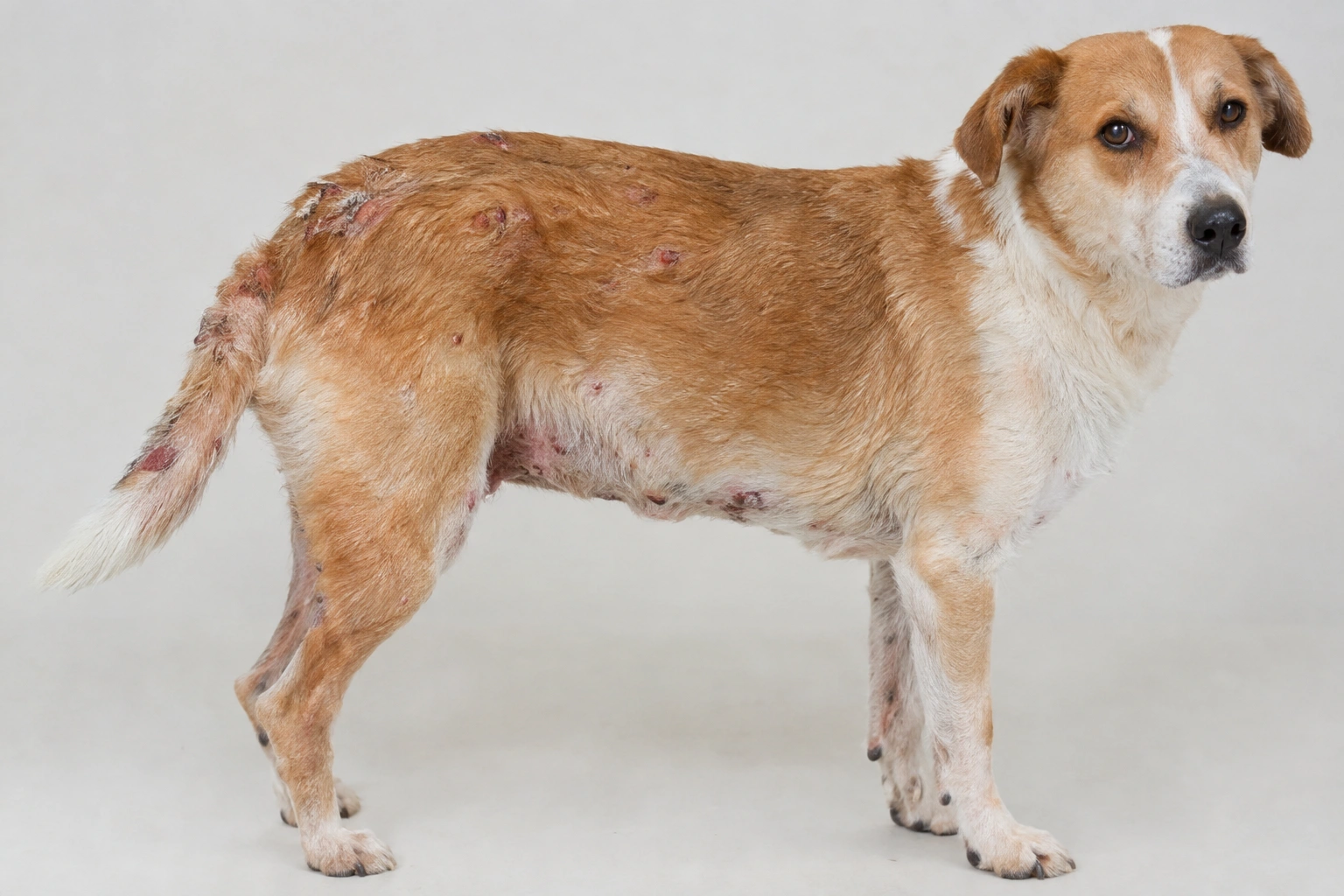
Common areas include the belly, paws, face, ears, and legs, though allergies can affect other areas too. Seasonal flare-ups are a clue for environmental allergies. Chronic year-round itch can happen with either food or environmental triggers.
Allergies are a common reason a dog keeps getting scabs back again and again.
Dry skin or grooming-related irritation
Dry skin can cause flaking and small scabs, especially if the coat has been overwashed, the shampoo was harsh, or the weather is dry. This is more likely when the dog is otherwise comfortable, the itching is mild, and there is no odor or spreading redness.
That said, dry skin is often overcalled. If the dog is very itchy, losing hair, or developing crusts in multiple areas, dry skin alone is probably not the whole explanation.
Other possible causes if the common ones do not fit
If fleas, allergies, mites, and infection do not fit the pattern, a vet may also consider contact dermatitis, insect bites other than fleas, or less common immune-mediated skin disease.
How to tell flea scabs from allergies, mange, infection, and dry skin
Here’s a practical way to sort through the possibilities.

| Possible cause | Itch level | Common locations | Odor | Hair loss / crusting pattern | Urgency |
|---|---|---|---|---|---|
| Fleas / flea allergy | Moderate to severe | Back, tail base, rump, sometimes belly | Usually none unless infected | Small scabs, scratching, flea dirt may be present | Vet soon if widespread or persistent |
| Sarcoptic mange | Usually severe | Ears, face, legs, elbows, belly | Usually none at first | Crusts, sores, hair loss, intense itch | Prompt vet visit |
| Demodectic mange | Variable | Face, legs, patchy areas | Usually none | Bald spots, scabs, sores | Vet visit needed |
| Bacterial infection | Variable, often painful or itchy | Any area, often where skin is broken | Sometimes noticeable | Redness, crusts, discharge, moist skin | Prompt vet visit |
| Yeast infection | Often itchy | Ears, paws, belly, skin folds | Often strong or musty | Greasy skin, redness, crusting | Prompt vet visit |
| Allergies | Often chronic and recurring | Belly, paws, face, ears, legs | Usually none unless infected | Repeated scratching, licking, scabs from self-trauma | Vet soon if ongoing |
| Dry skin / irritation | Mild to moderate | More generalized or after bathing | None | Fine flakes, small scabs, usually less redness | Monitor if mild |
A few decision rules help:
- Back and tail-base scabs make fleas or flea allergy more likely.
- Ears, face, and legs with crusting and intense itch raise concern for mange.
- Odor, greasy skin, discharge, or soreness pushes infection higher on the list.
- Belly and paws are common allergy sites.
- Mild flaking without strong itch is more consistent with dry skin or irritation.
What to check on your dog right now
A quick home check can give you useful clues before the vet visit.
1) Look at the skin under the coat
Part the fur in several places and look for:
- red skin
- small crusts or scabs
- flea dirt, which looks like black pepper
- hair loss
- moist or sticky areas
- swelling or discharge
Use a flashlight if the coat is dark or dense. In a thick-coated dog, you may need to check the skin in sections rather than trying to inspect the whole body at once.
2) Check the ears, paws, belly, and tail base
These areas often reveal the pattern:
- Ears: crusting, head shaking, or odor can suggest mites or infection
- Paws: licking and redness often point to allergies
- Belly: irritation here can fit allergies, parasites, or contact irritation
- Tail base and rump: classic flea territory
3) Watch the dog’s behavior
A dog that cannot settle, keeps biting at the same spot, or wakes up to scratch is telling you the itch is significant. If the dog seems painful when touched, that is more concerning than simple itch.
When scabs are urgent and the dog needs a vet soon
Use this simple urgency split:
Same-day vet visit
Seek same-day veterinary care if you notice:
- rapidly spreading scabs or redness
- pus, discharge, or open sores
- swelling
- obvious pain
- the dog seems very distressed, restless, or cannot stop scratching
- feverish behavior or marked lethargy
- a rapidly worsening skin problem
Prompt vet visit within 24–72 hours
Book a vet visit within the next few days if you see:
- widespread scabs that are not an emergency but are not improving
- recurring scabs that keep coming back
- strong itch without obvious relief
- odor, greasy skin, or crusting
- large patches of hair loss
- bleeding from constant scratching
- skin problems that persist despite current parasite prevention
Home monitoring only for very mild cases
Short-term monitoring is reasonable only if the issue is very mild and there is no itch, no redness, no odor, and no hair loss. If any of those features appear, move to a vet visit rather than watching it too long.
What a veterinarian may test for and why
A vet usually starts with the simplest high-yield checks first.
Flea assessment
Even if fleas are not obvious, the vet may look for flea dirt, skin irritation patterns, and signs that fit flea allergy dermatitis. This matters because treating only the scabs without controlling fleas often leads to repeat flare-ups.
Skin scraping or similar parasite testing
This helps look for mites. Sarcoptic mange and demodectic mange can look similar from the outside, but they are not managed the same way.
Cytology
This is a close look at skin cells and surface debris under a microscope. It helps identify bacteria or yeast, which is useful when the skin is red, greasy, crusty, or smelly.
Allergy evaluation
If the problem is chronic or keeps returning, the vet may discuss food elimination trials, allergy testing, or other steps depending on the pattern. Allergy cases often need more than one fix because the skin, itch, and infection cycle can all feed each other.
For a deeper look at how vets think through skin masses and lesions in general, my guide to why a dog has a lump explains the same practical decision-making style: what is urgent, what is likely, and what testing is worth doing first.
Safe at-home steps while you wait for the vet
These steps are aimed at preventing the skin from getting worse, not replacing treatment.
Stop the scratching cycle
If the dog is chewing, licking, or scratching constantly, use an Elizabethan collar or another barrier if you have one. It is not glamorous, but it can stop a small problem from becoming a much larger one.
Avoid human creams, oils, and antiseptics
Human products can sting, delay healing, or be unsafe if licked. Essential oils are especially risky. If you are tempted to “just try something,” pause and get veterinary guidance first.
Use only appropriate parasite control
If flea exposure is plausible and prevention is overdue, update parasite control with a dog-safe product and follow the label carefully. If the dog is already on prevention, check whether doses were missed or delayed.
Keep bathing simple
If you bathe the dog, use a gentle dog shampoo unless your vet recommends a medicated one. Overbathing or harsh products can strip the skin barrier and make itching worse.
What to avoid before diagnosis
Until the cause is clear, avoid:
- over-the-counter steroid creams on broken skin
- random antibiotic ointments
- essential oils
- frequent bathing with harsh shampoos
- home remedies that sting or leave residue the dog will lick off
If infection or mange is possible, it is better to keep the skin clean and protected than to experiment with multiple products at once.
Common treatments by cause
What the vet recommends depends on what is driving the skin damage.
- Fleas / flea allergy: consistent flea control for the dog and often the environment
- Mites / mange: prescription parasite treatment
- Bacterial infection: antibiotics when appropriate
- Yeast infection: antifungal treatment, often with topical support
- Allergies: itch control, skin support, and sometimes diet or allergy workup
- Inflamed, crusty skin: medicated shampoos or topical therapies may help in selected cases
Antihistamines may reduce itching for some dogs, but they do not fix the underlying cause. That’s why they’re usually one piece of the plan, not the whole plan.
How to stop the scratching cycle from making the scabs worse
The real battle is often not the scab itself. It is the dog’s behavior around the scab.
A cone or similar barrier is worth using when the dog keeps reopening the same spots. Yes, it is inconvenient. But a few days of protection can prevent infection and reduce the need for more intensive treatment later.
For dogs that are licking paws or rubbing their face, environmental management helps too. Keep the dog indoors during obvious flare-ups if that seems to reduce exposure to irritants, and wash bedding if the vet suspects parasites or environmental contamination.
If the dog is still scratching through barriers, that suggests the itch is not yet controlled and the underlying cause still needs treatment.
How to prevent scabs from coming back
Long-term prevention is mostly about consistency.
Keep parasite control current
This is the biggest practical step. Flea control has to be regular, not occasional. Skipping months creates an easy opening for reinfestation, especially for active dogs that move through grass, woods, or shared outdoor spaces.
Watch for early itch patterns
If your dog always starts licking paws in spring, or always gets scabs after time in tall grass, you have a clue. Catching the pattern early helps you intervene before skin damage builds.
Don’t wait for scabs to become widespread
A single small patch may be manageable. Multiple patches, repeated flare-ups, or any odor or hair loss should move you toward a vet visit. The earlier you interrupt the itch-scratch cycle, the easier the skin is to settle.
Keep Border Collie outdoor habits in mind
Border Collies often rack up more exposure simply because they are active, curious, and outside more often. That does not mean they are doomed to skin problems. It does mean regular coat checks after hikes, field work, or rough play are worth the few minutes they take.
When to see a veterinarian or certified trainer
This is a veterinary issue first. See a veterinarian soon if the scabs are widespread, itchy, recurring, smelly, painful, or paired with hair loss or sores.
A certified trainer is not the right first stop for the skin problem itself, but behavior help can matter if itching has created hard-to-break licking or scratching habits. Once the medical cause is being addressed, behavior management can help prevent the dog from turning a healing skin issue into a repeated trauma cycle.
The practical takeaway
If your dog has scabs all over, think in terms of causes, not cosmetics. Fleas, flea allergy, mites, infection, and allergies are the main patterns to sort through, and the location of the scabs gives you real clues. Mild cases without itch, redness, odor, or hair loss may be monitored briefly, but widespread itch, odor, hair loss, bleeding, or pain should move you toward a vet visit quickly.
The goal is not to make the scabs disappear for a day. It is to find and treat the reason they keep forming.
FAQ
Can scabs all over a dog go away on their own?
Sometimes a very mild irritation can improve, but widespread scabs usually mean an underlying issue is still active. If the dog is itchy, losing hair, or developing new scabs, a vet visit is usually the better move.
Are scabs on a dog always caused by fleas?
No. Fleas are common, but allergies, mites, bacterial or yeast infections, dry skin, and other skin problems can also cause scabs.
Should I bathe my dog if it has scabs?
A gentle bath may be okay in some mild cases, but avoid harsh shampoos or frequent bathing before you know the cause. If the skin is raw, oozing, or very itchy, check with your vet first.
Can I use human cream on my dog’s scabs?
It is best not to. Human creams can irritate the skin or be unsafe if licked. Ask your vet what is appropriate for your dog.
When is scabbing an emergency?
Same-day care is a good idea if the skin is rapidly worsening, painful, swollen, oozing, or making your dog very distressed. If it is mild and there is no itch, redness, odor, or hair loss, short-term monitoring may be reasonable.
