
Why Your Dog Sleeps With His Butt Toward You: What It Usually Means

If you have ever looked over and found your dog asleep with his back end aimed straight at you, you are not alone. It can feel oddly personal, almost like a silent snub. In most cases, though, this sleeping position is not a sign of disrespect. It is usually a normal comfort choice.
With Border Collies, this question comes up a lot because they are observant, sensitive, and often very tuned in to their environment. A Border Collie may choose a sleep position based on temperature, habit, room layout, or how secure he feels in the space. The key is not the butt-facing posture by itself, but whether it is part of a relaxed, stable pattern or a sudden change that comes with other signs of discomfort.
Why dogs sleep with their butt facing you
The simplest explanation is often the best one: your dog is comfortable. Dogs do not sleep the way people do, and they do not assign the same social meaning to every posture. A dog may turn his back toward you because he has found the most comfortable position for the surface, the temperature, and the available space.
Sometimes the posture is about trust. A sleeping dog is at his most vulnerable, so if he settles with his back exposed near you, that can suggest he feels safe enough to rest nearby without staying on guard. That does not mean the posture by itself proves bonding or affection, and it does not mean he is “protecting” you in a dramatic sense. It more likely means he is relaxed enough to stop monitoring everything around him.
There is also a practical explanation: dogs often sleep in whatever position gives them the best mix of warmth, support, and room to stretch. If the bed is small, the couch is crowded, or your dog wants to stay close without being pressed against you, turning away may simply be the easiest arrangement.
What this sleeping position can mean in dog body language
Dog body language is easiest to read when you look at the whole picture. A dog sleeping with his butt toward you can mean very different things depending on how the rest of his body looks.
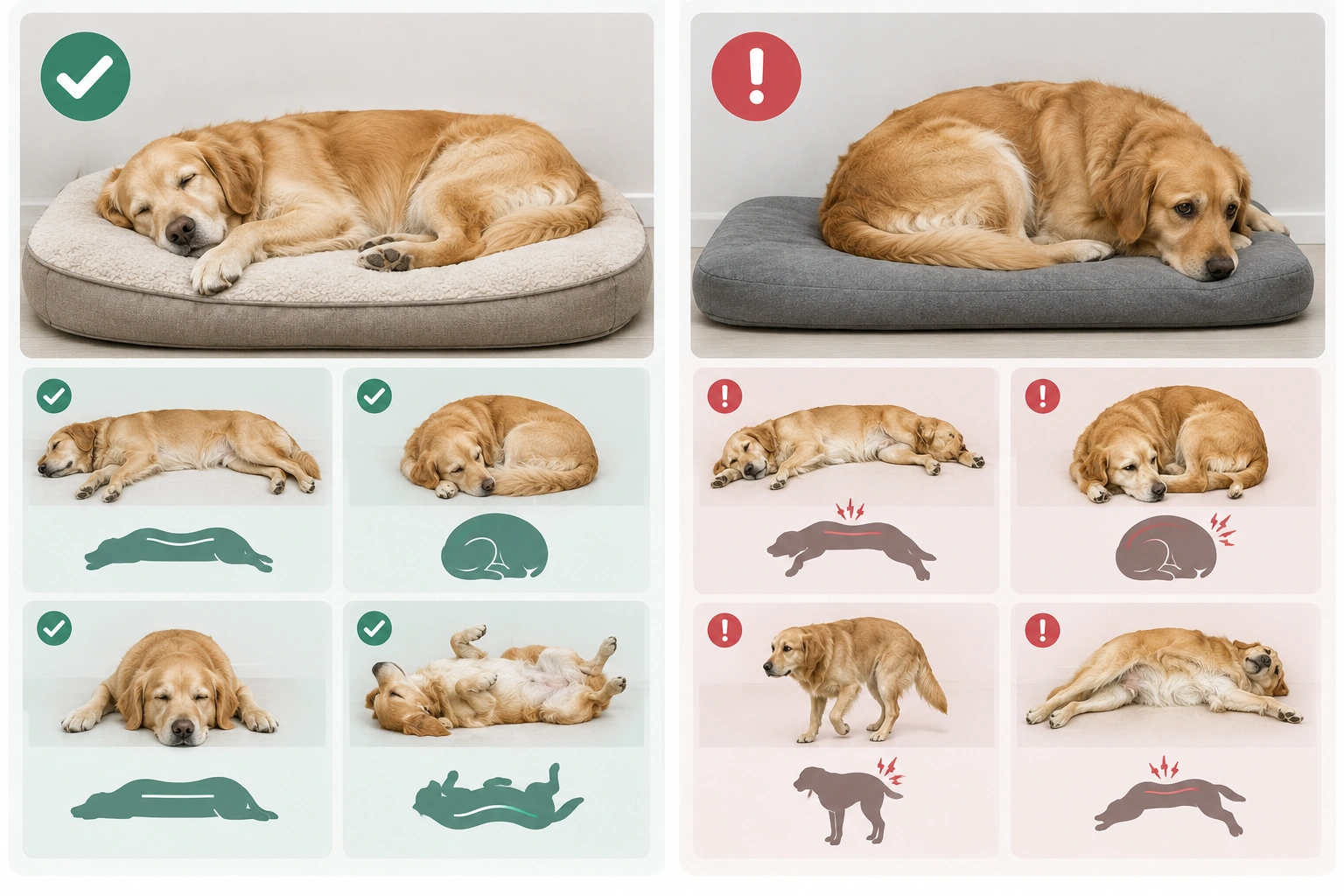
A loose jaw, soft breathing, limp limbs, and an easy position usually point to genuine relaxation. If your dog settles quickly, sleeps deeply, and wakes up normally, the posture is likely just one of his preferred ways to rest. In that case, the body language is saying, “I am comfortable here.”
This is also why it helps not to over-interpret the position as rejection. Dogs do not always sleep facing the person they like most. They may face away and still be perfectly bonded, especially if they remain close to you, seek you out during the day, or settle quickly when you are nearby.
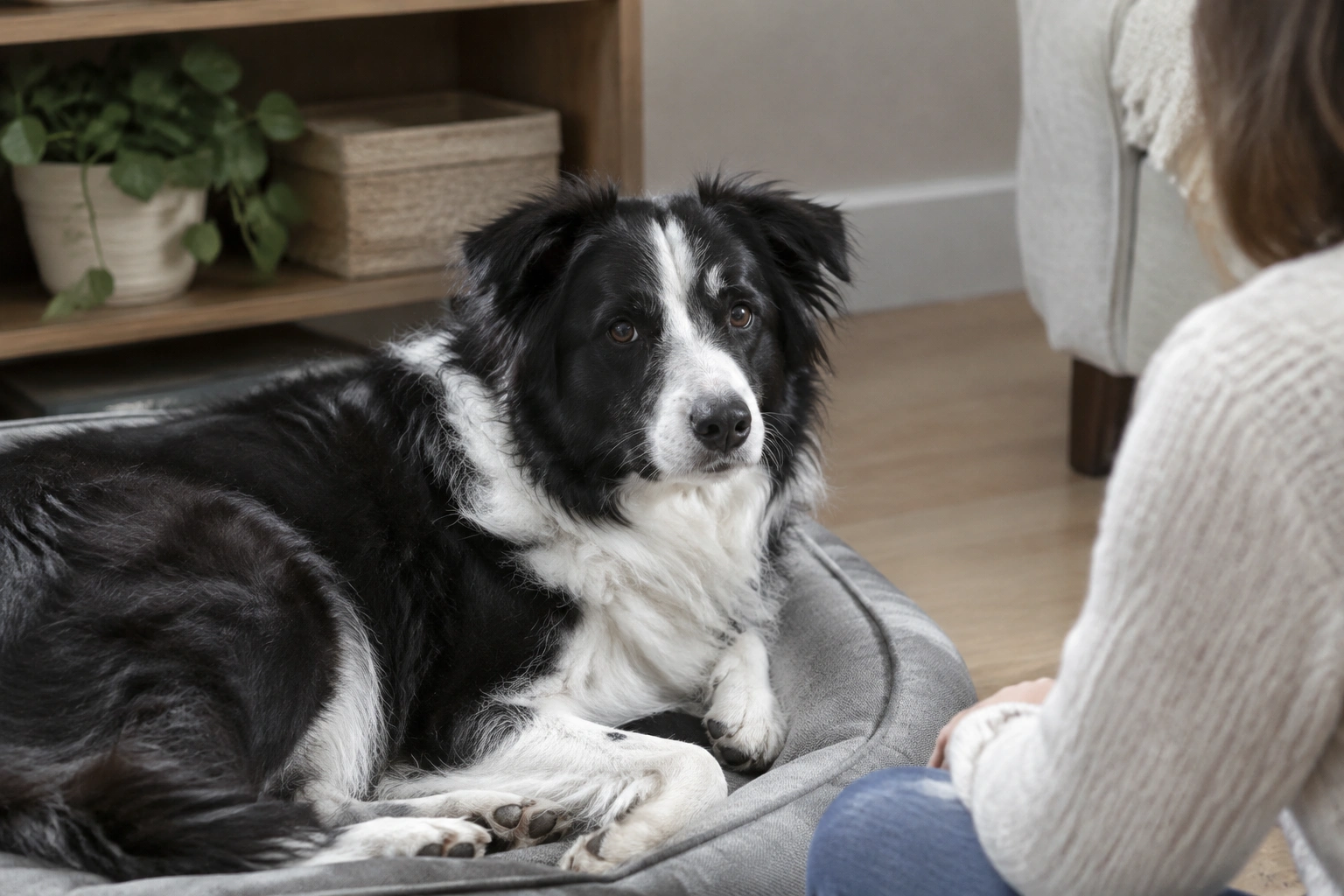
For a Border Collie, this can be especially true. Many are alert by nature, but alertness does not disappear the moment they lie down. Some will choose a position that lets them relax while still feeling oriented to the room or to their preferred sleeping spot.
When butt-facing is just a preference versus a meaningful change
The most useful question is not “Why does my dog sleep with his butt towards me?” but “Has this always been his normal way to sleep?”
A long-standing habit is usually less concerning than a new one. If your dog has slept this way for months or years and nothing else has changed, it is probably just his preference. That is the low-risk scenario.
A sudden shift matters more. If your dog used to curl up facing you, but now consistently turns away and seems less settled, that can be a clue that something else is going on. The sleeping posture itself is not the diagnosis. The change is what deserves attention.
Here is a practical way to think about it:
- Stable pattern, relaxed dog, no other symptoms: usually normal
- New pattern, but the dog is otherwise bright and mobile: monitor closely
- New pattern plus stiffness, restlessness, or discomfort: worth a vet conversation
That distinction is important because dogs often compensate quietly. A behavior that looks minor can be the first visible sign of an issue if it appears alongside mobility changes or trouble settling.
Signs to look for that point to pain, stiffness, anxiety, or illness
If the butt-facing posture is paired with other changes, it becomes more meaningful. Watch for signs that your dog is struggling to get comfortable rather than simply choosing a preferred position.
Common red flags include:
- repeated repositioning before lying down
- trouble getting up or lying down
- stiffness after rest
- limping or favoring one side
- panting when the room is not warm
- whining, groaning, or vocalizing while settling
- restlessness through the night
- sleeping in short bursts instead of settling deeply
- reluctance to jump, climb stairs, or use the couch
- a tense body, tucked tail, or unusually guarded posture
If you see several of these together, do not assume the sleeping position is just a quirk. Pain, arthritis, muscle soreness, digestive discomfort, or anxiety can all affect how a dog lies down and how long he stays there.
A good rule: if your dog seems to be “searching” for a comfortable position every night, the posture is probably not the main issue. The posture is just a symptom of the larger problem.
For general guidance on canine body language and sleep-related comfort, the ASPCA’s dog care resources and veterinary references such as VCA Hospitals are useful places to cross-check concerns before deciding whether a vet visit is needed.
How breed, age, and temperament can influence the behavior
Not all dogs sleep the same way, and Border Collies can be especially individual about rest. Their working heritage, sensitivity to movement, and tendency to stay mentally “on” can shape how they settle.
A young, energetic Border Collie may sprawl or turn away simply because he wants to cool down after activity. An older dog may choose a position that reduces pressure on stiff joints. A dog with a cautious temperament may prefer to sleep close to you but not directly pressed against you, which makes a butt-facing position look more likely.
Temperature matters too. If the room is warm, many dogs stretch out or angle away to lose heat. If the bedding is too soft, too small, or too warm, a dog may rotate until he finds a position that feels less restrictive.
The trade-off here is simple: a sleeping position that looks strange to you may be perfectly efficient for your dog. On the other hand, if your dog’s preferences change as he ages, what once looked like a harmless habit may deserve a closer look because his body needs have changed.
Normal comfort versus a possible problem: a quick comparison
| Pattern | More likely meaning | What to do |
|---|---|---|
| Dog has always slept this way, settles easily, and wakes normally | Comfort, habit, or trust | Leave him alone |
| Dog turns away in a warm room and stretches out | Cooling off or space preference | Adjust bedding or airflow if needed |
| Dog sleeps butt-facing but remains relaxed and eats, moves, and plays normally | Likely harmless individual preference | Monitor casually |
| Dog recently started doing this and also seems stiff or restless | Possible pain or discomfort | Watch closely and consider a vet visit |
| Dog changes positions repeatedly and cannot settle | Anxiety, pain, or another issue | Look for other symptoms and seek advice |
| Dog whines, pants, or struggles to lie down | More concerning health signal | Contact a veterinarian |
This kind of comparison helps because the sleeping posture alone is not enough. The surrounding behavior tells you whether you are seeing a normal preference or a dog trying to manage discomfort.
What to do if your dog sleeps this way
If the behavior is longstanding and your dog seems relaxed, do nothing. That is often the correct response. Waking or moving a sleeping dog usually adds nothing unless there is a safety issue.
If the setup seems cramped or too warm, change the environment rather than the dog. A slightly larger bed, a cooler room, or a different sleeping surface may solve the issue without making it a “training” problem. That is especially useful for Border Collies, which often do better with a bed that lets them choose between curling up and stretching out.
If the behavior is new, monitor it for a few days if your dog otherwise seems normal. Keep a simple watch list for:
– how easily he lies down
– whether he gets up stiffly
– whether he changes positions more than usual
– whether stairs, jumping, or play look different
– whether appetite, energy, or mood have changed
If the behavior is new and you also notice pain, stiffness, restlessness, limping, trouble getting up, or any other symptom, call your veterinarian. That gives you a clearer picture than focusing on the sleeping posture alone. If nothing else changes, the posture is probably just a preference. If several things shift together, the behavior becomes more medically relevant.
When this sleeping posture is most likely harmless
This posture is usually low-risk when all of the following are true:
- your dog has done it for a long time
- he settles quickly
- he sleeps deeply
- he wakes normally
- he moves comfortably during the day
- there are no signs of pain, anxiety, or illness
In other words, a dog that sleeps butt-facing you but still acts like himself is usually fine. The behavior is often just part of his normal sleep style.
That is the main reason not to overreact. Dogs are not always communicating a social message. Sometimes they are simply arranging their bodies in the easiest possible way.
When to see a veterinarian or certified trainer
A veterinarian is the right next step if the posture is new or if it appears alongside signs of discomfort, stiffness, restlessness, or changes in mobility. If your dog is struggling to settle, seems sore getting up, or is acting differently during the day, a health check is more appropriate than trying to interpret the posture as a behavior issue.
A certified trainer or behavior professional can help if the concern is not pain but a broader settling problem, especially if your dog seems anxious, hypervigilant, or unable to relax in the sleeping area. That said, behavior support should not replace a vet visit when physical discomfort might be involved.
One useful rule: if the change affects how your dog moves, lies down, or sleeps through the night, treat it as more than a quirky sleeping habit.
The bottom line
A dog sleeping with his butt toward you is usually normal. In many cases, it points to comfort, trust, temperature preference, or simple space management rather than rejection. The part that matters most is not the posture itself, but whether it is a consistent habit or a sudden change paired with other signs.
If your Border Collie is relaxed, sleeping well, and acting normally, there is usually nothing to fix. If the posture is new or comes with stiffness, restlessness, or trouble settling, that is the moment to look deeper and involve your veterinarian.
For more on related health and body-language topics, you may also find our guides on black spots on a dog’s skin and dog dental cleaning timing useful when you are trying to separate harmless quirks from signs that deserve attention.
