
Why Is My Dog Getting Eye Boogers? What’s Normal, What’s Not, and What to Do

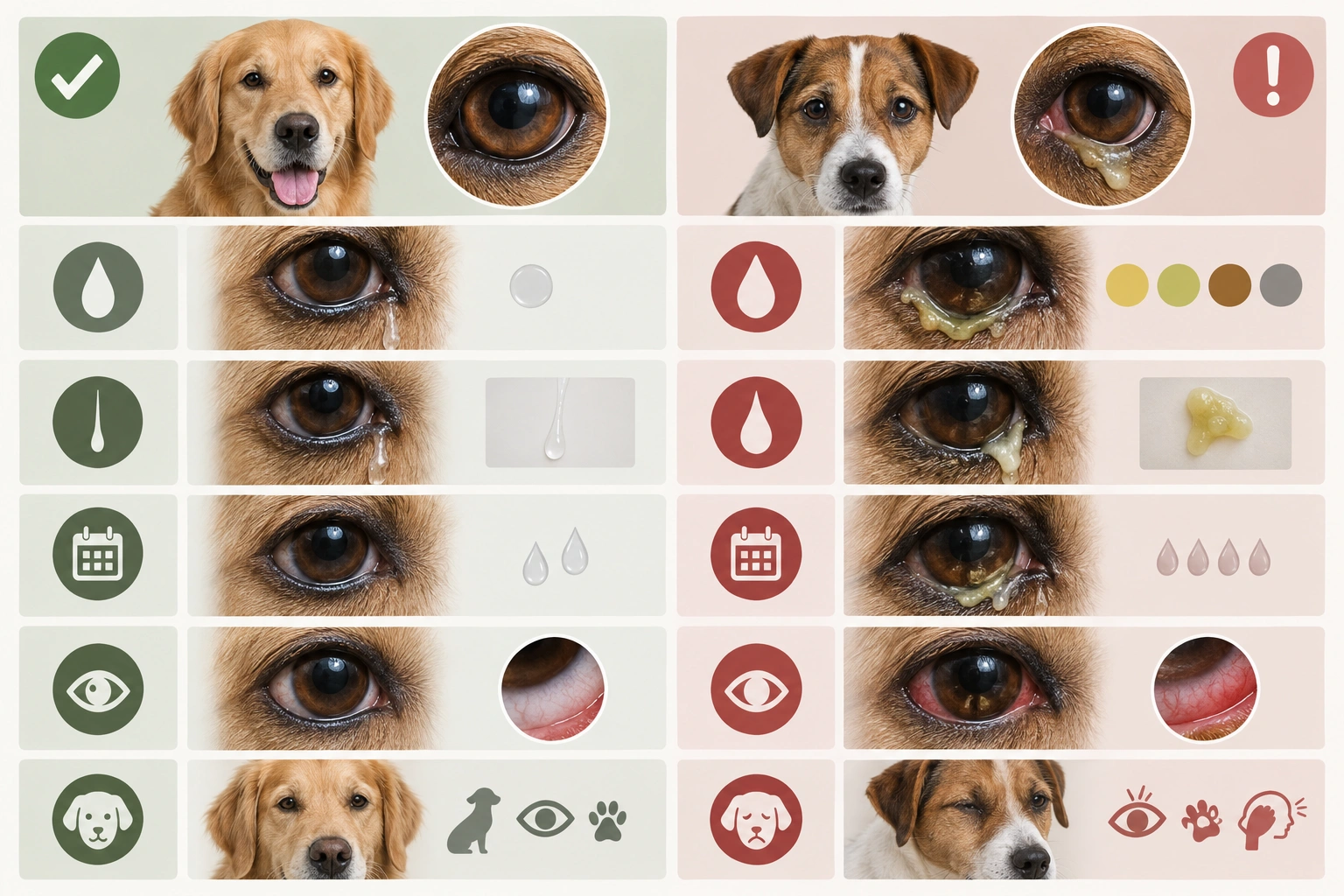
If your dog has a little crust at the inner corners of their eyes, that is often just normal tear drainage. Color is only one clue; pain, redness, squinting, and one-sided symptoms matter more than color alone. If the discharge is frequent, thick, colored, smelly, or paired with redness or squinting, treat it as a problem that needs attention.
Here’s the practical rule I use: small, clear, or light-brown eye boogers that show up mostly in the morning and stay about the same from day to day are usually low concern. Eye discharge that is new, increasing, one-sided, thick, yellow/green, bloody, or linked with discomfort is not something to ignore.
For Border Collie owners, this matters because active dogs spend a lot of time in grass, wind, dust, and brush. That can make simple irritation more likely, and it also means a scratch or foreign body can be missed if you assume it is “just boogers.”
What dog eye boogers usually are
“Eye boogers” is the casual name for discharge that gathers near the corners of the eyes. It can look crusty, gooey, watery, or sticky depending on what is causing it. In many dogs, it is simply a mix of dried tears, oil, mucus, dust, dead cells, and tiny bits of debris that collect as the eye cleans itself.
That cleaning system is normal. Tears help keep the eye moist and healthy, and they also flush away irritants. A small amount of crust in the morning is common because tears and debris have had all night to dry at the inner corner of the eye.
The key is consistency. A dog that wakes up with the same small amount of crust every morning and then has clear, comfortable eyes the rest of the day is a very different case from a dog whose eyes are getting gunkier, redder, or more uncomfortable over time.
What the color, thickness, and frequency can mean
Color alone does not diagnose the problem, but it gives you a useful clue about how cautious to be. It cannot reliably tell you whether the cause is allergy or infection, so the rest of the symptoms and the context matter more than appearance alone.
| Discharge look | What it often suggests | How concerned to be |
|---|---|---|
| Small clear or light-brown crust | Normal tear drainage, mild dust, or minor irritation | Usually low concern if the eye is otherwise comfortable |
| Watery, clear discharge | Irritation, allergies, or early inflammation | Monitor closely if the dog is comfortable |
| Sticky white-gray material | Ongoing irritation or dry eye can be a possibility | Worth a vet visit if it keeps returning |
| Yellow or green thick discharge | Infection or significant inflammation becomes more likely | Call the vet, especially if one eye is affected |
| Bloody or reddish discharge | Injury, trauma, or a more serious eye problem | Same-day veterinary care is safer |
| Foul-smelling discharge | Infection or trapped debris may be present | Needs veterinary attention |
Frequency matters as much as appearance. A little crust after sleep is one thing. A dog that needs wiping several times a day, or whose eyes are repeatedly filling back up after you clean them, is telling you the problem is ongoing rather than temporary.
One useful comparison: allergies often cause watery eyes and mild irritation, while infection more often brings thicker discharge and redness. That is not a hard rule, but it helps you decide whether to watch for a day or book an exam sooner.
Common causes of eye discharge in dogs
Eye discharge is a symptom, not a diagnosis. The job is to figure out what is driving it.
Dust, grass, and other debris
A windy walk, a dusty yard, or a run through tall grass can leave a dog with a small amount of eye discharge afterward. This is especially relevant for active dogs, because they are often outdoors and moving fast through fields, brush, and uneven ground.
When debris is the cause, the discharge is usually mild and short-lived. The eye may look a little watery, but it should not stay red, swollen, or painful.
Allergies
Allergies can cause watery eyes, mild redness, and rubbing. Seasonal patterns are a clue: if the discharge shows up with pollen season or after time in grass, allergies move higher on the list.
The trade-off here is that allergies can look mild while still being annoying. A dog may not seem sick, but if the eyes are watering every day, the irritation is real and worth addressing.
Dry eye, or keratoconjunctivitis sicca
Dry eye happens when the eye does not make enough tears or the tears are poor quality. That can lead to sticky discharge, repeated crusting, and chronic irritation. It often becomes a recurring problem rather than a one-off event.
This is one reason chronic eye boogers should not be dismissed. If the eyes keep getting sticky despite cleaning, the issue may be less about “gunk” and more about inadequate tear film.
Conjunctivitis
Conjunctivitis is inflammation of the tissue around the eye. It can happen for different reasons, including irritation, infection, allergies, or immune-related problems. A dog with conjunctivitis may have red eyes, discharge, and some discomfort.
The important point is that “pink eye” is not one single cause. The treatment depends on what is driving the inflammation, which is why repeated or worsening discharge deserves a vet exam.
Blocked tear ducts
Tears normally drain through ducts at the inner corner of the eye. If those ducts are blocked or narrowed, tears can overflow and dry into crusts. This can look like a dog that always has damp or dirty-looking corners of the eyes.
When the discharge is chronic and mostly centered at the inner corner, tear drainage problems become more likely.
Eyelid or eyelash abnormalities
If eyelashes or the eyelid edge rub against the eye, the surface can stay irritated. That irritation can lead to tearing, squinting, and discharge that keeps coming back.
These problems are easy to miss at home because the eye may not look dramatic at first. But if one eye keeps acting up more than the other, structural issues should stay on your radar.
Foreign bodies and injury
A grass seed, bit of dirt, or small scratch can cause a dog to suddenly start tearing, pawing, or squinting. This is the category I worry about most when the problem is one eye only and started after outdoor activity.
If you suspect something is stuck in the eye, do not rub it. Rubbing can turn a minor issue into a corneal injury.
When it is probably mild irritation vs when it may be infection or structural disease
A simple way to think about it:
- Likely mild irritation: small amount of clear discharge, both eyes affected, dog otherwise bright and comfortable, started after dust, wind, or grass exposure.
- More suspicious for infection or disease: thick discharge, one eye worse than the other, redness, repeated return after cleaning, or signs of discomfort.
A temporary irritation usually improves quickly once the eye is rinsed or the trigger passes. Chronic or structural problems do not. They keep creating discharge because the eye never fully settles down.
That distinction matters because it tells you whether home care is enough or whether the eye needs an exam to find the underlying cause.
Red flags and when it is urgent
Eye discharge becomes more urgent when it is paired with pain or clear irritation. Watch for:
- redness
- swelling
- squinting or keeping the eye partly closed
- pawing at the eye
- light sensitivity
- cloudiness
- visible change in vision
- lethargy or acting unusually quiet
- blood
- the eye being held closed
These signs suggest the eye is not just messy; it may be inflamed, scratched, infected, or otherwise injured. A corneal ulcer is one example of a problem that can worsen quickly and should not be watched casually.
If your dog is repeatedly pawing at one eye after running through brush or tall grass, think foreign body or scratch first, not simple discharge. If the eye looks painful, cloudy, swollen, or closed, do not wait to see if it “works itself out.”
When to monitor at home, when to call the vet, and when it is urgent
Use this decision rule.
Monitor at home for a short time if:
- the discharge is small, clear, or light brown
- the eye is open and comfortable
- there is no redness, swelling, or squinting
- your dog is eating, active, and acting normal
- the problem is not getting worse
For a mild case like that, a day or two of observation is reasonable. If it clears up and stays gone, you likely dealt with minor irritation.
Call your vet soon if:
- the discharge keeps returning
- it becomes thick, yellow, or green
- only one eye is affected
- the eye looks red or irritated
- your dog keeps rubbing the face
- the problem lasts more than a couple of days
That pattern suggests the issue is not just ordinary tear drainage.
Seek same-day veterinary care if:
- your dog is squinting
- the eye is swollen
- the eye looks cloudy
- there is obvious pain
- you suspect a foreign body or scratch
- there is blood
- the eye is being held closed
How to clean your dog’s eyes safely at home
For mild, non-painful discharge, gentle cleaning is fine.
What to use
- clean gauze or a soft, lint-free cloth
- sterile saline if you have it
- a calm, steady hand
How to do it
- Moisten the cloth or gauze.
- Wipe gently from the inner corner outward.
- Use a fresh part of the cloth for each pass.
- Stop if your dog pulls away, blinks hard, or seems painful.
- Clean only what is visible; do not dig into the corner of the eye.
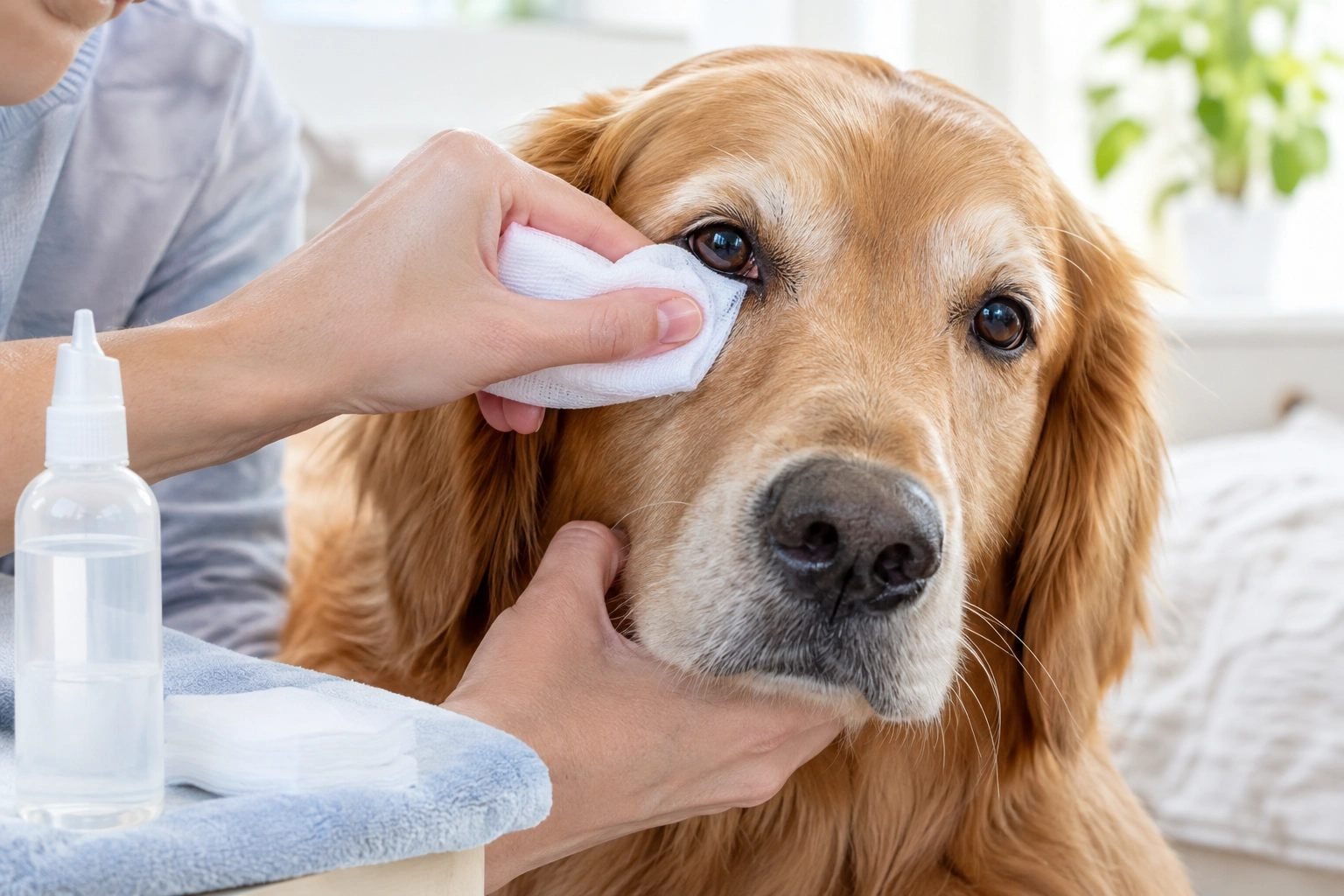
The goal is to remove crust without irritating the eye surface. Gentle wiping once or twice a day is usually enough for mild buildup. Over-cleaning can make the area more irritated, especially if the skin is already sensitive.
What not to use
- rough paper towels
- cotton fibers that shed into the eye
- human eye drops unless your vet told you to use them
- anything scented or medicated without veterinary guidance
If you need to flush debris, saline is safer than improvised home mixtures. And if the eye seems painful, stop and call the vet rather than trying to keep cleaning it.
What not to do with dog eye discharge
A few mistakes cause more harm than good:
- Do not rub the eye. Rubbing can worsen a scratch.
- Do not try to pull out a stuck object. If something is embedded, let a vet handle it.
- Do not assume all redness is allergies. Infection and injury can start subtly.
- Do not use human eye medications on your own. Some are unsafe, and the wrong product can delay proper treatment.
If you are tempted to “see if it gets better overnight,” ask whether the eye looks comfortable. If the answer is no, waiting is the wrong trade-off.
Breed-related notes: are Border Collies more prone to eye boogers?
Border Collies are not especially known for being uniquely prone to eye discharge. But their lifestyle matters. They are active, fast, and often outdoors, which means more exposure to dust, grass seeds, wind, and other eye irritants.
That can make two things more likely:
1. simple temporary irritation
2. missed minor injury
So while the breed itself is not the main issue, the way Border Collies live can make eye problems show up more often. If your dog comes in from a hike with a small amount of clear crust in both eyes and otherwise looks normal, that is one thing. If one eye stays watery and the dog starts squinting after brush work, that is a different story.
For general eye-health guidance, the American Kennel Club’s dog health resources and VCA Hospitals’ pet care information are useful starting points, especially when you want broader context before booking a visit.
What a vet may look for if the discharge keeps coming back
If the discharge is recurring, a vet will usually try to identify the underlying pattern rather than just treating the crust. That may include checking for:
- dry eye
- tear drainage problems
- eyelid or eyelash abnormalities
- conjunctivitis
- corneal injury
- infection or inflammation
- foreign material under the eyelid
That is why chronic discharge should not be managed as a grooming issue alone. If the eye keeps producing gunk, something is still irritating the surface or disrupting normal tear flow.
A vet may also recommend treatment based on the cause, such as lubricating drops for dry eye, allergy management when allergies are likely, or other medications when infection or inflammation is present. The exact plan depends on the exam findings, not just the color of the discharge.
Frequently asked questions about dog eye boogers
Are eye boogers normal in dogs?
Yes, a small amount can be normal, especially in the morning. The concern is when the amount increases, changes color, or comes with redness or discomfort.
Why are they worse in the morning?
Tears and debris dry while your dog sleeps, so crust is often most noticeable after naps or overnight.
Is clear discharge always harmless?
Not always. Clear discharge can still happen with allergies, irritation, or early eye problems. The rest of the eye matters more than the color alone.
Should I worry if only one eye has discharge?
One-sided discharge is more suspicious for a foreign body, scratch, tear duct issue, or another local problem than a simple whole-body cause.
Can allergies cause eye boogers?
Yes. Allergies often cause watery eyes and mild irritation. If the dog also has seasonal itching or other allergy signs, that becomes more likely.
When is it an emergency?
If the eye is cloudy, closed, very red, swollen, painful, or your dog is pawing at it constantly, do not wait.
How often should I clean my dog’s eyes?
Only as needed for mild buildup. If you are cleaning the same eye every day or the discharge keeps coming back, the problem needs a veterinary look.
Can I use Benadryl or Zyrtec?
Do not give human medications for eye discharge without veterinary guidance. The right drug, dose, and reason for use depend on your dog’s health and the actual cause of the eye problem.
If you want a deeper breakdown of discharge color and what it may mean, see our guide on green eye boogers in dogs. If you think the eye may be infected, our article on safe first aid for dog eye infections explains what you can and cannot do at home.
