
Why Is My Dog’s Skin Turning Black? Causes, Warning Signs, and What to Do Next

If you’ve noticed dark patches on your dog’s skin, the first thing to understand is this: black skin is usually a sign of something else, not the problem itself. In dogs, that color change is often called hyperpigmentation. It can happen after chronic itching, infection, inflammation, friction, or hormonal disease. In some dogs, dark skin is simply part of normal pigmentation. In others, it’s the skin’s way of showing you that something has been irritating it for a while.
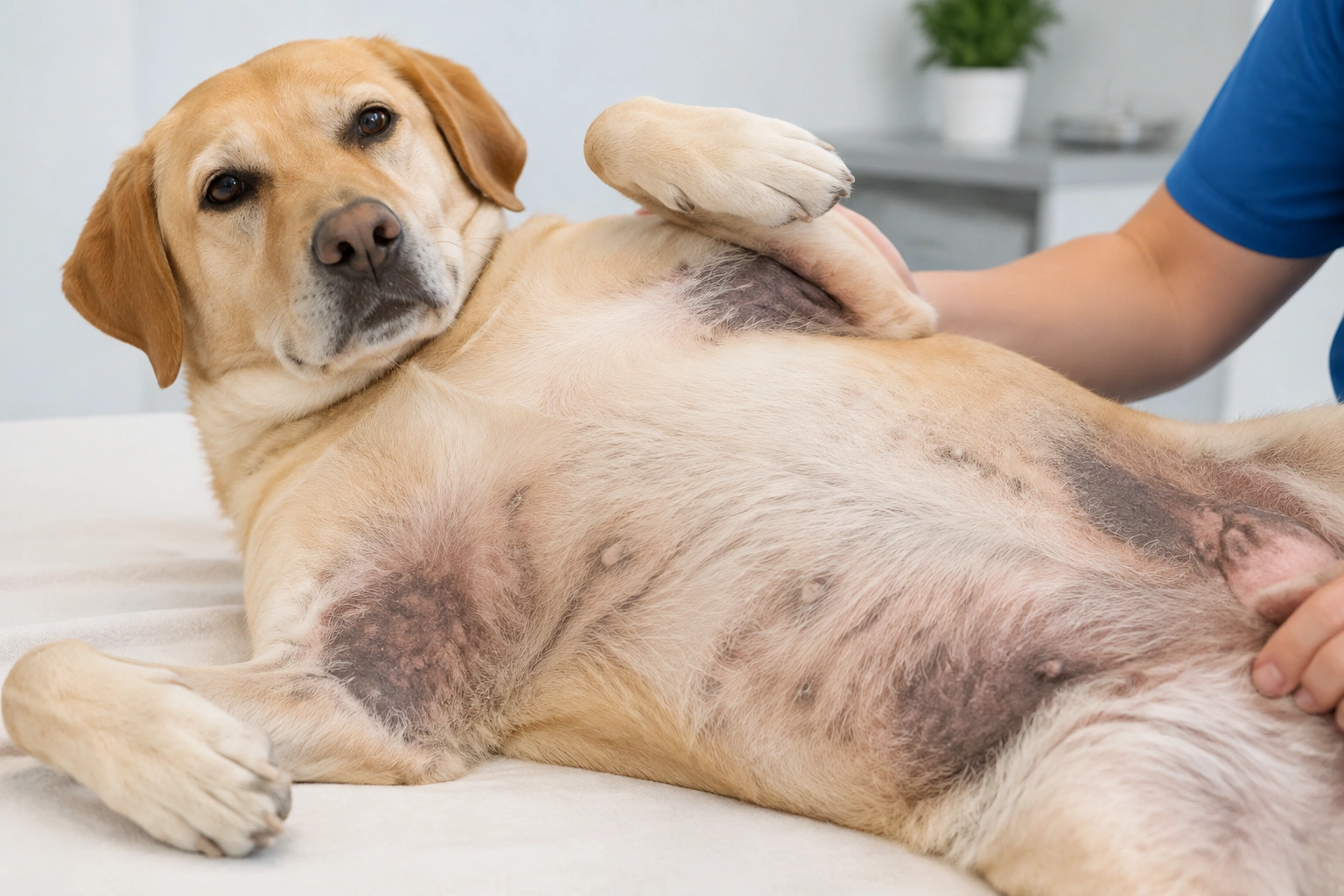
That difference matters because the right next step depends on what else you see. A patch of darker skin with no itch, odor, redness, or hair loss may be worth watching. Dark skin plus licking, a yeasty smell, or thickened skin is a different situation entirely.
What black skin on a dog actually means
Hyperpigmentation is a change in pigment, usually from increased melanin in the skin. It may look light brown, dark brown, or black. The skin can also feel velvety, rough, thickened, or hairless in the affected area. Hyperpigmentation is often a secondary finding, meaning it develops because something else has been irritating or inflaming the skin. Normal pigmentation differences can also occur based on age, genetics, or breed.
The practical takeaway is simple: dark skin is a clue, not a diagnosis. A dog’s skin can darken because the skin has been under stress for a long time. Chronic inflammation often leaves behind pigment changes even after the original irritation starts to settle.
That’s why two dogs can both have black skin and need very different care. One may have a healed rash that left behind discoloration. Another may have ongoing allergies, infection, or endocrine disease that still needs treatment.
When black skin is normal and when it suggests a problem
Some skin color variation is normal. Many dogs have naturally darker skin on the belly, groin, armpits, or around the lips and nipples. If the area has always looked that way and the dog is comfortable, it may just be normal pigmentation.
What pushes me toward “this needs attention” is a change over time. Ask yourself:
- Did the skin used to be lighter?
- Is the dark area spreading?
- Is the skin itchy, red, smelly, moist, or painful?
- Has the coat thinned or fallen out there?
- Does the skin feel thicker or rougher than before?
If the answer to one or more of those is yes, you’re likely looking at secondary hyperpigmentation rather than a harmless color variation.
A useful rule: stable color without symptoms is less concerning than changing color with inflammation. That doesn’t mean ignore it forever, but it does help you decide how urgent the problem is.
Location clues that narrow down the cause
Where the skin is darkening gives you useful clues.
Belly, armpits, and groin
These are high-yield areas for allergies, friction, licking, and yeast overgrowth. If a dog is licking the belly or inner thighs, the skin often darkens over time. The same happens when the armpits stay irritated from repeated rubbing or moisture.
Paws and ankles
Dark skin here often goes with chronic licking, allergies, infection, or parasites. Dogs that lick their feet a lot can develop thickened, darkened skin between the toes or around the ankles.
Ears and face
Darkening around the ears can happen with chronic ear inflammation, allergies, or yeast. If the ears also smell bad or the dog shakes its head, the skin change may be part of a bigger ear problem.
Neck and harness area
If the darkening lines up with where a collar or harness sits, think about friction. Repeated rubbing can trigger inflammation, then pigment change.
Rear end and lower abdomen
These areas can darken with chronic irritation, allergies, or long-term moisture and licking. If the skin is also thickened or hairless, the problem has likely been going on for a while.
Common causes of black skin in dogs
1) Post-inflammatory hyperpigmentation
This is one of the most common patterns: the skin darkens after inflammation. The original trigger may have been a rash, hot spot, allergy flare, infection, or repeated licking. Once the skin has been irritated for long enough, pigment builds up and the area stays darker.
This is why treating only the color change doesn’t work. If the inflammation is still active, the skin keeps getting damaged.
2) Allergies and chronic itching
Allergies are a major reason dogs develop dark skin, especially on the belly, paws, armpits, and ears. The main issue is not the pigment itself; it’s the itching and inflammation that keep the skin under stress.
A dog with allergies may also have:
– licking or chewing
– red skin
– recurring ear infections
– paw chewing
– hair loss
– a musty odor if yeast is involved
Border Collies are active, outdoorsy dogs, so it’s easy to dismiss a bit of licking as “normal.” But if the behavior is repetitive and the skin is changing color, it’s usually not something to brush off.
3) Yeast and bacterial skin infections
Infections often make dark skin look worse and can also be the reason it darkened in the first place. A yeast infection may create a greasy, smelly, itchy patch. Bacterial infection can cause redness, crusting, pain, or pustules.
The key point is that infection and allergy commonly overlap. A dog may start with allergies, then develop a yeast overgrowth because the skin barrier has been damaged. That’s why the smell matters. A strong odor is not a normal pigmentation issue.
4) Hormonal disease
Hormonal problems such as hypothyroidism and Cushing’s disease can lead to skin darkening, coat changes, and recurrent skin infections.
Think about hormonal disease when the dark skin is paired with:
– thinning coat or hair loss
– repeated skin infections
– generalized skin changes rather than just one irritated spot
– changes in energy, appetite, thirst, or weight
These conditions are not something to guess at from appearance alone. They need blood tests and a veterinary exam.
5) Friction, licking, or rubbing
Sometimes the skin darkens because it has been physically irritated over and over. Harnesses, collars, elbows resting on hard floors, and frequent licking can all create the same pattern: irritation first, then darkening.
This is especially likely when the dark skin lines up with a pressure point or a place the dog can reach easily.
6) Parasites and other irritants
Fleas, mites, and other causes of irritation can set off itching that leads to secondary darkening. Even if you don’t see fleas, parasite-related itch can still be part of the picture. If the dog is scratching, biting, or losing hair, parasites stay on the list until a vet rules them out.

Allergy-related darkening vs infection-related darkening
These two can look very similar, so don’t try to separate them by color alone.
Allergy-related darkening often comes with:
– recurring itch
– paw licking
– ear problems
– belly or armpit irritation
– symptoms that come and go
Infection-related darkening more often brings:
– odor
– greasy or moist skin
– redness
– crusting
– discharge
– pain or tenderness
But here’s the catch: allergies often lead to infection. So the dog may have both at once. That’s why a vet may need to do skin cytology instead of assuming it’s “just allergies” or “just yeast.”
If you want a broader overview of dark skin patterns and black spots, this practical guide on black spots on a dog’s skin may help you compare what you’re seeing.
Red flags: when to see a veterinarian soon or immediately
Book a veterinary visit soon if the dark skin is:
– getting worse
– itchy
– smelly
– red
– thickened
– hairless
– moist or greasy
– limited to one area that keeps recurring
Seek prompt care if you see:
– pain
– swelling
– open sores
– pus
– rapid spreading discoloration
– severe itching
– a strong odor
– your dog acting unwell overall
If your dog also has increased thirst, increased urination, weight changes, or low energy, don’t just treat the skin. Those signs can point to a broader medical issue.
What a veterinarian will actually do
A good workup is usually more practical than owners expect. The vet is trying to answer one question: what is driving the inflammation?
Common next steps include:
- Skin cytology to look for yeast or bacteria
- Skin scrape to check for mites or other parasites
- Flea control review and sometimes parasite treatment if the history fits
- Culture or additional testing if infection is stubborn or severe
- Blood tests if hypothyroidism or Cushing’s disease is suspected
- Allergy assessment based on the dog’s history, pattern, and response to treatment
In many cases, veterinarians first try to rule out parasites and infection because those problems are common and can mimic allergies. If the skin is still inflamed after that, they may recommend a diet trial to look for food allergy or discuss environmental allergy evaluation depending on the dog’s signs and history.
This matters because the treatment changes depending on the cause. A dog with yeast needs a different plan from a dog with hormonal disease, and both differ from a dog whose skin is dark because of friction.
Treatment: what improves the skin color and what treats the cause
The visible dark skin usually improves only when the underlying problem is controlled.
That may mean:
– treating yeast or bacterial infection
– controlling allergies
– managing parasites
– reducing friction or moisture
– treating endocrine disease with prescription care
In many dogs, the skin color fades slowly. In long-standing cases, it may not return completely to the original color, especially if the skin has thickened or been inflamed for months. That is normal and frustrating, but it doesn’t mean treatment failed. It often means the active problem has been controlled and the skin is still remodeling.
If your dog also has bad breath or other ongoing health concerns, it’s worth looking at the whole picture. Skin changes and other chronic signs can share a root cause. You can read more in our guide to why a dog’s breath smells so bad.
What you can safely monitor at home
While you’re waiting for a vet appointment, keep the monitoring simple and useful.
Track:
– where the darkening is
– whether it’s spreading
– whether the dog is scratching or licking
– any odor
– redness, crusting, or discharge
– changes in hair loss or thickness
– appetite, energy, thirst, and bathroom habits
Take clear photos every few days in the same light. That gives your vet a better sense of whether the problem is stable or progressing.
What not to do: don’t keep cycling through random shampoos, creams, or home remedies if the skin is getting worse. If the area is itchy, smelly, painful, or spreading, that’s a sign to stop guessing and get it checked.
A practical way to think about the next step
Here’s the decision framework I use:
- Looks darker but feels normal, no itch, no smell, no hair loss: monitor and mention it at your next vet visit.
- Darker plus itch, licking, redness, or odor: book a veterinary exam.
- Darker plus pain, pus, swelling, open sores, or rapid spread: see a vet promptly.
- Darker plus thirst, weight change, or coat thinning: ask about bloodwork for hormonal disease.
That approach keeps you from overreacting to harmless pigmentation, but it also prevents the common mistake of waiting too long when the skin is trying to tell you something important.
FAQs
Is black skin on a dog always bad?
No. Some dogs naturally have darker skin in certain areas. The concern is new or changing darkening, especially when it comes with itch, odor, hair loss, redness, or thickening.
Can black skin go back to normal?
Sometimes. If the underlying cause is treated early, the skin may lighten over time. Long-standing cases may improve only partially because the skin has already thickened and changed.
Why does my dog’s skin turn black around the armpits or belly?
That pattern often points to chronic irritation, allergies, friction, or infection. Those areas are common places for licking, rubbing, and moisture to build up.
Should I wait and see if it clears up?
Only if the skin is stable and the dog has no other signs. If it’s itchy, smelly, painful, or spreading, waiting usually delays the real diagnosis.
What if my dog seems fine otherwise?
That’s reassuring, but not enough to rule out a skin problem. Some infections and hormonal issues start with skin changes before the dog acts sick.
The bottom line
Black skin on a dog is usually a clue that the skin has been irritated, inflamed, or stressed for a while. If it’s stable and symptom-free, monitor it. If it’s itchy, smelly, thickened, hairless, painful, or spreading, schedule a veterinary exam so the underlying cause can be identified and treated.
