

Quick Answer
Indoor Border Collie bathing is usually easiest in a bathtub, walk-in shower, or large utility sink with secure footing. Brush first, use lukewarm water and dog-safe shampoo, rinse the dense double coat thoroughly, then dry it completely. The Border Collie’s double coat makes careful rinsing and drying especially important.
Indoor Bathing Steps
- Brush first: Remove loose fur, dirt, and small tangles before adding water.
- Prevent slipping: Put a rubber or non-slip mat under your dog’s feet.
- Use warm water: Choose comfortable lukewarm water rather than hot or cold water.
- Wash gently: Work dog shampoo through both the outer coat and dense undercoat.
- Rinse completely: Keep rinsing until no shampoo residue remains.
- Dry thoroughly: Towel-blot first, then use cool or low airflow if needed.
One Rule I Never Skip
- Set out every towel, brush, treat, and bottle before bringing the dog into the bathing area.
Indoor Border Collie bathing can be much easier than washing an energetic dog outside. I prefer the control of an indoor setup because I can manage water temperature, footing, distractions, and drying.
A Border Collie also has more coat than many owners expect. In this 2026 guide, I’ll show you how I organize the whole process without turning the bathroom into a wet wrestling match.
In This Guide
- What Is Indoor Border Collie Bathing?
- Where Is the Best Place to Bathe a Border Collie Indoors?
- What Should You Do Before the Bath?
- How Do You Bathe a Border Collie Indoors?
- How Should You Dry a Border Collie Indoors?
- How Often Does a Border Collie Need an Indoor Bath?
- What Indoor Bathing Mistakes Should You Avoid?
- How Can You Make Indoor Baths Less Stressful?
- Indoor Border Collie Bathing FAQ
- Final Takeaway
What Is Indoor Border Collie Bathing?
Indoor Border Collie bathing means washing your dog inside a controlled home bathing area. A bathtub, shower, or suitable utility sink can all work.
The main advantage is control. You can manage temperature, traction, water pressure, and distractions much better indoors.
Definition: A Border Collie’s double coat has a softer undercoat beneath protective outer hair. Water and shampoo need to reach through both layers, and the coat needs careful drying afterward.
The breed comes in rough and smooth coat varieties. Both still have dense double coats that benefit from regular brushing.
That density changes how I approach bath day. I don’t judge the rinse by looking only at the top of the coat.
- Rough coat: Longer feathering can hold more water and form tangles during careless drying.
- Smooth coat: Shorter hair is easier to handle, but the undercoat can still retain moisture.
- Heavy shedding: Loose undercoat can make bathing and drainage messier unless you brush first.
This is why indoor bathing works well for many owners. You can take your time and check the coat section by section.
Where Is the Best Place to Bathe a Border Collie Indoors?
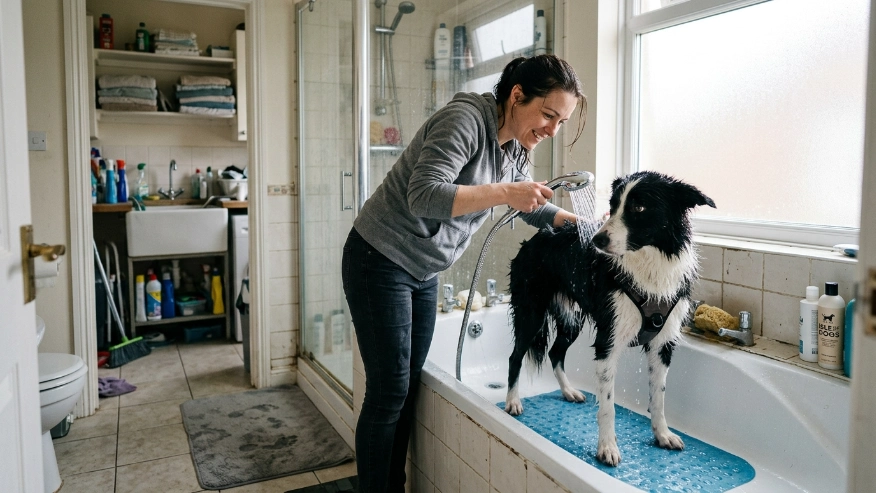
A bathtub or walk-in shower is usually the easiest choice for an adult Border Collie. The best location gives your dog stable footing and gives you enough room to rinse every area.
I care more about safety than convenience here. A beautiful bathroom setup is useless if the dog keeps sliding.
Bathtub vs Shower vs Utility Sink
| Indoor Location | Best For | Main Advantage | Possible Problem |
|---|---|---|---|
| Bathtub | Most adult Border Collies | Contains water well | Dog must step over a high side |
| Walk-in shower | Older or reluctant dogs | Easy entry and exit | Water can escape easily |
| Utility sink | Small puppies | Comfortable working height | Usually too small for adults |
Put a non-slip mat on the bathing surface. I also place another mat or towel where the dog will step out.
Close the bathroom door before starting. A wet Border Collie escaping through the house creates a problem remarkably fast.
What Should You Do Before the Bath?
Preparation makes indoor Border Collie bathing much easier. I want everything within reach before the first paw enters the tub.
Gather Your Supplies
- Dog-safe shampoo
- Non-slip rubber mat
- Two or three absorbent towels
- Brush and metal comb
- Handheld sprayer, cup, or pitcher
- Damp washcloth for the face
- High-value treats
- Cool or adjustable pet dryer, if you use one
I also remove bath mats, toilet paper, clothing, and anything else I don’t want soaked. The shake usually happens before I can stop it.
Brush Before Adding Water
Brush the coat thoroughly while it’s dry. The AKC’s double-coat grooming guidance explains why regular coat maintenance matters for dense-coated dogs.
Work through loose fur and small tangles gently. Pay extra attention behind the ears, under the front legs, around the tail, and along feathered areas.
I don’t try to solve a severe mat by soaking it. Water can tighten some tangles and make the next part harder.
If a mat sits close to the skin, a professional groomer is safer than attacking it with household scissors.
How Do You Bathe a Border Collie Indoors?
The simplest method is slow, organized, and gentle. You don’t need aggressive scrubbing or strong water pressure.
- Secure the footing. Place your dog on the non-slip mat before turning on the water.
- Check the temperature. Use comfortable lukewarm water and test it against your wrist or forearm.
- Wet from the neck down. Work slowly so water penetrates the dense coat instead of running over the surface.
- Apply dog shampoo. Massage it gently through the coat according to the product directions.
- Clean the legs and underside. Mud often hides on the belly, paws, chest, and feathering.
- Handle the face separately. Use a damp cloth rather than spraying water directly toward the eyes and ears.
- Rinse thoroughly. Keep rinsing until the coat feels clean and no visible lather remains.
- Squeeze out excess water. Use your hands gently before reaching for the towels.
The PetMD home dog bathing guide also recommends a non-slip environment, pet-safe shampoo, gentle face cleaning, and careful drying.
Which Shampoo Should You Use?
Use a shampoo formulated for dogs. I avoid using my own shampoo because canine skin and coat care needs are different from ours.
For a healthy dog, a gentle everyday dog shampoo is usually enough. Medicated products are different and should follow veterinary instructions.
- Normal coat: Choose a mild dog shampoo designed for routine bathing.
- Sensitive skin: Ask your veterinarian about an appropriate gentle formula.
- Skin treatment: Follow the prescribed product, contact time, and bathing schedule.
Vet note: Persistent redness, sores, hair loss, strong odor, or ongoing itching deserves veterinary attention rather than repeated home shampoo experiments.
Section Takeaway: A good indoor bath is more about control and thorough rinsing than heavy scrubbing. Keep the water comfortable, protect the face, and remove all shampoo residue.
How Should You Dry a Border Collie Indoors?
Drying deserves almost as much attention as washing. A Border Collie’s undercoat can remain damp after the surface looks nearly dry.
Start With Towels
I press and blot the coat instead of rubbing it wildly. Hard rubbing can twist longer rough-coat hair into tangles.
Start with one towel, then change it when saturated. A second dry towel removes much more moisture than fighting with one soaked towel.
Can You Use a Blow Dryer?
Yes, but keep the airflow cool or comfortably low. Avoid concentrating hot air on one patch of skin.
Move the dryer continuously and separate the coat with your fingers or brush. Give nervous dogs breaks instead of forcing them through the noise.
- Dry the chest and belly.
- Check behind the ears.
- Dry under the front legs.
- Check the tail and rear feathering.
- Feel through the undercoat for remaining dampness.
Keep your dog indoors until the coat is dry, especially during cold weather. I also avoid sending a freshly washed dog straight into a dusty yard.
How Often Does a Border Collie Need an Indoor Bath?
There isn’t one perfect bathing schedule for every Border Collie. Coat condition, activity, dirt exposure, skin health, and season all affect the answer.
A practical starting point for many healthy dogs is roughly every four to eight weeks when a full bath is needed. Some clean dogs can comfortably go longer.
Veterinary guidance on dog bathing frequency also stresses that breed, coat, lifestyle, health, and season affect how often a dog should be washed.
When Might an Earlier Bath Make Sense?
- Your Border Collie rolled in something foul.
- Mud has worked deeply into the coat.
- The coat feels unusually dirty or greasy.
- Your dog was exposed to something that should be washed away.
- Your veterinarian prescribed a specific bathing routine.
When Can You Skip the Full Bath?
A muddy paw doesn’t always justify soaking the whole dog. I often clean only the affected area.
A damp dog-safe cloth, paw rinse, brush, or towel can handle many everyday messes. This reduces both work and unnecessary full-body washing.
Vet note: Dogs with allergies, infections, or other skin conditions may need a different schedule. Follow your veterinarian’s instructions for medicated bathing.
What Indoor Bathing Mistakes Should You Avoid?
Most indoor bath problems come from rushing. A few minutes of preparation prevents many of them.
- Using slippery flooring: A nervous dog becomes less cooperative when its feet cannot grip.
- Skipping the pre-bath brush: Loose undercoat and tangles become harder to manage when soaked.
- Using hot water: Warm and comfortable is enough.
- Spraying the face: Direct water around the eyes, nose, and ears can make dogs resist bathing.
- Using human shampoo: Choose a product made for dogs instead.
- Rinsing too quickly: Shampoo can hide deep inside a thick coat.
- Using excessive dryer heat: High heat can make drying uncomfortable and unsafe.
- Leaving the undercoat damp: Check below the surface before deciding the dog is finished.
Another mistake is bathing every time you see dirt. Border Collies often pick up dry dust and debris that comes out with brushing.
I check the coat first. If brushing or spot cleaning solves the problem, I save the full bath for another day.
How Can You Make Indoor Baths Less Stressful?
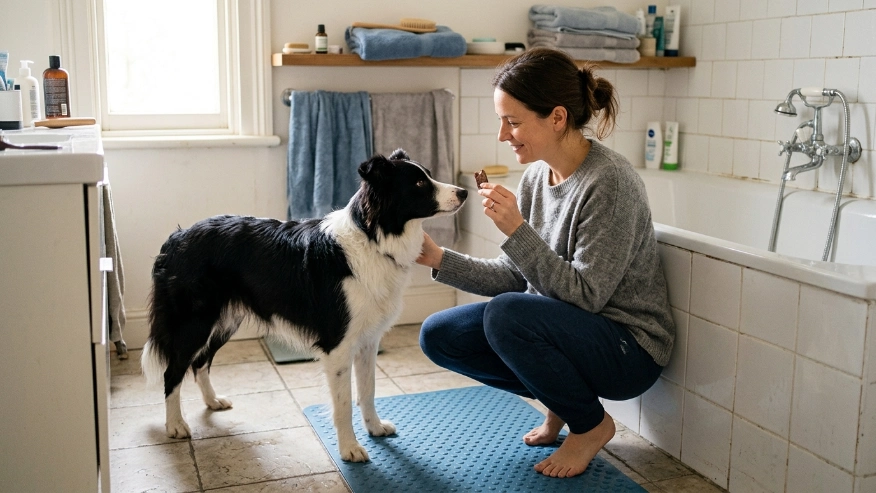
Don’t make your dog’s first lesson a complete bath. Short, easy practice sessions can teach that the bathroom isn’t a trap.
Build the Routine in Small Pieces
- Let your dog enter the dry bathroom and reward calm behavior.
- Practice standing on the non-slip mat.
- Reward a few seconds in the empty tub or shower.
- Introduce quiet running water from a distance.
- Practice touching paws, chest, tail, and legs.
- End the session before your dog becomes overwhelmed.
Border Collies learn patterns quickly. I keep the routine predictable instead of suddenly changing equipment, location, and handling every bath.
Watch for stress signals such as repeated lip licking, tucked posture, freezing, escape attempts, or refusal of normally valuable treats. Slow the process when your dog starts struggling.
What Worked Best in My Routine
The biggest improvement for me came from preparing before the dog entered the room. I once tried gathering towels midway through a bath, which ended with wet paw prints down the hallway.
Now the door closes, towels sit within reach, and treats are ready. That tiny change makes the whole process calmer.
I also keep bath sessions businesslike. I wash what needs washing, rinse carefully, dry the coat, reward the dog, and finish.
Section Takeaway: Calm indoor bathing is a trained routine, not a test of strength. Stable footing, gradual exposure, rewards, and predictable handling make future baths easier.
Indoor Border Collie Bathing FAQ
Can I Bathe My Border Collie in My Bathtub?
Yes. A home bathtub works well for many adult Border Collies when you add a non-slip mat and can safely help the dog enter and exit. Keep shampoo, towels, and rinsing equipment within reach before you start.
Can I Bathe a Border Collie in a Shower?
Yes. A walk-in shower can be especially convenient for dogs that dislike climbing over a bathtub wall. Use secure footing, gentle water pressure, lukewarm water, and a controlled exit area for drying.
Should I Brush My Border Collie Before or After Bathing?
Brush before bathing to remove loose fur, surface debris, and manageable tangles. After the coat is thoroughly dry, another gentle brushing can separate the coat and remove additional loose hair.
Can I Use Human Shampoo on a Border Collie?
Use shampoo made specifically for dogs instead. If your Border Collie has sensitive, itchy, inflamed, or infected skin, ask your veterinarian which product is suitable rather than experimenting with household cleansers.
How Do I Keep Water Out of My Border Collie’s Ears?
Avoid directing the sprayer into the ear opening. I wash the head and face with much more control than the body, using a damp cloth around sensitive areas instead of spraying them directly.
Why Does My Border Collie Still Smell After a Bath?
A coat may smell if it remains damp or wasn’t rinsed completely. However, persistent strong odor can also accompany skin or ear problems, so contact your veterinarian if odor quickly returns or comes with redness, discharge, itching, or discomfort.
Can I Let My Border Collie Air-Dry Indoors?
Partial air-drying may work in a warm room, but the dense undercoat can stay wet longer than expected. Towel off as much water as possible and check the coat down to the skin before considering the drying process complete.
Vet note: Seek veterinary advice for ongoing odor, inflamed skin, sores, excessive scratching, unusual ear discharge, or a sudden change in coat condition.
Final Takeaway
Indoor Border Collie bathing doesn’t need to be complicated. A safe surface, lukewarm water, dog shampoo, thorough rinsing, and patient drying cover the essentials.
The biggest lesson I’ve learned is to prepare first. When everything is ready before the water starts, both the dog and the person holding the shampoo have a much better day.
Keep full baths purposeful, use spot cleaning for smaller messes, and pay attention to your dog’s skin and coat. With a consistent routine, indoor bath day becomes another normal part of Border Collie care.

1 Comment
Pingback: Best Dog Bathtub for Border Collie: 2026 Buying Guide