

Dry skin makes bath time confusing. You want a clean Border Collie, but you do not want more flakes or itching afterward.
I use a simple approach: clean only as much as the coat needs, rinse longer than feels necessary, and never ignore a skin change. This guide explains how to do that safely in 2026.
In This Guide
- Can bathing make a Border Collie’s dry skin worse?
- How often should you bathe a Border Collie with dry skin?
- What shampoo is best for a Border Collie with dry skin?
- How do you bathe a Border Collie with dry skin?
- How should you rinse and dry a Border Collie’s double coat?
- What should you do after the bath?
- When is dry skin a reason to call the vet?
- Frequently asked questions
- Final takeaway
Can bathing make a Border Collie’s dry skin worse?
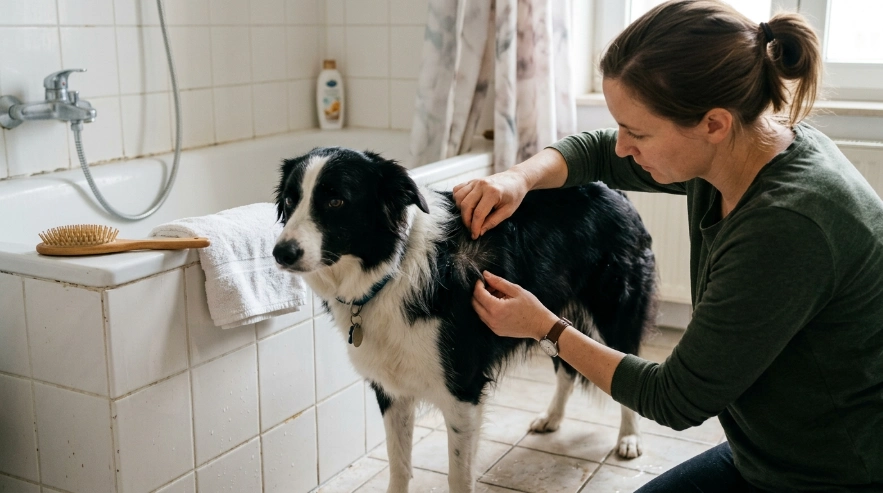
Yes. Too-frequent bathing, harsh shampoo, hot water, poor rinsing, or high-heat drying can leave dry skin more irritated.
A Border Collie has a dense, weather-resistant double coat. Both rough- and smooth-coated Borders carry an undercoat beneath the outer coat, so products and moisture can stay close to the skin.
A Border Collie’s dry skin is skin that has lost enough moisture or barrier protection to become flaky, tight, scaly, or itchy. Dryness is a symptom, not a single diagnosis.
The American Kennel Club’s double-coat guidance explains that Border Collies have a medium double coat. That structure helps protect the skin, but it also makes proper brushing and drying important.
- Overbathing: Repeated shampooing can remove natural oils faster than the skin replaces them.
- Wrong shampoo: Human shampoo or strong fragrances may irritate sensitive canine skin.
- Residue: Incomplete rinsing can leave cleanser against the skin beneath the undercoat.
- Dry air: Winter heating and low humidity can worsen flaking even when your bath routine has not changed.
- Underlying disease: Allergies, parasites, infections, and other conditions can look like simple dryness.
With my own Border Collies, the easy mistake has been focusing on lather instead of rinsing. A thick coat can look clean while still holding product near the skin.
Vet note: New or worsening dry skin should not be diagnosed from bathing history alone. Ask your veterinarian if the skin is red, painful, smelly, crusted, or intensely itchy.
How often should you bathe a Border Collie with dry skin?
There is no single perfect calendar. Bathe when your dog needs cleaning, then adjust frequency based on skin condition, activity, climate, and veterinary advice.
For a Border Collie with uncomplicated dryness, I would avoid “just because it has been a week” baths. A dirty dog needs cleaning, but a clean dog with flakes usually needs skin evaluation more than extra shampoo.
| Skin or coat situation | Bath approach | Best next step |
|---|---|---|
| Clean coat, mild flakes only | Skip an unnecessary shampoo bath | Brush, monitor, and review humidity or recent products |
| Muddy or dirty coat with mild dryness | Bathe once using a gentle dog shampoo | Rinse thoroughly and track itching for 24–48 hours |
| Dryness after frequent baths | Increase time between routine baths | Use brushing or spot-cleaning when practical |
| Red, greasy, odorous, sore, or very itchy skin | Do not keep experimenting with shampoos | Ask a veterinarian about diagnosis and bathing frequency |
Veterinary guidance may call for more frequent medicated bathing when a diagnosed skin condition needs it. That schedule is treatment, not ordinary grooming.
After swimming, a clean-water rinse may remove salt, chlorine, or debris without a full shampoo. Dry the undercoat afterward.
Vet note: If a veterinarian prescribed a medicated shampoo, follow its contact time and frequency instead of a general grooming schedule.
What shampoo is best for a Border Collie with dry skin?
Choose a shampoo made for dogs and aimed at sensitive or dry skin. Simple, moisturizing formulas are a safer starting point than strongly scented or aggressive degreasing products.
The ASPCA grooming guidance recommends pet-formulated shampoo and notes that some human products can irritate pets. That matters more when the skin is already dry.
Ingredients and label features I look for
- Dog-specific pH: The label should clearly say the product is formulated for dogs.
- Moisturizing formula: Products marketed for dry or sensitive skin are usually a better fit.
- Oatmeal: Colloidal oatmeal is commonly used to soothe mild itching and dryness.
- Low fragrance: Unscented or lightly scented choices reduce one possible source of irritation.
- Clear directions: You should know whether to dilute, how long to leave it on, and how thoroughly to rinse.
PetMD’s dog-shampoo guidance also recommends products designed for canine skin and matching the shampoo to the dog’s skin issue. A medicated product is not automatically better.
What I avoid
- Routine use of human shampoo.
- Strong degreasers for ordinary grooming.
- Heavy perfume when the skin is reactive.
- Essential-oil-heavy formulas without veterinary guidance.
- Switching among several new products at once.
If one product causes more scratching after a bath, stop using it. Keep the bottle or ingredient list so your veterinarian can see what touched the skin.
Vet note: Prescription shampoos can contain active antibacterial or antifungal ingredients. Use them only for the condition and schedule your veterinarian recommends.
How do you bathe a Border Collie with dry skin?
Keep the bath gentle, controlled, and short. The goal is to clean the coat without scrubbing irritated skin or leaving product behind.
- Brush before wetting. Remove loose fur, dirt, and small tangles with a pin brush, slicker, or comb that suits your dog’s coat.
- Check the skin. Part the coat at the neck, back, belly, armpits, groin, tail base, and behind the ears.
- Use lukewarm water. Wet the coat gradually, starting below the neck and working backward.
- Dilute shampoo if directed. Follow the label rather than guessing a stronger mixture.
- Work through the coat gently. Use your fingertips, not your nails, and avoid hard scrubbing.
- Keep shampoo away from eyes and ears. Use a damp cloth for the face when needed.
- Rinse until the water is clear. Then rinse again through the thickest areas.
- Blot with towels. Press moisture out instead of rubbing the coat into tangles.
I pay extra attention to the chest, feathering, belly, and tail area. Those spots can hold diluted shampoo long after the back feels rinsed.
How much shampoo should you use?
Use enough to distribute a light lather through the coat, not enough to create a mountain of foam. More shampoo makes rinsing harder and does not guarantee a cleaner dog.
Should you scrub flaky patches?
No. Flakes are not dirt that needs to be scraped away.
Massage gently and let the shampoo do the work. Scrubbing can irritate already-compromised skin and may create small abrasions.
Section Takeaway: A dry-skin bath should feel gentle from start to finish. Thorough rinsing matters more than heavy lather or hard scrubbing.
How should you rinse and dry a Border Collie’s double coat?
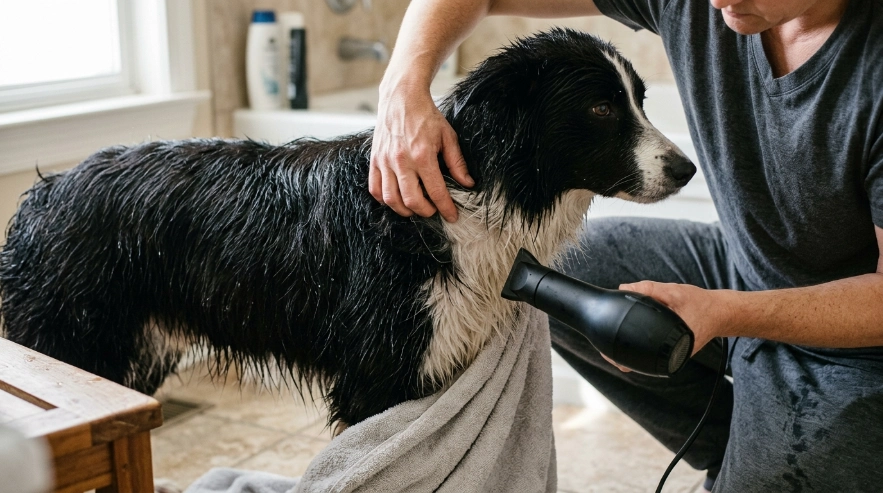
Rinse until you cannot feel any slippery shampoo at the skin. Then focus on removing moisture from the undercoat without overheating your dog.
Border Collies come in rough and smooth coat types, but both are double-coated. The rough coat usually needs more time around feathering and longer hair.
- Neck and shoulders: Lift the coat so water reaches the skin rather than running over the top.
- Chest and armpits: Rinse from several angles because dense hair can trap suds.
- Belly and groin: Use gentle water pressure on these more sensitive areas.
- Tail and rear feathering: Separate longer hair with your fingers during the final rinse.
- Paws: Rinse between toes if shampoo or outdoor residue reached them.
After rinsing, squeeze water gently from longer coat sections. Follow with absorbent towels and blot rather than vigorous rubbing.
If you use a dryer, choose cool or low heat and keep the airflow moving. Never hold hot air close to one patch of skin.
Why complete drying matters
A damp undercoat can stay wet after the surface looks dry. That trapped moisture may increase discomfort and can contribute to matting or skin problems.
I run my fingers against the coat direction to feel near the skin. If the undercoat still feels cool and damp, drying is not finished.
Vet note: Stop drying and inspect the skin if your dog becomes painful, develops sudden redness, or cannot tolerate airflow on one area.
What should you do after the bath?
Give the skin time to settle, then watch what happens over the next day or two. A successful bath should not create new redness, intense scratching, or a sudden increase in flakes.
Use a simple post-bath routine
- Brush when fully dry: Remove loose undercoat gently and check for hidden tangles.
- Wash bedding: Clean bedding can reduce dirt, pollen, and residue returning to the coat.
- Track scratching: Note whether itching improves, stays the same, or becomes worse.
- Check humidity: Heated indoor air can be drying during colder months.
- Keep products consistent: Do not add sprays, oils, and conditioners all at once.
Do not apply human lotion to your Border Collie’s skin unless your veterinarian specifically approves it. Dogs lick their coats, so topical products need to be canine-safe.
Regular brushing is useful between baths because it removes debris and spreads natural oils through the coat. During heavy shedding, you may need to brush more often.
Diet also affects overall skin and coat health, but supplements are not a quick fix for unexplained dryness. Ask your veterinarian before adding oils, vitamins, or fatty-acid products.
Vet note: Persistent dry skin can have causes that grooming cannot solve. A veterinarian may need to check for parasites, infection, allergy, or another condition.
When is dry skin a reason to call the vet?
Call your veterinarian when dry skin is persistent, spreading, uncomfortable, or paired with other changes. Simple winter flaking should not be assumed when the skin looks inflamed or infected.
The signs below are more important than the amount of dandruff you can see.
- Constant scratching or chewing: Especially when it interrupts sleep or normal activity.
- Red or hot skin: Inflammation can signal more than simple dryness.
- Hair loss: Bald patches or broken hair deserve investigation.
- Scabs or open sores: These may develop from self-trauma or skin disease.
- Strong odor: A musty or unpleasant smell can accompany skin or ear problems.
- Greasy scaling: Oily flakes are different from a mildly dry coat.
- Swelling or hives: Seek prompt veterinary advice, especially after a new product.
PetMD notes that dry, flaky skin can have many underlying causes, including overbathing, environmental dryness, parasites, allergies, and infections. The right treatment depends on the cause.
That is why I avoid cycling through shampoos when a Border Collie keeps itching. Each new product adds another variable and can delay a useful diagnosis.
Vet note: Seek urgent veterinary care if skin changes appear with facial swelling, trouble breathing, collapse, severe pain, or rapidly worsening illness.
Section Takeaway: Treat dry skin as a symptom, not a cosmetic problem. If it persists or comes with redness, odor, sores, hair loss, or severe itching, get veterinary help.
Frequently asked questions
Can I bathe my Border Collie if the skin is already flaky?
Yes, if the dog is dirty and the skin is only mildly flaky. Use lukewarm water and gentle dog shampoo, rinse thoroughly, and stop if the skin looks painful, red, or irritated.
Will bathing more often remove Border Collie dandruff?
Not necessarily. Frequent shampooing can worsen dryness by removing protective skin oils, while dandruff can also come from allergies, parasites, infection, or environmental dryness.
Is oatmeal shampoo good for a Border Collie with dry skin?
A gentle dog shampoo containing colloidal oatmeal may help soothe mild dry or itchy skin. It does not treat every cause, so persistent symptoms still need veterinary evaluation.
Can I use baby shampoo on my Border Collie?
A dog-formulated shampoo is the better routine choice. Products made for people are not designed around canine skin, and fragrances or detergents may irritate a sensitive dog.
Should I use conditioner on a dry Border Collie coat?
A dog-specific moisturizing conditioner can be useful when the label suits dry or sensitive skin. Introduce one product at a time, rinse as directed, and avoid human conditioners.
How do I know if shampoo is causing the dryness?
Look for a pattern. If flaking, redness, or scratching consistently becomes worse after using the same product, stop it and discuss the reaction with your veterinarian.
Can I let my Border Collie air-dry after a bath?
Partial air-drying is possible in a warm environment, but the dense undercoat can stay damp. Towel-blot well and make sure the coat is dry to the skin before prolonged rest or cold exposure.
Final takeaway
When a Border Collie has dry skin, gentler grooming usually beats more grooming. Bathe only when needed, use dog-specific moisturizing products, rinse deeply, and dry the double coat completely.
Most important, watch the skin rather than chasing flakes. If dryness keeps returning or comes with redness, odor, sores, hair loss, or strong itching, make a veterinary appointment.
A careful bath can improve comfort and cleanliness. A good skin-care plan starts with knowing when the problem needs more than a bath.