

Quick Answer
For most healthy Border Collies, conditioner doesn’t need its own weekly schedule. I recommend using a dog-safe conditioner after shampooing when the coat feels dry, tangles easily, or needs extra moisture, which for many dogs means conditioning on normal bath days rather than between baths. The Border Collie’s double coat also makes regular brushing more important than frequent washing.
A practical conditioner routine
- Normal coat: Condition after shampoo baths when extra softness or detangling is needed.
- Dry coat: Use a moisturizing dog conditioner more consistently after bathing.
- Muddy lifestyle: Condition after shampooing if repeated cleaning starts drying the coat.
- Heavy shedding: Focus first on brushing and undercoat removal, then condition during bath days if helpful.
- Sensitive skin: Ask your veterinarian which formula and frequency are appropriate.
The simplest rule
- Condition based on your Border Collie’s coat and skin condition, not because a calendar says it’s time.
Border Collie conditioner frequency sounds like a simple question, but there isn’t one schedule that fits every dog. A smooth-coated Collie who stays mostly clean has different needs from a rough-coated farm dog that swims, rolls in mud, and collects burrs.
I’ve found it more useful to watch the coat itself. This guide explains when conditioner helps, when it isn’t necessary, and how to fit it into a healthy Border Collie grooming routine.
In This Guide
- How Often Should You Condition a Border Collie?
- Why Does a Border Collie’s Double Coat Change the Routine?
- How Does Conditioner Frequency Change by Lifestyle?
- When Might a Border Collie Need Conditioner More Often?
- When Should You Condition Less Often?
- What Type of Conditioner Is Best for a Border Collie?
- How Do You Condition a Border Collie Correctly?
- When Is a Coat Problem More Than a Grooming Issue?
- Frequently Asked Questions
How Often Should You Condition a Border Collie?
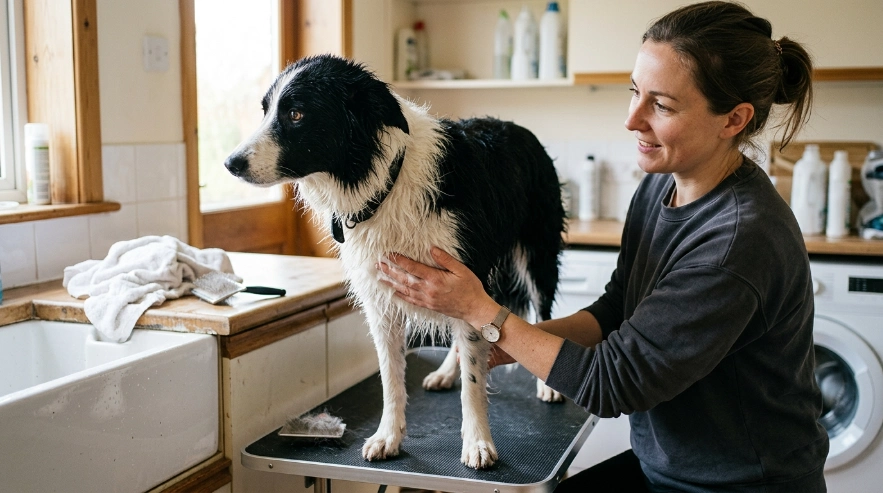
A healthy Border Collie usually needs conditioner when it is useful, not at a fixed weekly interval. For routine home grooming, that generally means applying it after shampooing rather than scheduling separate conditioning sessions.
Some Border Collies benefit from conditioner after nearly every full shampoo bath. Others have naturally manageable coats and need it only occasionally.
Think in terms of bath days
I treat conditioner as one part of a complete bath rather than an independent treatment. If the coat doesn’t need shampoo, it usually doesn’t need a traditional rinse-out conditioner either.
The biggest exception is a leave-in product recommended for a particular coat or skin need. Always follow that product’s label.
- Clean, soft coat: Conditioner may be optional.
- Dry or rough coat: Conditioner can be useful after shampooing.
- Feathering that tangles: A light conditioner can improve combing.
- Frequent shampoo baths: Conditioning may help replace moisture removed during washing.
- Skin disease: Follow veterinary directions instead of a general grooming schedule.
VCA notes that bathing needs vary with age, lifestyle, haircoat, and health. It also recommends a conditioning product after shampooing when restoring moisture is helpful.
That individualized approach makes sense for Border Collies. These dogs can live dramatically different lives despite sharing the same breed.
Don’t confuse conditioning with grooming frequency
Your Border Collie may need brushing several times between conditioner applications. During a heavy shed, brushing can become an almost daily job.
Conditioner cannot remove a packed undercoat by itself. A proper brush, comb, and patient line-by-line grooming do far more.
Why Does a Border Collie’s Double Coat Change the Routine?
A Border Collie’s coat has two functional layers: a softer insulating undercoat and protective outer guard hairs. Both rough-coated and smooth-coated Border Collies have this double-coat structure.
That matters because coat care should preserve those layers rather than coat them with excessive product.
What is a Border Collie’s double coat?
A Border Collie’s double coat is a two-layer haircoat consisting of a dense undercoat beneath tougher outer guard hairs. The two layers help protect the skin and provide insulation.
The American Kennel Club describes Border Collies as having dense, weather-resistant double coats. It also recommends regular brushing for both coat varieties.
You can read broader AKC guidance on choosing dog shampoo when building your bathing routine.
Rough coat versus smooth coat
Rough-coated Border Collies usually have more noticeable feathering around the chest, legs, belly, and tail. These longer areas can catch debris and form tangles more easily.
Smooth-coated dogs have shorter outer hair. They can still shed heavily because the undercoat remains part of the coat.
- Rough coat: Conditioner may be more useful for feathering, tangles, and combability.
- Smooth coat: Heavy conditioning is often unnecessary unless the hair or skin feels dry.
- Either coat: Brushing and complete drying remain essential.
As of 2026, the basic principle hasn’t changed: Border Collie coat care depends more on coat condition and lifestyle than on whether the calendar says another treatment is due.
How Does Conditioner Frequency Change by Lifestyle?
There is no official Border Collie conditioner calendar. However, you can use your dog’s lifestyle and coat condition to decide when conditioning makes practical sense.
The ranges below are starting points for healthy dogs, not medical treatment schedules.
| Border Collie Situation | Typical Bath Pattern | Conditioner Approach | Main Priority |
|---|---|---|---|
| Healthy indoor companion | As dirty or odorous; often several weeks apart | Use after shampoo when coat needs softness | Regular brushing |
| Rough-coated, tangle-prone dog | As needed | Often useful after full shampoo baths | Detangling and thorough rinsing |
| Working or farm Border Collie | More often when genuinely dirty | Condition if repeated shampooing dries the coat | Removing mud and debris |
| Heavy seasonal shedding | Bath when useful for coat release | Optional after shampoo | Undercoat removal |
| Dry, itchy, or inflamed skin | Veterinarian-directed | Veterinarian-directed formula and frequency | Finding the underlying cause |
Weather also changes the equation. A dog working outside through a wet spring may need more cleaning than the same dog during a dry winter.
Watch the results after each bath. A soft, clean coat that separates easily when brushed is usually telling you the routine is working.
When Might a Border Collie Need Conditioner More Often?
You may want to use conditioner consistently after baths when your Border Collie’s coat becomes dry, static-prone, tangled, or difficult to comb. Frequent exposure to water and shampoo can also make moisture replacement more useful.
The goal isn’t to make the coat feel artificially silky. It’s to keep it manageable without leaving greasy residue.
Your dog gets muddy frequently
Border Collies often find mud with impressive efficiency. Working dogs, hiking companions, and enthusiastic swimmers may need more baths than dogs with quieter lifestyles.
If those baths involve shampoo each time, a mild conditioner can help prevent the coat from feeling increasingly dry.
Feathering tangles after baths
The longer hair behind the legs, under the belly, and around the tail can knot as it dries. Conditioner may reduce friction and make combing easier.
Still, remove obvious tangles before bathing. Water can tighten existing knots.
The air is dry
Indoor heating and seasonal weather changes can affect skin and coat moisture. Some dogs develop more static or flaky-looking coats during dry periods.
In those situations, I would adjust the product before dramatically increasing bath frequency.
- Choose a gentle dog-specific moisturizing conditioner.
- Use only the amount recommended on the label.
- Distribute it through the coat instead of piling it onto one spot.
- Rinse as directed.
- Monitor the skin for redness or increased itching.
Section Takeaway: More frequent conditioning makes the most sense when more frequent shampooing, tangles, or noticeable dryness create a real need. Don’t add baths simply to apply conditioner.
When Should You Condition Less Often?
Use conditioner less often when your Border Collie’s coat already feels clean, flexible, and easy to brush. More product isn’t automatically better for a double coat.
A heavy residue can make the coat feel flat or greasy and may attract dirt faster.
The coat feels coated after drying
If clean hair feels waxy or unusually heavy, first check how much product you’re using. Incomplete rinsing is another common problem.
Cut back the amount or choose a lighter formula next time.
You’re bathing a clean dog too frequently
Conditioner shouldn’t become a reason to shampoo a Border Collie every few days. Most routine grooming can happen without water.
PetMD notes that bathing schedules vary greatly according to breed, coat, lifestyle, season, and individual need.
Your dog develops irritation
Stop using a cosmetic product if you notice new redness, bumps, excessive scratching, or discomfort. Rinse away any residue you can safely remove.
Vet note: Persistent itching, inflamed skin, hair loss, sores, odor, or recurring dandruff deserves veterinary attention rather than repeated product changes.
What Type of Conditioner Is Best for a Border Collie?
Choose a conditioner formulated specifically for dogs. Human conditioner isn’t designed around canine skin and coat needs.
VCA specifically advises using pet shampoos and conditioners because human grooming products can irritate pets.
For more general coat-care guidance, see VCA’s dog grooming and coat-care guidance.
Look for the lightest product that solves the problem
A Border Collie doesn’t usually need an extremely heavy conditioner intended to make human hair slick. You want softness and manageability while preserving the natural texture of the coat.
- Moisturizing conditioner: Useful when the coat feels dry after shampooing.
- Detangling conditioner: Helpful for longer rough-coat feathering.
- Hypoallergenic formula: Worth discussing with your veterinarian for sensitive dogs.
- Leave-in conditioner: Useful only when the label specifically allows leave-in use.
- Medicated conditioner: Use according to veterinary instructions.
PetMD also notes that not every dog requires conditioner, while dogs with dry skin or longer coats may benefit from added smoothing and moisture. Their dog shampoo and conditioner guidance also emphasizes using products made for dogs.
Avoid choosing by fragrance alone
A strong perfume doesn’t tell you whether a product suits your dog. Coat response and skin comfort matter more.
If your Border Collie scratches more after a new product, stop and reassess instead of masking the problem with another scented formula.
How Do You Condition a Border Collie Correctly?
Apply conditioner only after thoroughly rinsing shampoo unless the product directions say otherwise. Work methodically so the product reaches the coat without being dumped onto one area.
The entire process should stay calm and predictable.
- Brush before bathing. Remove loose undercoat, burrs, and tangles before getting the coat wet.
- Wet the coat thoroughly. Dense Border Collie fur can resist water at first, so work down to the undercoat.
- Shampoo with a dog-safe product. Massage gently rather than aggressively scrubbing the hair together.
- Rinse the shampoo completely. Pay attention to the chest, belly, armpits, and feathering.
- Apply conditioner as directed. Spread it through areas that need moisture or detangling.
- Respect the contact time. Follow the bottle instead of guessing how long to leave it on.
- Rinse as instructed. Traditional rinse-out conditioners shouldn’t remain as hidden residue.
- Dry thoroughly. Towel blot first, then use cool or low airflow if your dog accepts a dryer.
- Brush again when appropriate. Finish by separating the coat and checking for remaining tangles.
Drying matters as much as conditioning
A dense undercoat can remain damp long after the surface looks dry. Pay special attention to the chest, belly, behind the ears, and thick feathering.
Don’t rub the coat aggressively with a towel. Blotting and squeezing out water helps reduce new tangles.
Section Takeaway: A good conditioner cannot rescue a rushed bath. Brushing before washing, complete rinsing, and thorough drying are just as important.
When Is a Coat Problem More Than a Grooming Issue?
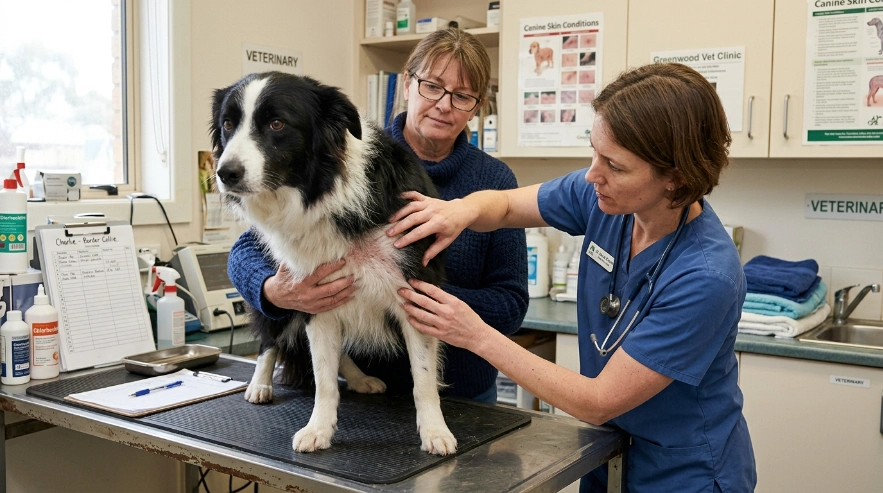
A dull or difficult coat isn’t always a conditioner problem. Persistent changes in the skin or hair can reflect allergies, parasites, infection, nutrition issues, or another health condition.
That’s why I wouldn’t keep increasing conditioner when the coat continues getting worse.
Watch for warning signs
- Persistent scratching or chewing
- Red, inflamed, or painful skin
- Patchy hair loss
- Scabs or open sores
- Strong or unusual skin odor
- Recurring greasy or flaky skin
- Sudden major changes in coat texture
A conditioner can make dry hair feel softer, but it doesn’t diagnose the reason a dog’s skin became unhealthy.
Vet note: If your Border Collie has ongoing itching, skin lesions, hair loss, infection signs, or repeated coat problems, ask your veterinarian before changing bathing frequency or trying medicated products.
Medicated products follow different rules
Veterinary shampoos and conditioners may have specific contact times and treatment schedules. Those instructions override a normal cosmetic grooming routine.
Don’t substitute a general moisturizer for prescribed treatment. Skin disease needs the correct diagnosis first.
Frequently Asked Questions
Should I condition my Border Collie after every bath?
Not necessarily. If your Border Collie’s coat is healthy and easy to brush, conditioner may be optional during some baths. It becomes more useful when shampooing leaves the coat dry, when rough-coat feathering tangles, or when your veterinarian recommends a moisturizing product.
Can I condition my Border Collie once a week?
A healthy Border Collie usually doesn’t need a weekly rinse-out conditioner simply because seven days have passed. If you’re also bathing weekly, make sure that frequency suits your dog’s lifestyle, product choice, and skin condition rather than following a fixed calendar.
Do smooth-coated Border Collies need conditioner?
Smooth-coated Border Collies can use conditioner, but many don’t need heavy conditioning. Their shorter outer coat may tangle less than rough feathering. Use a light dog-safe product when the hair feels dry or when repeated shampooing makes the coat harder to manage.
Does conditioner help Border Collie shedding?
Conditioner can make loose hair easier to work through during a bath, but it isn’t a replacement for brushing. During seasonal shedding, consistent brushing and undercoat removal are usually the most important parts of managing loose Border Collie hair.
Can I use human conditioner on my Border Collie?
It’s better to use a conditioner formulated for dogs. Human hair products are designed for human skin and hair chemistry and may irritate canine skin. Choose a dog-specific formula and follow its directions for dilution, contact time, and rinsing.
What if my Border Collie’s coat feels dry even after conditioning?
First check the shampoo, bathing frequency, rinsing, and product choice. If dryness continues or comes with itching, flakes, redness, odor, or hair loss, speak with your veterinarian because the problem may involve the skin rather than the conditioner.
Can I use leave-in conditioner between Border Collie baths?
Yes, if the product is specifically formulated and labeled as a leave-in conditioner for dogs. Use it sparingly and according to the label. Stop if the coat becomes greasy or your dog develops itching, redness, or discomfort.
Border Collie conditioner frequency doesn’t need to be complicated. Start with your dog’s actual coat condition, use dog-safe products, and remember that brushing does most of the day-to-day work.
If the coat stays clean, comfortable, tangle-free, and easy to manage, your routine is probably doing its job. Adjust when your Border Collie’s lifestyle, season, or skin condition gives you a reason to change it.