

Quick Answer
Yes, Border Collies are often photographed with an expression that looks like a smile. A relaxed open mouth, soft eyes, and loose facial muscles usually accompany happiness or comfortable panting, but dogs do not smile exactly like humans. Because this breed is highly responsive to people, owners who learn how a Border Collie shows love can interpret that expression more accurately.
Signs the “smile” is friendly
- Soft eyes: The eyelids look relaxed rather than wide, fixed, or intensely focused.
- Loose mouth: The jaw hangs naturally, with no wrinkles around the muzzle.
- Relaxed ears: The ears rest naturally or move casually toward interesting sounds.
- Wiggly posture: The body remains loose instead of becoming stiff or forward-leaning.
- Friendly context: The expression appears during play, greeting, cuddling, or calm interaction.
How to verify it
- Read the whole dog: Check the eyes, ears, tail, breathing, posture, and situation rather than judging the mouth alone.
Border Collies, sometimes called Borders or working sheepdogs, have wonderfully expressive faces. After living and training with them, I’ve learned that one open-mouthed “grin” can carry several meanings.
This guide explains why Border Collies appear to smile, how to recognize a happy dog, and when a similar expression may signal stress.
In This Guide
- Do Border Collies Really Smile?
- Why Do Border Collies Look So Smiley?
- How Can You Tell Whether the Smile Means Happiness?
- Happy Smile vs Panting, Appeasement, and Warning
- When Are Border Collies Most Likely to Smile?
- Can You Encourage a Border Collie to Smile?
- When Should a Smiling Expression Concern You?
- Frequently Asked Questions
- The Best Way to Read Your Border Collie
Do Border Collies Really Smile?
Border Collies can make facial expressions that humans recognize as smiles. However, canine expressions do not carry the exact social meaning of a human smile.
A Border Collie smile is a human description of a relaxed or tooth-showing facial expression. It is not proof of one specific emotion.
What a typical Border Collie smile looks like
The most familiar version appears after play or during a friendly greeting. The mouth opens slightly, the tongue may show, and the corners of the lips pull back.
- Mouth: Open and relaxed, without a tight jaw.
- Eyes: Soft, normally shaped, and easy to look at.
- Ears: Neutral, casually alert, or moving independently.
- Body: Balanced, loose, and willing to move away.
- Tail: Relaxed or wagging in a broad, fluid motion.
The American Kennel Club’s Border Collie profile describes the breed as energetic, bright, and strongly driven to work. Those traits create many animated expressions during interaction.
Is it the same as human happiness?
Not exactly. Humans often smile deliberately to share friendliness, amusement, or politeness.
Dogs communicate through combined signals. A mouth shape only becomes meaningful when you consider posture, movement, eyes, ears, breathing, and context.
A relaxed open mouth can still accompany a positive emotional state. It is reasonable to call that a happy expression when the rest of the body supports the interpretation.
Section Takeaway: Border Collies can look unmistakably smiley, but their complete body language reveals what the expression means.
Why Do Border Collies Look So Smiley?
Border Collies look smiley because they are active, attentive, and responsive to human behavior. Their facial structure and frequent panting also help create the familiar open-mouthed appearance.
They watch people closely
Generations of herding work selected Border Collies that noticed tiny changes in movement. Modern family dogs often apply that same attention to their owners.
This responsiveness helps explain why many people feel that their Collie mirrors their mood. Owners also report that their dogs approach, lean close, or become quieter when someone feels upset.
That impression connects with the broader question of whether Border Collies can sense sadness. They may notice changes in voice, posture, routine, facial expression, and scent.
Exercise produces a cheerful-looking expression
A Border Collie often pants after running, training, or playing fetch. Panting opens the mouth and pulls the lips into a shape people read as a grin.
Exercise-related panting should gradually settle after the dog rests in a cool place. Provide water and avoid intense activity during hot weather.
Owners can reinforce expressive behavior
Dogs repeat actions that produce rewarding results. A Border Collie may offer a particular expression more frequently if it earns praise, laughter, attention, or a treat.
I once worked with a Collie who pulled her lips into a gentle grin whenever I picked up the training pouch. Everyone greeted the expression warmly, so she began offering it before sessions.
She had learned a successful social behavior. The expression became part of our shared routine.
Coat markings make expressions more visible
Classic black-and-white markings can emphasize the mouth and eyes. A white muzzle may make dark lips especially noticeable in photographs.
Red, blue merle, tricolor, sable, and smooth-coated Border Collies can look just as expressive. Contrast and facial markings only change how easily humans notice the expression.
Section Takeaway: A Border Collie’s activity, close attention to people, facial contrast, and learned responses can all produce a smile-like look.
How Can You Tell Whether the Smile Means Happiness?
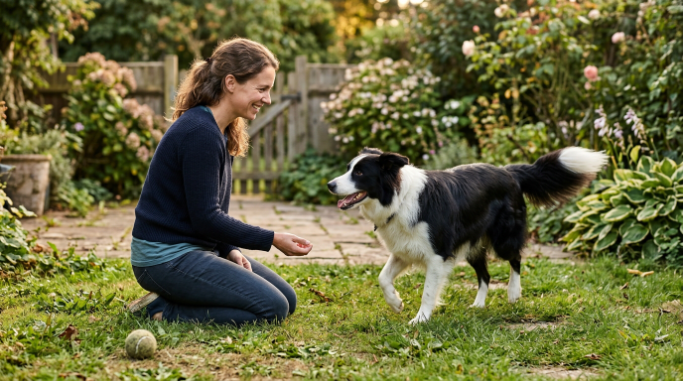
A happy Border Collie usually shows a loose body, soft face, normal breathing, and comfortable engagement. Look for several matching signals instead of relying on visible teeth.
Read the expression from nose to tail
Start with the mouth, but keep scanning. The following signs commonly appear together in a relaxed or playful dog:
- Soft facial muscles: The forehead and muzzle lack deep tension or hard wrinkles.
- Natural blinking: The dog blinks normally instead of staring without interruption.
- Loose movement: Turns, steps, and tail wags flow without stiffness.
- Voluntary contact: The dog approaches and remains free to leave.
- Play signals: A play bow, curved approach, or bouncy movement supports a friendly reading.
- Quick recovery: Excitement settles once the activity ends.
The AKC guide to dog body language explains that a submissive grin can show front teeth while the dog maintains a loose, wiggly posture. That combination differs sharply from a threatening snarl.
Consider what happened immediately before it
Context often resolves the mystery. A relaxed expression after a favorite game probably relates to enjoyment, cooling, or both.
The same mouth shape at a noisy veterinary clinic may accompany uncertainty. Look at what changed in the previous 10 to 30 seconds.
- Did a familiar person arrive?
- Did the dog finish running?
- Did someone lean over the dog?
- Did a child hug or corner the dog?
- Did an unfamiliar dog approach?
- Did the room suddenly become loud?
Know your dog’s normal expression
Individual Border Collies differ. One may pant during mild excitement, while another keeps a closed mouth throughout training.
Observe your dog during calm moments at home. This baseline helps you spot meaningful changes later.
I like to compare three ordinary situations: resting after dinner, greeting a trusted person, and waiting for a toy. Those moments reveal the dog’s normal ears, eyes, breathing, and muscle tension.
Section Takeaway: A genuine-looking happy smile should appear alongside soft eyes, loose movement, comfortable engagement, and an appropriate situation.
Happy Smile vs Panting, Appeasement, and Warning
Several expressions can resemble a smile. Their meanings range from comfortable relaxation to heat stress or a request for more space.
| Expression | Mouth and Face | Whole-Body Clues | Best Response |
|---|---|---|---|
| Relaxed smile | Soft open mouth, relaxed tongue, normal eyes | Loose posture, fluid movement, broad wag | Continue the comfortable interaction |
| Exercise panting | Open mouth, extended tongue, faster breaths | Warm body, recent activity, otherwise relaxed | Offer water, shade, and rest |
| Appeasement grin | Front teeth visible, lips pulled back, eyes may squint | Lowered body, curved approach, ears back, wiggling | Reduce social pressure and greet calmly |
| Stress panting | Tight mouth corners, rapid panting, repeated lip licking | Pacing, trembling, avoidance, tucked tail | Create distance and lower stimulation |
| Warning snarl | Wrinkled muzzle, lifted lip, exposed canines | Stiff posture, hard stare, freezing, growling | Stop approaching and provide space |
What is an appeasement grin?
An appeasement grin is a tooth-showing expression used to reduce conflict or social pressure. Older resources often call it a submissive grin.
The VCA explanation of dog smiling notes that dogs may use this expression to communicate non-threatening intentions. Some dogs also learn that people respond positively to it.
How is a snarl different?
A snarl usually includes facial tension, a wrinkled nose, and visible canine teeth. The body may freeze or shift weight forward.
Never punish growling, snarling, or lip lifting. These warnings communicate discomfort and give you time to create distance.
If your Border Collie seems uneasy around unfamiliar dogs, understanding whether Border Collies generally like other dogs can help you plan calmer introductions. Individual temperament and social history still matter most.
Section Takeaway: Relaxed smiles, panting, appeasement grins, and snarls may involve an open mouth, but posture and context separate them.
When Are Border Collies Most Likely to Smile?
Border Collies often look smiley during enjoyable activity, friendly reunions, and calm time with trusted people. These situations combine movement, anticipation, and social connection.
After physical exercise
A healthy adult Border Collie often needs substantial daily activity, but requirements vary. Age, fitness, weather, and health should shape the routine.
After 20 to 40 minutes of suitable play or training, many dogs show an open mouth and relaxed tongue. Let breathing settle before deciding that every panting expression means happiness.
During short training sessions
Border Collies tend to thrive when they can solve clear problems. Sessions of 5 to 10 minutes often keep enthusiasm high without creating frustration.
- Reward offered eye contact.
- Practice simple position changes.
- Use scent searches around one room.
- Teach the names of two or three toys.
- Finish while the dog remains engaged.
A focused Border Collie may close its mouth and stare intensely while working. That serious expression does not mean the dog is unhappy.
When greeting trusted people
Many Border Collies reserve their warmest greetings for familiar people. They may approach with a loose body, lowered ears, a curved path, and an open mouth.
This breed’s attachment can be powerful. Articles exploring whether Border Collies are extremely loyal help explain why reunions can produce such animated behavior.
During affection and quiet companionship
Some Borders smile while leaning against an owner or resting nearby. Others show affection through following, nudging, toy sharing, or quiet eye contact.
Not every dog enjoys being hugged. Many prefer sitting beside someone because that position preserves freedom of movement.
If you want closer contact, learn whether Border Collies like to cuddle and let your dog choose the distance.
Section Takeaway: Play, training, greetings, and peaceful companionship commonly produce smile-like expressions, although every Border Collie has a personal style.
Can You Encourage a Border Collie to Smile?
You can create conditions that produce relaxed expressions, but you should not force the mouth into a smile. Focus on comfort, choice, appropriate exercise, and rewarding interaction.
Meet physical and mental needs together
Endless running does not automatically create a settled dog. Border Collies also need thinking tasks and opportunities to decompress.
A balanced day may include:
- Purposeful exercise: Walks, controlled fetch, hiking, herding, or an appropriate dog sport.
- Mental work: Scent games, shaping exercises, trick training, or food puzzles.
- Calm exploration: A sniff-focused walk with no pressure to maintain a strict heel.
- Social choice: Affection and play that the dog can start or leave.
- Real rest: Quiet periods without constant demands or household disturbance.
The breed’s famous work ethic can lead owners to overfill every hour. Dogs also need help learning how to settle.
Use positive reinforcement
Reward behaviors you want to see with food, play, praise, or access to something enjoyable. Avoid intimidation and physical corrections.
If your dog naturally offers a relaxed grin, you can mark it with a word such as “yes.” Follow immediately with a small reward.
After enough repetitions, you may add a cue like “smile.” Keep sessions playful and stop if the dog shows tension.
Respect individual personality
One Border Collie may look cheerful throughout the day. Another may show happiness with a closed mouth, soft eyes, and a gently wagging tail.
Neither personality is better. Expressions also change with age, energy level, environment, and experience.
Some Borders stay close because they enjoy contact, while others follow people from working habit or uncertainty. Learning why Border Collies can seem clingy helps owners support independence without rejecting affection.
Section Takeaway: Build happiness through suitable activity, mental work, choice, rest, and reward-based training—not by manipulating your dog’s face.
When Should a Smiling Expression Concern You?
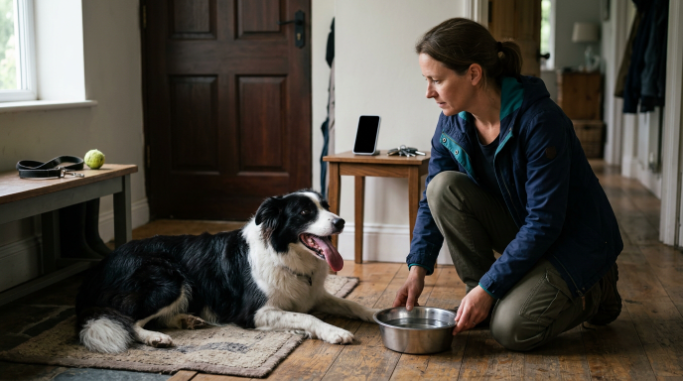
A smile-like expression deserves attention when it appears with frantic panting, pain, stiffness, avoidance, or sudden behavioral change. The mouth may be only one clue.
Watch for heat stress
Panting helps dogs release heat. Heavy panting that does not improve in a cool environment can signal trouble.
- Move the dog into shade or an air-conditioned space.
- Offer cool water without forcing it.
- Stop all exercise.
- Contact a veterinarian promptly if the dog appears weak, confused, unsteady, or distressed.
Do not assume a wide mouth and extended tongue mean the dog feels happy. Weather and recent exercise matter.
Notice possible pain or dental problems
A new facial expression may develop because opening or closing the mouth feels uncomfortable. Drooling, bad breath, pawing at the face, reduced appetite, or one-sided chewing need attention.
Jaw chattering, facial swelling, bleeding, or difficulty eating also warrant veterinary advice. Do not place your fingers inside a painful dog’s mouth.
Vet note: Contact your veterinarian whenever facial changes appear suddenly or accompany pain, overheating, breathing difficulty, weakness, or unusual behavior.
Respond safely to fear or aggression
If the body freezes and the muzzle tightens, stop moving toward the dog. Turn slightly sideways and allow a clear escape route.
Keep children and unfamiliar animals away. A qualified reward-based trainer or veterinary behavior professional can help with repeated warning behavior.
The ASPCA dog-care resource provides broader guidance on behavior, health, and recognizing situations that need professional support.
Section Takeaway: Treat the whole dog, not the apparent smile. Rapid panting, pain, stiffness, or sudden changes require a careful response.
Frequently Asked Questions
Do Border Collies smile when they are happy?
Many happy Border Collies show a relaxed open mouth, soft eyes, and loose posture. That expression resembles a human smile, but the mouth alone cannot confirm happiness. Check the dog’s ears, tail, breathing, movement, and situation.
Why does my Border Collie show its front teeth?
Visible front teeth may indicate an appeasement grin, especially when the body stays low, curved, and wiggly. A stiff body, wrinkled muzzle, hard stare, or growl suggests a warning instead. Give the dog space if you are uncertain.
Why does my Border Collie smile after running?
The expression is often normal panting that helps the dog cool down. Breathing should gradually slow during rest. Seek veterinary help if panting remains extreme or appears with weakness, confusion, vomiting, collapse, or breathing difficulty.
Can Border Collies learn to smile on command?
Some can learn a “smile” cue if they naturally offer the expression. Mark the voluntary behavior and reward it, then add the verbal cue. Never lift the lips manually or continue when the dog looks uncomfortable.
Are Border Collies happier than other breeds?
No breed can be ranked reliably by happiness. Border Collies often look animated because they are active and responsive. Their well-being depends on suitable exercise, mental stimulation, rest, health care, kind training, and a compatible home.
Does a wagging tail prove that the smile is friendly?
No. Dogs can wag while excited, uncertain, frustrated, or tense. A friendly wag usually accompanies loose muscles and fluid movement. A high, stiff, rapid wag with a fixed stare deserves more caution.
Why does my Border Collie look serious instead of smiling?
A serious face can be normal, especially during focused work or observation. Border Collies use an intense herding stare called “eye.” Judge well-being through daily behavior, appetite, sleep, movement, interest, and social comfort rather than one facial expression.
The Best Way to Read Your Border Collie
Border Collies are known for expressive, smile-like faces. A loose open mouth often appears during play, exercise, greetings, and relaxed time with people.
The safest interpretation always comes from the complete picture. Check the eyes, ears, breathing, posture, tail, recent activity, and surrounding environment.
Learn your dog’s normal signals during calm moments. That simple habit makes happy expressions easier to enjoy and uncomfortable ones easier to recognize.
When your Border Collie approaches with soft eyes, a loose body, and that familiar open-mouthed grin, enjoy the connection. Your dog may not smile exactly as you do, but the comfort behind the expression can still be genuine.
