

Quick Answer
The main disadvantages of a Border Collie are their intense exercise needs, constant demand for mental stimulation, strong herding instincts, sensitivity, shedding, and possible inherited health problems. They’re brilliant dogs, but the Border Collie’s working-dog temperament can make everyday ownership demanding for a household that wants an easygoing pet.
The biggest drawbacks to consider
- High exercise needs: A healthy adult often needs much more purposeful activity than a short neighborhood walk.
- Mental workload: Bored Border Collies may invent their own games, including chasing, digging, barking, or chewing.
- Herding instinct: Staring, circling, chasing, and occasional heel-nipping can create problems around children, pets, bikes, and traffic.
- Emotional sensitivity: Many respond poorly to harsh corrections, chaotic handling, or inconsistent rules.
- Coat maintenance: Rough- and smooth-coated Border Collies both have double coats and shed.
- Health considerations: The breed can inherit conditions that make breeder health screening and routine veterinary care important.
Before choosing one
- Ask whether you can provide structured exercise, training, enrichment, and calm downtime almost every day for many years.
I’ve lived around Border Collies long enough to understand why people fall for them. They’re fast learners, remarkably observant, and often seem to know what you’re about to do before you do it.
Those same qualities create most Border Collie disadvantages. This guide looks beyond the usual “high-energy dog” warning and explains what ownership can feel like day after day.
In This Guide
- Why are Border Collies so demanding to exercise?
- What happens when a Border Collie gets bored?
- Can a Border Collie’s herding instinct become a problem?
- Are Border Collies too sensitive or intense for some owners?
- Do Border Collies shed and require lots of grooming?
- What health problems can Border Collies have?
- Are Border Collies difficult for families and first-time owners?
- Is a Border Collie still worth owning?
- Frequently Asked Questions
Why Are Border Collies So Demanding to Exercise?
Border Collies were developed to work livestock for long periods while responding to subtle handler cues. A casual walk may leave their body exercised a little while doing almost nothing for their working brain.
Definition: A Border Collie disadvantage isn’t necessarily a defect in the breed. It’s usually a working trait that becomes difficult when the dog’s daily life doesn’t give that trait an appropriate outlet.
They need purposeful activity, not just mileage
I don’t judge exercise by the distance shown on my phone. I look at whether the dog had opportunities to run, sniff, think, respond, and settle afterward.
A healthy adult might have a day built around several different activities rather than one exhausting session. Age, fitness, weather, and medical history should always change the plan.
| Daily activity | Practical planning example | What it provides |
|---|---|---|
| Walking, hiking, or controlled running | 45–75 minutes | Physical activity and environmental exposure |
| Fetch, tug, agility, or similar play | 20–40 minutes | Speed, coordination, and engagement |
| Short training sessions | 2–4 sessions of 5–10 minutes | Mental work and communication |
| Sniffing, food puzzles, or calm enrichment | 15–30 minutes | Problem-solving and decompression |
Those ranges are examples, not a prescription. A puppy, senior, injured dog, or inexperienced athlete needs a different routine.
More exercise isn’t always the answer
One mistake I’ve seen is trying to exhaust a Border Collie every day. That can simply create a fitter dog that expects harder exercise tomorrow.
Teaching an “off switch” matters too. Calm mat work, settling after play, sniffing, and quiet chewing can help a busy dog learn that nothing happening is also normal.
Section Takeaway: Border Collies need both movement and thinking. A household that cannot provide either consistently may find the breed exhausting.
What Happens When a Border Collie Gets Bored?
A bored Border Collie rarely sits around politely waiting for entertainment. Many start creating activities that humans don’t enjoy.
The problem comes from intelligence combined with drive. The dog notices patterns quickly and practices whatever behavior gives it stimulation.
Boredom can become annoying behavior
- Chewing: Furniture, shoes, rugs, or household objects can become self-made enrichment.
- Digging: A yard may turn into a project when the dog lacks another task.
- Barking: Movement outside windows can become an all-day trigger.
- Chasing: Cars, bicycles, shadows, wildlife, or running children may attract intense attention.
- Demanding behavior: Some dogs repeatedly bring toys, paw at people, or stare until someone responds.
The ASPCA’s dog-care resources also emphasize enrichment and healthy outlets for normal canine behavior. For Border Collies, I consider enrichment part of daily care rather than an occasional extra.
They can become too good at predicting routines
I’ve seen Border Collies learn the sound of a particular drawer, a pair of walking shoes, or the minute a laptop closes. Their ability to predict events is impressive.
It can also create frustration. If every predictable signal always leads to intense activity, the dog may struggle when the routine changes.
That’s why I vary the sequence of walks, training, meals, and quiet periods. Flexibility can be a useful life skill for an intelligent working dog.
Can a Border Collie’s Herding Instinct Become a Problem?
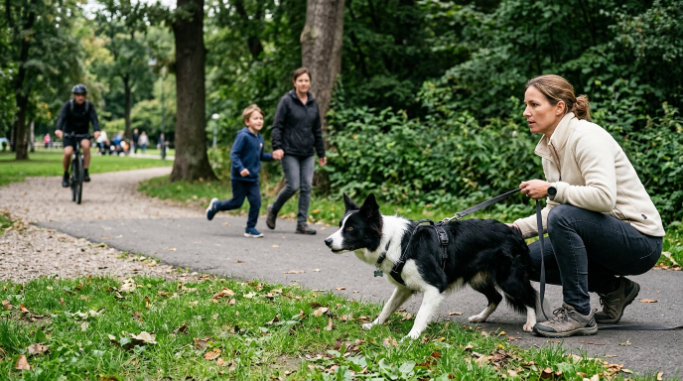
Yes. A Border Collie’s natural herding behavior can cause trouble when it gets redirected toward children, pets, bicycles, joggers, or vehicles.
Herding instinct is the inherited drive to control movement. Border Collies often use stalking, intense eye contact, circling, and rapid movement to influence livestock.
Moving children can trigger the instinct
A child running across the yard may look like something that needs controlling. Some Border Collies follow, block movement, circle, or nip toward heels.
This doesn’t automatically mean the dog is aggressive. It does mean adults must supervise interactions and teach both the child and dog appropriate behavior.
Cars and bicycles create a more serious risk
A dog that becomes fixated on wheels can put itself in danger quickly. I would never rely on obedience alone beside moving traffic.
Secure fencing, a leash, distance from triggers, recall training, and carefully planned behavior work provide much safer management.
Other pets may not appreciate being managed
Cats and calmer dogs can become frustrated when a Border Collie continually watches or controls their movement. A compatible household needs escape spaces and clear boundaries.
I interrupt persistent herding before it becomes a daily habit. Redirecting the dog toward training, toys, sniffing, or another structured task usually works better than punishment.
Are Border Collies Too Sensitive or Intense for Some Owners?
They can be. Many Border Collies notice tiny changes in voice, posture, routine, and environment that a more easygoing dog might ignore.
This sensitivity helps them work closely with handlers. In a stressful home, the same trait can become difficult.
Harsh training can backfire
I prefer clear, reward-based training with short sessions. Shouting or heavy corrections can make a sensitive dog worried about offering behavior at all.
The clever dog that learns a new cue quickly can also learn your inconsistencies quickly. If jumping is allowed Monday but punished Tuesday, confusion follows.
Some Border Collies struggle with overstimulation
Busy streets, crowded events, constant visitors, and unpredictable noise can be challenging for certain individuals. Breed tendencies matter, but each dog still has its own temperament.
I watch body language instead of assuming every Border Collie wants nonstop excitement. Moving away from pressure is often more useful than forcing the dog to “get used to it.”
Intelligence doesn’t mean automatic obedience
A smart dog learns quickly, including behaviors you never planned to teach. Opening doors, anticipating cues, stealing food, or manipulating training patterns can become part of daily life.
Border Collie ownership rewards consistency. It can frustrate people who expect intelligence to mean effortless manners.
Do Border Collies Shed and Require Lots of Grooming?
Border Collies shed, and both recognized coat varieties have a double coat. The smooth coat may look lower-maintenance, but it still releases hair around the house.
The rough coat has longer feathering and can collect burrs, mud, seeds, and tangles. Active outdoor dogs often bring part of the trail home with them.
Regular brushing is part of ownership
I normally check high-friction areas such as behind the ears, under the collar, around the legs, and near the tail. Small tangles are much easier to handle before they tighten.
During heavier seasonal shedding, brushing may need to happen more often. Expect hair on furniture, clothing, car seats, and floors.
Outdoor lifestyles create extra cleanup
A Border Collie that hikes, works stock, or races across wet grass won’t stay showroom-clean. Muddy paws and damp belly hair become routine in wet weather.
This isn’t a major problem for me, but it matters to someone wanting a low-maintenance house dog. Grooming should be considered before choosing the breed.
What Health Problems Can Border Collies Have?
Border Collies are generally athletic dogs, but the breed can inherit several medical conditions. Responsible breeding and veterinary care reduce risk, but they cannot guarantee a problem-free dog.
The PetMD Border Collie health guide discusses conditions including hip dysplasia, epilepsy, the MDR1 medication-sensitivity mutation, trapped neutrophil syndrome, and neuronal ceroid lipofuscinosis.
Genetic screening matters
If you’re buying a puppy, don’t stop at asking whether the parents “look healthy.” Ask what breed-relevant testing was completed and request documentation.
A reputable breeder should be comfortable discussing health history and why a particular pairing was chosen. Avoid anyone who treats health questions as an inconvenience.
Medication sensitivity deserves attention
MDR1 is a gene mutation that can alter sensitivity to certain drugs in affected dogs. Testing can help your veterinarian make informed medication choices.
Never change medication because of something you read online. The American Veterinary Medical Association’s pet-owner resources are useful general references, but your own veterinarian knows your dog’s history.
Vet note: Any seizure, unexplained weakness, persistent pain, sudden behavior change, vision problem, or unusual reaction to medication deserves veterinary attention.
High-drive dogs can hide discomfort
An enthusiastic Border Collie may still want to chase a ball despite soreness. That willingness to work shouldn’t be mistaken for proof that the dog feels fine.
I pay attention to changes in stride, jumping, willingness to climb, recovery after exercise, and how easily the dog settles afterward. Subtle changes can be worth discussing with a vet.
For broader veterinary information, the VCA Know Your Pet library provides regularly updated material on canine health and care.
Section Takeaway: Health risk is not a reason to avoid every Border Collie. It is a reason to choose carefully, keep records, and involve your veterinarian early.
Are Border Collies Difficult for Families and First-Time Owners?
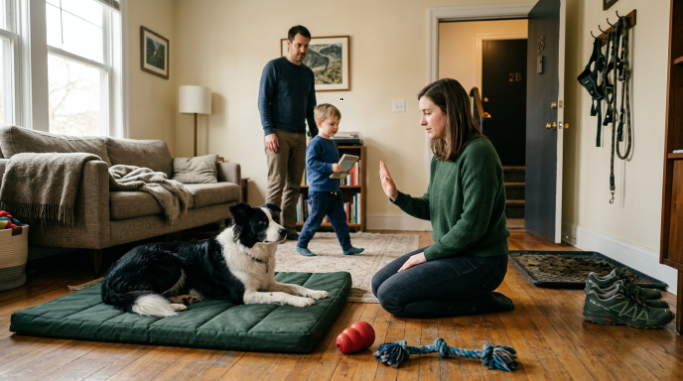
A Border Collie can live happily in a family, apartment, or first-time dog home. The difficulty depends more on lifestyle and management than the label attached to the household.
Still, some situations create predictable challenges.
Families with young children need supervision
Running, squealing, and unpredictable movement can excite herding behavior. Children also need help learning when the dog wants space.
A Border Collie shouldn’t become a child’s full-time entertainment. Adults remain responsible for exercise, training, supervision, and veterinary care.
Apartment living requires more planning
A large yard is convenient, but a yard alone doesn’t satisfy this breed. Conversely, an active apartment owner may provide a better life than someone who leaves the dog alone outside.
The bigger apartment concerns are barking, hallway triggers, limited off-leash space, and the effort required for several daily outings.
Long workdays can be difficult
A Border Collie regularly left without exercise or meaningful interaction for most of the day may struggle. Hiring help can reduce the problem, but that adds cost and scheduling.
I would think carefully before getting a young Border Collie if the normal routine includes long absences followed by little energy for training.
First-time owners face a steep learning curve
New owners can succeed with the breed, especially when they enjoy training and seek qualified help early. They should expect to learn about canine body language, enrichment, recall, impulse control, and herding behavior.
As of 2026, the basic question hasn’t changed: can your normal lifestyle meet the needs of a working herding dog for years, not just during the exciting puppy stage?
Is a Border Collie Still Worth Owning?
For the right person, absolutely. The disadvantages become much easier to accept when the traits causing them are the same traits you wanted in the first place.
I enjoy dogs that want interaction, training, movement, and shared projects. Someone wanting a relaxed companion that is satisfied with short walks may feel differently.
A Border Collie may suit you if:
- You enjoy daily outdoor activity and structured dog training.
- You want a dog that learns quickly and notices small details.
- You can provide mental enrichment alongside physical exercise.
- You are willing to manage herding instinct around moving triggers.
- You don’t mind shedding, grooming, and muddy outdoor adventures.
- You can budget for routine veterinary care and possible health testing.
You may prefer another breed if:
- You want a dog that needs only modest daily activity.
- Your schedule regularly leaves little time for training or enrichment.
- You dislike intense, highly observant dogs.
- You cannot safely manage chasing around roads, children, or other animals.
- You want minimal shedding and grooming.
- You mainly chose a Border Collie because of its reputation for intelligence.
I’ve found that intelligence is only convenient when you’re prepared to direct it. Otherwise, the dog often finds its own job.
That’s the central tradeoff. Border Collies can be extraordinary companions, but they rarely make effortless ones.
Frequently Asked Questions
What is the biggest disadvantage of a Border Collie?
The biggest disadvantage for most households is the breed’s demanding combination of physical energy and mental drive. Exercise alone may not be enough, because Border Collies also benefit from training, problem-solving, structured play, and learning how to settle calmly.
Are Border Collies difficult dogs to own?
They can be difficult for owners who want a low-maintenance companion. Their intelligence, herding instincts, sensitivity, exercise requirements, and need for ongoing engagement mean they usually require more planning than a calmer, less work-driven breed.
Can a Border Collie be left alone all day?
Regularly leaving a Border Collie alone for long periods can be challenging, especially for young, energetic dogs. Individual tolerance varies, but owners should plan for exercise, toilet breaks, enrichment, social interaction, and gradual training for comfortable alone time.
Do Border Collies calm down with age?
Many become easier to manage as they mature, but age doesn’t erase their working heritage. An adult Border Collie may develop better impulse control while still needing exercise, mental stimulation, training, and appropriate outlets for its drive.
Are Border Collies bad with children?
No, but their herding instinct can complicate family life. Some may stare, circle, chase, or nip toward running children, so supervision, training, management, and teaching children respectful dog interactions are important.
Are Border Collies good for first-time owners?
A committed first-time owner can succeed, but the breed is rarely the easiest starting point. New owners should enjoy training, have enough daily time, understand the exercise commitment, and be willing to work with qualified trainers or veterinary professionals when needed.
What should I know before buying a Border Collie puppy?
Learn about the parents’ temperament and health screening, not just the puppy’s color or markings. Also plan for training, safe socialization, enrichment, grooming, veterinary costs, controlled exercise, and several years of living with an energetic working dog.
The final takeaway: Don’t choose a Border Collie simply because they’re famous for being smart. Choose one because you genuinely want the active, sensitive, work-focused lifestyle that comes with that intelligence.
If that lifestyle sounds enjoyable rather than exhausting, the disadvantages may be manageable. If it sounds like a constant obligation, another breed may fit your home much better.
