
How to Dry a Border Collie Bath Mat Properly

Quick Answer
To dry a Border Collie bath mat properly, remove excess water, check its care label, and either hang it in a well-ventilated area or tumble-dry it on an approved low-heat setting. Keep rubber-backed mats away from heat unless their manufacturer explicitly permits it, and do not put the mat back on the floor until both sides are completely dry.
A bath mat used after washing a Border Collie can absorb plenty of water from dripping fur and wet paws. If it stays damp underneath, it can develop an unpleasant smell, leave moisture on the bathroom floor, or become a less hygienic place for your dog to stand.
The correct drying method depends on the mat’s material and backing, not the breed of dog. A washable microfiber mat may tolerate low-temperature tumble drying, while a rubber-backed, foam-filled, or non-slip mat may require a different approach.
1. Remove Excess Water Before Drying the Mat
Start by removing as much trapped water as possible. A heavily saturated mat takes longer to dry and can drip onto floors or furniture while you move it.
- Lift the mat carefully. Support the middle and edges so the wet material does not drag across the floor.
- Let excess water drain. Hold the mat over the bathtub or shower for a short time, allowing free water to run off naturally.
- Press out moisture if appropriate. For a flexible fabric mat, gently press it between clean towels or against the side of a basin. Avoid twisting or wringing it, especially if it has a bonded backing or foam layer.
- Check for trapped debris. Remove loose dog hair, dirt, and other visible material before hanging or drying the mat.
Do not assume that a mat needs washing every time it gets wet. If it has only collected clean bathwater and remains free of dirt or odor, removing the moisture and drying it completely may be enough. Wash it when it is visibly dirty, contaminated, or due for routine cleaning according to its care instructions.
2. Check Which Drying Method Your Bath Mat Allows
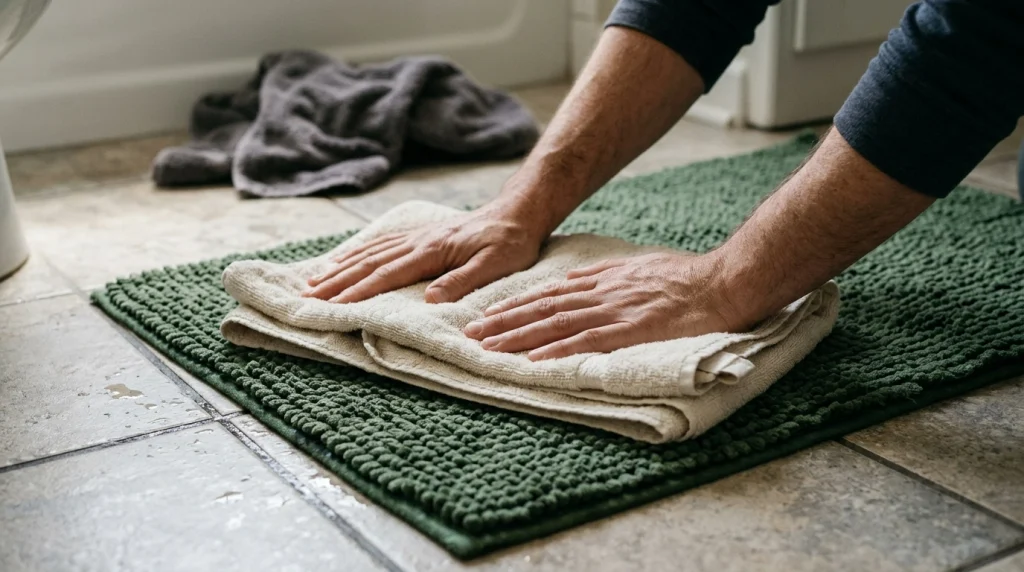
Before using a dryer or placing the mat outdoors, check the manufacturer’s care label. The backing often determines the safest method, even when the upper surface is made from ordinary fabric.
| Mat type | Suitable drying method | Main precaution |
|---|---|---|
| Microfiber or chenille fabric | Air-dry or use an approved low-heat setting | Protect the backing and fibers from excessive heat. |
| Cotton or terry cloth | Hang-dry or tumble-dry if the label permits | Allow thick sections to dry all the way through. |
| Rubber-backed or latex-backed | Usually air-dry unless the manufacturer approves another method | Avoid heat that can weaken or damage the backing. |
| Foam-filled or layered mat | Use the specified method; air-dry when permitted | The interior may retain moisture after the surface dries. |
This comparison is general guidance, not a substitute for the product’s instructions. Some manufacturers allow low heat for particular non-slip mats, while others prohibit tumble drying entirely.
3. How to Air-Dry a Border Collie Bath Mat
Air-drying is a practical default when the label permits it, particularly for mats with sensitive backing. It avoids direct dryer heat and allows you to inspect both surfaces as the moisture disappears.
- Choose a ventilated location. Use a laundry area, sheltered outdoor space, or another place with steady airflow and enough room for the mat to hang freely.
- Spread the mat out. Hang it over a sturdy drying rack or line that supports its weight without stretching the fabric. If the care instructions permit, turn it periodically so both sides receive airflow.
- Keep the mat away from standing water. Do not leave its lower edge sitting in a wet shower tray or puddle.
- Improve air circulation. Leave space around the mat rather than folding it over itself or placing it against a wall. A room fan can help circulate air without applying concentrated heat.
- Inspect the backing and thicker areas. Check the underside, corners, seams, and any padded sections before deciding it is ready.
Direct sunlight is not essential for drying. Although a mild breeze can help, prolonged strong sunlight may fade some fabrics or affect sensitive backing materials. Choose a shaded, ventilated area when the manufacturer recommends avoiding direct sun.
Drying time varies with humidity, airflow, mat thickness, and how much water it absorbed. A thin fabric mat may dry relatively quickly, while a dense or layered mat can remain damp for much longer. Use the mat’s actual condition rather than a fixed number of hours to judge completion.
4. Can You Put the Bath Mat in a Tumble Dryer?
Yes, if the manufacturer specifically permits tumble drying. For a compatible mat, use the approved low-heat or air-only setting and remove it when the cycle finishes so you can check for remaining moisture.
Before starting the dryer, confirm that the mat fits comfortably, is suitable for the machine, and has no damaged backing or loose parts. A very heavy, waterlogged mat may be unsuitable for a small domestic dryer.
Never assume that a fabric top makes the entire mat dryer-safe. Rubber, latex, adhesive layers, foam, and other backing materials may respond differently to heat. If the label is missing and the material is uncertain, air-drying is the more cautious choice.
Warning
Do not use a radiator, space heater, or high-temperature dryer to speed up the process. Excessive heat can damage some backing materials and create a fire or burn hazard if equipment is used improperly. Keep the mat away from heating elements and follow the appliance and mat manufacturers’ instructions.
5. How to Tell When the Mat Is Completely Dry
A mat is ready to use when its surface, underside, seams, and any padded interior are dry. The top may feel dry while moisture remains trapped underneath, especially in a thick mat that absorbed water from your Border Collie’s chest, legs, or paws.
- Check both surfaces: Run your hand across the fabric and backing to identify cool or damp patches.
- Inspect the corners and seams: These areas can retain moisture after the main surface dries.
- Check thicker sections: Press gently around padded or layered areas to see whether moisture remains.
- Smell the mat: A persistent musty odor can indicate that it needs washing or more thorough drying.
- Inspect the floor beneath it: Before reuse, ensure the floor is dry and the mat’s backing is clean and intact.
Do not rely on smell alone. A mat can be damp without smelling bad, and an already musty mat may need laundering rather than additional drying alone.
Once the mat is fully dry, place it on a clean, dry floor. Check that it lies flat and does not slide or curl when your dog steps onto it.
6. Prevent Musty Smells and Backing Damage
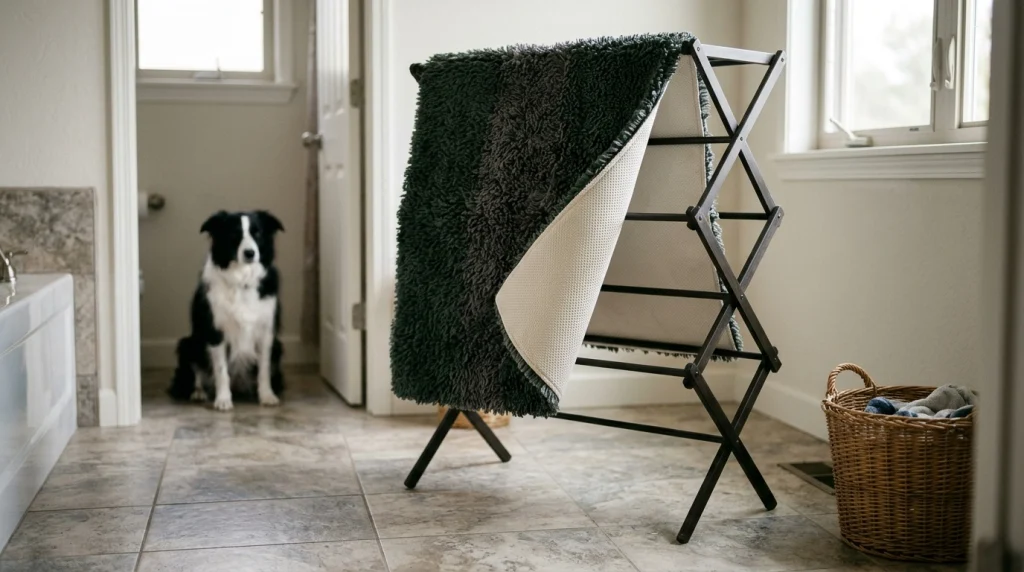
The best way to prevent odors is to avoid storing or reusing a damp mat. Moisture trapped in fabric or between layers can contribute to unpleasant smells, particularly in a humid room with limited ventilation.
- Do not leave the mat bunched up. Spread it out after use so moisture can escape.
- Wash it when necessary. Follow the care label and use a suitable detergent. Avoid fabric softener if the manufacturer advises against it, because it can reduce absorbency in some microfiber products.
- Lift it after bathing. Dry the floor beneath it rather than leaving moisture trapped between the mat and tile.
- Keep it away from high heat. A cracked, peeling, or crumbly backing may no longer provide reliable grip.
- Store it only when dry. If you keep a spare mat in a cupboard or basket, make sure it has no damp patches before putting it away.
If a mat repeatedly develops a musty smell despite proper washing and thorough drying, inspect it for trapped moisture, damaged layers, or persistent contamination. Replace it if it cannot be cleaned adequately or its backing has deteriorated.
For a broader post-bath routine, see our guide on how to dry a Border Collie after a bath. Removing excess water from the coat first can help keep the mat from becoming saturated again immediately.
7. What If the Mat Still Feels Damp or Smells Musty?
If the mat remains damp after the expected drying period, do not put it back beneath your dog. Return it to a ventilated drying area, separate any removable layers if the instructions allow, and give the thicker sections more time to dry.
If the surface dries but the underside stays wet, improve airflow around the backing and turn the mat over when safe to do so. Avoid adding heat unless the care label permits it.
If the mat smells musty, wash it according to its care instructions before drying it again. Simply covering the odor with fragrance does not remove the underlying dirt or moisture. If the smell persists after proper cleaning, or the material is visibly deteriorating, replacing the mat may be the more practical option.
Also check whether water is collecting underneath the mat during use. Our guide to keeping the bathroom floor dry after a Border Collie bath explains how to contain splashes and prevent moisture from remaining on the floor.
For a dog that keeps leaving wet footprints after bathing, our guide to stopping a Border Collie from tracking water after a bath covers drying paws and managing the route away from the bathing area.
Tip
Keep a spare dry mat or clean towel ready for bath time. You can move the wet mat to a drying rack immediately instead of leaving it on the floor while your Border Collie finishes drying.
Related Product
Washable Absorbent Pet Drying Mat
A spare absorbent mat lets you rotate between a dry mat and one that is still drying after your Border Collie’s bath. Check the material and care instructions before choosing one.
As an Amazon Associate, we earn from qualifying purchases.
Frequently Asked Questions
1. How long does a Border Collie bath mat take to dry?
It depends on the material, thickness, humidity, and airflow. A thin fabric mat may dry faster than a dense microfiber or layered mat. Check both sides and the seams rather than relying on a set drying time.
2. Can I dry a rubber-backed dog bath mat in the dryer?
Only if the manufacturer’s instructions explicitly permit tumble drying. Many rubber- or latex-backed mats are better air-dried because excessive heat can damage their backing.
3. Is it safe to dry a dog bath mat in direct sunlight?
It may be suitable for some mats, but prolonged direct sunlight can affect certain fabrics and backing materials. Follow the care label and use a shaded, well-ventilated area when sunlight is not recommended.
4. Why does my bath mat smell musty after drying?
The mat may have retained moisture in its backing, seams, or inner layers, or it may need washing. Clean it according to the care label, improve airflow, and let every layer dry completely before reuse.
5. Should I wash a dog bath mat after every bath?
Not necessarily. Wash it when it becomes dirty, develops an odor, or needs cleaning according to the manufacturer’s instructions. A mat exposed to muddy paws, shampoo residue, or other contamination may need washing sooner.
6. Can I use a bath mat again if its underside is still damp?
No. Let it dry completely before placing it back on the floor. Moisture trapped underneath can leave the floor wet and may contribute to musty odors or an unstable surface.
Conclusion
Drying a Border Collie bath mat properly starts with removing excess water and choosing a method that suits its material and backing. Air-drying in a well-ventilated area is a cautious option when the care label allows it, while tumble drying should be reserved for mats explicitly approved for that method.
Before reusing the mat, check both sides, the seams, and any padded sections for lingering moisture. Keep the floor underneath dry, clean the mat when necessary, and replace it if its backing deteriorates or persistent odors remain. A fully dry, stable mat helps make your dog’s post-bath routine cleaner and more comfortable.