
How Much Water Should a Border Collie Drink Each Day?

Border Collies are active, fast-moving dogs, so it makes sense that many owners worry about hydration. The good news is that most healthy dogs regulate water well when fresh water is always available. The harder part is knowing whether your Border Collie’s drinking is normal for their size, diet, activity level, and weather.
A practical starting point is the common veterinary rule of thumb: about 1 ounce of water per pound of body weight per day. That means a 30-pound Border Collie may drink around 30 ounces a day, while a 45-pound dog may drink about 45 ounces. That’s a baseline, not a hard rule, but it gives you a useful benchmark.
If you want the shortest answer to the question how much water should a border collie drink, use this: most healthy Border Collies fall somewhere near 1 ounce per pound per day, with more needed after exercise, in hot weather, during growth, or when eating dry food. Less may be normal for dogs that eat wet food.
Quick Water Intake Guide for Border Collies
Here’s a simple reference you can use at home. I’m using the common 1 ounce per pound guideline as the baseline, then translating it into cups. This is a broad average, and real needs can vary with food moisture, temperature, and activity.
| Border Collie weight | Rough daily water target | In cups |
|---|---|---|
| 20 lb | 20 oz | 2.5 cups |
| 30 lb | 30 oz | 3.75 cups |
| 40 lb | 40 oz | 5 cups |
| 45 lb | 45 oz | 5.6 cups |
| 50 lb | 50 oz | 6.25 cups |
| 55 lb | 55 oz | 6.9 cups |
A few practical notes:
- 1 cup = 8 fluid ounces
- A Border Collie on dry kibble often drinks more from the bowl than a dog eating mostly wet food
- A very active dog may sit above the baseline without anything being wrong
- A dog that is quiet, cool, and eating moisture-rich food may drink less and still be fine
What Affects a Border Collie’s Water Needs
Water intake is not just about breed. It changes with the dog in front of you.
Body weight
Larger Border Collies need more water than smaller ones. A 35-pound dog and a 55-pound dog should not be expected to drink the same amount. That seems obvious, but it’s where a lot of owners misjudge “too much” or “too little.”
Age
Puppies often drink more relative to their size because they are growing and usually more active. They also need more frequent access to water because their routines are less predictable. Senior dogs can go either direction: some drink less because they move less, while others drink more because of age-related health issues.
Activity level
A Border Collie that spends the day on the couch will not need the same water intake as one doing agility, herding, long hikes, or fetch in warm weather. Exercise increases fluid loss through panting, and panting is how dogs cool themselves.
Weather and season

Heat and humidity both push water needs up. On hot days, a Border Collie may drink noticeably more than usual, and that can be completely normal. After a long session outdoors, it’s reasonable to expect a bigger water bowl drain than on a cool morning.
Diet type
Dogs eating mostly dry kibble usually drink more from the bowl than dogs eating wet food. Wet food already contains a lot of moisture, so bowl-drinking totals can look lower even when hydration is adequate.
Pregnancy and lactation
Pregnant and nursing dogs need more water than usual. Lactation especially increases fluid demand. If a Border Collie is nursing puppies, free access to fresh water matters even more.
Border Collie Water Intake by Weight, Age, and Activity
The most useful way to think about hydration is not “How much should a Border Collie drink?” but “How much should this Border Collie drink today?”
Adult Border Collies
For a healthy adult, the baseline is still about 1 ounce per pound per day. A 40-pound adult might land near 40 ounces, or 5 cups, across the day. A 50-pound adult might be closer to 6 to 6.5 cups.
That said, many adults do not drink in a neat, even pattern. They may take a few big drinks after waking, after walks, and after meals. That is normal.
Puppies
Puppies often need more frequent water access than adults. They are active, growing, and less predictable about when they drink. You usually should not try to micromanage puppy intake unless your veterinarian has told you to do so for a medical reason.
If you’re raising a Border Collie puppy, the better question is whether the puppy is drinking regularly, urinating normally, and staying bright and energetic. A puppy that suddenly stops drinking is more concerning than a puppy that drinks a lot after play.
If you’re feeding a young dog, this guide on how much to feed a Border Collie puppy can help you pair food and water routines more sensibly.
Seniors
Older Border Collies may drink less if they are less active, but a sudden increase in thirst is worth attention. Seniors are also more likely to have medical reasons for drinking changes, so a new pattern matters more than the exact number.
Active or working Border Collies
This is where a simple chart can mislead you if you treat it like a law. A working Border Collie in warm weather may drink well above the baseline and still be perfectly normal. After a long training session, a hike, or a day of herding, extra thirst is expected.
A helpful rule: if the dog drinks more after exercise but settles back into a normal pattern afterward, that usually points to healthy thirst rather than a problem.
How Wet Food, Dry Kibble, Exercise, and Hot Weather Change Drinking
The biggest mistake owners make is comparing their dog’s bowl intake to someone else’s without accounting for what the dog ate or did that day.
Wet food vs dry food
A dog eating wet food may drink less from the bowl because part of their hydration is coming from the food itself. That does not automatically mean they are underhydrated.
A dog on dry kibble often needs more bowl water because the meal contains very little moisture. If you switch from wet food to dry food, expect bowl-drinking to rise.
Exercise
After a long run, agility session, or active play, more drinking is normal. Dogs lose water while panting, and Border Collies are exactly the kind of breed that can push hard without acting tired until they’re already low on fluids.
The practical trade-off is simple: you want water available before, during, and after activity, but you don’t need to panic if your dog gulps after exercise.
Hot weather
Heat increases thirst. If your Border Collie comes inside and empties the bowl after a warm afternoon outside, that may be a normal response. What matters is whether the drinking stays elevated for days, continues overnight, or comes with other symptoms.
A realistic example
A 40-pound Border Collie on dry kibble might drink around 5 cups on a mild, quiet day. The same dog could drink more after a long hike in summer. If that dog eats wet food and spends most of the day indoors, the bowl total may be lower and still be fine.
How to Measure Your Dog’s Water Intake at Home
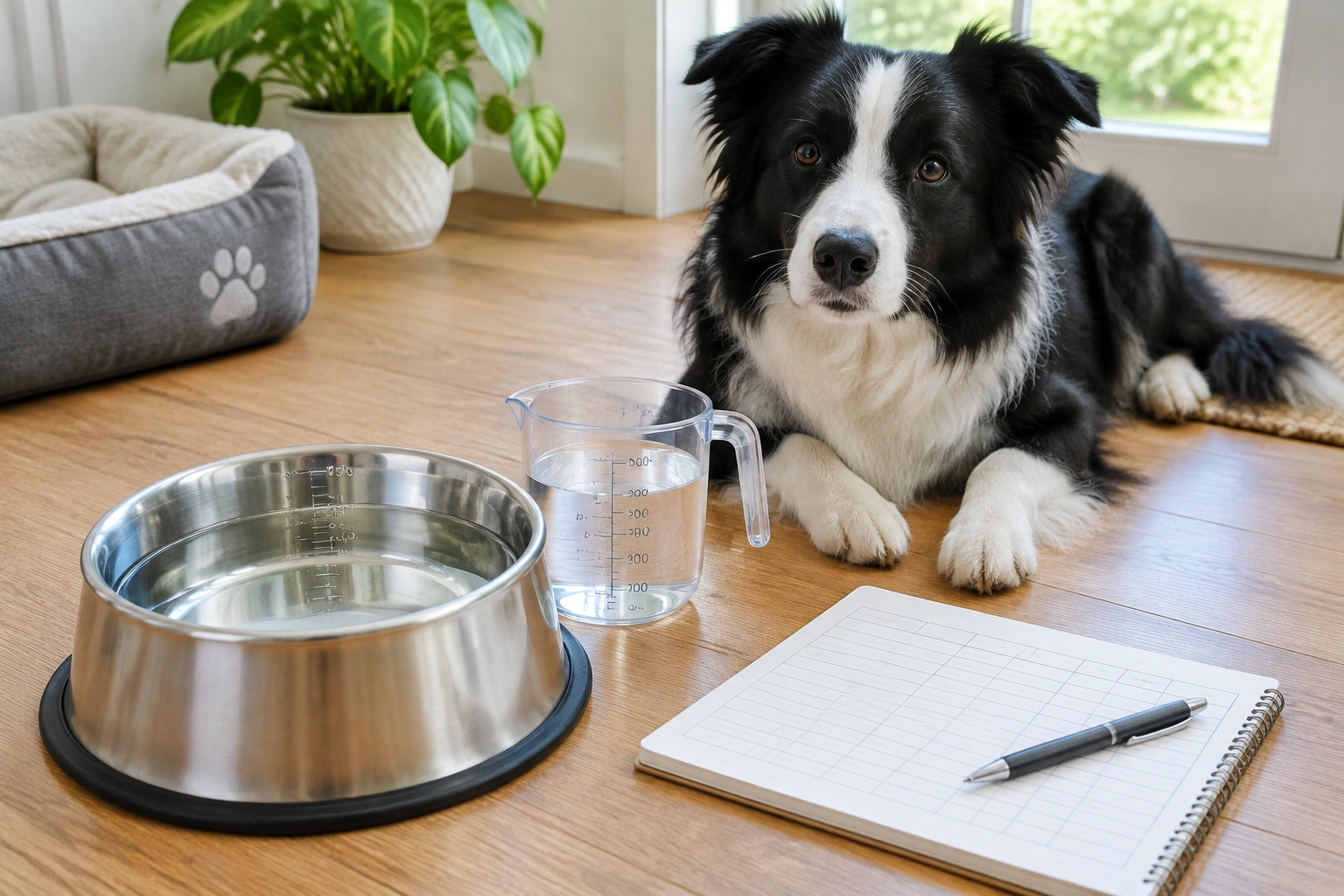
If you want to know whether your Border Collie is actually drinking too much or too little, guesswork is not enough. A simple 24-hour log gives you a much better answer.
The easiest tracking method
- Fill the bowl with a measured amount of water.
- Record how much you poured in.
- Refill only with measured amounts.
- At the end of 24 hours, add up the total.
If the bowl is shared with another pet, tracking becomes less reliable. In that case, separate the dog during the test period if possible.
What to watch for
- Sudden jumps from the dog’s usual baseline
- Drinking that keeps rising over several days
- Very large amounts paired with frequent urination
- Drinking less than usual along with lethargy or dry gums
A single thirsty day after exercise is not the same thing as a persistent change.
Signs Your Border Collie May Be Dehydrated
A dog can still be in trouble even if they are drinking some water. Watch for the pattern, not just the presence of a water bowl.
Common warning signs
- Dry or tacky gums
- Lethargy or weakness
- Reduced urination
- Sunken-looking eyes
- Loss of skin elasticity
- Thick saliva
- Panting that seems excessive for the activity level
If a dog has vomiting or diarrhea, dehydration risk rises quickly. That matters especially for puppies and seniors.
A Border Collie that seems dull, won’t eat, and is drinking less than normal deserves veterinary attention.
When Drinking Too Much Water Is a Problem
Some Border Collies are simply enthusiastic drinkers after activity. That alone is not enough to call it a problem.
What becomes concerning is persistent, unexplained excessive drinking, especially if it’s new. As a rough benchmark, a sustained intake above about 1.5 to 2 ounces per pound per day for more than a day or two is worth a vet call, and any sudden jump from your dog’s normal baseline that lasts 24 to 48 hours should be checked.
Signs the drinking may be abnormal
- The dog is drinking much more than usual for several days
- The dog is urinating more often or having accidents
- The dog seems hungrier, weaker, or less energetic
- There is vomiting, diarrhea, or weight loss
- The dog drinks heavily even when cool and rested
Increased drinking plus increased urination is more concerning than thirst alone. Common medical causes of increased thirst in dogs include issues such as kidney disease, diabetes, and some endocrine disorders such as Cushing’s disease. You do not need to diagnose the cause at home, but you do need to notice the pattern.
A useful distinction: normal thirst has a reason; concerning thirst often does not.
When to Ask Your Veterinarian
Call your veterinarian if your Border Collie has a sudden change in drinking that lasts more than a day or two, especially if it comes with other symptoms.
Seek advice sooner if your dog:
- Stops drinking or drinks much less than usual
- Drinks far more than usual and urinates excessively
- Has vomiting or diarrhea
- Seems weak, lethargic, or painful
- Has dry gums or signs of dehydration
- Is a puppy, senior, pregnant, or nursing and drinking behavior changes suddenly
Do not restrict water on your own if your dog is drinking too much. Limiting access can make dehydration worse if the underlying issue is not simple thirst.
For feeding context, the Border Collie daily feeding guide can help you think through how food type and meal size may affect drinking patterns.
Practical Ways to Encourage Healthy Hydration
You usually do not need tricks, but a few small habits help.
- Keep water fresh and clean
- Place bowls where your Border Collie actually spends time
- Offer extra water after exercise
- Use multiple bowls in larger homes
- Pay attention to how much moisture comes from food
- In hot weather, check bowls more often than usual
If your dog is a picky drinker, the issue may be environmental, but medical causes can also affect drinking, so it’s best to look at the full context rather than assuming the bowl setup is the only factor.
For active dogs, hydration and exercise go together. If you’re building a routine around walks and training, this guide on how long you should walk a Border Collie may help you plan water breaks more realistically.
Bottom Line
Most healthy Border Collies do well with water intake that averages near 1 ounce per pound of body weight per day, but the real answer depends on your dog’s normal baseline, diet, activity, and weather. Some dogs will drink more after exercise or in heat, while others will drink less if they eat wet food.
Measure your Border Collie’s baseline intake, compare it to what’s normal for them, and call your veterinarian if the change is sustained for 24 to 48 hours or is paired with frequent urination, lethargy, vomiting, or other symptoms.
