

Quick Answer
You can remove mild Border Collie odor without a bath by brushing out debris, wiping the coat with a damp towel, drying damp areas, and cleaning bedding and collars. A dog-formulated waterless shampoo can also help; the AKC’s waterless dog-cleaning guidance explains several between-bath options. Strong, localized, or quickly returning odor needs closer investigation.
Quick odor-removal steps
- Find the source: Smell the coat, paws, ears, mouth, neck, and rear separately.
- Brush thoroughly: Remove loose undercoat, dried mud, grass, and other odor-holding debris.
- Wipe the coat: Use a clean towel lightly dampened with lukewarm water for surface dirt.
- Dry completely: Check the dense undercoat because trapped moisture can create a musty smell.
- Clean dog gear: Wash bedding, blankets, collars, harnesses, and reusable grooming cloths.
- Use dog products only: Choose a waterless shampoo or wipe specifically labeled for dogs.
Check before masking the smell
- Call your vet: Seek advice if odor comes with redness, discharge, sores, pain, heavy scratching, hair loss, or repeated licking.
Border Collies can get surprisingly funky between baths, especially after rain, training, farm work, or a muddy walk. I’ve found that another full bath often isn’t the fastest answer.
A Border Collie, sometimes called a Border or working sheepdog, has a dense double coat that can hold moisture and outdoor debris. The key is removing the source of the smell rather than covering it with fragrance.
In This Guide
- Why Does My Border Collie Smell Without Being Dirty?
- How Do I Find Where the Odor Is Coming From?
- How Can I Remove Border Collie Odor Without a Bath?
- Which Waterless Odor-Removal Method Works Best?
- What Should I Avoid Putting on My Border Collie’s Coat?
- How Does the Border Collie Double Coat Affect Odor?
- When Does Border Collie Odor Need a Vet?
- How Can I Keep My Border Collie Smelling Fresh Longer?
- Frequently Asked Questions
- Final Takeaway
Why Does My Border Collie Smell Without Being Dirty?
A Border Collie can smell even when the visible coat looks clean. Moisture, natural skin oils, saliva, outdoor debris, and dirty gear can all contribute.
Definition: Border Collie coat odor is a noticeable smell coming from the fur, undercoat, skin, or material trapped within the coat. Mild temporary odor is different from persistent odor caused by a skin, ear, dental, or other medical problem.
That double coat holds more than you can see
Both rough-coated and smooth-coated Border Collies have an undercoat. The rough variety simply makes hidden damp areas easier to overlook.
Run your fingertips down to the skin after rain or swimming. The outer hairs can feel dry while the undercoat still feels cool and damp.
- Rainwater: Moisture can remain near the skin after the surface dries.
- Mud and soil: Fine dirt works between guard hairs and into the undercoat.
- Saliva: Repeated licking leaves moisture and organic material in one area.
- Pond or livestock odor: Working Borders can carry strong environmental smells home.
- Dirty collars: A clean dog can smell again minutes after wearing damp or oily gear.
Normal dog smell versus suspicious odor
A light earthy smell after outdoor activity isn’t automatically a health problem. It should improve after brushing, drying, and cleaning dirty equipment.
A sour, rotten, intensely musty, or fishy smell deserves more attention. Location matters as much as strength.
Section Takeaway: Don’t assume the whole dog needs washing. First decide whether you’re smelling dirty fur, trapped moisture, contaminated gear, or one specific body area.
How Do I Find Where the Odor Is Coming From?
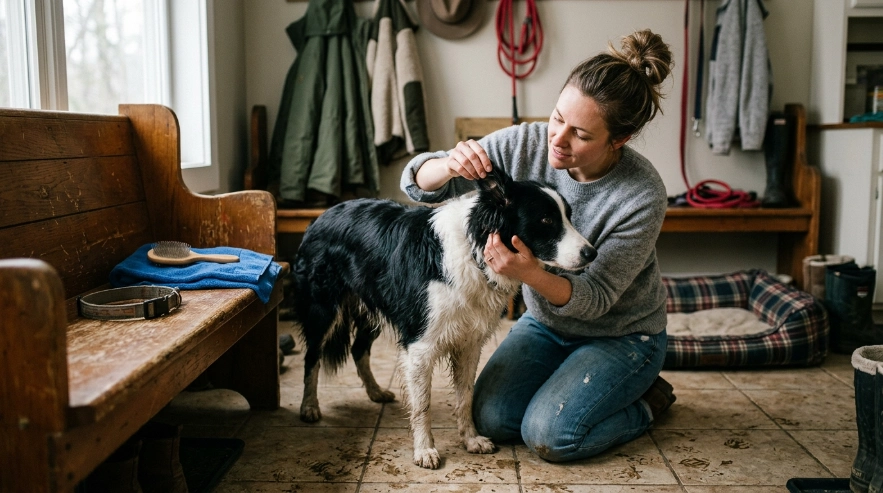
Find the source before applying any product. This five-minute check prevents a lot of unnecessary bathing.
I start at the head and work toward the tail. Separating the areas keeps one strong smell from fooling your nose.
Use a simple nose-to-tail odor check
- Ears: Smell near the opening without inserting anything into the canal.
- Mouth: Notice unusually foul breath, drooling, or difficulty chewing.
- Neck: Remove the collar and smell the coat and collar separately.
- Skin: Part the hair at several spots and inspect the skin beneath it.
- Paws: Check between the toes for moisture, redness, licking, or debris.
- Rear end: Notice any sudden strong fishy odor, swelling, licking, or scooting.
- Gear: Smell bedding, blankets, harnesses, towels, and crate mats.
Check the skin rather than just the fur
A strong smell that remains in one location after wiping the fur may come from the skin. Look for redness, greasy patches, flakes, crusts, bumps, or thinning hair.
The PetMD overview of canine skin infections lists odor alongside signs such as itching, redness, bumps, hair loss, and scabs. Those signs call for veterinary assessment rather than deodorizing.
Vet note: A home smell check cannot diagnose yeast, bacteria, allergies, parasites, or other skin disease. Ask your veterinarian when the odor is persistent or the skin looks abnormal.
How Can I Remove Border Collie Odor Without a Bath?
For ordinary coat odor, start with the least invasive method. Brushing, wiping, drying, and laundering solve more cases than heavy fragrance does.
1. Brush the coat in sections
Spend about 5–10 minutes working through the neck, chest, sides, hindquarters, tail, and feathering. Use gentle strokes and stop if you hit a tight mat.
Brushing lifts loose undercoat and releases dried dirt. It also gives you another chance to inspect the skin.
2. Use a damp-towel wipe
Wet a clean microfiber or soft cotton towel with lukewarm water. Wring it until damp rather than dripping.
- Wipe in the direction the coat grows.
- Concentrate on dirty legs, belly, chest, and hindquarters.
- Use a separate clean section of towel as dirt transfers.
- Avoid rubbing water into the ears.
- Dry the wiped areas afterward.
The ASPCA’s dog grooming guidance also emphasizes routine coat, ear, paw, and skin care as part of keeping dogs clean.
3. Try dog-formulated grooming wipes
Dog grooming wipes are useful for dusty paws, belly fur, or a dirty rear after a walk. Choose an unscented or lightly scented dog-specific product when possible.
Keep wipes away from eyes and inside the ears. Stop using them if the skin becomes red or uncomfortable.
4. Use waterless dog shampoo when needed
Waterless shampoo can help when a larger coat area smells but doesn’t justify soaking the dog. Foam products are often easier to control than clouds of powder around the face.
- Read the product label first.
- Brush out loose dirt.
- Apply only the recommended amount.
- Keep the product away from eyes, nose, and mouth.
- Work it through the coat as directed.
- Brush or towel away residue if the instructions require it.
5. Dry damp areas instead of deodorizing them
If the undercoat is damp, fragrance won’t solve the problem. Press the area with clean towels and provide gentle airflow.
Don’t use high heat against the skin. Your fingers should confirm the undercoat feels dry, not merely the coat surface.
6. Wash everything touching the dog
This is the step owners often miss. A clean Border can pick up yesterday’s odor from a collar or bed immediately.
- Bedding and crate covers
- Blankets
- Fabric collars
- Harnesses
- Reusable towels
- Brushes and combs that can be safely cleaned
On muddy training days, my routine is simple: brush, damp-wipe the legs and belly, towel dry, then swap the collar. That small reset is usually enough without turning the evening into bath night.
Section Takeaway: Work from dry cleaning to light moisture before reaching for stronger products. If ordinary grooming doesn’t improve the smell, look for another cause instead of repeatedly deodorizing the coat.
Which Waterless Odor-Removal Method Works Best?
There isn’t one best method for every smell. Match the cleaning method to what caused the odor.
| Method | Best For | Water Needed | Main Limitation |
|---|---|---|---|
| Brushing | Dust, loose hair, dried dirt | None | Won’t remove oily or sticky contamination |
| Damp towel | Mud residue, paws, belly, light coat odor | Small amount | Coat must be dried afterward |
| Dog grooming wipes | Small dirty areas and quick cleanups | None added | Impractical for the whole dense coat |
| Waterless dog shampoo | General between-bath coat odor | No rinse | Can leave residue if overused |
| Wash bedding and gear | Odor that returns after resting | Dog stays dry | Won’t treat odor already on skin |
For most healthy Borders, I start with brushing plus a damp towel. Waterless shampoo is my next step when the odor covers more of the coat.
What Should I Avoid Putting on My Border Collie’s Coat?
A dog’s coat doesn’t need to smell like laundry detergent or perfume. Strong fragrance can hide useful warning signs and may irritate sensitive skin.
- Human perfume: It’s made for people, not a dog that will inhale and lick product from its coat.
- Air freshener: Household sprays aren’t grooming products.
- Human shampoo: Save it for a proper bath only if your veterinarian specifically instructs otherwise.
- Concentrated essential oils: Don’t improvise topical blends on your dog.
- Harsh disinfectants: Never use household surface cleaners on fur or skin.
- Heavy powder around the face: Avoid creating dust your dog can inhale or get into its eyes.
The safest rule is boring but effective: use products labeled for dogs and follow the instructions. When your Border has known skin sensitivity, ask your veterinarian before adding a new product.
The American Veterinary Medical Association is also a useful starting point for finding reliable veterinary guidance instead of relying on unverified home-remedy claims.
How Does the Border Collie Double Coat Affect Odor?
The double coat explains why Border Collies need a different approach from many short, single-coated dogs. Moisture and debris can disappear from sight while remaining underneath.
Rough coat versus smooth coat
A rough-coated Border has longer outer hair and feathering around areas such as the chest, legs, and tail. Those areas collect burrs, mud, and moisture easily.
A smooth-coated Border looks easier to keep clean, but the dog still carries an undercoat. You still need to check skin-level moisture.
Regular brushing is odor prevention
During normal weeks, brushing once or twice weekly is a practical starting point for many Border Collies. Heavy seasonal shedding can justify more frequent brushing.
Working dogs may need brief checks after every dirty outing. Focus on paws, belly, tail, armpits, and behind the ears.
- After rain: Towel and check the undercoat.
- After swimming: Dry thoroughly, including around the neck and ears.
- After farm work: Remove manure, grass, seeds, and mud promptly.
- During shedding: Remove loose undercoat before it forms dense pockets.
Good coat care isn’t about stripping away natural oils. It’s about preventing dirt, loose hair, and moisture from sitting against the skin.
When Does Border Collie Odor Need a Vet?
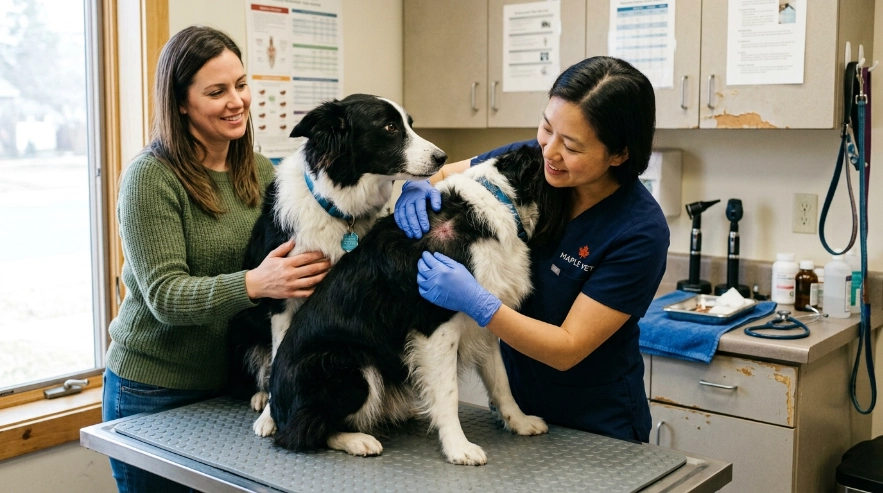
Persistent odor can be a medical clue. Seek veterinary advice when the smell is strong, localized, worsening, or accompanied by skin or behavior changes.
Watch for skin and ear warning signs
- Red or inflamed skin
- Greasy or unusually flaky patches
- Hair loss
- Crusts, bumps, sores, or discharge
- Repeated scratching or chewing
- Constant paw licking
- Head shaking or ear scratching
- Strong odor from one ear
- Pain when an area is touched
Yeast overgrowth can cause itching, redness, scaling, and a musty odor. The VCA guidance on yeast dermatitis in dogs describes these signs and explains why veterinary diagnosis matters.
Don’t forget the mouth and rear end
Bad breath may come from the mouth rather than the coat. Dental problems deserve veterinary attention, especially with pain, bleeding, drooling, or trouble eating.
A sudden fishy smell near the rear may involve anal-gland material. Don’t repeatedly deodorize that area or attempt treatment without knowing the cause.
Vet note: Contact your veterinarian if an unusual odor persists after the coat, bedding, and equipment are clean and dry. Seek care sooner when odor occurs with pain, swelling, discharge, wounds, marked itching, lethargy, or other illness signs.
Section Takeaway: Odor alone doesn’t diagnose a disease. Odor plus inflammation, discomfort, discharge, hair loss, or repeated recurrence is a good reason for a veterinary examination.
How Can I Keep My Border Collie Smelling Fresh Longer?
The easiest way to control odor is to keep small problems from building up. A five-minute post-adventure routine can prevent an unnecessary full bath later.
My between-bath routine
- Inspect: Check paws, belly, tail, ears, and coat after wet or dirty outings.
- Brush: Remove dry debris once the mud is no longer sticky.
- Spot clean: Wipe only the areas that need attention.
- Dry: Check the undercoat with your fingers.
- Swap gear: Don’t put a wet or smelly collar back on a clean neck.
- Check bedding: Wash it before accumulated odor transfers back to the coat.
Keep grooming tools clean too
Hair packed into a brush can hold dust, oils, and debris. Remove collected hair after grooming and clean tools according to their materials and manufacturer instructions.
As of 2026, I still prefer this simple approach over trying to make a Border Collie smell artificially perfumed. A clean, dry dog should smell like a dog.
Baths still have a place when your Border is truly dirty, contaminated, or due for normal grooming. Between those baths, targeted cleaning is quicker and often kinder to the coat.
Frequently Asked Questions
Can I make my Border Collie smell better without washing them?
Yes. Brush out loose debris, wipe dirty areas with a damp towel, dry the undercoat, wash bedding and collars, and use dog-formulated grooming wipes or waterless shampoo when needed. Persistent odor despite cleaning deserves further investigation.
Why does my Border Collie smell musty?
A musty smell can come from a damp undercoat, wet bedding, skin oils, or a skin problem. Dry the coat completely and inspect the skin. If the smell persists with itching, redness, greasy skin, flakes, or hair loss, contact your veterinarian.
Can I use baby wipes on my Border Collie?
Dog-specific grooming wipes are the safer routine choice because they’re formulated for canine use. Human wipes can contain fragrances or other ingredients you don’t need on a coat that your Border Collie may lick afterward.
Can I spray perfume on my Border Collie?
Avoid ordinary human perfume and household fragrance sprays. They mask odor instead of fixing its source and may irritate your dog’s skin or airways. If you use a deodorizing grooming product, choose one specifically formulated for dogs.
Why does my Border Collie smell again after lying on the bed?
The bedding may be transferring old skin oils, saliva, moisture, or outdoor odor back onto the coat. Wash the bed cover, blankets, crate mat, and any fabric collar or harness that smells similar.
How often should I bathe my Border Collie?
There isn’t one correct schedule for every Border Collie. Activity level, coat condition, environment, and skin health all matter. Brush and spot clean between baths, and use a veterinarian-directed bathing schedule if your dog has a medical skin condition.
Does a fishy Border Collie smell mean the coat is dirty?
Not necessarily. A strong fishy odor can originate around the rear, skin, ears, or mouth rather than from dirty fur. Locate the source first, and contact your veterinarian if the smell is persistent or comes with pain, discharge, scooting, swelling, or irritation.
Final Takeaway
You usually don’t need a full bath to remove ordinary Border Collie odor. Start by brushing the coat, wiping dirty areas, drying hidden moisture, and cleaning anything that touches your dog.
Use dog-formulated waterless products only when they add something useful. Don’t cover a strange smell with perfume.
The most important step is knowing when grooming stops being the answer. If the odor keeps returning or comes with itching, redness, discharge, pain, sores, or hair loss, let your veterinarian investigate the source.
A fresh Border Collie doesn’t need to smell scented. Clean, comfortable, and completely dry is the goal.
