

Quick Answer
You usually do not need to trim a Border Collie before a bath. Instead, thoroughly brush your Border Collie before bathing, remove debris, and work through loose tangles. Small functional trims around the paw pads or excessively messy feathering can be done when necessary, but avoid shaving the main double coat.
Best pre-bath routine
- Inspect first: Feel through the coat for mats, burrs, dirt, and irritated skin.
- Brush thoroughly: Remove loose undercoat and ordinary tangles before adding water.
- Tidy paws: Trim excessive hair around or between the pads only when it needs attention.
- Leave the body coat: Don’t shorten or shave the double coat just to prepare for bathing.
- Handle mats carefully: Tight, skin-level matting is better handled by an experienced groomer.
- Finish after drying: Cosmetic tidying is often easier once the clean coat is completely dry.
I’ve found that Border Collie bath preparation goes much better when I think “brush first,” not “cut first.” A Border Collie, sometimes simply called a Border, has a coat that usually needs maintenance more than frequent cutting.
The important question is therefore not whether you can trim before bathing. It’s whether trimming that particular area will make the grooming session safer or easier.
In This Guide
- Should You Trim a Border Collie Before a Bath?
- What Should You Do Before Bathing Instead of Trimming?
- Which Areas Can You Trim Before a Border Collie Bath?
- Is It Better to Trim a Border Collie Before or After a Bath?
- Can You Shave a Border Collie’s Double Coat Before Bathing?
- How Do Rough and Smooth Border Collie Coats Change Grooming?
- When Should a Groomer or Vet Handle the Trim?
- Frequently Asked Questions
Should You Trim a Border Collie Before a Bath?
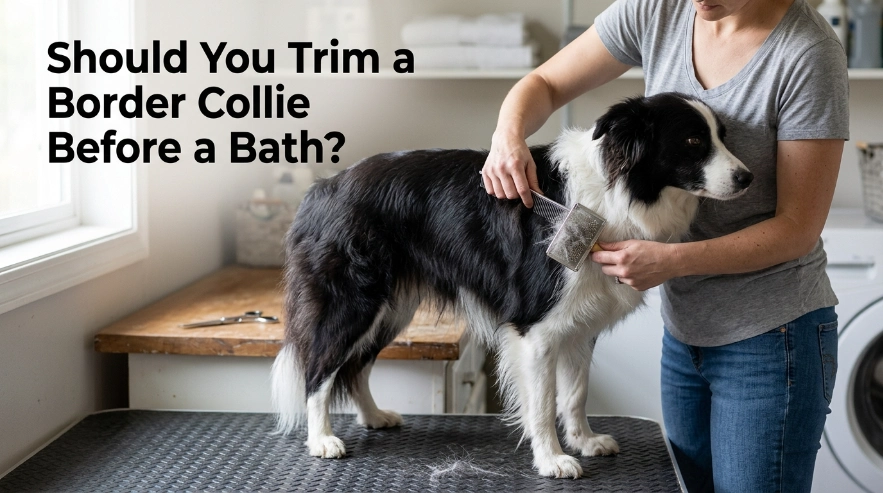
No, routine body trimming is not a necessary first step before bathing a healthy Border Collie. Brushing, detangling, and inspecting the coat are usually more useful.
Definition: A pre-bath trim means selectively shortening hair that creates a practical grooming problem before the dog gets wet. It does not mean shaving or substantially shortening the entire Border Collie coat.
Border Collies have coat protection that should not automatically be removed because the dog looks fluffy. The American Kennel Club’s Border Collie information is a useful starting point for understanding the breed.
Why brushing matters more than cutting
Water can make existing tangles more difficult to handle. Loose undercoat also becomes heavier and messier once saturated.
- Loose hair: Remove as much dead coat as reasonably possible.
- Burrs and grass: Pick out outdoor debris before wetting the coat.
- Small tangles: Work through them while the hair is dry.
- Skin problems: Look for redness, sores, lumps, or unusual irritation.
- Paw debris: Check between toes and around the pads.
The ASPCA’s dog grooming guidance also recommends brushing away dead hair and mats before bathing.
That matches what I see at home. Ten careful minutes with a brush often saves far more time during rinsing and drying.
What Should You Do Before Bathing Instead of Trimming?
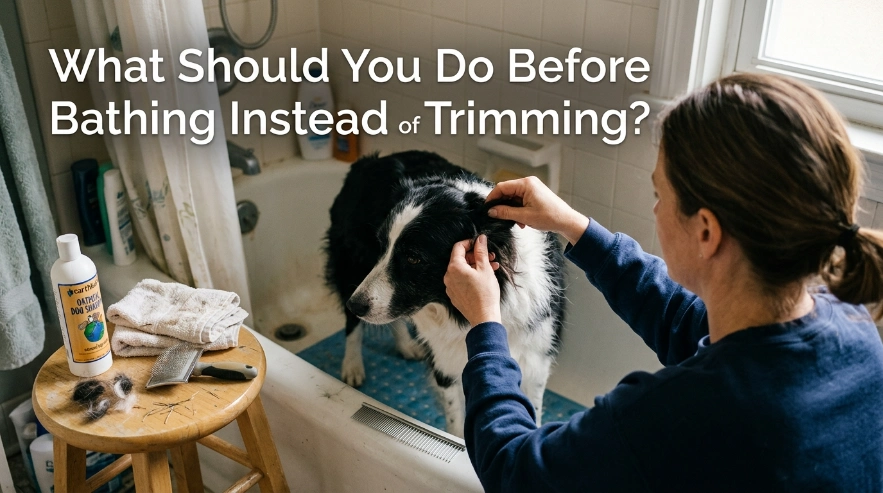
Prepare the coat from skin to tip before turning on the water. Your goal is a coat that separates easily without painful pulling.
1. Feel through the entire coat
Start with your hands. Fingers can find compacted hair that looks invisible from above.
- Behind the ears
- Under the collar
- Chest and armpits
- Front-leg feathering
- Rear trousers
- Belly
- Under the tail
- Tail feathering
2. Brush in small sections
Use controlled strokes instead of repeatedly dragging a brush over the surface. Rough-coated Border Collies especially need attention beneath the longer outer hair.
A slicker or pin brush can handle general work. A comb provides a useful final check for hidden resistance.
3. Adjust preparation to the coat
| Coat Condition | Practical Prep Time | Main Job |
|---|---|---|
| Smooth coat, light shedding | About 5–8 minutes | Loose hair and debris |
| Rough coat, normal condition | About 10–15 minutes | Undercoat and feathering |
| Heavy seasonal shedding | About 15–25 minutes | Loose undercoat |
| Tight or extensive matting | Not a timed DIY job | Professional assessment |
These times are practical estimates rather than rules. Coat density, shedding, age, outdoor activity, and grooming history all matter.
4. Prepare the bath itself
Once the coat is ready, set up towels, shampoo, and a nonslip surface before bringing your dog into the bathing area.
Use comfortably lukewarm water for your Border Collie’s bath. Avoid testing the temperature only after your dog is already standing in the tub.
Section Takeaway: A successful pre-bath routine removes loose coat, debris, and manageable tangles. Trimming is only a small optional part of that preparation.
Which Areas Can You Trim Before a Border Collie Bath?
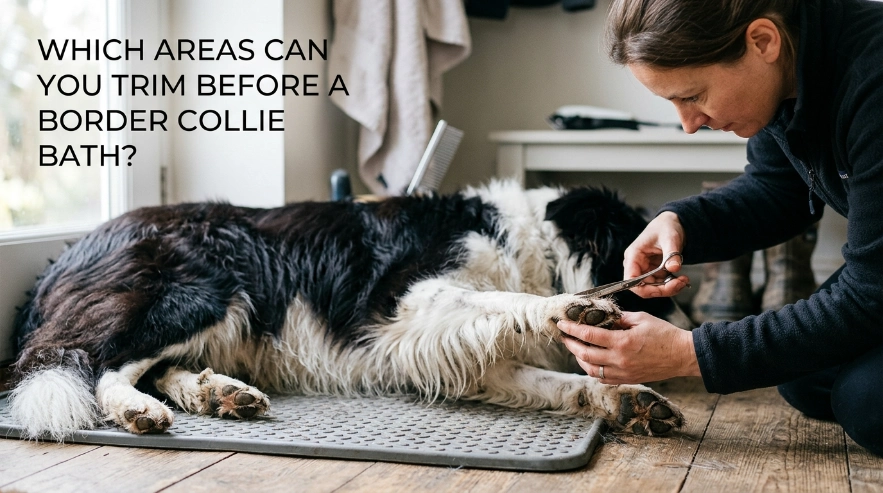
Small functional trims can make sense when excess hair is creating a specific problem. Focus on tidy areas rather than shortening the whole coat.
Paw-pad hair
Hair extending well beyond the pads can collect mud and debris. Long hair between the toes may also tangle.
The ASPCA advises combing and trimming excessive hair between a dog’s toes so it stays even with the pads. Work carefully because paw skin is easy to nick.
Dirty feathering
A rough-coated Border Collie may have long hair around the legs, belly, tail, and rear. Sometimes a tiny amount becomes damaged or repeatedly soiled.
- Remove only hair that clearly needs tidying.
- Keep the natural outline instead of creating a dramatic haircut.
- Never pull scissors through hair you cannot clearly separate from skin.
- Leave difficult mats for a professional.
Sanitary areas
Some companion dogs benefit from careful sanitary tidying when long hair repeatedly collects waste. This should be minimal and functional.
If you are uncomfortable working near thin or sensitive skin, leave this job to a groomer. There is no reason to risk an injury for a cosmetic improvement.
What should stay untouched?
- The main back and side coat
- Healthy undercoat
- Normal chest furnishings
- Healthy tail feathering
- Normal leg feathering that is clean and tangle-free
For shampoo selection, choose a product made for dogs rather than assuming stronger means cleaner. This guide to choosing shampoo for a Border Collie covers the main options.
Is It Better to Trim a Border Collie Before or After a Bath?
Functional problem areas may be handled before bathing, but cosmetic finishing is usually easier after the coat is clean and completely dry.
| Grooming Task | Before Bath | After Bath | Better Choice |
|---|---|---|---|
| Remove loose undercoat | Yes | Final brush helpful | Start before bath |
| Detangle ordinary knots | Yes | Recheck afterward | Before bath |
| Tidy paw-pad hair | Possible | Possible | Either, if controlled |
| Shape feathering | Usually wait | Easier to judge | After drying |
| Remove severe matting | Professional help | Don’t simply soak it | Assess before bathing |
| Full-body shaving | Avoid routinely | Avoid routinely | Not routine coat care |
A clean coat separates more evenly, making its natural shape easier to see. Dry hair is also easier to judge than wet, flattened feathering.
Don’t rush that drying step. A dense coat can feel dry on top while retaining moisture deeper down, so follow a proper Border Collie post-bath drying routine.
Can You Shave a Border Collie’s Double Coat Before Bathing?
You generally should not shave a healthy Border Collie’s double coat as routine bath preparation. Shaving is very different from selectively tidying paws or damaged ends.
A double coat contains an outer protective layer and a softer undercoat. Removing both layers dramatically changes the coat rather than simply cleaning it up.
Why shaving is different from trimming
- Tidying: Removes a small amount of excess hair from a specific area.
- Feathering trim: Lightly shapes longer hair without removing the main coat.
- Clipping: Shortens a larger area with clippers.
- Shaving: Removes the coat close to the skin.
The AKC’s guidance on double-coated dogs advises against routine shaving and explains that cutting away both coat layers can affect coat condition and skin protection.
A bath is not a reason by itself to shave. Heavy shedding is also better handled through appropriate brushing and undercoat removal.
Are there exceptions?
Yes. Severe matting, medical treatment, surgery, or certain skin problems can change the decision.
Those cases should be guided by a professional rather than treated like normal home grooming.
Vet note: If your Border Collie has painful mats, bald areas, sores, unusual odor, persistent itching, or inflamed skin, ask your veterinarian before bathing, clipping, or applying grooming products.
How Do Rough and Smooth Border Collie Coats Change Grooming?
Rough-coated Border Collies usually need more detangling and feathering care. Smooth-coated Border Collies have less long hair to shape, but they still shed and need coat maintenance.
Rough-coated Border Collies
The rough variety has more visible feathering around areas such as the chest, legs, belly, and tail. Those longer sections can collect grass, mud, and small knots.
- Check behind the ears carefully.
- Comb the rear trousers before bathing.
- Inspect the tail in small sections.
- Part chest and belly hair to find hidden tangles.
- Tidy only genuinely troublesome ends.
Smooth-coated Border Collies
A smooth coat usually needs little cosmetic trimming. The main pre-bath job is removing dead coat and checking the skin.
Don’t assume short outer hair means there is nothing to brush. Loose hair can still accumulate throughout the coat.
What about shedding season?
During a heavy shed, I spend more time removing loose coat and less time thinking about scissors. A thorough brush-out usually solves the problem owners hope a haircut will fix.
Bath frequency should also follow your dog’s actual condition rather than shedding alone. See the full guide on how often to bathe a Border Collie for a practical schedule.
Section Takeaway: Rough and smooth coats look different, but neither normally requires full-body trimming before a bath. Let coat condition decide how much preparation is needed.
When Should a Groomer or Vet Handle the Trim?
Get professional help when you cannot clearly separate the hair from the skin or when grooming causes pain. Tight mats can hide what is underneath them.
Choose a groomer for coat-management problems
- Large or tight mats
- Heavy compacted undercoat
- A dog that strongly resists trimming
- Extensive sanitary trimming
- Major coat correction after neglected grooming
- A trim requiring clippers near sensitive skin
An experienced groomer can also tell you whether an area truly needs cutting. Sometimes a careful brush-out preserves far more healthy coat.
Call your veterinarian for skin concerns
- Open sores
- Persistent redness
- Swelling
- Unusual bald patches
- Strong skin odor
- Constant scratching or chewing
- Pain when you touch the coat
- Unexplained skin discharge
VCA’s coat-care guidance also recommends considering underlying health issues when a dog’s coat or skin looks abnormal.
Vet note: Grooming can reveal skin problems, but it cannot diagnose them. Stop routine trimming if you uncover painful or abnormal skin and contact your veterinarian.
Frequently Asked Questions
Should I trim my Border Collie before every bath?
No. Most Border Collies don’t need a haircut before every bath. Brush thoroughly, remove debris, detangle the coat, and trim only specific areas that genuinely need tidying.
Should I cut mats out before bathing my Border Collie?
Ordinary loose tangles should be addressed before bathing. Tight mats sitting close to the skin are different because scissors can accidentally catch folded skin, so professional removal is safer.
Can I trim the hair around my Border Collie’s paws?
Yes, you can carefully tidy excessive hair around and between the paw pads when needed. Keep the trim functional and avoid cutting into skin hidden beneath thick hair.
Can I trim my Border Collie’s feathering?
Lightly tidying damaged or excessively messy ends is possible, especially on a companion dog. Avoid aggressively shortening healthy chest, leg, tail, or belly feathering simply because it looks long.
Should I shave my Border Collie in summer before bathing?
Routine shaving isn’t recommended for a healthy double-coated Border Collie. Brush out loose undercoat instead, and speak with an experienced groomer or veterinarian if there is a medical or severe matting reason to clip closely.
Is trimming easier before or after a Border Collie bath?
Pre-bath work is best for removing debris, loose coat, and tangles. Fine cosmetic tidying is often easier after bathing and complete drying because the clean coat falls into its natural shape.
What should I do immediately before putting my Border Collie in the tub?
Run a comb through the problem areas, check the skin, remove remaining debris, and make sure no painful mats remain. Then prepare dog shampoo, lukewarm water, towels, and a nonslip bathing surface.
Final takeaway: Don’t turn bath preparation into an unnecessary haircut. For most Border Collies, the winning routine is inspect, brush, detangle, bathe, dry thoroughly, and only then make small trims where they are truly useful.
When you preserve the healthy double coat and focus on regular maintenance, bath day becomes simpler. Your Border Collie also keeps the natural coat that makes the breed so distinctive.