

Quick Answer
For a safe DIY Border Collie bath, brush the coat first, use lukewarm water and dog shampoo, wash down to the skin without scrubbing harshly, rinse until the water runs clear, then dry the dense double coat completely. The Border Collie’s coat needs more careful rinsing and drying than many short-coated dogs because moisture and shampoo can hide beneath the outer fur.
DIY Border Collie Bath Steps
- Brush first: Remove loose undercoat, burrs, and small tangles before the coat gets wet.
- Use warm water: Keep the water comfortably lukewarm rather than hot or cold.
- Choose dog shampoo: Use a mild product designed specifically for canine skin.
- Rinse deeply: Work through the thick coat until no slippery shampoo remains.
- Dry completely: Towel blot first, then use gentle airflow if your dog accepts a dryer.
- Brush again: Once nearly dry, lightly brush to separate the coat and catch loosened hair.
One important rule
- Stop and contact your veterinarian if you discover open sores, painful skin, unusual redness, or a strong persistent odor.
Giving your Border Collie a bath at home sounds simple until water meets that dense coat. I learned quickly that most of the work happens before the shampoo ever comes out.
A good home bath protects the coat, keeps the process calm, and saves a muddy dog from decorating every floor in the house. Here’s the method I use to make bathing faster and less stressful.
In This Guide
- What do you need for a DIY Border Collie bath?
- How should you prepare a Border Collie before bathing?
- How do you bathe a Border Collie at home step by step?
- How do you dry a Border Collie after a bath?
- How often should you bathe a Border Collie?
- Do rough and smooth Border Collies need different baths?
- What DIY bathing mistakes should you avoid?
- DIY Border Collie bath FAQs
What do you need for a DIY Border Collie bath?
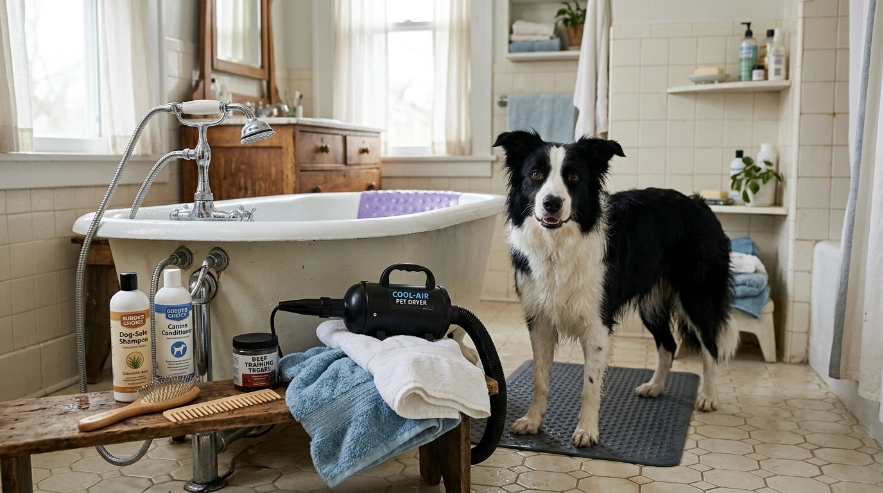
You don’t need professional grooming equipment. A few well-chosen tools make the job much easier.
A Border Collie’s double coat includes a softer insulating undercoat beneath protective outer hairs. Water must penetrate both layers, so preparation matters.
- Dog shampoo: Choose a gentle formula intended for dogs, preferably fragrance-free if your dog has sensitive skin.
- Conditioner: Optional, but useful for longer rough coats that tangle easily.
- Pin brush or suitable comb: Use it before bathing to remove loose coat and debris.
- Several absorbent towels: One towel rarely handles a fully soaked Border Collie.
- Non-slip mat: It gives your dog secure footing in a bathtub or shower.
- Cup or handheld sprayer: A controlled flow makes rinsing easier around the chest and legs.
- Dog dryer or household dryer with a cool setting: Use only if your dog remains comfortable around the noise.
- Treats: Small rewards can turn standing still into a predictable training exercise.
Don’t substitute your own shampoo simply because it’s nearby. Veterinary grooming guidance from VCA recommends shampoo formulated for dogs because canine skin differs from human skin.
Vet note: If your Border Collie has allergies, recurring itching, dandruff, sores, or a medicated shampoo prescription, follow your veterinarian’s bathing instructions instead of a general routine.
How should you prepare a Border Collie before bathing?
Brush before adding water. Wetting tangled hair can tighten knots and make them much harder to remove.
I spend more time on this stage during shedding season. A ten-minute pre-bath brushing session can save a surprising amount of fur from ending up in the drain.
Check the common tangle zones
Run your fingers through the coat before brushing. Small tangles often hide where hair rubs against itself.
- Behind the ears
- Under the collar
- Under the front legs
- Chest feathering
- Back of the thighs
- Tail feathering
Work gently from the ends toward the roots. Don’t yank a comb through resistance.
If you find a tight mat against the skin, consider a professional groomer rather than cutting it with scissors. Skin can become pulled into a mat and is surprisingly easy to nick.
Let your dog inspect the bath area
Border Collies notice changes fast. A slippery tub, loud sprayer, and strange bottle noises can make the entire setup feel suspicious.
Let your dog enter the dry bath area first. Reward calm standing before introducing water.
- Place the non-slip mat down.
- Set shampoo and towels within reach.
- Run the water briefly at low pressure.
- Reward relaxed behavior.
- Close doors before the dog is wet.
That last step matters. A dripping Border Collie can cross a hallway faster than you think.
How do you bathe a Border Collie at home step by step?
A DIY Border Collie bath works best when you move methodically from wetting to washing to rinsing. Rushing the rinse is the mistake I see owners make most often.
1. Wet the coat thoroughly
Use comfortably lukewarm water. Start around the shoulders instead of spraying directly at the face.
Move your fingers through the coat as the water runs. The outer layer can look soaked while the undercoat remains surprisingly dry.
2. Apply dog shampoo
Follow the dilution directions on the bottle. Some concentrated shampoos spread better through a double coat after proper dilution.
Work shampoo into the neck, chest, back, belly, legs, tail base, and hindquarters. Massage with your fingers rather than scratching with your nails.
3. Clean the head carefully
Use less water around the face. I prefer a damp cloth for areas close to the eyes and muzzle.
- Avoid spraying into the eyes.
- Don’t direct water into the ear canals.
- Keep shampoo away from the mouth.
- Wipe the face gently instead of scrubbing.
4. Rinse longer than you think
Rinsing is critical with a dense coat. Shampoo residue can stay hidden near the skin after the visible foam disappears.
Use your fingers to separate sections while rinsing. Pay special attention to the chest, belly, armpits, and thick hair around the hindquarters.
The coat should stop feeling slippery. Keep rinsing if you can still squeeze suds from the fur.
5. Use conditioner if needed
A dog-safe conditioner can help longer feathering feel smoother and easier to comb. Follow the label rather than guessing how long it should remain on the coat.
Rinse the product completely unless its instructions specifically describe it as leave-in.
Section Takeaway: Thorough wetting and even more thorough rinsing are the keys to bathing a Border Collie’s double coat safely at home.
How do you dry a Border Collie after a bath?
Drying is part of the bath, not an optional extra. A thick undercoat can remain damp long after the surface looks almost dry.
Start with towel blotting
Let your dog shake first if you can tolerate the splash. Then press towels into the coat instead of rubbing aggressively.
Hard rubbing can twist longer coat sections together. Blotting removes water without creating as many tangles.
Use airflow carefully
If your Border Collie tolerates a dryer, use cool or comfortably warm airflow. Keep the dryer moving instead of concentrating heat on one spot.
- Start at low power.
- Keep distance from the skin.
- Avoid blowing directly into the face or ears.
- Part thick sections with your fingers.
- Reward calm standing.
Some Border Collies dislike dryer noise more than bathing itself. Don’t turn drying into a wrestling match.
Use towels and a warm indoor room instead if necessary. Keep your dog away from cold outdoor temperatures while the undercoat is damp.
Brush once the coat is nearly dry
A light post-bath brushing lifts separated hair and removes loose undercoat released during washing. It also helps you identify any damp areas underneath.
The ASPCA dog-care resources are a useful general reference when building a broader grooming and health routine.
How often should you bathe a Border Collie?
There isn’t one fixed calendar that fits every Border Collie. Lifestyle and coat condition matter more than bathing on an arbitrary date.
Dogs that work livestock, hike through mud, swim, or roll in something unpleasant may need baths sooner. A mostly indoor dog can often go much longer.
Good reasons to give a bath
- The coat is muddy beyond what brushing can remove.
- Your dog has a noticeable persistent doggy odor.
- Sticky or unpleasant material is caught in the coat.
- Your veterinarian recommends bathing for a skin treatment.
- Seasonal shedding makes a bath useful as part of grooming.
Current veterinary guidance emphasizes bathing according to coat, lifestyle, age, and health instead of following a universal schedule. That’s especially sensible for active herding breeds in 2026.
Between baths, many Border Collies need brushing more than shampooing. Dirt that dries on the outer coat can sometimes be brushed away easily.
The AVMA pet-care resource center is also worth using when you need veterinary guidance beyond routine grooming.
Vet note: Frequent itching, redness, odor, greasy skin, flakes, or repeated need for bathing can signal a skin problem. Ask your veterinarian before increasing bath frequency.
Do rough and smooth Border Collies need different baths?
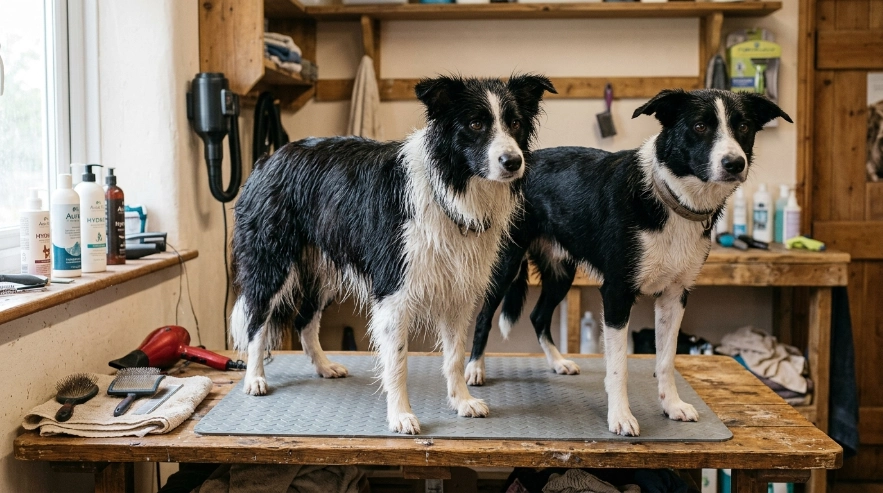
The washing method is similar, but coat length changes how much preparation and drying work you’ll face. Both varieties can have a double coat.
| Bathing Factor | Rough-Coated Border Collie | Smooth-Coated Border Collie |
|---|---|---|
| Pre-bath brushing | More time needed around feathering and tangle-prone areas | Usually faster, though loose undercoat still needs attention |
| Wetting | Longer hair can make reaching the undercoat slower | Water generally reaches the skin more easily |
| Rinsing | Extra attention around chest, tail, and leg feathering | Usually easier to inspect for leftover shampoo |
| Drying | Often takes longer because more hair holds moisture | Typically quicker, depending on undercoat density |
| Post-bath brushing | Especially useful for separating feathering | Useful for collecting loosened shedding hair |
The biggest difference isn’t the shampoo. It’s the time needed to brush, rinse, and dry longer hair correctly.
What DIY bathing mistakes should you avoid?
Most home-bath problems come from shortcuts rather than complicated grooming errors. Avoiding a few habits makes the process safer.
- Bathing a tangled coat: Remove loose tangles and debris first.
- Using human shampoo: Choose a product formulated for canine skin instead.
- Using hot water: Comfortable lukewarm water is the safer routine choice.
- Spraying the face: Use a damp cloth around sensitive areas.
- Rushing the rinse: Dense fur can trap shampoo close to the skin.
- Leaving the undercoat damp: Check beneath the outer coat before deciding drying is finished.
- Scrubbing aggressively: Massage gently instead of roughing up the coat.
- Forcing a frightened dog: Break bathing into shorter training sessions when necessary.
What if your Border Collie hates baths?
Treat bath behavior like any other training exercise. Break the process into small skills instead of expecting instant cooperation.
- Reward entering the dry tub.
- Reward standing on the non-slip mat.
- Introduce quiet running water.
- Wet one leg briefly.
- Build toward a complete bath over several sessions.
Short practice sessions often work better than restraining an anxious dog through a long wash. Border Collies learn patterns quickly, including unpleasant ones.
If fear becomes intense or your dog may bite, get professional help. Safety matters more than finishing the bath at home.
Section Takeaway: A calm setup, dog-safe products, complete rinsing, and patient drying prevent most DIY Border Collie bath problems.
DIY Border Collie bath FAQs
Can I use human shampoo on my Border Collie?
No. Routine bathing should use shampoo formulated for dogs because canine skin differs from human skin. Human products, including many mild or baby shampoos, can be too harsh. Choose a dog-safe product and ask your veterinarian about sensitive or medicated formulas.
Should I brush my Border Collie before or after a bath?
Do both when needed, but the pre-bath brushing matters most. Remove loose hair, burrs, and tangles before wetting the coat. Once your Border Collie is nearly dry, a gentle second brushing can separate the coat and remove hair loosened during bathing.
Can I let my Border Collie air-dry?
Partial air-drying may be fine in a warm indoor environment, but make sure the dense undercoat doesn’t stay wet for a long period. Towel blot thoroughly first. If your dog accepts it, cool or gently warm airflow can speed drying.
Can I bathe a Border Collie puppy at home?
Yes, when a puppy needs cleaning, but keep the bath warm, short, gentle, and positive. Use an age-appropriate dog shampoo and prevent chilling afterward. Early calm handling can also help puppies learn that future grooming is routine rather than frightening.
Why does my Border Collie still smell after a bath?
First check whether the undercoat is still damp or shampoo wasn’t completely rinsed away. A strong or recurring odor can also come from skin or ear problems. If the smell persists despite proper bathing and drying, contact your veterinarian.
Should I use conditioner on a Border Collie?
Conditioner isn’t mandatory for every bath, but a dog-safe formula can help longer rough coats feel easier to comb. It may also help when the coat feels dry. Use the product according to its label and rinse thoroughly unless it’s designed to remain in the coat.
How can I keep my Border Collie clean between baths?
Regular brushing removes loose fur, dried dirt, and outdoor debris without shampooing the whole dog. Wipe muddy paws and lower legs after walks, check feathering for burrs, and clean small dirty areas rather than automatically giving a full bath.
A cleaner Border Collie without turning bath day into chaos
The best DIY Border Collie bath starts before your dog gets wet. Brush first, prepare the room, use dog-safe shampoo, rinse deeply, and make complete drying part of the routine.
Keep the experience calm and predictable. With practice, even a mud-loving Border Collie can learn that bath day is just another short job followed by a good reward.