

Quick Answer
Yes, you should rinse or bathe a Border Collie after the beach, especially after swimming in saltwater. Fresh water removes salt, sand, and other debris that can irritate the skin or remain trapped in the double coat; the PetMD beach safety guidance also recommends washing away salt and sand after a beach visit.
Quick post-beach steps
- Step 1 — Rinse: Flush the coat and paws thoroughly with fresh, lukewarm water.
- Step 2 — Check: Look for shells, sand, burrs, cuts, redness, and debris between the toes.
- Step 3 — Shampoo if needed: Use a mild dog shampoo when the coat is heavily salty, dirty, oily, or smelly.
- Step 4 — Rinse again: Remove every trace of shampoo from the dense undercoat.
- Step 5 — Dry: Blot with towels and dry the undercoat completely with gentle airflow if needed.
- Step 6 — Monitor: Watch for itching, vomiting, diarrhea, unusual thirst, lethargy, or other problems after the beach.
My simple rule
- If my Border has been swimming in the ocean, I always give the coat a thorough fresh-water rinse before settling in at home.
If you’re wondering how to bathe a Border Collie after the beach, the biggest issue isn’t ordinary dirt. Salt, fine sand, damp undercoat, and hidden debris can stay close to the skin long after your Border looks clean.
Border Collies, sometimes called Borders or working sheepdogs, have a weather-resistant double coat in both rough and smooth varieties. In this 2026 guide, I’ll walk through the routine I use after swimming, running on sand, and long coastal days.
In This Guide
- Should You Bathe a Border Collie After the Beach?
- What Should You Do Before the Post-Beach Bath?
- How Do You Bathe a Border Collie After the Beach?
- Does Your Border Collie Need Shampoo Every Time?
- Does Coat Type Change Post-Beach Care?
- What Should You Check on the Paws, Ears, and Skin?
- How Should You Dry a Border Collie After the Beach?
- Frequently Asked Questions
- Final Takeaway
Should You Bathe a Border Collie After the Beach?
Yes, a Border Collie should at least receive a thorough fresh-water rinse after ocean swimming. A full shampoo bath becomes more useful when salt, sand, odor, algae, or grime remains in the coat.
The goal isn’t to make the coat smell perfumed. It’s to remove substances that shouldn’t remain against the skin.
Definition: A post-beach bath is a fresh-water rinse or dog-shampoo wash used to remove salt, sand, dirt, and contaminants after coastal activity.
Why salt and sand matter
Sea salt can remain on the coat as water evaporates. Fine sand also works deep into the feathering, paws, belly, and undercoat.
- Salt residue: May leave skin dry or irritated if it stays in the coat.
- Fine sand: Can collect between toes, around pads, and beneath longer feathering.
- Wet undercoat: Can remain damp even when the guard hairs feel dry.
- Beach debris: Small shells, plant matter, fishing debris, and burrs can hide in fur.
- Dirty water: Local bacteria or algal warnings may make swimming unsafe altogether.
The Border Collie’s coat deserves special attention because both rough and smooth Borders have a double coat. The American Kennel Club’s Border Collie guidance describes both varieties as having dense, weather-resistant coats that need regular grooming.
I don’t wait for dried salt to make a Border feel gritty. If we’ve had a proper ocean swim, rinsing becomes part of packing up from the beach.
What Should You Do Before the Post-Beach Bath?
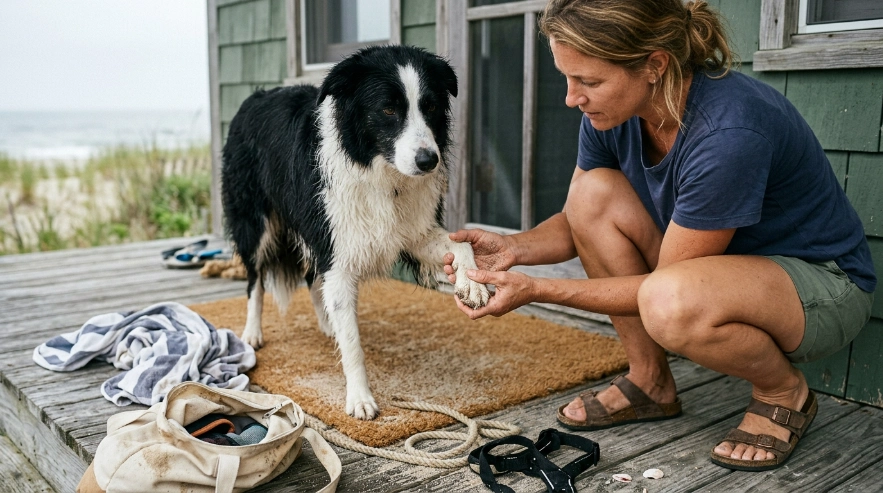
Remove loose sand and inspect your Border Collie before starting the bath. This makes it easier to notice injuries before dense wet fur hides them.
Do a two-minute body check
Once we’re away from hot sand and excitement, I run my hands from shoulders to tail. Then I check the places that collect the most beach debris.
- Between every toe
- Around paw pads
- Lower legs and feathering
- Belly and groin
- Armpits
- Behind the ears
- Tail and rear feathering
- Under the collar or harness
If the coat is packed with dry sand, let some of it fall or brush out gently before the full wash. Don’t grind sand against the skin with aggressive brushing.
Check for cuts before shampooing
Shells, rocks, discarded hooks, and other sharp objects can injure paws. Examine the pads closely if your dog suddenly starts licking, limping, or avoiding weight on one foot.
For routine sandy paws, the AKC’s paw-cleaning guidance recommends cleaning away sand or salty residue and drying paws thoroughly afterward.
Vet note: If you find a deep cut, embedded object, significant bleeding, marked swelling, or persistent limping, contact your veterinarian rather than treating a serious injury as a grooming problem.
How Do You Bathe a Border Collie After the Beach?
Start with a long fresh-water rinse, then use dog shampoo only when the coat needs more than rinsing. Work gently through the double coat and rinse longer than you think necessary.
1. Flush the coat with fresh water
Use comfortably lukewarm water. Begin around the legs and body rather than spraying directly into the face or ears.
I usually spend about 3–5 minutes getting fresh water through an adult Border’s coat after ocean swimming. A dense rough coat may take longer.
2. Work water down to the skin
Don’t rinse only the top layer. Separate the fur with your fingers so water reaches through the outer guard hairs and into the undercoat.
- Chest: Lift dense fur so clean water reaches underneath.
- Belly: Rinse away fine sand without aggressive scrubbing.
- Legs: Run water down each leg and through feathering.
- Tail: Separate longer fur and flush out trapped grit.
- Paws: Rinse between toes and around each pad.
3. Use dog-safe shampoo when necessary
If the coat still feels salty, greasy, dirty, or smelly, apply a mild shampoo made for dogs. Human shampoo and dish soap aren’t good routine substitutes.
The AKC’s dog-shampoo guidance notes that double-coated breeds such as Border Collies need shampoo to penetrate the undercoat when a full bath is required.
4. Rinse until the coat feels clean
Leftover shampoo can be irritating and can make the coat feel tacky. Rinse section by section until you no longer feel slickness or see foam.
5. Keep water out of the ears
Wash the face with a damp cloth instead of spraying the head. Don’t pour water or cleaning solution into the ear canal unless your veterinarian has recommended a specific product and method.
Section Takeaway: A good post-beach bath prioritizes rinsing, not scrubbing. Fresh water needs to reach the skin, paws, feathering, and dense undercoat before your Border is truly free of salt and sand.
Does Your Border Collie Need Shampoo Every Time?
No. A fresh-water rinse may be enough after a short beach walk, while an ocean swim or dirty-water session often deserves more cleaning.
Using shampoo unnecessarily after every minor exposure can remove coat oils and contribute to dryness. Match the wash to what your dog encountered.
| Beach exposure | Fresh-water rinse | Dog shampoo | Extra check |
|---|---|---|---|
| Walked on dry sand | Paws and lower legs | Usually unnecessary | Pads and between toes |
| Brief splash in seawater | Whole wet area | Only if residue remains | Belly and paws |
| Full ocean swim | Whole body, thoroughly | Useful if salty or dirty | Skin, ears, paws, undercoat |
| Rolled in seaweed or grime | Whole body | Usually appropriate | Skin and coat odor |
| Only paws entered water | Paws and legs | Usually unnecessary | Toe webs and pads |
For frequent beach dogs, this distinction matters. You can remove salt after every trip without automatically turning every rinse into a heavy shampoo bath.
Does Coat Type Change Post-Beach Care?
Yes, although rough and smooth Border Collies both need salt and sand removed. Rough coats usually take more time because longer feathering gives debris more places to hide.
Rough-coat Border Collies
A rough Border often carries longer hair around the chest, legs, belly, and tail. Sand can remain deep in those furnishings after the outer surface looks clean.
- Separate feathering while rinsing.
- Check behind ears for early tangles.
- Rinse the tail thoroughly.
- Blot longer fur instead of rubbing it into knots.
- Confirm the dense undercoat is dry near the skin.
Smooth-coat Border Collies
Smooth Borders may look easier to clean because their outer hair is shorter. They still have a double coat, so don’t assume the skin and undercoat are dry after one quick towel pass.
Focus on paws, belly, chest, tail base, and any area submerged in seawater. Smooth coats can still trap fine grit close to the skin.
Should you shave the coat after beach season?
No. Shaving a healthy Border Collie’s double coat isn’t a sensible shortcut for sand, shedding, or summer beach care.
Regular brushing, thorough rinsing, and proper drying preserve the coat’s normal structure. Deal with severe matting through an experienced groomer or veterinary professional rather than routinely shaving the dog.
What Should You Check on the Paws, Ears, and Skin?
Check paws for injuries, ears for trapped moisture or debris, and skin for redness after every significant beach outing. These areas can reveal problems before the rest of the coat does.
Paws
Sand can lodge between toes, while shells and hot surfaces may irritate pads. Rinse each paw separately rather than letting bathwater do all the work.
- Spread the toes gently.
- Flush out visible sand.
- Inspect every pad for cuts or cracks.
- Dry between the toes.
- Watch for repeated licking or limping afterward.
Ears
A Border Collie’s ears may be erect, semi-erect, or variable in carriage. Regardless of shape, swimming can leave moisture around the ear opening.
Dry the visible outer ear gently. Don’t insert cotton swabs deep into the ear canal.
Skin and belly
Check the sparsely coated belly for redness, abrasions, or irritation. Also inspect the armpits and groin where damp fur and sand can rub during running.
Beach safety tip: If local authorities have posted bacterial contamination, harmful algae, or water-quality warnings, keep your dog out of the water rather than relying on a bath afterward.
What if your Border Collie drank seawater?
A few accidental mouthfuls can happen during retrieving or swimming, but intentionally drinking ocean water isn’t safe. Large saltwater intake can cause vomiting, diarrhea, dehydration, excessive thirst, weakness, and more serious neurologic problems.
Bring fresh drinking water to the beach and offer frequent breaks. Wet balls and toys can also carry saltwater into a dog’s mouth during repeated retrieving.
Vet note: Contact your veterinarian promptly if your Border Collie develops repeated vomiting, diarrhea, unusual weakness, marked lethargy, excessive thirst, tremors, trouble walking, seizures, or concerning behavior after drinking seawater.
Section Takeaway: Post-beach care isn’t only about making the coat clean. A careful paw, ear, skin, and behavior check can catch beach-related problems that shampoo cannot fix.
How Should You Dry a Border Collie After the Beach?
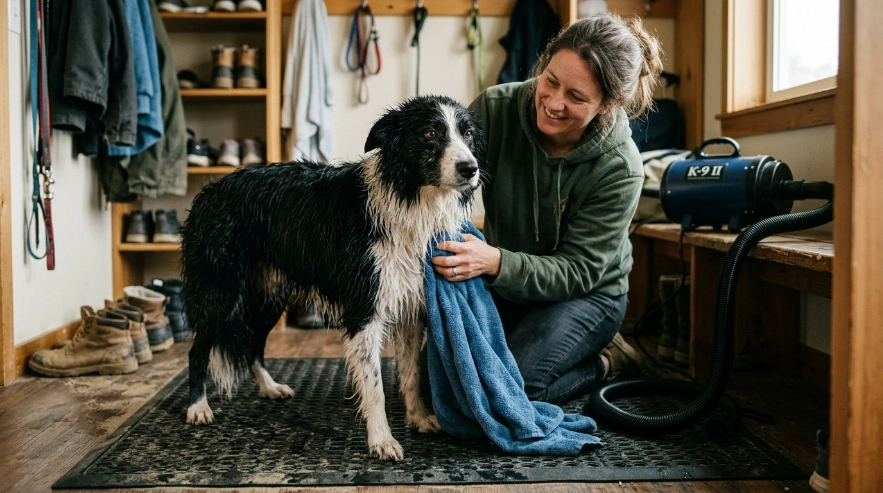
Dry the coat all the way to the undercoat rather than stopping when the outer hairs feel dry. Dense damp fur can remain hidden around the chest, belly, legs, and tail base.
Start by letting the dog shake
Give your Border a safe place to shake off loose water. This can remove an impressive amount before the towel touches the coat.
Blot instead of scrubbing
Press absorbent towels into the coat and gently squeeze longer sections. Fast circular rubbing can encourage tangles in rough-coat feathering.
- First towel: Remove the heaviest surface water.
- Second towel: Work through the chest, belly, legs, and tail.
- Dry towel check: Press against dense areas to see whether moisture still transfers.
Use gentle airflow for dense coats
A dog dryer or other appropriate cool-to-lukewarm airflow can help move moisture from the undercoat. Avoid concentrating hot air on one patch of skin.
Some Borders need time to accept a dryer. I start at a low setting and reward calm behavior rather than holding a worried dog in place.
How long does drying take?
There isn’t one exact number. A lightly wet smooth Border may dry fairly quickly, while a thoroughly soaked rough-coated adult can need 30 minutes or more of combined towel and airflow drying.
Use your fingers rather than the clock. Part the coat at the chest, belly, behind the ears, and tail base and feel near the skin.
Frequently Asked Questions
Do I need to bathe my Border Collie immediately after the beach?
You don’t need to panic on the drive home, but remove salt and sand reasonably soon. A fresh-water rinse at a beach shower is ideal after ocean swimming, followed by more thorough cleaning at home if the coat remains salty or dirty.
Can I rinse my Border Collie with only water after swimming in the sea?
Yes. Fresh water may be enough when the goal is removing light salt and sand and the coat isn’t dirty or smelly. A full dog-shampoo bath becomes more useful after heavy swimming, rolling in grime, or when residue remains after rinsing.
Can I use human shampoo after the beach?
No. Choose a shampoo formulated for dogs. Human shampoos aren’t designed around canine skin and can be unnecessarily harsh, especially when a dog already has dry or irritated skin after sun, salt, and sand exposure.
Should I brush my Border Collie while the coat is wet?
Remove obvious debris before bathing and avoid dragging a brush through tight wet tangles. After drying, a gentle brush or comb can help remove remaining loose undercoat and sand, especially in rough-coated Borders with longer feathering.
What if my Border Collie is itching after the beach?
Give the coat a thorough fresh-water rinse if salt or sand may remain, then inspect the skin closely. Persistent itching, redness, sores, swelling, hair loss, discharge, or worsening discomfort deserves veterinary advice rather than repeated shampooing.
Can my Border Collie swim in the ocean every day?
Some healthy adult Borders enjoy frequent swimming, but conditions matter. Provide fresh drinking water, rest, shade, safe water access, post-swim rinsing, and close supervision while considering waves, currents, heat, water quality, and your dog’s swimming ability.
Should I clean my Border Collie’s ears after every swim?
Check and gently dry the visible ear after swimming, but don’t routinely pour products into the ear canal without guidance. Dogs prone to ear problems may need a veterinarian-recommended cleaning routine tailored to their individual needs.
Final Takeaway
If you bathe a Border Collie after the beach, concentrate on what the beach left behind. Salt, sand, moisture, and hidden debris matter more than making the coat smell freshly shampooed.
For most ocean-swimming days, my routine is simple:
- Offer fresh drinking water and let the dog settle.
- Inspect the paws, belly, skin, and coat.
- Rinse thoroughly with fresh, lukewarm water.
- Use mild dog shampoo only when the coat needs it.
- Rinse the double coat completely.
- Blot with clean towels.
- Dry the undercoat near the skin.
- Check the ears and paws again.
- Watch for delayed signs of illness or irritation.
A Border Collie’s working heritage encourages many of them to throw themselves into beach adventures with enthusiasm. A calm ten-minute cleanup after a lighter outing, or a more thorough bath after swimming, can make the next adventure much more comfortable.
Keep the routine positive, reward calm behavior, and adjust it to your Border’s coat and beach habits. If anything about the skin, paws, ears, or behavior worries you afterward, contact your veterinarian rather than treating it as an ordinary grooming issue.
