

Quick Answer
The best conditioner for a Border Collie is a lightweight, dog-specific formula that softens the coat, adds detangling slip, and rinses clean without leaving the dense undercoat greasy. Because both rough and smooth Border Collies have double coats, I prefer formulas that support normal double-coat grooming rather than heavy products designed to flatten or coat the fur.
What I look for first
- Dog-specific formula: Choose a conditioner labeled for dogs rather than a human hair product.
- Light texture: The coat should feel soft and movable after drying, not oily or coated.
- Easy detangling: Rough coats benefit from extra slip around feathering, the tail, and behind the ears.
- Clean rinsing: A conditioner should rinse thoroughly from the dense undercoat.
- Sensitive-skin option: Consider a simple, low-fragrance formula when your dog is easily irritated.
Simple rule
- For most healthy Border Collies, start with a lightweight rinse-out conditioner and use only enough to coat the hair evenly.
Choosing the best conditioner for a Border Collie is less about finding the fanciest bottle and more about understanding the breed’s coat. A Border Collie, sometimes simply called a Border, carries a weather-resistant double coat that needs softness without heavy buildup.
My approach is simple: protect the coat’s natural feel, make brushing easier, and keep the skin comfortable. This 2026 guide explains what to choose, what to avoid, and how to condition both rough- and smooth-coated Border Collies.
In This Guide
- What Kind of Conditioner Is Best for a Border Collie?
- Does a Border Collie Actually Need Conditioner?
- Does Coat Type Change Which Conditioner You Should Use?
- Which Type of Border Collie Conditioner Should You Choose?
- What Should You Look for in a Border Collie Conditioner?
- How Do You Condition a Border Collie Correctly?
- What Should You Avoid When Choosing Conditioner?
- When Is a Coat Problem More Than a Grooming Issue?
- Frequently Asked Questions
What Kind of Conditioner Is Best for a Border Collie?
For most healthy Border Collies, a lightweight rinse-out dog conditioner is the safest all-purpose starting point. It should soften dry-feeling hair and improve combing without making the coat limp.
A Border Collie’s conditioner is a dog-specific grooming product applied after shampoo to improve coat manageability, softness, and detangling. It isn’t meant to replace brushing, skin treatment, or proper rinsing.
Prioritize coat function over fragrance
Border Collies have dense double coats with an outer layer and softer undercoat. The American Kennel Club describes both rough and smooth Border Collies as double-coated dogs.
That means I don’t choose conditioner based on scent alone. I care more about how cleanly it rinses and how the coat behaves after drying.
- Normal healthy coat: Start with a lightweight moisturizing rinse-out conditioner.
- Tangle-prone rough coat: Look for extra detangling slip without a greasy finish.
- Short smooth coat: Use less product and keep the formula light.
- Dry-feeling coat: Consider a moisturizing dog conditioner designed for regular grooming.
- Sensitive skin: Choose a simple formula and discuss recurring irritation with your veterinarian.
My practical test happens after the dog is fully dry. The hair should separate easily when I run my fingers through it, yet still feel like a Border Collie’s natural coat.
Does a Border Collie Actually Need Conditioner?
No, every Border Collie doesn’t need conditioner after every bath. A healthy coat can often be maintained with good brushing, appropriate shampoo, complete rinsing, and thorough drying.
Conditioner becomes useful when you need extra manageability. Rough-coated Borders often benefit most because longer feathering can tangle around the ears, legs, chest, tail, and hindquarters.
When conditioner can make grooming easier
- After a muddy wash: Shampooing may leave longer hair harder to comb.
- During shedding: Added slip can make careful post-bath brushing easier.
- With long feathering: Conditioner may reduce friction while combing tangles.
- In dry weather: Some dogs develop a drier-feeling coat and skin.
- Before a detailed groom: A manageable coat is easier to inspect and brush section by section.
Regular brushing still matters more than pouring extra product onto the coat. The ASPCA’s dog grooming guidance recommends brushing to remove dirt, distribute natural oils, and help prevent tangles.
I treat conditioner as a supporting tool, not the center of the grooming routine. If brushing is inconsistent, conditioner won’t solve packed undercoat or established mats.
Does Coat Type Change Which Conditioner You Should Use?
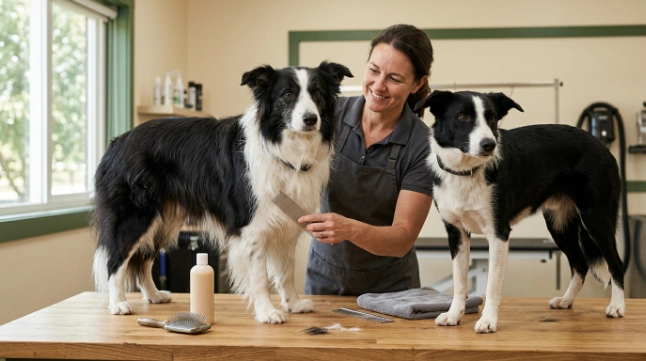
Yes. Rough and smooth Border Collies share the double-coat structure, but their grooming challenges aren’t identical.
The rough coat has longer outer hair and noticeable feathering. The smooth coat is shorter, so it usually needs less detangling support.
Rough-coated Border Collies
A rough coat benefits from controlled slip. Pay special attention to friction points behind the ears, under the collar, near the armpits, and through the tail.
I prefer a conditioner that spreads easily through wet hair without requiring a large amount. Heavy formulas can make long feathering look flat and oily.
Smooth-coated Border Collies
Smooth coats generally need less product. Their main challenge is often loose undercoat rather than long tangles.
Use a small amount and rinse thoroughly. The finished coat should feel clean and springy rather than slick.
| Coat Feature | Rough Border Collie | Smooth Border Collie |
|---|---|---|
| Outer coat length | Longer with feathering | Shorter and closer |
| Main conditioning goal | Detangling and manageability | Light softness without buildup |
| Product amount | Moderate, focused on longer areas | Usually lighter application |
| Detangler usefulness | Often useful | Usually optional |
Whichever coat your Border has, avoid trying to make it behave like a single-coated breed. The goal is a clean, functional double coat.
Which Type of Border Collie Conditioner Should You Choose?
The best conditioner type depends on the problem you’re trying to solve. A healthy adult Border Collie rarely needs every grooming product on the shelf.
| Conditioner Type | Best Use | Rinse Required? | Best Coat Match |
|---|---|---|---|
| Light rinse-out | Routine bath conditioning | Yes | Rough or smooth |
| Detangling conditioner | Long feathering and small tangles | Usually | Especially rough coats |
| Leave-in spray | Light brushing support between baths | No | Tangle-prone areas |
| Moisturizing conditioner | Dry-feeling coat | Usually | Either coat type |
| Veterinary product | Diagnosed skin or coat problems | Follow label or vet | As prescribed |
If I were buying one conditioner for a healthy Border Collie, I’d start with the first category. It gives you the most flexibility without making the routine complicated.
A leave-in product can be useful later if your rough-coated dog regularly develops minor tangles. Use it as directed rather than layering multiple products automatically.
What Should You Look for in a Border Collie Conditioner?
Look at the label before the marketing claims. A product should clearly state that it’s intended for dogs and explain how it should be diluted, applied, rinsed, or left in.
PetMD’s general dog-care guidance recommends shampoos and conditioners specifically labeled for pets. Following the product directions and rinsing the skin and coat thoroughly also matters.
Useful features for this breed
- Dog-specific labeling: This should be your starting requirement.
- Light conditioning: Avoid formulas that leave a thick film on the fur.
- Good slip: This helps a comb move through longer feathering more comfortably.
- Clear directions: You should know whether the formula needs dilution or complete rinsing.
- Low-fragrance option: This can be useful when strong scents bother you or your dog.
- Simple sensitive-skin formula: Consider this when your dog’s skin reacts easily to grooming products.
What about oatmeal and moisturizing formulas?
Oatmeal-based dog grooming products are commonly marketed for moisturizing and soothing dry-feeling skin. PetMD also discusses moisturizing dog shampoos and conditioners as options in dry conditions.
That doesn’t mean oatmeal is right for every dog. If your Border has persistent redness, itching, sores, hair loss, or recurrent skin trouble, product shopping shouldn’t replace veterinary assessment.
Vet note: Skin problems can have many causes, including allergies, parasites, infections, and other medical conditions. Ask your veterinarian before changing products when symptoms persist or worsen.
How Do You Condition a Border Collie Correctly?
Proper application matters almost as much as the formula. Too much conditioner or incomplete rinsing can leave a dense Border Collie coat feeling heavy.
- Brush before bathing. Remove loose hair, debris, and manageable tangles before adding water.
- Wet the coat thoroughly. Work lukewarm water through the outer coat until the undercoat is wet.
- Shampoo as directed. Use a dog-specific shampoo and rinse it completely.
- Apply conditioner sparingly. Start with less than you think you need and spread it evenly.
- Focus on longer areas. Rough coats may need more attention on the chest, tail, and feathering.
- Follow the contact time. Don’t invent a longer soaking time than the label recommends.
- Rinse carefully. Keep rinsing until the coat no longer feels coated or excessively slippery.
- Blot and dry thoroughly. Press moisture out with towels instead of aggressively rubbing tangles into the fur.
The AKC notes that Border Collies have medium double coats and recommends regular brushing to remove loose fur and prevent mats. Conditioner should make that routine easier, not replace it.
I pay extra attention to the dense hair around the neck, rump, and tail while rinsing. These areas can hold more product than the flatter parts of the coat.
How often should you use conditioner?
There isn’t one schedule for every Border Collie. Use depends on bathing frequency, coat condition, lifestyle, and the specific product.
PetMD notes that bathing needs vary with breed, coat, lifestyle, season, and health. Follow your conditioner’s label rather than assuming more frequent use is better.
What Should You Avoid When Choosing Conditioner?
Avoid anything that creates more problems than it solves. The wrong product can leave you with residue, an unhappy dog, or an irritated coat and skin.
- Human hair conditioner: Choose a product formulated and labeled for dogs.
- Overpowering fragrance: A strong scent isn’t proof of better coat care.
- Excessive product: More conditioner doesn’t automatically mean more softness.
- Poor rinsing: Dense undercoat can trap product if you rush.
- Multiple new products together: Introduce grooming products sensibly so problems are easier to identify.
- DIY medicated mixtures: Don’t improvise treatment for unexplained skin disease.
Don’t use conditioner to hide a grooming problem
A mat doesn’t become safe just because it’s wet and slippery. Tight matting can pull on skin and may need careful professional handling.
Likewise, a bad odor that repeatedly returns may not be a conditioner problem. Persistent odor can accompany skin or ear issues that deserve closer attention.
Don’t overload the double coat
The Border Collie’s coat should still have movement after grooming. If it looks stringy, separates into greasy sections, or attracts dirt quickly, you may be using too much product.
Try reducing the amount before buying something stronger. Simple adjustments often make the biggest difference.
When Is a Coat Problem More Than a Grooming Issue?
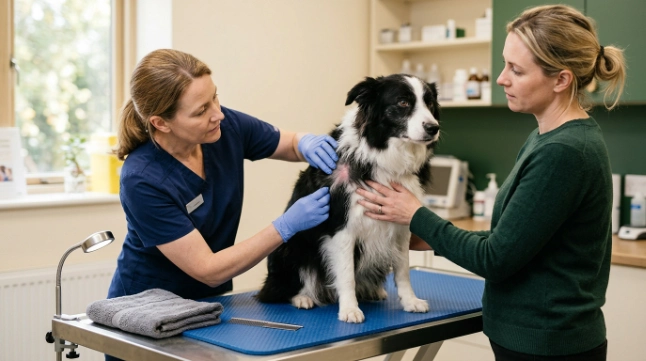
Conditioner is for coat care, not diagnosis. When the skin is persistently itchy, painful, red, flaky, smelly, or losing hair, your veterinarian should help determine the cause.
The ASPCA advises veterinary evaluation for abnormalities such as skin irritation, sores, bald patches, persistent scratching, and excessive licking. Those signs can have several underlying causes.
Call your vet when you notice
- Persistent itching: Especially when your dog scratches, chews, or licks repeatedly.
- Red or inflamed skin: Don’t keep changing conditioners while inflammation continues.
- Bald or thinning patches: Normal shedding shouldn’t create unexplained bald areas.
- Sores or scabs: These need more than cosmetic grooming.
- Strong recurring odor: Especially when a clean coat smells abnormal again quickly.
- Pain during grooming: Sudden sensitivity deserves investigation.
Also talk with your veterinarian before using a medicated conditioner. A treatment product should match the condition being treated.
Vet note: Never rely on grooming products alone when a Border Collie has persistent skin or coat changes. Your veterinarian can check for allergies, parasites, infections, and other possible causes.
Frequently Asked Questions
What is the best conditioner for a rough-coated Border Collie?
A lightweight dog-specific rinse-out conditioner with good detangling slip is a strong starting choice. Focus it on longer feathering and tangle-prone areas, then rinse thoroughly so the rough coat stays soft without becoming heavy.
What is the best conditioner for a smooth-coated Border Collie?
Smooth-coated Border Collies usually do well with a light dog conditioner used sparingly. They generally need less detangling support than rough coats, so prioritize clean rinsing and a natural finish.
Can I use human conditioner on my Border Collie?
I recommend sticking with conditioners specifically formulated and labeled for dogs. Pet grooming guidance from veterinary sources consistently favors pet-specific products because canine skin and grooming needs differ from human hair care.
Should I condition my Border Collie after every bath?
Not necessarily. Use conditioner when it improves softness or manageability, and follow the individual product directions rather than applying it automatically after every wash.
Is leave-in conditioner good for Border Collies?
A dog-specific leave-in conditioner or detangling spray can help rough-coated Border Collies with minor tangles between baths. Use a light amount and stop if the coat becomes greasy or the skin appears irritated.
Can conditioner reduce Border Collie shedding?
Conditioner doesn’t stop normal shedding. Regular brushing and undercoat removal are more important for controlling loose hair, although a well-conditioned coat may be easier to brush during grooming.
What if my Border Collie has dry or itchy skin?
Choose a gentle dog-specific product only if the irritation is mild and temporary. Persistent itching, redness, hair loss, sores, odor, or repeated skin problems should be evaluated by a veterinarian instead of managed through conditioner alone.
My Final Takeaway
For most healthy dogs, the best conditioner for a Border Collie is a lightweight rinse-out formula made specifically for dogs. It should improve combing and softness while preserving the natural movement of the double coat.
Start simple, use less product than you think you need, and rinse thoroughly. Your Border’s coat should feel clean, soft, and functional when the job is finished.
If you’re building a complete grooming routine, pair the conditioner with regular brushing, a dog-specific shampoo, careful drying, and routine skin checks. Those basics matter more than chasing a long list of grooming products.
