

Quick Answer
The best grooming kit for a Border Collie includes a pin brush, gentle slicker brush, metal comb, undercoat rake, nail clippers or grinder, dog shampoo, absorbent towels, ear-cleaning supplies, and a paw-hair trimmer. Both rough and smooth Border Collies have double coats, so your kit should remove loose undercoat without damaging the protective outer coat, which matches AKC Border Collie grooming guidance.
Border Collie Grooming Kit Essentials
- Pin brush: Handles routine brushing and longer feathering without excessive pulling.
- Slicker brush: Removes loose hair and works through small surface tangles.
- Metal comb: Checks whether knot-prone areas are brushed completely through.
- Undercoat rake: Helps manage loose seasonal undercoat when used gently.
- Nail tool: Keeps nails manageable and reduces snagging or overgrowth.
- Bath supplies: Dog shampoo, towels, and safe drying equipment complete the kit.
Finding the best grooming kit for Border Collie coat care is easier once you understand the breed’s double coat. A Border Collie, often shortened to BC by owners, needs more than one all-purpose brush.
I’ve found that a small collection of well-chosen tools works better than a huge grooming box. This 2026 guide explains what belongs in the kit, what each tool does, and how I use everything without turning grooming into a wrestling match.
In This Guide
- What Is the Best Grooming Kit for a Border Collie?
- Which Tools Should a Border Collie Grooming Kit Include?
- How Do You Groom a Border Collie Step by Step?
- How Often Should You Use Each Grooming Tool?
- Does a Rough-Coat Border Collie Need a Different Kit?
- What Grooming Tools Should You Avoid or Use Carefully?
- When Should You Use a Professional Groomer or Veterinarian?
- Frequently Asked Questions
- Final Takeaway
What Is the Best Grooming Kit for a Border Collie?
The best Border Collie grooming kit is a collection of tools that can reach both layers of the coat while staying gentle on the skin. It should also cover nails, paws, bathing, drying, and basic coat inspection.
A Border Collie grooming kit is a set of coat, nail, paw, and bathing tools selected for the breed’s dense double coat and active lifestyle.
The double coat includes a softer insulating undercoat beneath protective outer hairs. Both rough-coated and smooth-coated Border Collies have this basic coat structure.
That is why I don’t rely on a single de-shedding tool. One brush may lift loose hair, while another checks tangles around the ears, chest, legs, and tail.
What should you look for when buying a grooming kit?
Choose tools based on function rather than the number of pieces printed on the package. A five-piece kit containing useful tools beats a 15-piece bundle filled with duplicates.
- Rounded or protected tips: Grooming teeth should not feel sharp against your own skin.
- Comfortable handle: A secure grip matters during longer shedding sessions.
- Easy cleaning: Brushes should release accumulated Border Collie hair without a fight.
- Correct size: Medium-size grooming tools usually provide better control on an adult Border Collie.
- Coat compatibility: The tool should separate hair rather than repeatedly cut healthy coat.
- Durable construction: Loose pins, bent teeth, and weak handles make grooming harder.
I also like keeping the kit portable. Border Collies collect burrs, seeds, mud, and loose vegetation surprisingly fast after field walks.
Which Tools Should a Border Collie Grooming Kit Include?
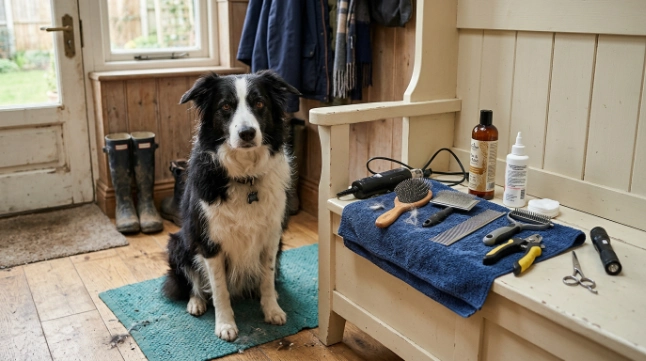
A useful kit needs several complementary tools rather than several versions of the same brush. These are the nine pieces I consider most practical.
1. Pin brush
A pin brush is my everyday starting tool, especially on rough-coated Borders. It moves through longer hair and feathering without grabbing every strand.
2. Gentle slicker brush
A slicker helps lift loose fur and separate small tangles. Use light pressure because pressing the fine wires into the skin can make grooming uncomfortable.
3. Stainless-steel comb
A metal comb is the best finishing check in my kit. If the comb passes smoothly behind the ears and through feathering, I know my brushing reached deeper layers.
4. Undercoat rake
An undercoat rake becomes most useful during heavier seasonal shedding. I use controlled strokes and stop once loose coat stops releasing easily.
5. Nail clippers or grinder
Choose the nail tool you can control confidently. VCA’s dog nail-trimming guidance notes that both scissor-style and guillotine-style clippers can work, while grinders offer another option.
6. Dog-specific shampoo
Keep a mild canine shampoo in the kit for full baths. I avoid using human shampoo because canine skin and coat have different grooming needs.
7. Absorbent microfiber towels
Thick towels remove water without rough scrubbing. Pressing moisture from the coat helps reduce tangling in longer chest, leg, and tail hair.
8. Paw and hygiene scissors
Small blunt-tip grooming scissors can tidy excessive hair around the paw edges when needed. Work slowly and never cut blindly beneath dense fur.
9. Ear and inspection supplies
I keep cotton pads, a veterinarian-approved ear cleaner, and a small grooming light nearby. These help with routine checks, although ear canals should never be aggressively cleaned.
| Tool | Best Use | Rough Coat | Smooth Coat | Typical Routine |
|---|---|---|---|---|
| Pin brush | General brushing | Excellent | Useful | 1-2+ times weekly |
| Slicker | Loose hair and tangles | Excellent | Useful | As needed |
| Metal comb | Finishing check | Essential | Optional-useful | After brushing |
| Undercoat rake | Seasonal loose coat | Useful | Useful | During heavy shedding |
| Nail tool | Nail maintenance | Essential | Essential | Check weekly; trim as needed |
Section Takeaway: Build the kit around separate jobs: brushing, undercoat removal, checking tangles, nail care, bathing, drying, and inspection. You don’t need multiple aggressive de-shedding tools.
How Do You Groom a Border Collie Step by Step?
Start with a dry coat inspection, brush in sections, check your work with a comb, then handle paws and nails. Save bathing for when the coat needs washing rather than automatically bathing after every brushing session.
- Inspect the coat. Check behind the ears, under the collar, armpits, chest, belly, hind legs, and tail.
- Remove debris. Pick out burrs, grass, twigs, and loose surface dirt before brushing.
- Use the pin brush. Work in the direction the coat naturally grows using controlled strokes.
- Use the slicker selectively. Concentrate on loose fur and small tangles instead of scraping the entire body repeatedly.
- Work through undercoat. During shedding periods, use the rake gently in small sections.
- Check with the comb. Run it through knot-prone areas without forcing it through resistance.
- Inspect paws and nails. Look for cracked nails, debris between pads, and excessive paw hair.
- Spot-clean or bathe. Choose the least intensive cleaning method that solves the problem.
Why should you brush before bathing?
Dry brushing removes dead hair and manageable tangles before water reaches them. The ASPCA’s dog grooming guidance also recommends brushing before a bath.
I’ve learned this lesson after trying to rush muddy Borders straight into the tub. A small knot that takes seconds to remove dry can become much more annoying once soaked.
How long should a grooming session take?
A routine maintenance session often takes about 10 to 20 minutes when the coat is already in good condition. Heavy shedding, outdoor debris, or longer rough-coat feathering may require more time.
I prefer two short sessions over one exhausting session. Border Collies learn patterns quickly, and calm repetition usually produces better grooming manners.
How Often Should You Use Each Grooming Tool?
Most Border Collies need regular weekly brushing, with extra coat work during shedding. The exact schedule should follow your dog’s coat, activity, weather, and tendency to tangle.
- Pin brush: About once or twice weekly for routine coat maintenance.
- Slicker brush: Use when loose hair or minor tangles appear.
- Metal comb: Use after brushing knot-prone areas.
- Undercoat rake: Increase use during heavier seasonal shedding.
- Paw inspection: Check after rough trails, fields, or muddy outings.
- Nails: Inspect weekly and trim when length requires it.
- Bath: Bathe when dirty, oily, or noticeably smelly rather than following an aggressive schedule.
The AKC recommends regular brushing for Border Collies and more frequent grooming during shedding periods. That approach makes sense because trapped undercoat becomes harder to manage when routine care gets skipped.
Should you groom daily during shedding season?
Daily light brushing can be useful when your Border Collie is actively dropping undercoat. Keep the sessions gentle and remove only fur that releases without force.
I often spend five or ten minutes removing loose coat instead of doing a long de-shedding session. That keeps fur manageable without repeatedly scraping the same skin.
Does a Rough-Coat Border Collie Need a Different Kit?
Rough and smooth Border Collies can use the same basic grooming kit. The rough coat usually makes the pin brush and metal comb more important because longer feathering creates more places for tangles to hide.
Rough-coat Border Collie
A rough coat has longer visible hair and feathering around areas such as the chest, legs, belly, and tail. I pay extra attention behind the ears and around friction points.
- Prioritize a pin brush with comfortable rounded pins.
- Keep a metal comb for feathering and hidden tangles.
- Use a slicker carefully around dense longer sections.
- Check the tail and rear feathering after outdoor activity.
- Keep long hair away from a spinning nail grinder.
Smooth-coat Border Collie
The smooth coat lies closer to the body, so major tangles are often less common. However, the undercoat still sheds and still needs routine maintenance.
- Use a pin or suitable slicker brush for loose surface hair.
- Keep an undercoat tool available for seasonal shedding.
- Inspect the skin because shorter hair makes changes easier to spot.
- Maintain the same nail and paw-care equipment.
- Do not assume a smooth Border needs no brushing.
The important point is coat structure, not just visible length. Both varieties are active working dogs that can bring home dust, plant material, and mud.
What Grooming Tools Should You Avoid or Use Carefully?
Avoid tools that depend on excessive pressure, repeated cutting, or aggressive pulling through the undercoat. The goal is to remove loose coat while preserving healthy outer hair and comfortable skin.
Aggressive de-shedding blades
Some cutting-style de-shedding tools can remove large amounts of hair quickly. That does not automatically mean they are the best choice for repeated Border Collie grooming.
If a tool seems to cut healthy coat rather than releasing loose undercoat, I switch tools. Controlled brushing is slower but easier to judge.
Mat splitters and sharp dematting tools
These tools can be useful in experienced hands, but their blades sit close to the skin. Tight mats are safer to address with a professional than with blind cutting.
High-heat dryers
Airflow can help dry and separate a double coat, but concentrated heat can irritate skin. Keep the dryer moving and use a comfortable temperature.
Human shampoo
I keep human shampoos out of my Border Collie kit. Choose products made for dogs unless your veterinarian recommends a particular treatment.
Shaving equipment for routine shedding
Shaving is not my solution for normal Border Collie shedding. Regular coat maintenance addresses loose fur without removing the protective outer coat.
Vet note: Persistent redness, sores, strong odor, bald areas, swelling, or intense itching needs veterinary attention rather than stronger grooming tools or repeated baths.
When Should You Use a Professional Groomer or Veterinarian?
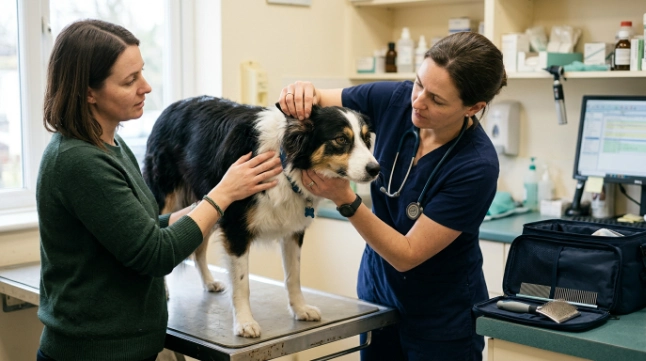
Use a professional groomer when coat work exceeds what you can do safely and calmly at home. Contact a veterinarian when the problem involves pain, skin disease, wounds, unexplained hair loss, ear trouble, or another health concern.
Consider a professional groomer when:
- Matting is tight against the skin.
- Your Border Collie cannot tolerate safe nail trimming.
- The coat is packed with difficult loose undercoat.
- You cannot dry the dense coat completely after bathing.
- You are unsure how much paw or sanitary hair to trim.
Contact your veterinarian when:
- Grooming causes unexplained pain.
- You find open sores or spreading redness.
- Hair loss creates bald or inflamed patches.
- An ear has strong odor, discharge, swelling, or persistent irritation.
- A nail is badly broken, bleeding heavily, or embedded.
For ordinary nail care, PetMD’s dog nail-trimming guide explains the quick, clipper types, and gradual trimming. Those basics are useful, but a fearful or painful dog should not be forced through the procedure.
I also treat grooming as a regular health check. Running my hands over the coat has helped me notice small skin changes, ticks, burrs, cracked nails, and tender areas before they became bigger problems.
Vet note: Grooming advice cannot diagnose skin, ear, nail, allergy, or parasite problems. Ask your veterinarian about persistent or painful symptoms.
Frequently Asked Questions
What is the single best brush for a Border Collie?
A pin brush is one of the most versatile choices for routine Border Collie grooming, especially on rough coats. However, one brush cannot perform every job, so pair it with a metal comb and an undercoat tool for a more complete kit.
Do Border Collies need a slicker brush?
A slicker brush is useful for loose hair and small tangles, but it should be used gently. You do not need to scrape the entire coat repeatedly if a pin brush and comb are already doing most routine work.
Do Border Collies need an undercoat rake?
An undercoat rake can be helpful during heavier shedding because Border Collies have double coats. Choose a tool that pulls loose undercoat without aggressively cutting healthy hair, and use light pressure.
How often should I brush my Border Collie?
Brushing once or twice weekly is a practical baseline for many Border Collies. Increase the frequency during seasonal shedding or when your dog regularly runs through fields, brush, mud, or other debris.
Should I buy a complete grooming kit or individual tools?
Either option works, but judge a bundle by the usefulness and quality of its individual pieces. I would rather buy several dependable tools separately than pay for a large kit filled with duplicate brushes and accessories I will never use.
Can I use a human hairbrush on a Border Collie?
A human hairbrush is not designed to work through a dense canine double coat. Dog-specific pin brushes, slickers, combs, and undercoat tools give you better control and are designed around canine coat maintenance.
Do Border Collies need professional grooming?
Most routine brushing, bathing, paw checks, and nail maintenance can be handled at home when the dog cooperates. Professional help is useful for tight matting, difficult nail care, heavy coat buildup, or grooming that you cannot complete safely.
Final Takeaway
The best grooming kit for Border Collie care does not need dozens of pieces. Start with a pin brush, slicker, metal comb, undercoat rake, nail tool, dog shampoo, towels, paw-grooming tool, and basic inspection supplies.
As of 2026, my approach remains simple: groom regularly, work gently, and use the least aggressive tool that solves the problem. Consistent 10-minute sessions are far more useful than attacking a neglected double coat once every few months.
Build the kit around your own Border Collie’s coat and tolerance. Once every tool has a clear job, grooming becomes faster, calmer, and much easier to keep consistent.
